Artwork
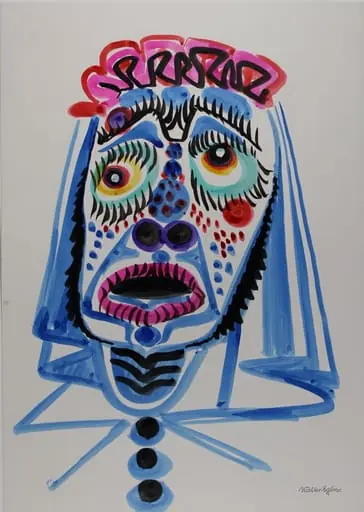
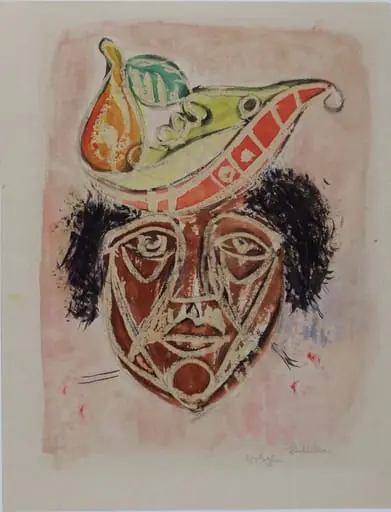
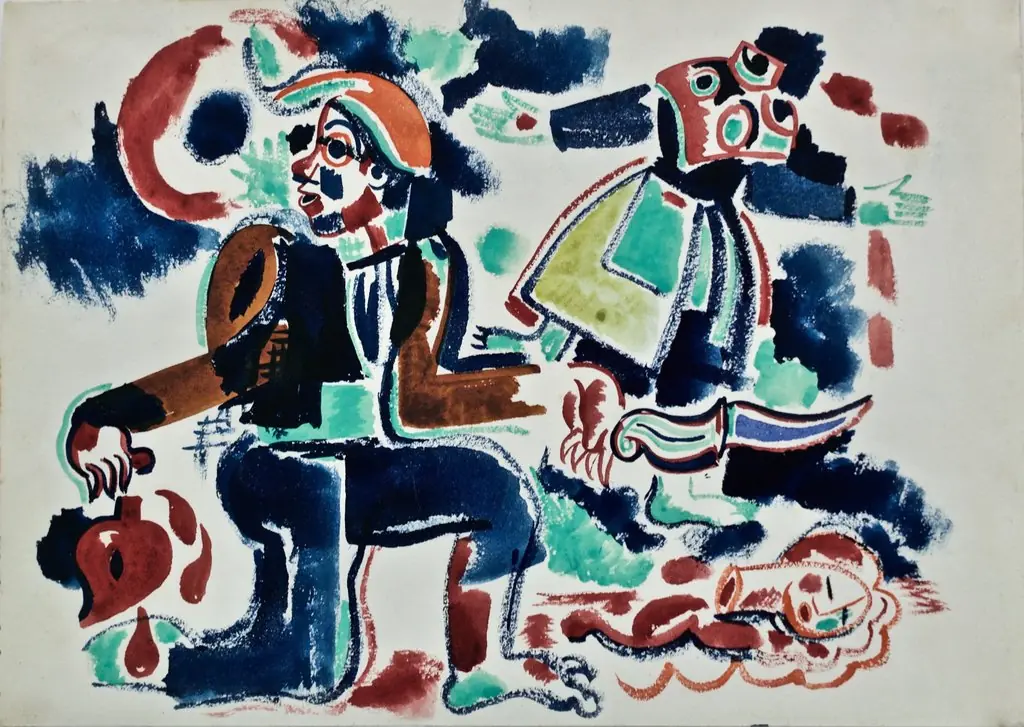
Eglin, Walter - Zeichnung, Huzgüri und Weibelwyb (Fasnacht)
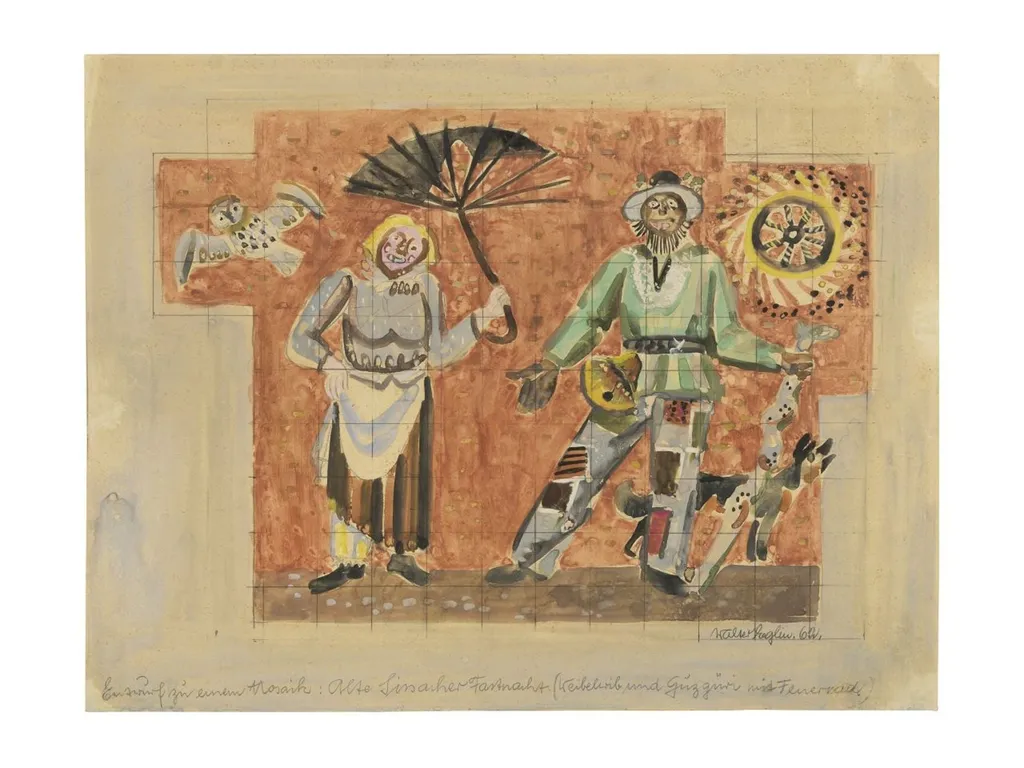
Eglin, Walter - Zeichnung, Huzgüri und Weibelwyb (Fasnacht) is an unspecified painting by Walter Eglin. It dates from 1962 and is held in the collection of the Archaeology and Museum Baselland.
About this work
Overview
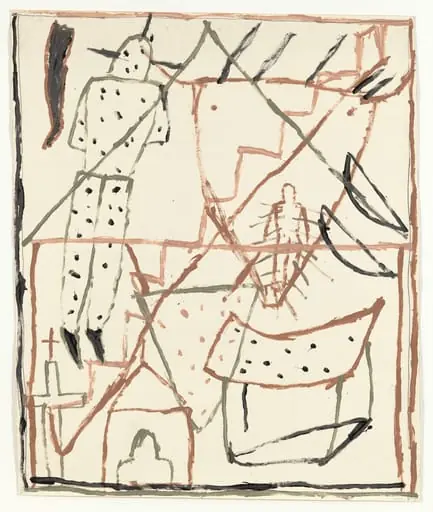
Walter Eglin's 1962 drawing, titled 'Zeichnung, Huzgüri und Weibelwyb (Fasnacht)', is a graphic work held by the Museum of Ethnography. It captures two figures engaged in a ceremonial context linked to Fasnacht, a traditional Swiss carnival. Rendered in ink or pencil on paper, the piece emphasizes line and pattern over color, reflecting Eglin’s interest in folk rituals and their visual symbolism.
Subject & Meaning
These elements likely symbolize protection, music, and the transient nature of carnival rites, rooted in regional customs.
The two central figures represent archetypal characters from Fasnacht celebrations: one, a woman in a white apron over a dress, holds an umbrella; the other, a musician in green and white, plays a lute. A dog rests beside the musician, and a bird hovers above the woman, suggesting movement and spiritual presence. These elements likely symbolize protection, music, and the transient nature of carnival rites, rooted in regional customs.
Technique & Style
Eglin employs precise linear drawing with minimal shading, relying on contour and arrangement to define form. The background features a uniform grid pattern in warm orange, creating a structured, almost architectural frame that contrasts with the organic figures. This deliberate juxtaposition enhances the ritualistic tone, grounding the scene in a symbolic space rather than a naturalistic one.
History & Provenance
Created in 1962, the drawing entered the collection of the Museum of Ethnography, which specializes in cultural artifacts from Swiss and Alpine traditions. Its acquisition reflects institutional interest in documenting vernacular performance and visual culture. No earlier ownership records are publicly documented, suggesting it was likely produced for personal or exhibition purposes within Eglin’s artistic circle.
Context
Eglin’s work emerges from a mid-20th-century Swiss interest in preserving regional folklore amid modernization. Fasnacht, a pre-Lenten festival with medieval roots, inspired many artists to record its masked processions and costumed figures. Eglin’s focus on two central roles—umbrella-bearer and musician—highlights the ritual’s performative hierarchy, aligning with ethnographic documentation efforts of the time.
Legacy
Though not widely exhibited beyond institutional settings, this drawing contributes to a body of work that preserves the visual language of Swiss carnival traditions. Eglin’s restrained style and attention to symbolic detail influenced later regional artists interested in ethnographic representation. The piece remains a quiet but significant record of cultural continuity in Swiss folk expression.
Artist & collection
Artist
Walter Eglin spent his life in the small Swiss town of Sissach, where he balanced teaching art to kids with painting on the side.