Artwork
Tobias and the Angel
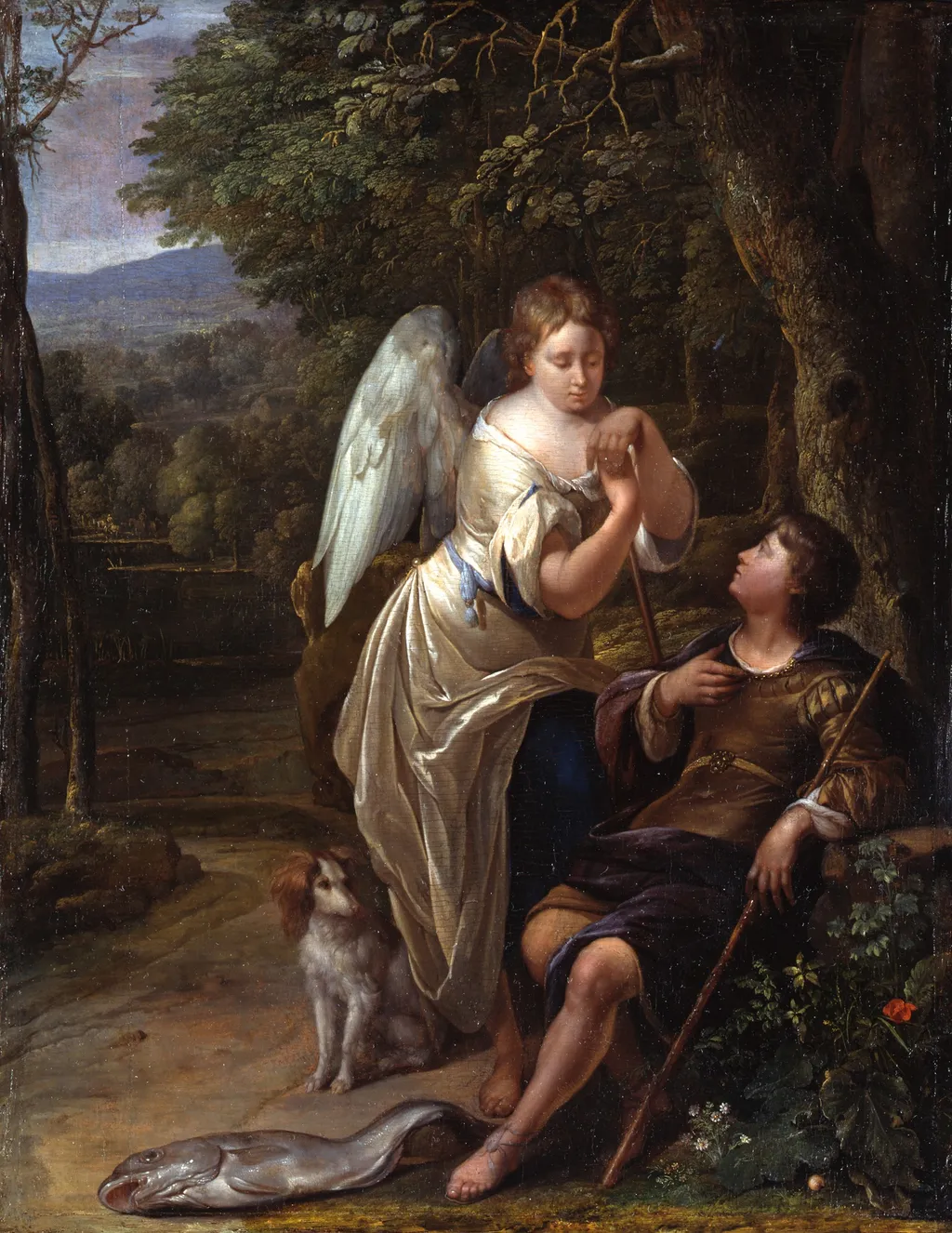
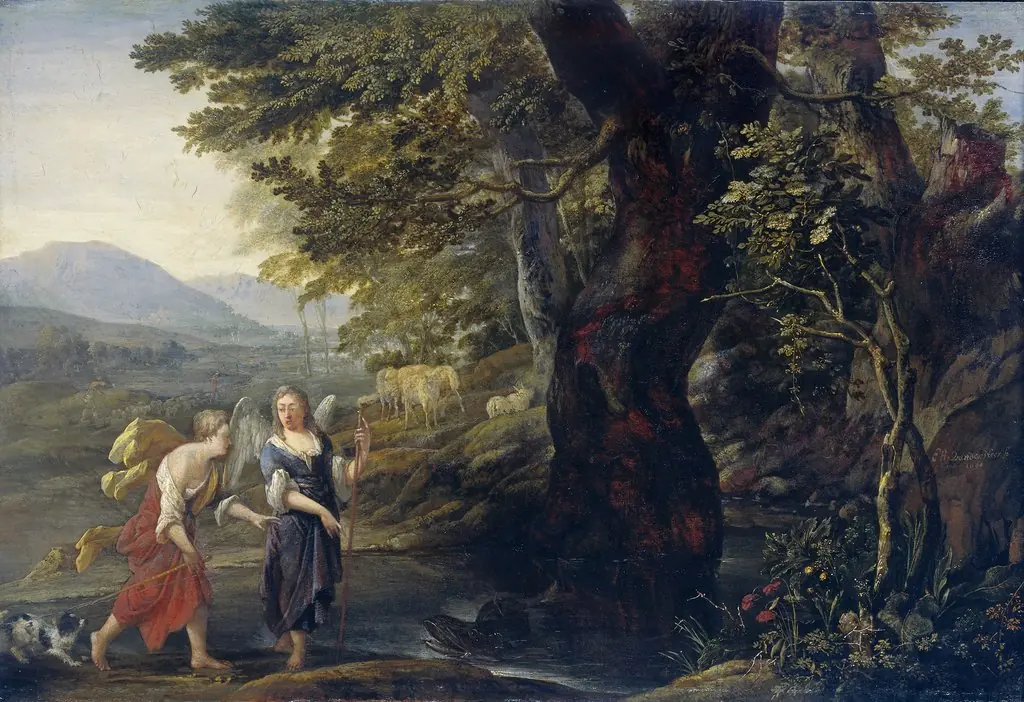
Tobias and the Angel is an oil painting by the Dutch Golden Age artist Eglon van der Neer. It dates from 1693 and is held in the collection of the Gemäldegalerie Berlin.
About this work
Overview
Created during the Dutch Golden Age, it reflects the artist’s engagement with biblical subjects, a departure from his later emphasis on landscapes.
Eglon van der Neer’s *Tobias and the Angel* (1693) is a religious narrative painting executed in oil on canvas. Created during the Dutch Golden Age, it reflects the artist’s engagement with biblical subjects, a departure from his later emphasis on landscapes. The work exemplifies van der Neer’s meticulous approach, combining refined detail with balanced composition. It remains part of the Gemäldegalerie Berlin’s collection, where it represents the period’s interest in devotional and historical themes.
Subject & Meaning
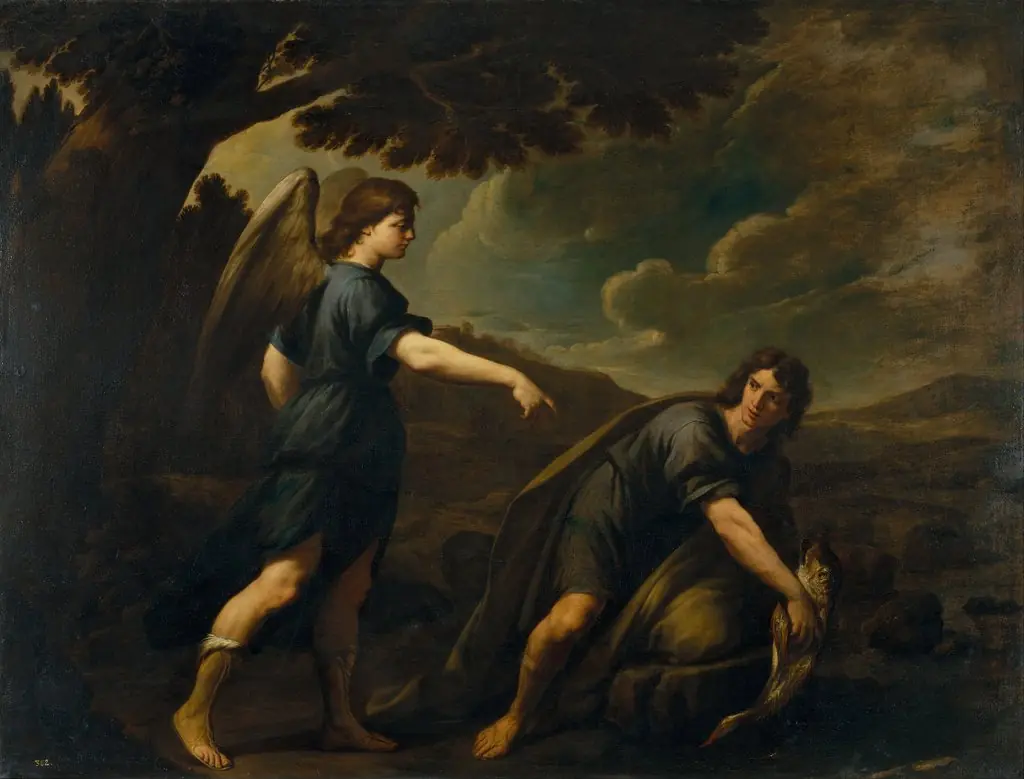
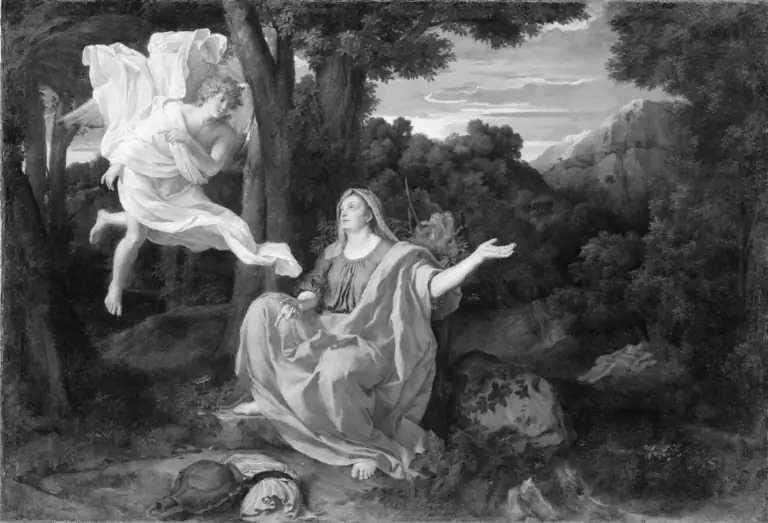
The painting illustrates a scene from the Book of Tobit, in which the archangel Raphael guides Tobias on a journey. Tobias, seated and gazing upward, appears to receive instruction or blessing from the angel, who stands beside him with a staff. A fish, central to the biblical narrative, lies at their feet, while a dog rests nearby, adding to the scene’s quiet intimacy. The interaction suggests themes of divine guidance, protection, and the fulfillment of providence.
Technique & Style
Van der Neer employs a controlled, luminous technique characteristic of Dutch Golden Age painting. The figures’ garments—particularly the angel’s flowing white robe and Tobias’s textured tunic—are rendered with precise brushwork, enhancing their material presence. Subtle chiaroscuro models forms, creating depth while maintaining a harmonious interplay of light and shadow. The landscape background, though secondary, is painted with equal care, featuring delicate foliage and a distant horizon that reinforces the scene’s serene atmosphere.
History & Provenance
Completed in 1693, *Tobias and the Angel* reflects van der Neer’s early focus on religious and historical subjects before his shift toward portraiture and landscape. The painting entered the Gemäldegalerie Berlin’s holdings, where it has been preserved as part of the museum’s broader collection of European art. Its provenance prior to institutional acquisition remains undocumented, though its condition and stylistic coherence align with van der Neer’s authenticated works from the period.
Context
During the late 17th century, Dutch artists increasingly explored religious narratives, often infusing them with the naturalism and refined elegance favored by patrons. Van der Neer’s treatment of the Tobias story aligns with this trend, blending devotional content with a composed, almost genre-like intimacy. The painting’s outdoor setting and attention to detail reflect the era’s broader interest in harmonizing biblical themes with contemporary artistic conventions, particularly the use of landscape to enhance narrative mood.
Legacy
While not among van der Neer’s most frequently reproduced works, *Tobias and the Angel* contributes to the understanding of Dutch Golden Age religious painting. Its restrained yet evocative depiction of a biblical encounter offers insight into the period’s approach to sacred subjects, bridging narrative clarity with technical refinement. The painting’s inclusion in the Gemäldegalerie Berlin ensures its accessibility for study, serving as a representative example of the artist’s early output and the broader cultural priorities of his time.
Own this work as a print
Artist & collection
Artist
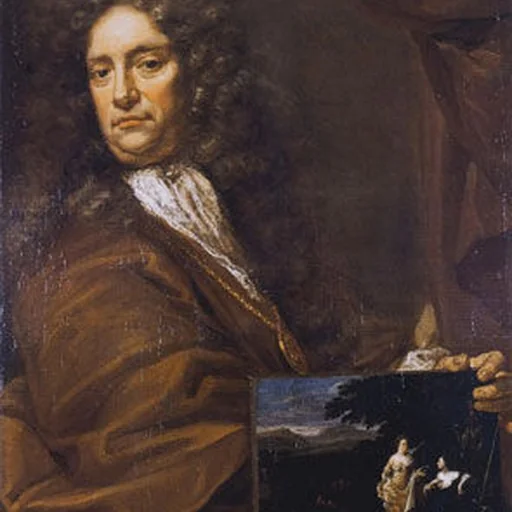
Eglon van der Neer (1635/36 – 3 May 1703) was a Dutch painter of historical scenes, portraits and elegant, fashionable people, and later of landscapes.