Artwork
Die kleine Stadt I
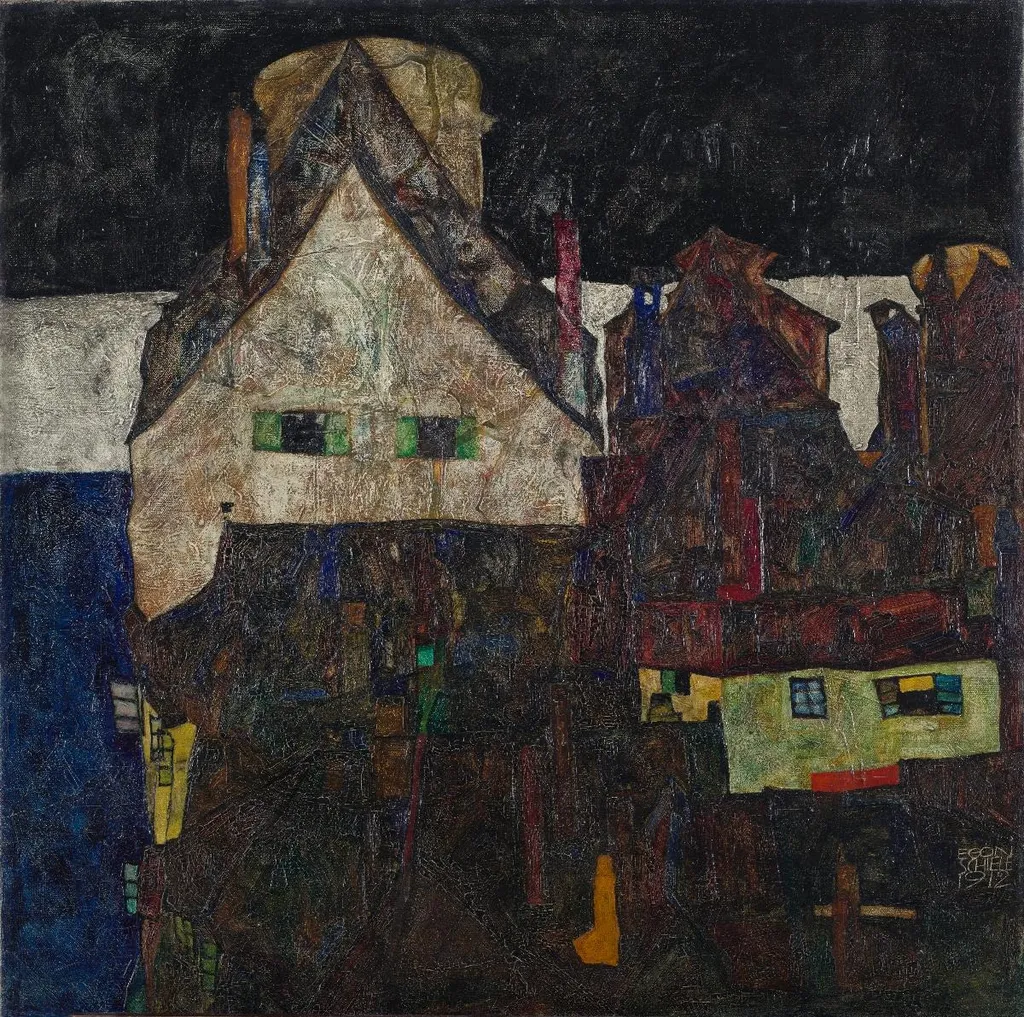
Die kleine Stadt I is an oil painting by Egon Schiele. It dates from 1912 and is held in the collection of the Kunsthaus Zürich.
About this work
Overview
Its composition avoids traditional perspective, favoring a flattened, expressive structure.
Die kleine Stadt I is an oil painting by Egon Schiele, completed in 1912. It presents a compact village scene rendered with heightened emotional intensity. The work is part of the collection at Kunsthaus Zürich and reflects Schiele’s engagement with landscape during a period of intense personal and artistic experimentation. Its composition avoids traditional perspective, favoring a flattened, expressive structure.
Subject & Meaning
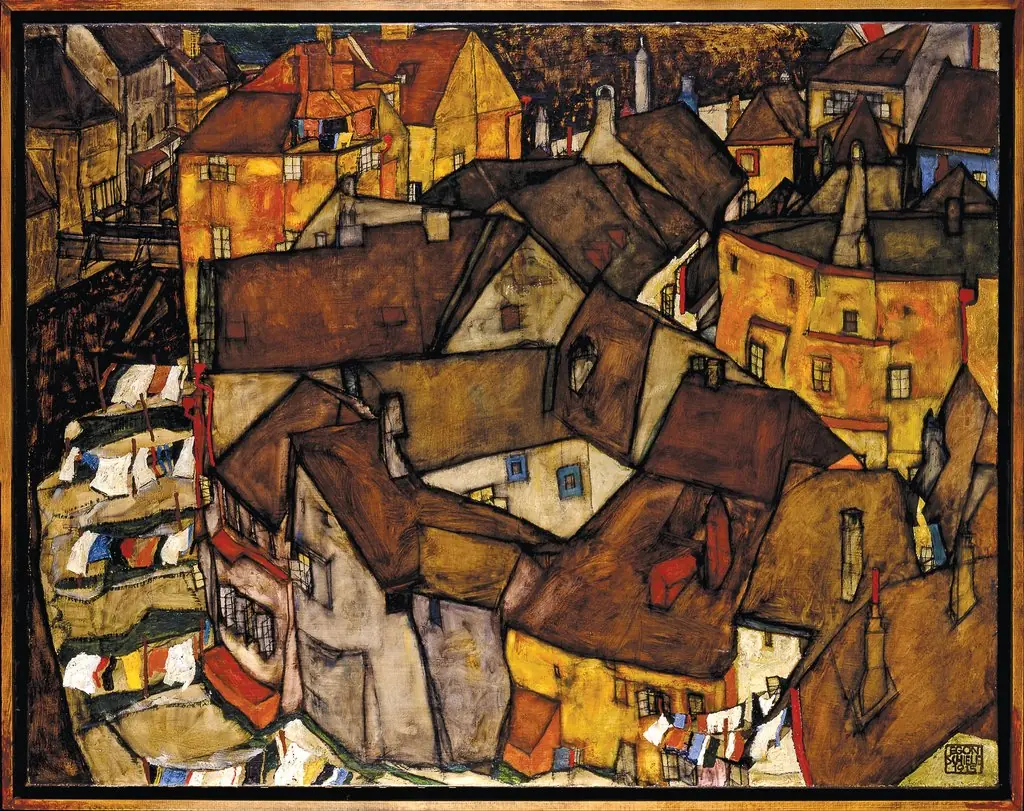
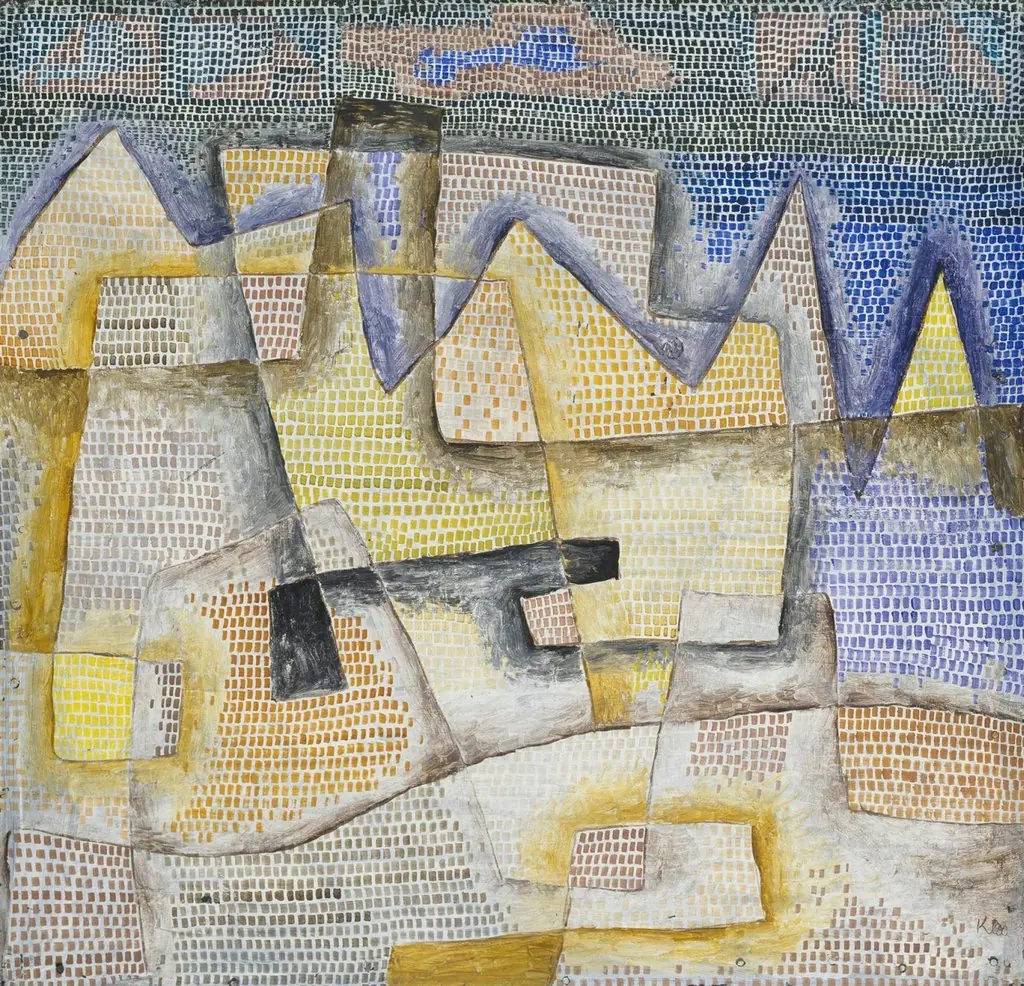
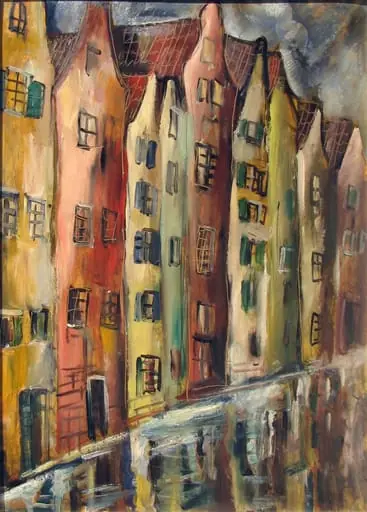
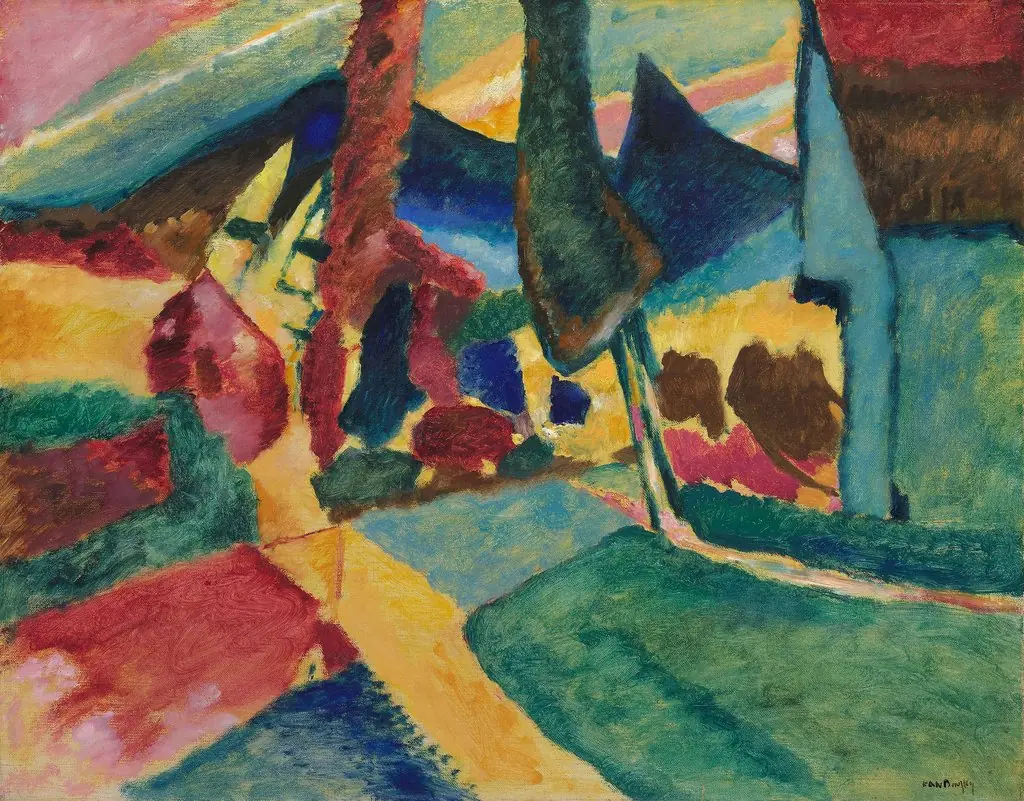
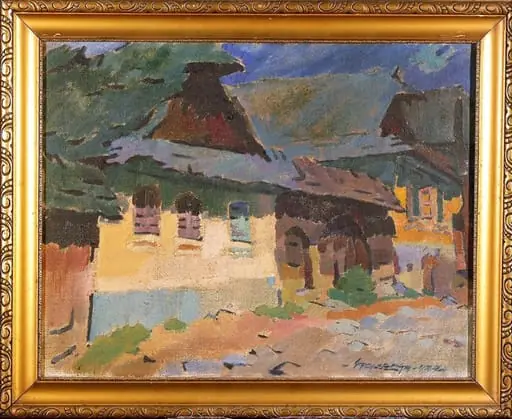
The painting portrays a cluster of modest dwellings, their forms simplified and arranged without clear spatial hierarchy. The absence of human figures shifts focus to the architecture itself, suggesting a quiet, almost haunting stillness. The dark, undefined background isolates the structures, amplifying their emotional weight. Schiele treats the village not as a documentary subject but as a psychological space.
Technique & Style
Schiele employs thick, deliberate brushwork and saturated hues—white, ochre, and brown—to define the buildings, contrasting sharply with the deep, near-black background. The paint is applied with visible texture, creating a tactile surface that enhances the emotional resonance. Lines are angular and fractured, rejecting naturalism in favor of a raw, introspective aesthetic aligned with Expressionism.
History & Provenance
Painted during Schiele’s prolific early period, the work emerged from his time in the Austrian countryside, where he sought refuge from urban pressures. It entered the Kunsthaus Zürich collection in the mid-20th century, following the dispersal of European modernist holdings after World War I. Its provenance reflects broader institutional efforts to preserve Austrian Expressionist works.
Context
Created in 1912, the painting coincides with Schiele’s growing reputation and his break from the more decorative styles of his mentor, Klimt. It aligns with a broader European turn toward emotional authenticity in art, where landscape became a vehicle for inner states rather than external observation. This period also saw Schiele’s increasing focus on isolation and existential tension.
Legacy
Die kleine Stadt I remains a key example of Schiele’s ability to infuse mundane subjects with psychological depth. While less known than his figural works, it demonstrates his consistent rejection of decorative harmony in favor of raw, unmediated expression. The painting contributes to the understanding of how Expressionism extended beyond portraiture into the representation of environment.
Artist & collection

Artist
Egon Leo Adolf Ludwig Schiele (German: ; 12 June 1890 – 31 October 1918) was an Austrian Expressionist painter.