Artwork
lasimaalaus, Forssan kirkon kuori-ikkuna, Jeesuksen syntymä
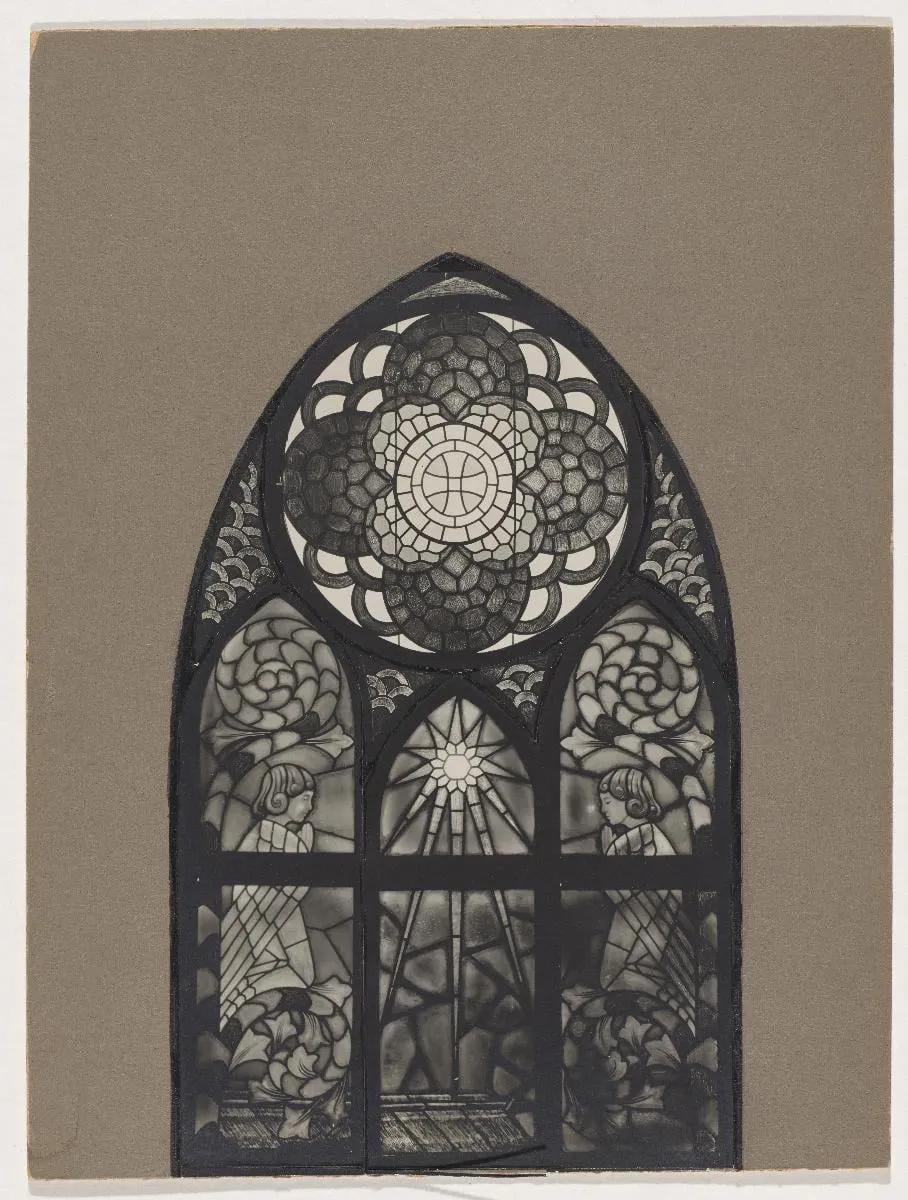
lasimaalaus, Forssan kirkon kuori-ikkuna, Jeesuksen syntymä is a photography by Eric O. W. Ehrström. It is held in the collection of the Finnish Heritage Agency. This stained-glass window, located in Forssa Church, Finland, depicts the Nativity of Jesus.
About this work
Overview
Rendered in monochrome in the photograph, the original window features colored glass arranged in a pointed arch with segmented panels.
This stained-glass window, located in Forssa Church, Finland, depicts the Nativity of Jesus. Rendered in monochrome in the photograph, the original window features colored glass arranged in a pointed arch with segmented panels. Thick leading lines divide the composition, suggesting early 20th-century craftsmanship. The image’s grainy texture reflects its age and the limitations of historical documentation.
Subject & Meaning
The central star is flanked by two small figures, likely Mary and Joseph, framing the birth of Christ. Surrounding geometric patterns—stars and swirling motifs—evoke celestial themes common in religious iconography. The composition emphasizes simplicity over narrative detail, aligning with regional Lutheran traditions that favored symbolic representation over elaborate storytelling.
Technique & Style
The window employs traditional leaded glass techniques, with hand-cut pieces fitted into thick black lead cames. Patterns are abstract rather than figurative, relying on repetition and symmetry. The limited palette implied by the black-and-white photo suggests muted tones, consistent with early 1900s Finnish ecclesiastical glasswork that prioritized clarity and durability over vibrancy.
History & Provenance
Created in the early 20th century, the window was installed in Forssa Church as part of a broader effort to modernize liturgical interiors while retaining traditional motifs. Its preservation in situ reflects local commitment to heritage. The photograph likely dates from the mid-20th century, documenting the window before widespread color documentation became standard.
Context
This window belongs to a wave of Finnish church renovations following independence in 1917, when communities sought to express national identity through religious art. Unlike ornate European stained glass, Finnish examples often favored minimalism and folk-inspired geometry, blending Christian symbolism with indigenous aesthetic sensibilities.
Legacy
The window remains in its original location, serving both liturgical and cultural functions. It is documented in the Museum of Ethnography’s archives as an example of vernacular ecclesiastical design. Its endurance highlights the value placed on modest, locally made religious art in rural Finnish communities throughout the 20th century.
Artist & collection
Artist
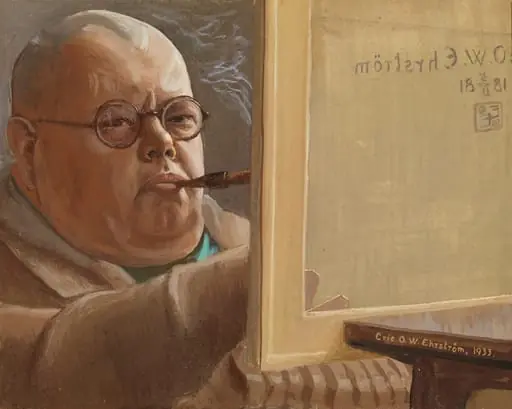
Eric O. W. Ehrström spent years on his hands and knees, squinting at stained-glass windows under scaffolding. He didn’t just snap photos—he climbed into the frames, capturing the way light turns red into honey and blue…
 Omakuva
 lasimaalaus, Forssan kirkon kuori-ikkunat
 lasimaalauksia, Suomen kansallismuseon pääportaikko, ethnographia - historia - archaeologia
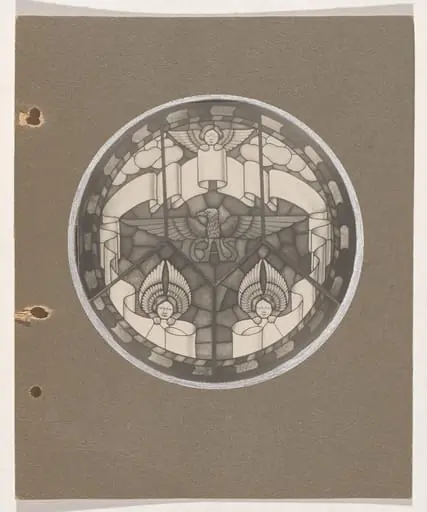 Mäntän kirkon urkuparven lasimaalaus, enkelit ja G. A. Serlachiuksen toiminimimerkki
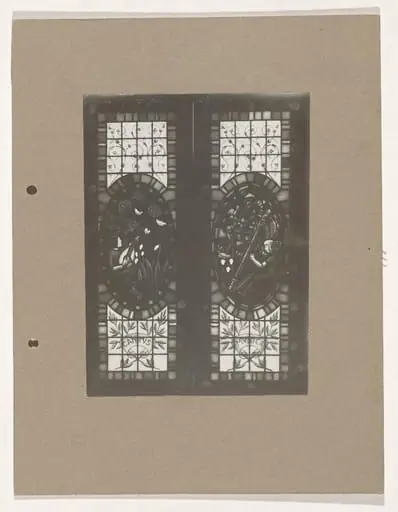 lasimaalaus, Kymintehdas, cantus musica
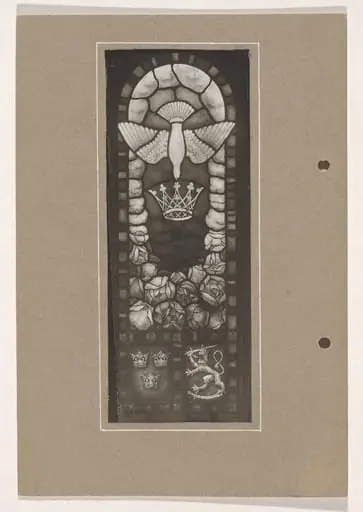 lasimaalaus, Olaus Petrin kirkko, kyyhkynen ja kruunu
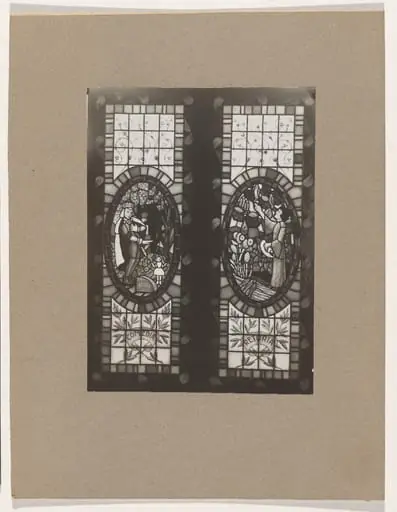 lasimaalaus, Kymintehdas, comedia retoria
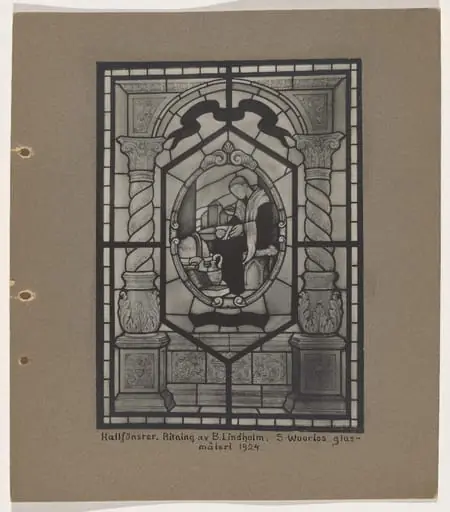 lasimaalaus, eteishallin ikkuna, omistaja herra Kivi
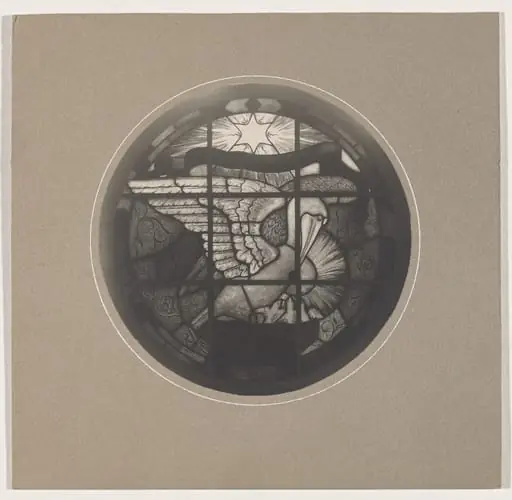 lasimaalaus, Hauhon kirkon kuori-ikkuna, pelikaani
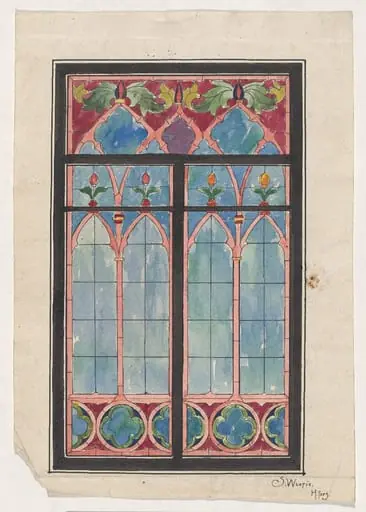 lasimaalausluonnos, kukka- ja kasviornamentiikkaa
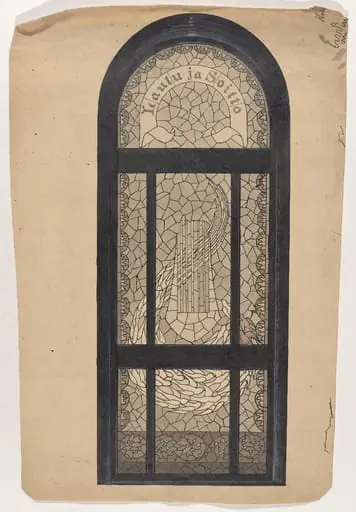 lasimaalausluonnos pyörökaari-ikkunaan, Laulu ja Soitto
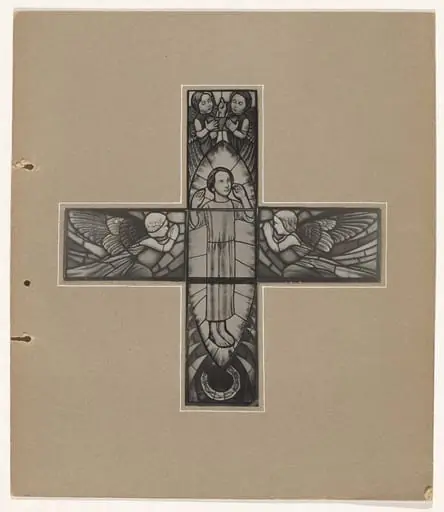 ristinmuotoinen lasimaalaus, Olaus Petrin kirkko
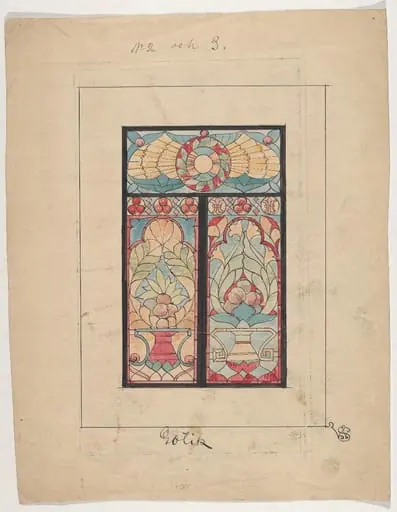 lasimaalaussuunnitelma, kasviornamentiikkaa, hedelmäkulhoja