Artwork
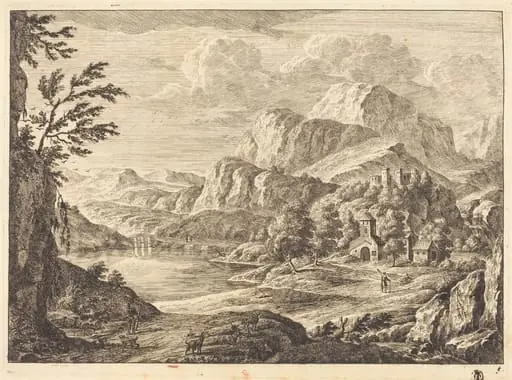
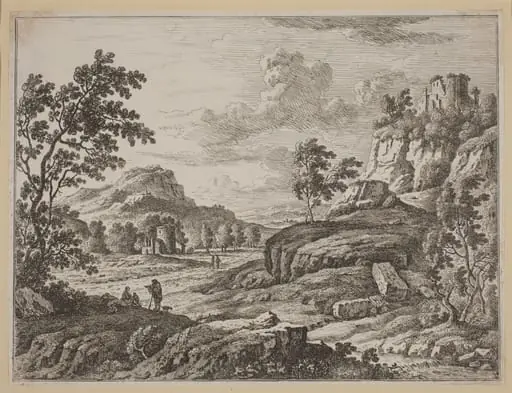
Mountainous Landscape with Figures and a Monastary
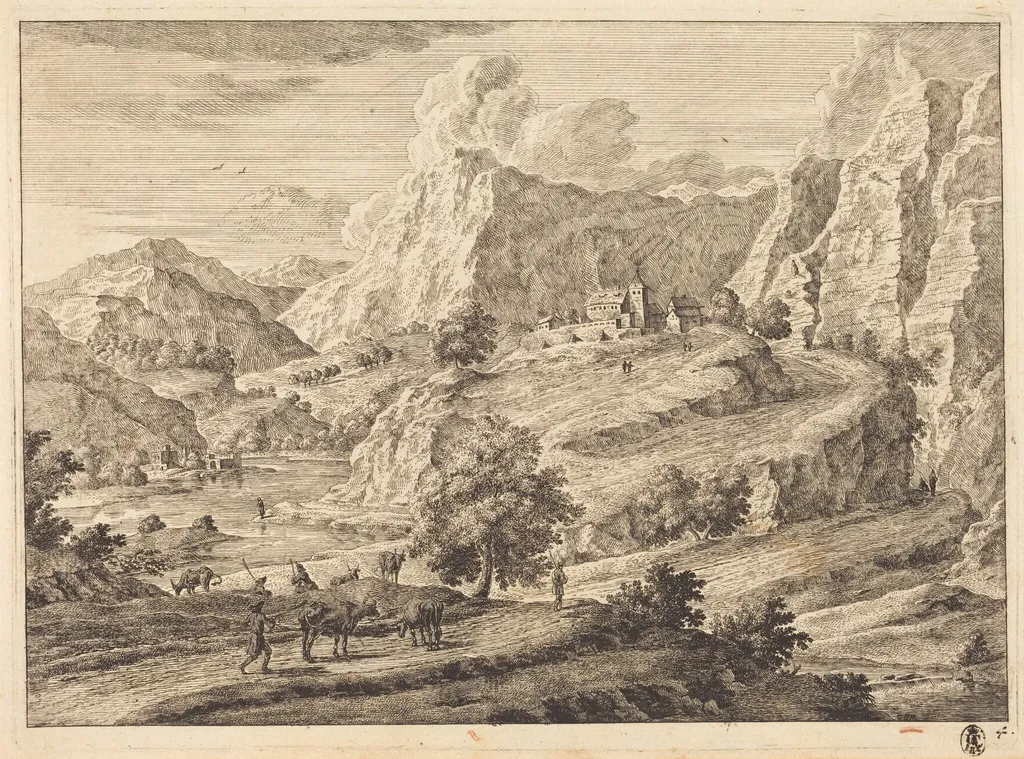
Mountainous Landscape with Figures and a Monastary is an ink print by the Baroque artist Georg Eisenmann. It dates from 1772 and is held in the collection of the National Gallery of Art.
About this work
Overview
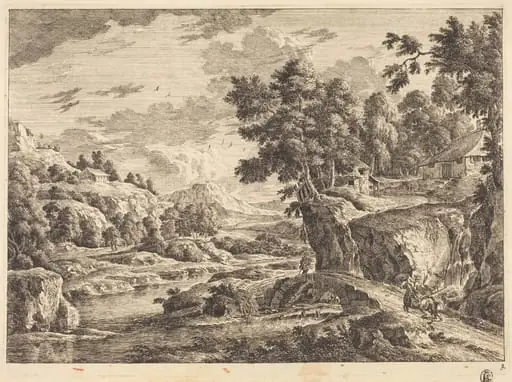
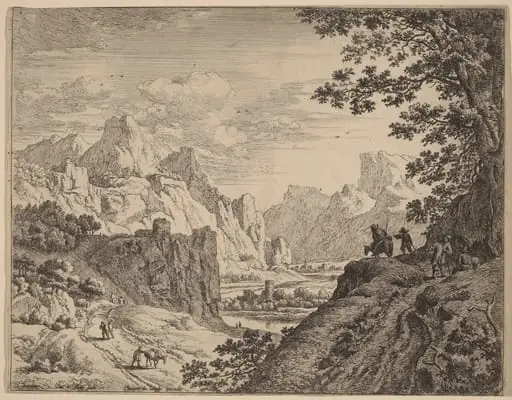
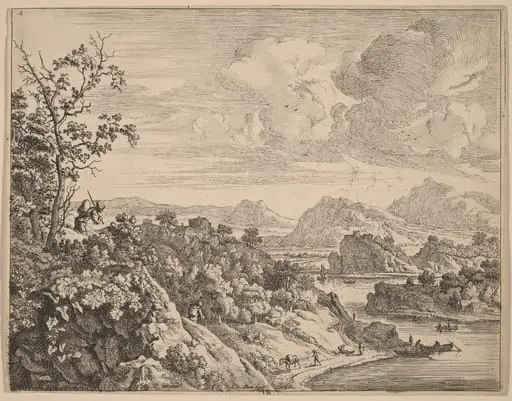
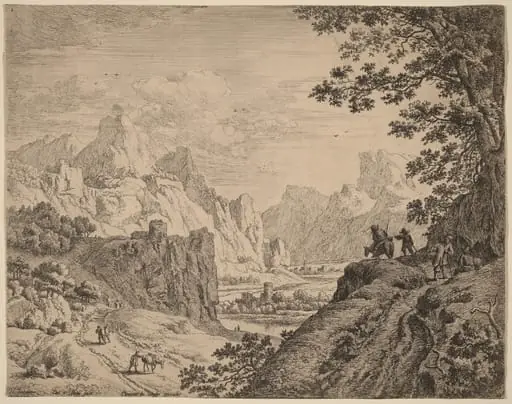
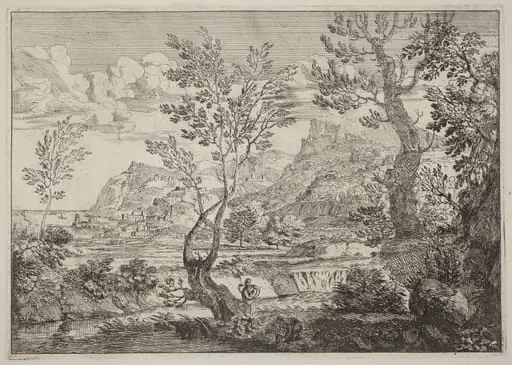
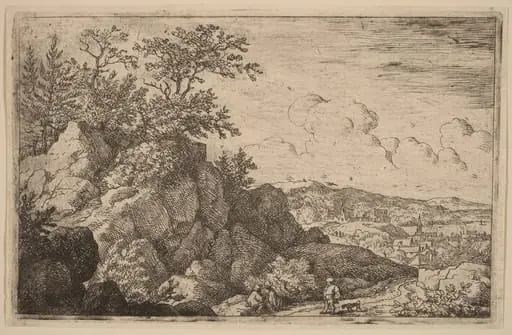
Georg Eisenmann’s 1772 etching presents a stark, monochrome view of a mountainous terrain bisected by a sinuous river. In the distance, a modest group of structures, interpreted as a monastery, clings to a hillside. Along the riverbank, a small procession of figures and livestock moves, while a solitary individual stands at the water’s edge, anchoring the composition.
Subject & Meaning
The work juxtaposes the grandeur of untamed nature with human activity, suggesting a dialogue between the spiritual refuge of the monastery and the everyday labor of the travelers. The lone figure by the water may symbolize contemplation amid the surrounding bustle, while the collective movement hints at pilgrimage or trade routes threading through remote landscapes.
Technique & Style
Executed through traditional etching, Eisenmann incised fine lines into a copper plate, allowing ink to fill the incised grooves before pressing onto paper. The delicate hatching renders the rugged texture of the cliffs, while broader, smoother strokes convey the river’s surface. This approach, typical of late‑18th‑century printmaking, balances detailed foregrounds with atmospheric depth.
History & Provenance
Created in 1772, the print reflects Eisenmann’s engagement with topographical subjects popular among Enlightenment-era artists. While specific ownership records are scarce, the piece has circulated among collections focusing on German printmaking of the period, illustrating the broader interest in documenting remote European scenery through reproducible media.
Own this work as a print
Artist & collection