Artwork
Mountainous Riverscape with Figures
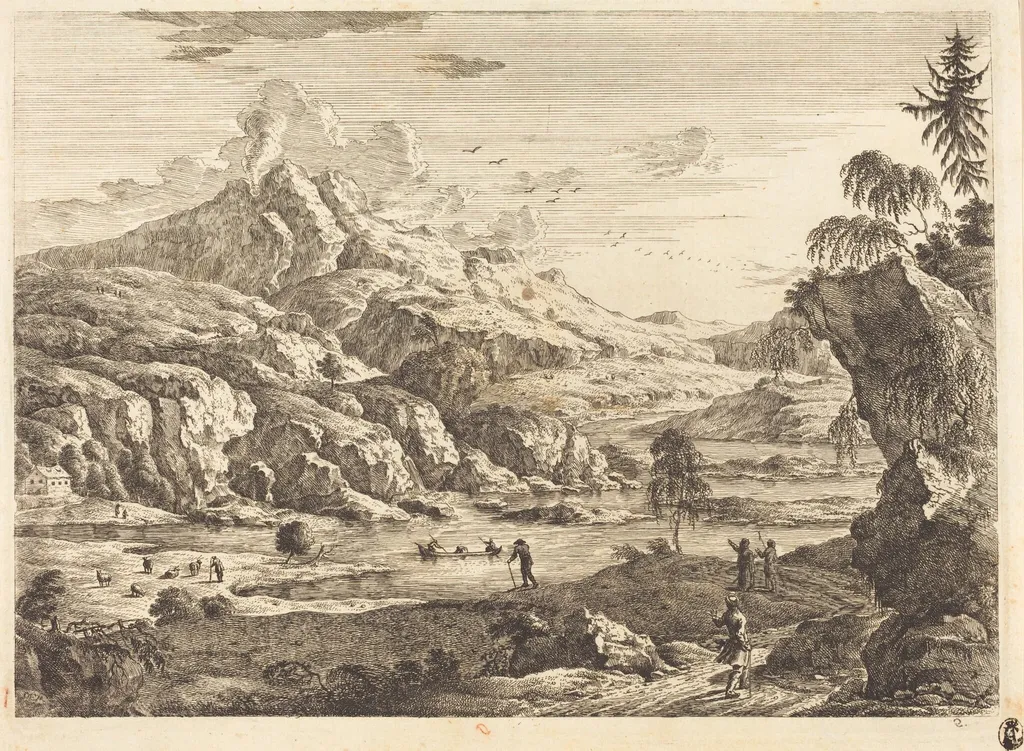
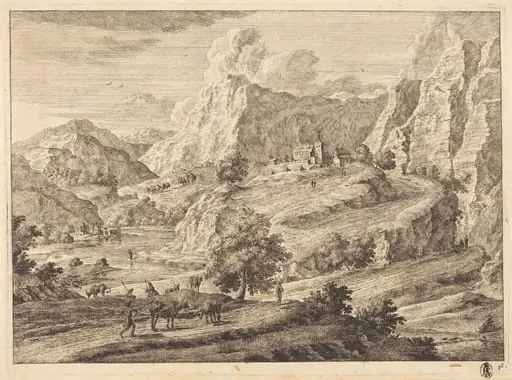
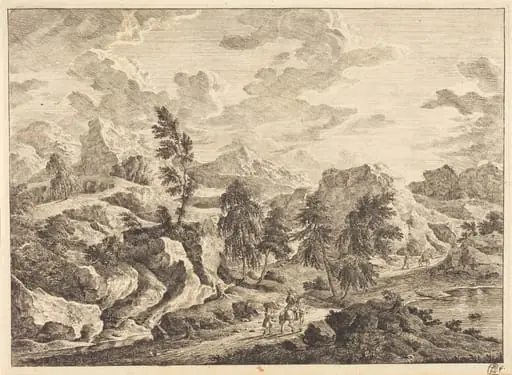
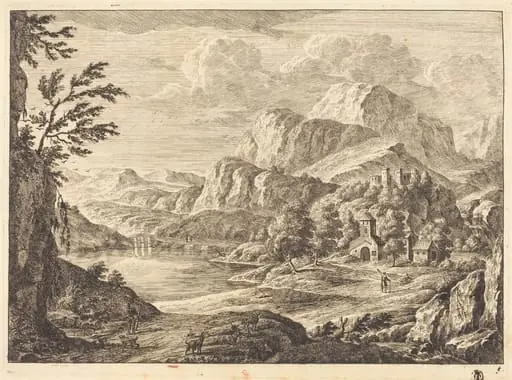
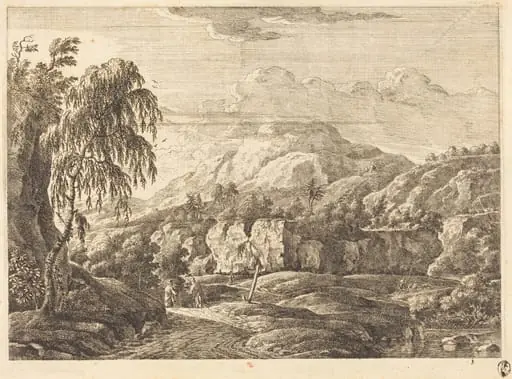
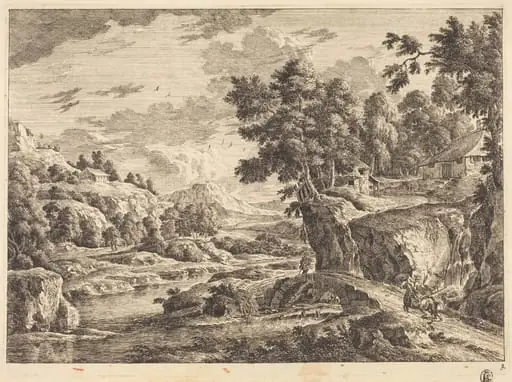
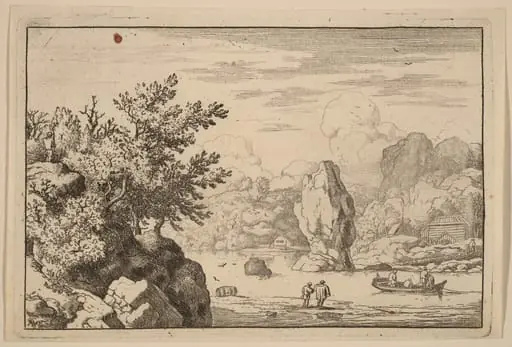
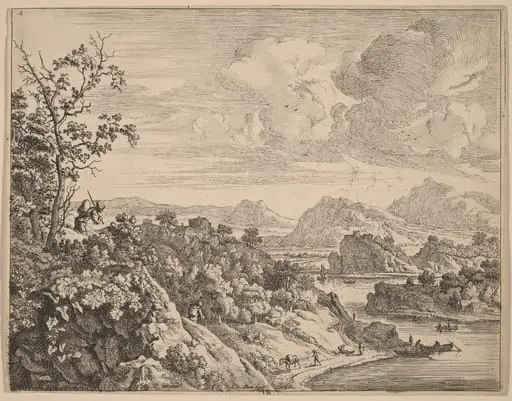
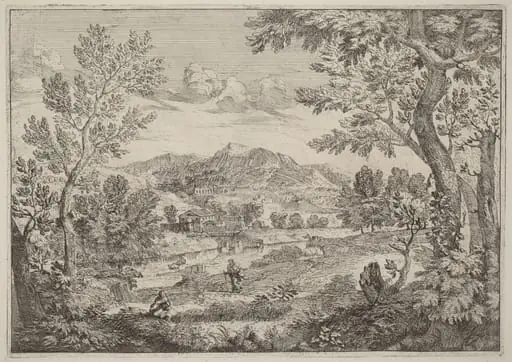
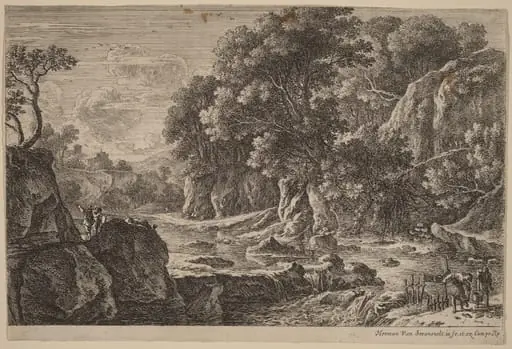
Mountainous Riverscape with Figures is an ink print by the Baroque artist Georg Eisenmann. It dates from 1772 and is held in the collection of the National Gallery of Art.
About this work
Overview
The composition is dominated by the river’s turbulent surface, flanked by steep, tree‑lined slopes that recede into a distant mountain range.
Georg Eisenmann’s 1772 etching presents a dramatic river valley where a swift watercourse carves its way through craggy hills. The composition is dominated by the river’s turbulent surface, flanked by steep, tree‑lined slopes that recede into a distant mountain range. Human figures are interspersed along the banks and in modest boats, adding narrative interest without overwhelming the natural setting.
Subject & Meaning
The work depicts a bustling riverscape that juxtaposes the power of nature with modest human activity. Fishermen and travelers occupy the shoreline, suggesting a scene of commerce or passage, while the imposing terrain underscores the environment’s dominance. The balance between movement in the water and the static, rugged landscape invites reflection on humanity’s relationship to untamed geography.
Technique & Style
Executed in etching, Eisenmann employed delicate, intersecting lines to render the texture of rock faces, foliage, and rippling water. The fine hatching creates tonal variation, giving depth to the cliffs and a sense of motion to the river’s surface. The overall style combines precise draftsmanship with a lively, almost theatrical arrangement of figures and natural elements.
History & Provenance
Created in 1772, the print belongs to the late‑Baroque period when German printmakers frequently explored topographical subjects. Eisenmann, known for his landscape studies, produced this piece as part of a series documenting regional scenery. The etching has passed through several private collections before entering a public museum inventory, where it serves as an example of 18th‑century German printmaking.
Artist & collection