Artwork
The Holy Family with Mary Magdalen
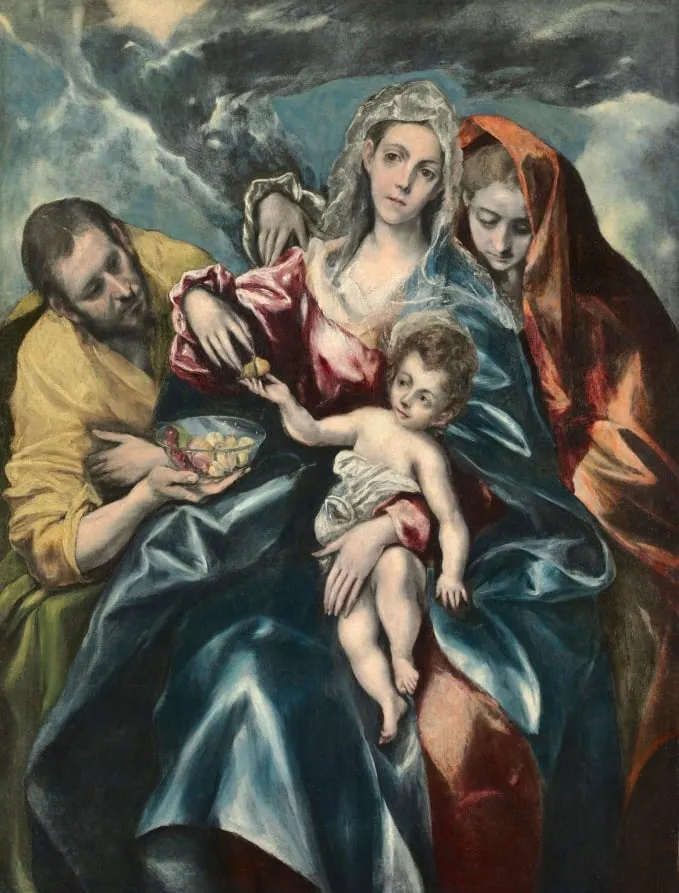
The Holy Family with Mary Magdalen is an unspecified painting by the Mannerist artist El Greco. It dates from 1592 and is held in the collection of the Cleveland Museum of Art. The painting gathers the Virgin Mary, Joseph, the infant Christ, and Mary Magdalene in a compact, radiant grouping.
About this work
Overview
The painting gathers the Virgin Mary, Joseph, the infant Christ, and Mary Magdalene in a compact, radiant grouping. El Greco renders the figures with elongated, almost flame‑like bodies, set against an indistinct background that emphasizes their spiritual presence over any realistic space. The palette is striking, combining vivid greens and pinks that heighten the work’s otherworldly atmosphere.
Subject & Meaning
She supports her son while her distant gaze suggests an awareness of his future suffering.
Central to the composition is Mary’s dual role as mother and intercessor. She supports her son while her distant gaze suggests an awareness of his future suffering. The infant holds fruit presented by Joseph; each piece carries symbolic weight—an apple alluding to humanity’s fall, cherries evoking Christ’s blood, peaches signifying salvation, and pears representing the sweetness of his virtue. Mary Magdalene’s inclusion reinforces themes of repentance and redemption.
Technique & Style
El Greco abandons conventional perspective, opting for a fluid, almost weightless arrangement that draws the viewer’s eye toward the figures’ inner light. The elongated forms stretch upward, echoing the artist’s signature mannerist elongation. His use of bold, electric colors—acidic greens and hot pinks—creates a visual tension that contrasts with the muted, ambiguous setting, reinforcing the painting’s spiritual focus rather than its material reality.
Context
Created during El Greco’s mature period, the work reflects his ongoing interest in expressing intense religiosity through unconventional visual means. The composition aligns with Counter‑Reformation ideals, emphasizing the sanctity of the Holy Family and the mediating role of the Virgin. By integrating symbolic fruit and a contemplative Mary, the painting engages viewers in a meditative experience that transcends literal narrative.
Artist & collection
Artist
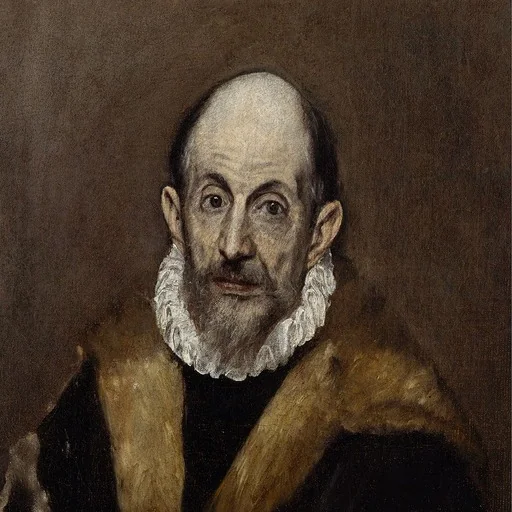
Doménikos Theotokópoulos was born in 1541 in Candia (modern Heraklion), the capital of Venetian-ruled Crete, where he was trained in the post-Byzantine tradition of icon painting.

 The Holy Family
 The Rest on The Flight into Egypt
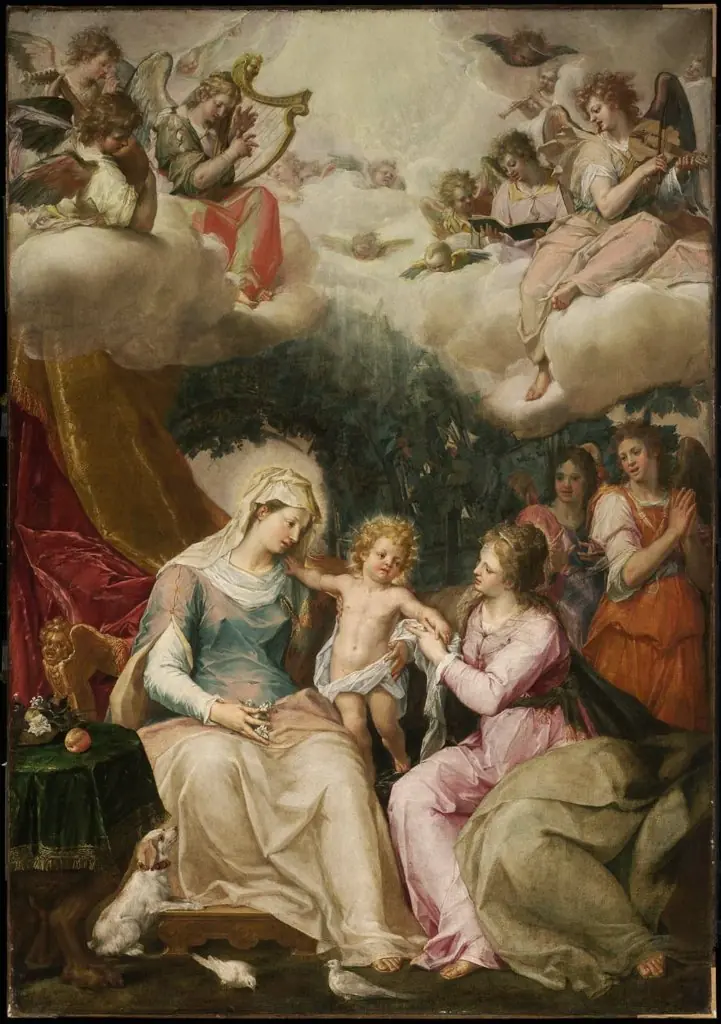 The Mystic Marriage of Saint Catherine
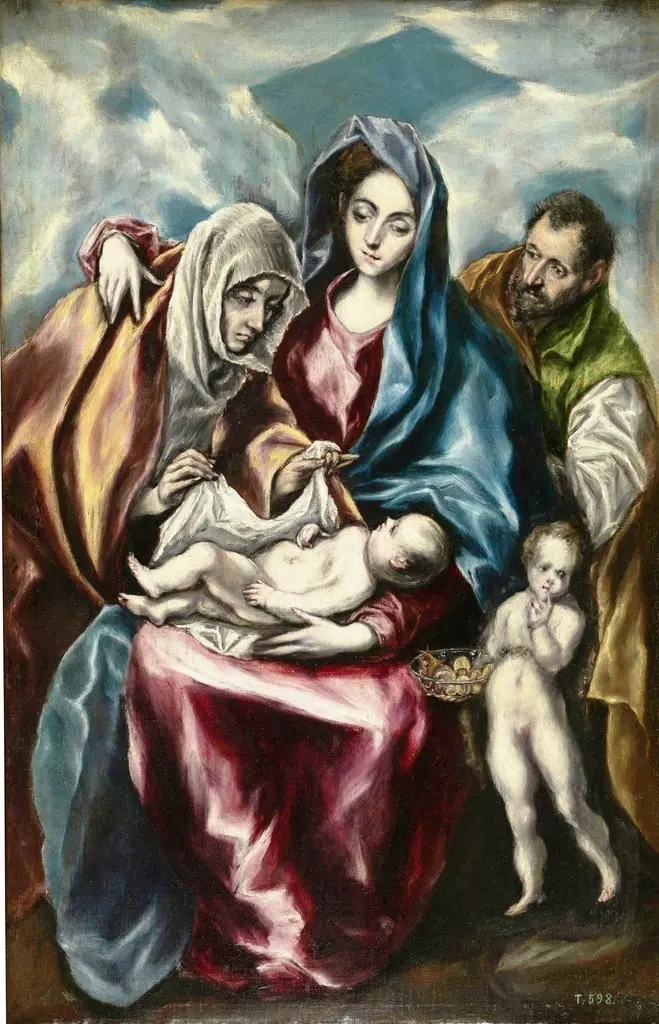 Holy Family with Saints
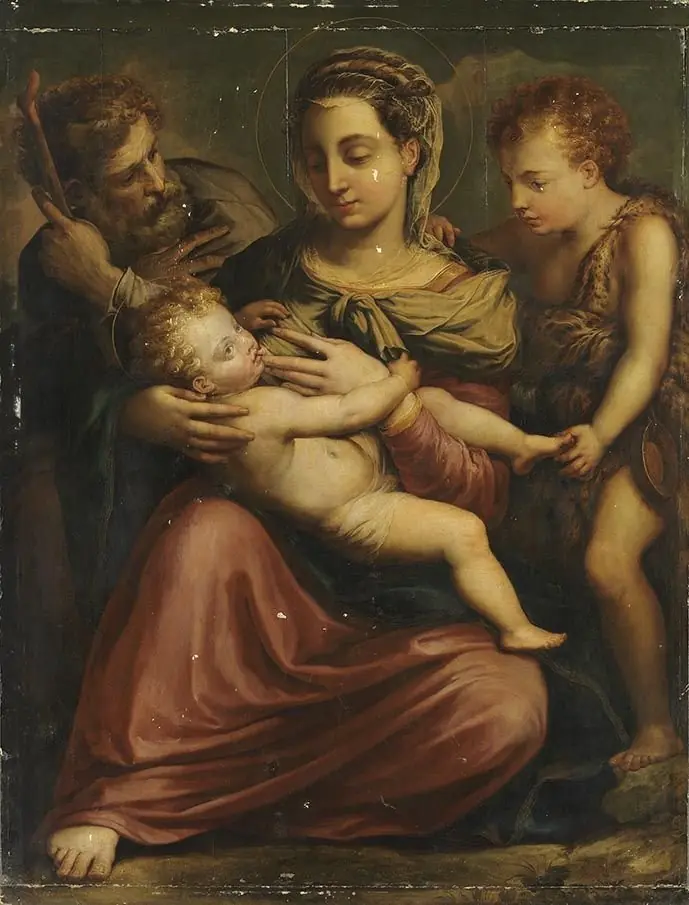 Holy Family with John the Baptist as child
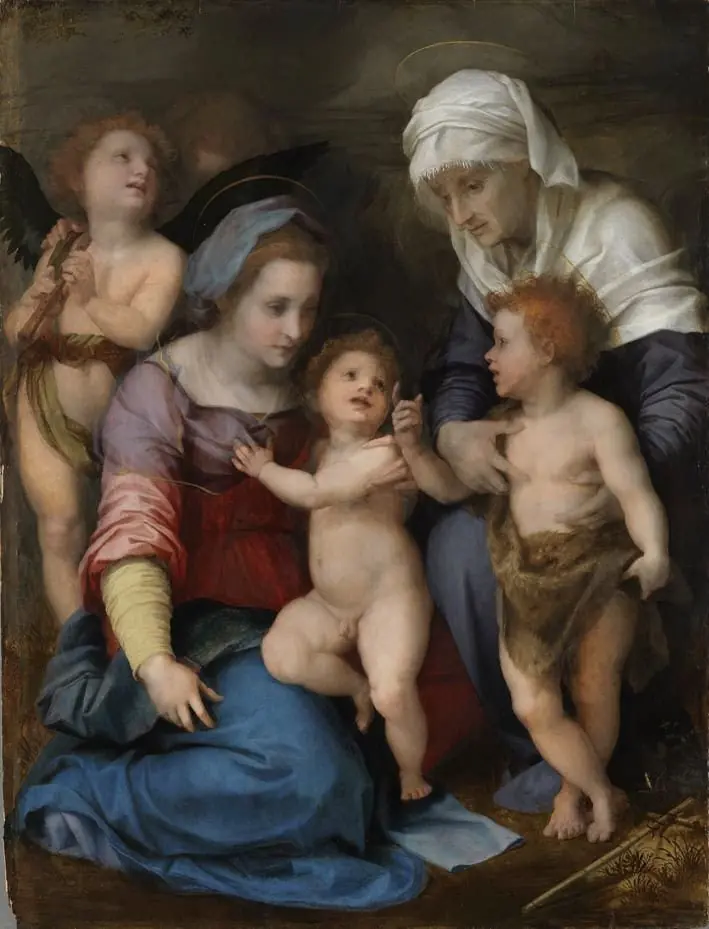 The Holy Family
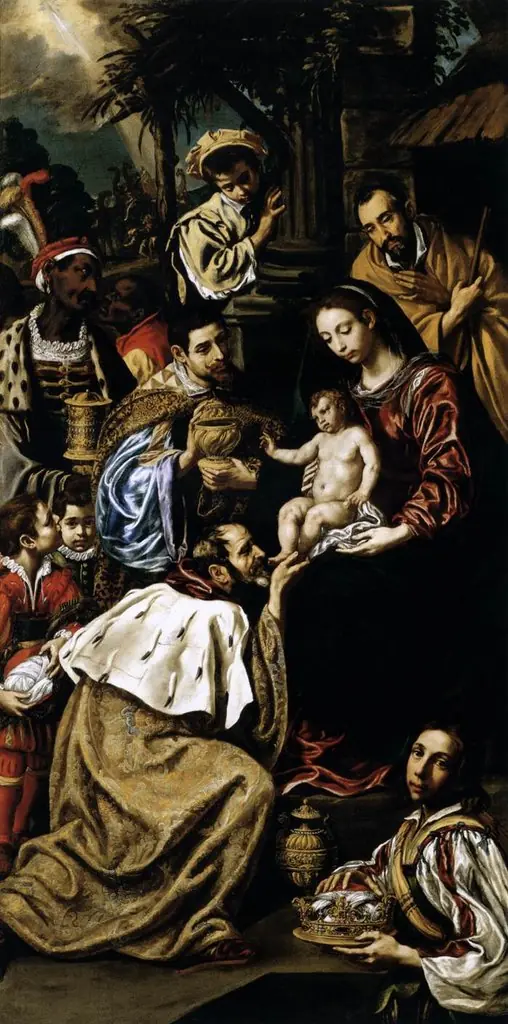 The Adoration of the Magi
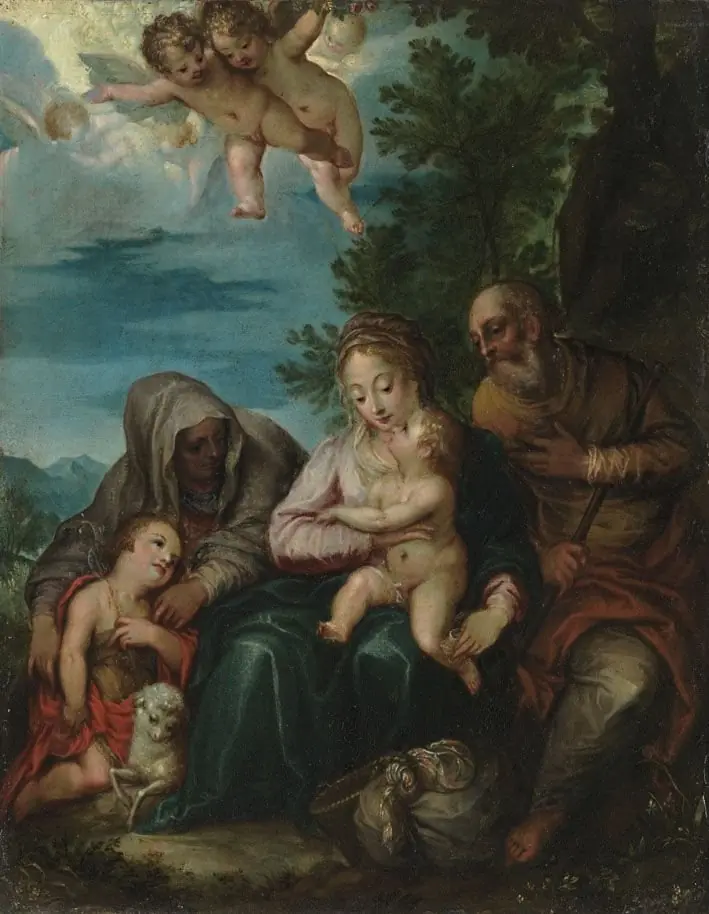 Heilige Familie
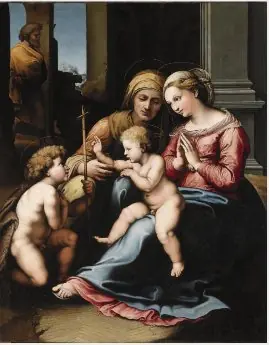 The Holy Family with Saints John the Baptist and Elizabeth
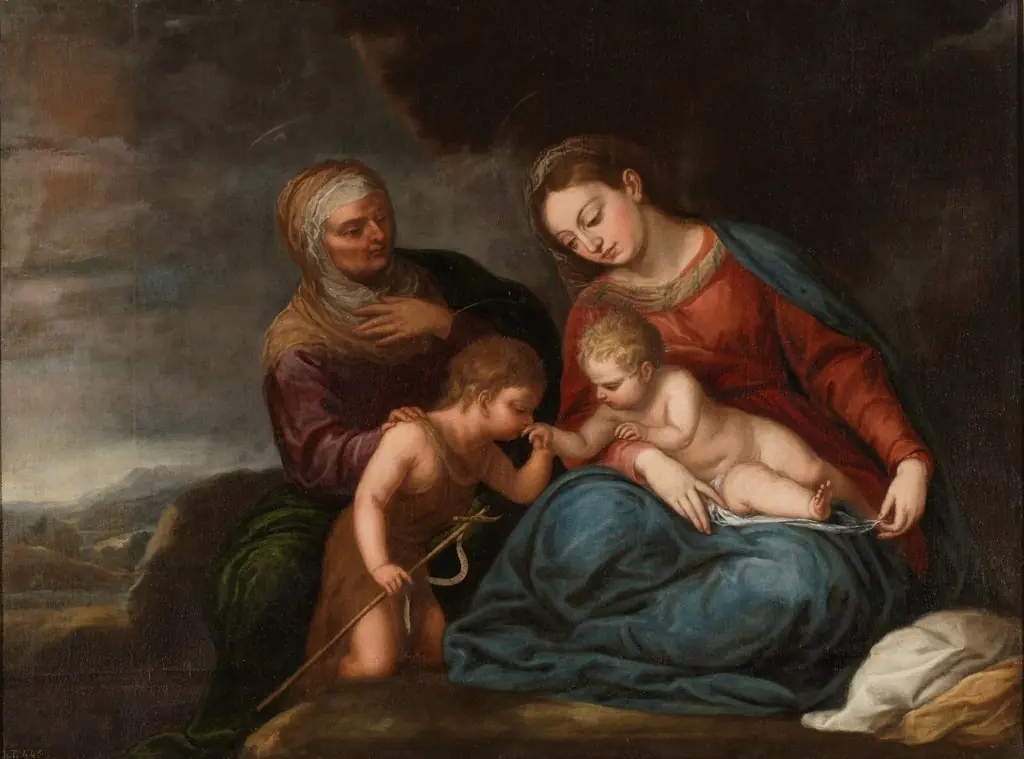 The Virgin and Child with Saints Elizabeth and John
 Die Heilige Familie mit Anna, Elisabeth, Johannes und einem Engel
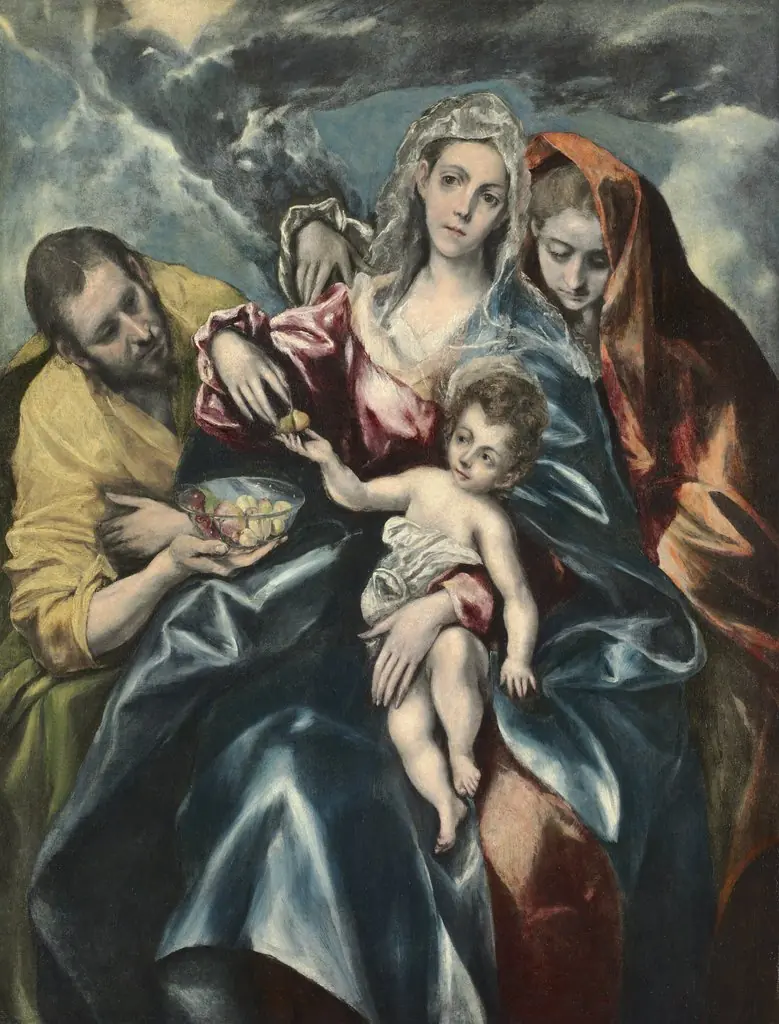 The Holy Family with Mary Magdalen