Artwork
The Mystic Marriage of Saint Catherine
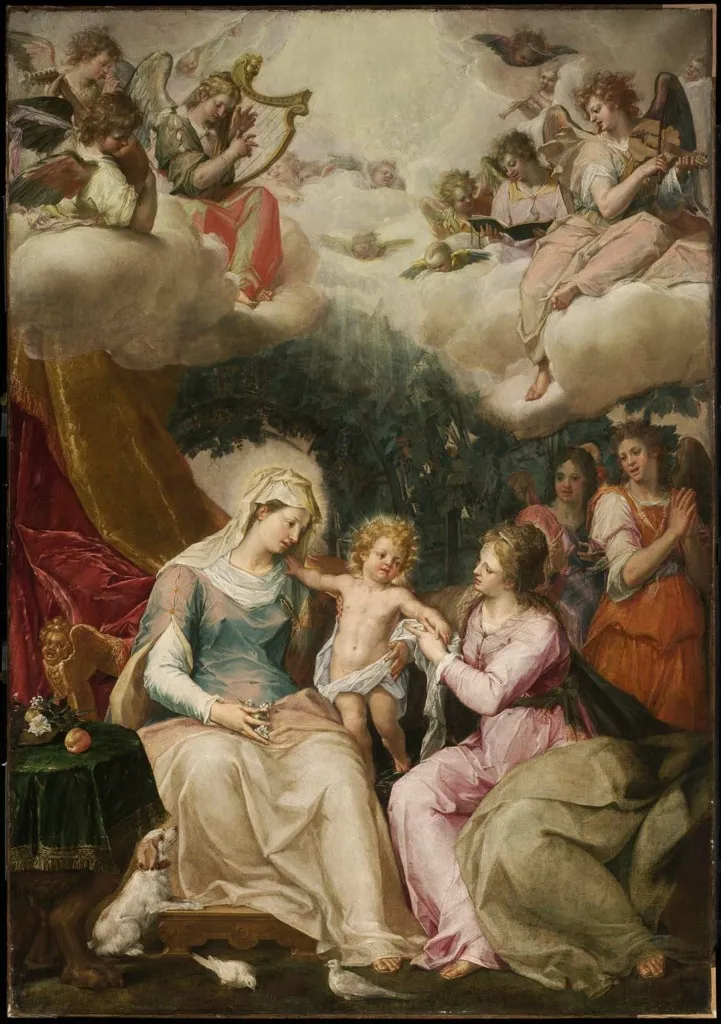
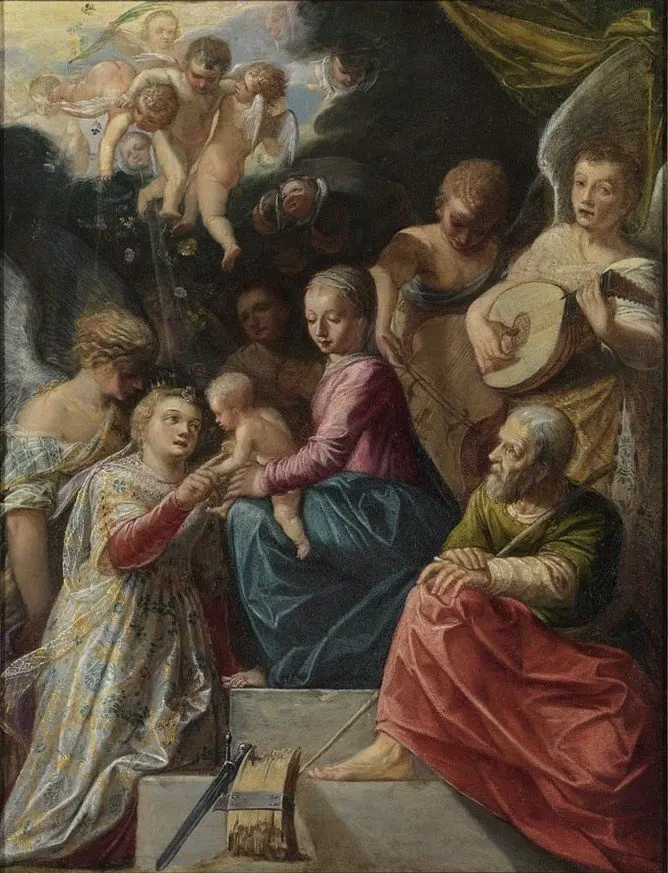
The Mystic Marriage of Saint Catherine is an oil painting by the Mannerist artist Peter Candid. It dates from 1596 and is held in the collection of the Museum of Fine Arts Boston.
About this work
Overview
The composition centers on a spiritual encounter between Saint Catherine and the Christ Child, rendered with refined elegance and a restrained palette.
Painted in 1596, this oil on panel work by Peter Candid presents a devotional scene rooted in Catholic mysticism. Candid, originally from Flanders, had trained in Italy and later served the Bavarian court, bringing a synthesis of Italian Mannerist conventions to northern European religious art. The composition centers on a spiritual encounter between Saint Catherine and the Christ Child, rendered with refined elegance and a restrained palette.
Subject & Meaning
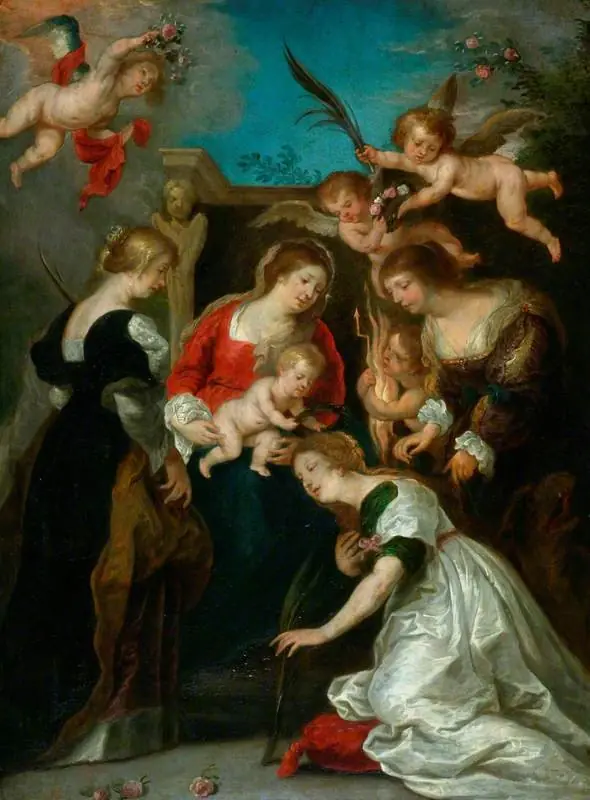
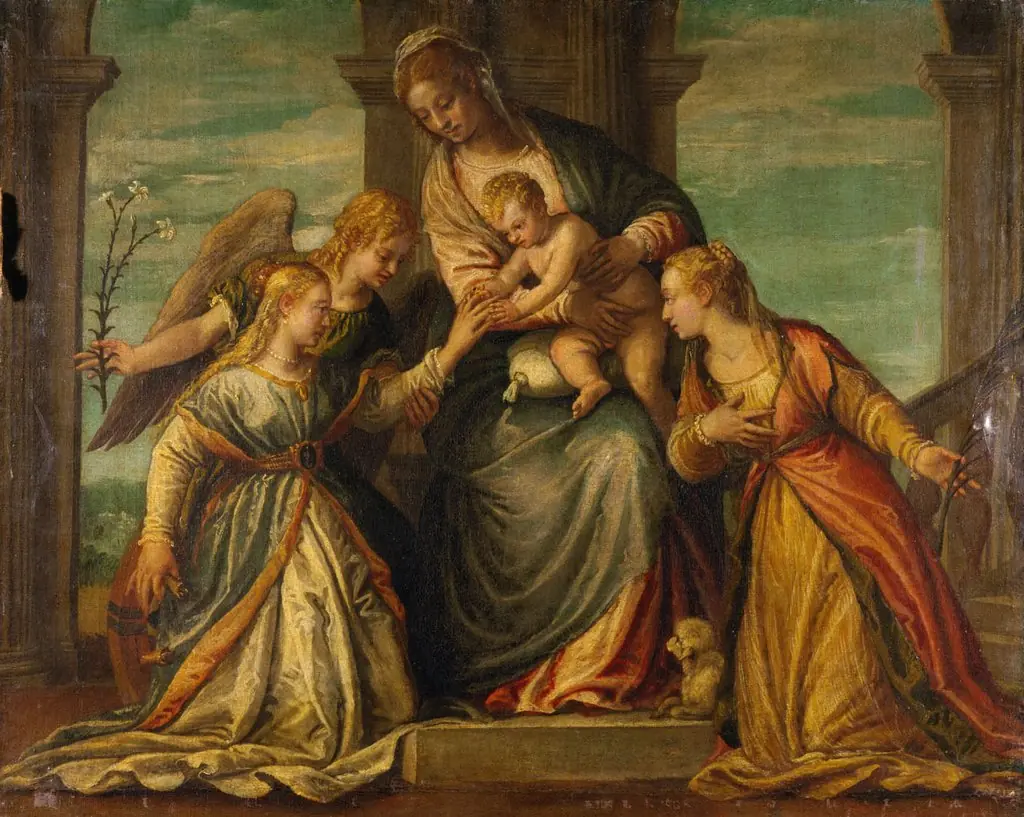
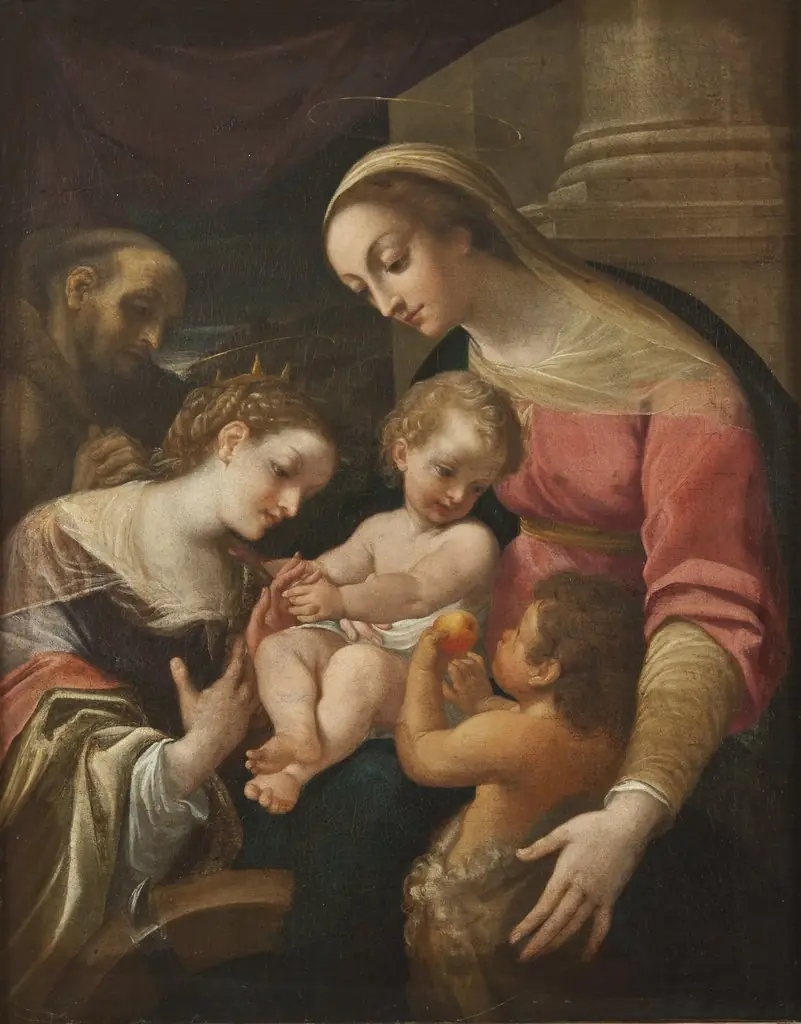
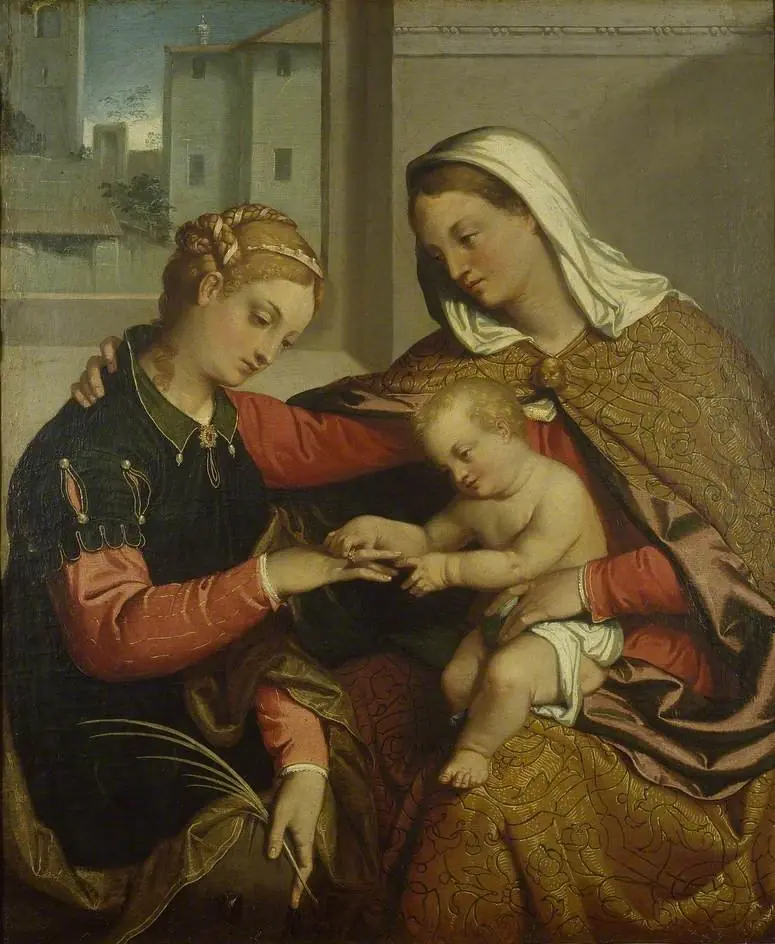
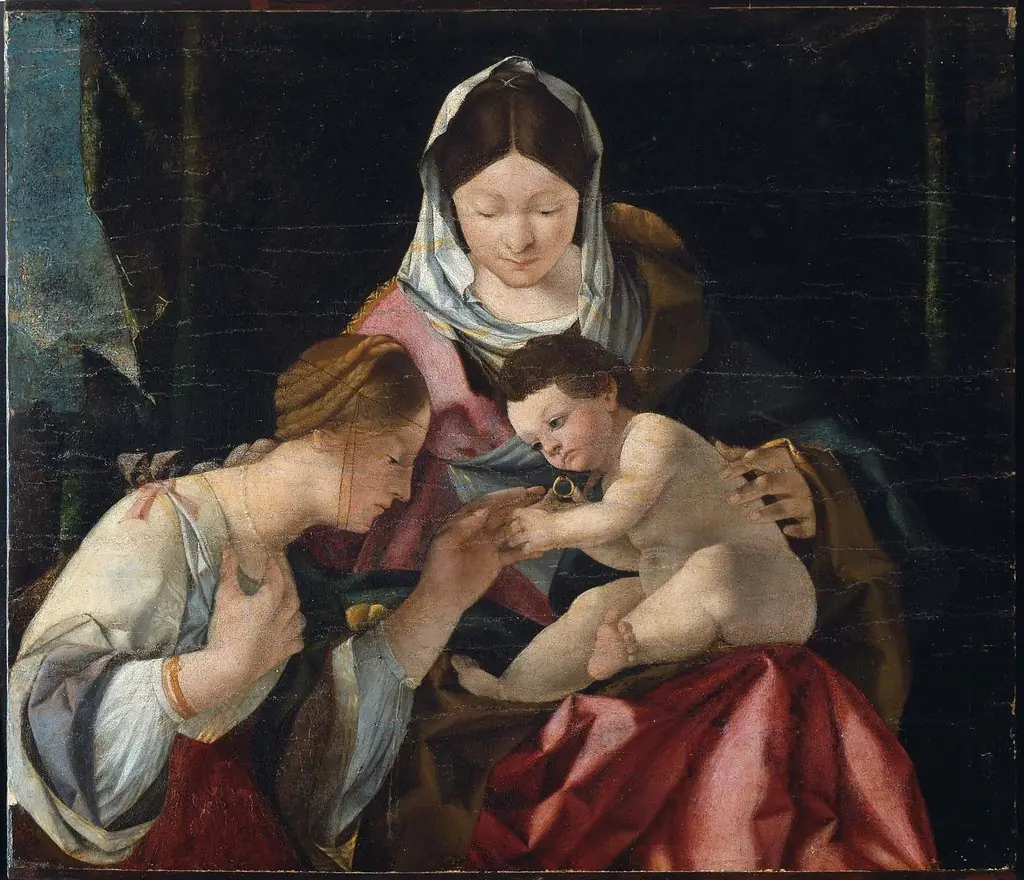
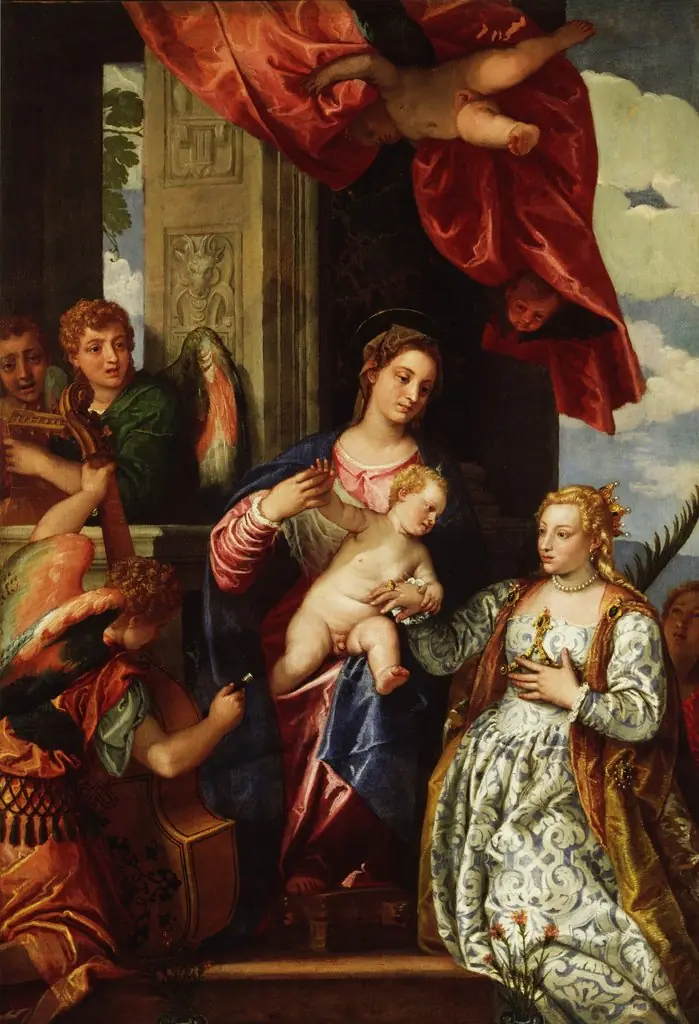
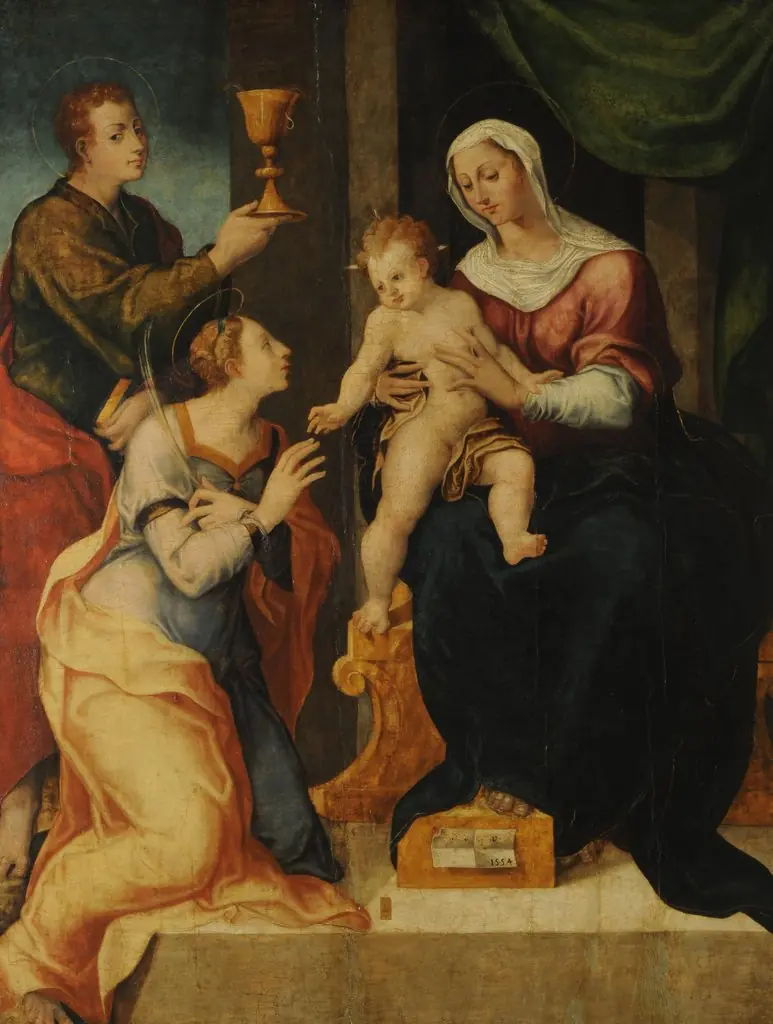
The painting illustrates the legendary mystical marriage of Saint Catherine of Alexandria to the infant Christ, a motif popular during the Counter-Reformation to emphasize divine grace and virgin devotion. Catherine, identified by her attribute of the broken wheel, receives a ring from the Christ Child, symbolizing her spiritual betrothal to heaven. Surrounding figures—other saints and angels—reinforce the celestial nature of the event, framing it as a sacred covenant beyond earthly bonds.
Technique & Style
Candid employs smooth, blended brushwork to achieve a soft, ethereal quality, characteristic of late Mannerism. Delicate chiaroscuro models the figures with subtle gradations of light, lifting them from a hazy, cloud-filled sky. The palette favors pale blues, pinks, and whites, accented by a single red cloak to draw attention without disrupting the harmony. The figures are elongated and poised, their gestures refined, reflecting Italianate influences adapted to northern sensibilities.
History & Provenance
Commissioned during Candid’s tenure at the Bavarian court under Duke Maximilian I, the painting likely adorned a private chapel or devotional space within the ducal residence. Its creation aligns with the Wittelsbach family’s efforts to promote Catholic piety in response to Protestant reforms. The work remained in Bavarian collections for centuries, documented in court inventories, before entering public ownership in the 19th century.
Context
Produced amid the religious tensions of the late 16th century, the painting reflects the Catholic Church’s emphasis on mystical experiences and saintly intercession. The imagery of divine marriage served as both theological instruction and emotional appeal, encouraging contemplation among the faithful. Candid’s fusion of Florentine grace with northern detail catered to the tastes of a court seeking to align artistic expression with Counter-Reformation ideals.
Legacy
Though not widely known outside regional collections, the painting exemplifies the transnational flow of artistic ideas in early modern Europe. Candid’s synthesis of Italian Mannerism and northern precision influenced courtly religious art in Bavaria. Its quiet intensity and technical restraint mark it as a thoughtful contribution to the devotional tradition, preserving a moment of spiritual symbolism through careful, understated execution.
Artist & collection

Artist
Peter de Witte, known in Italy as Pietro Candido and in Bavaria as Peter Candid (c.

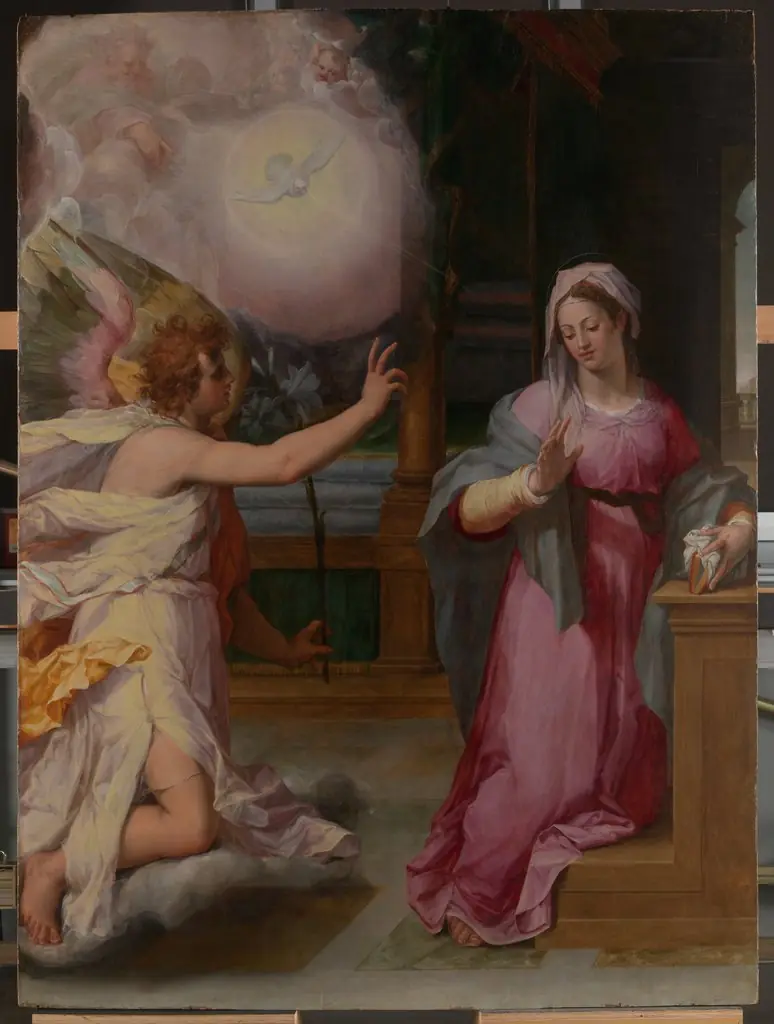 The Annunciation
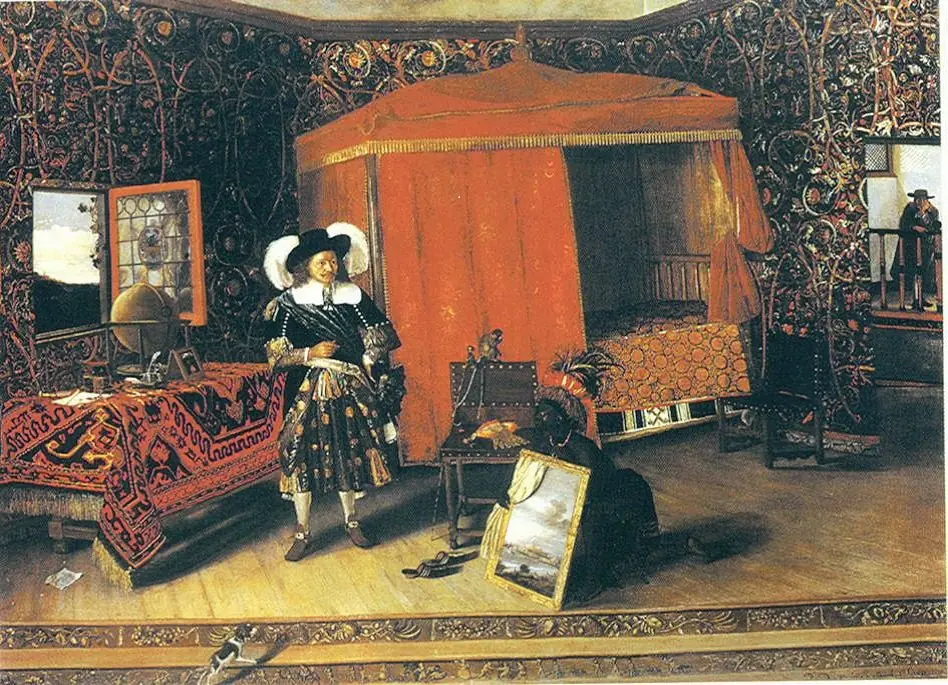 Portrait of Dirck Wilre with a Servant
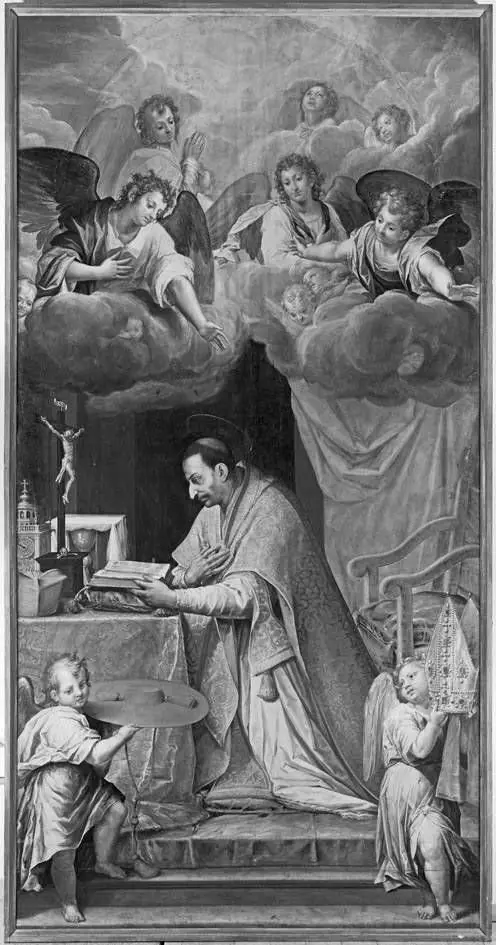 Der hl. Karl Borromäus im Gebet
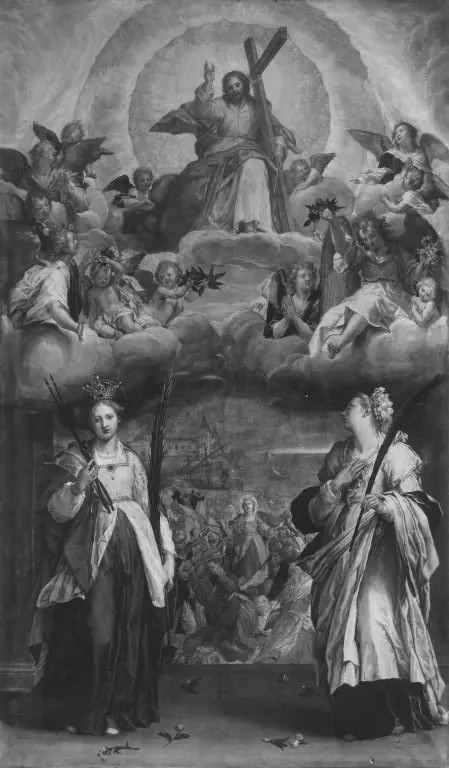 Die hll. Ursula und Cordula
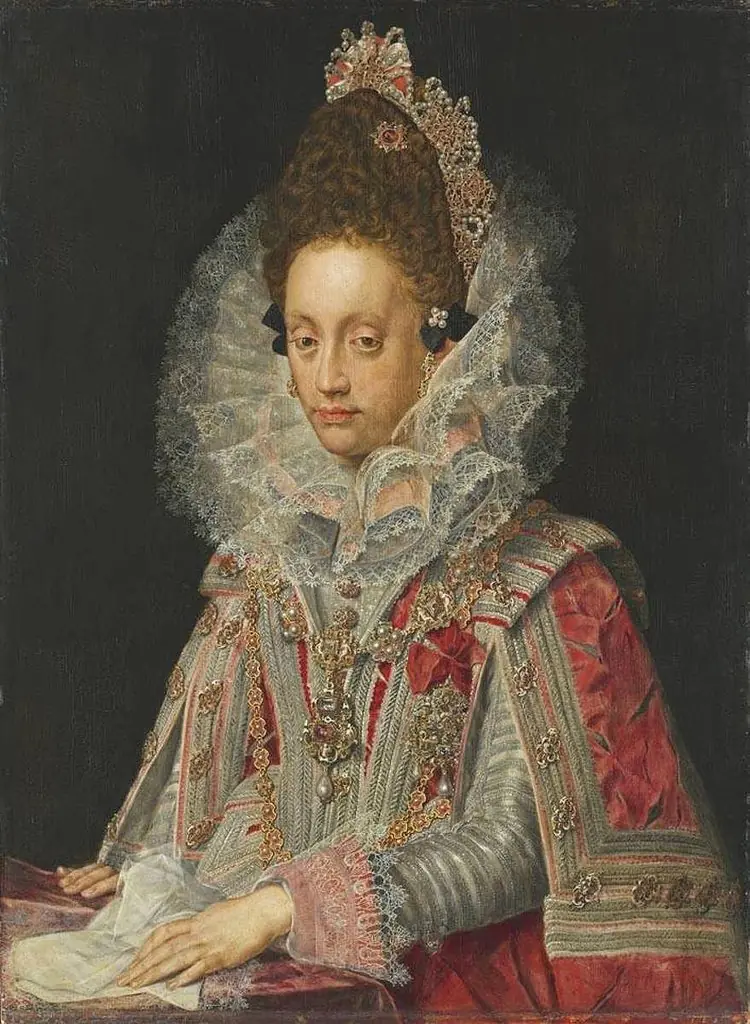 Bildnis der Herzogin Magdalena von Bayern, Gemahlin Herzog Wolfgang Wilhelms von Pfalz-Neuburg, im Hochzeitsstaat (1597-1628)
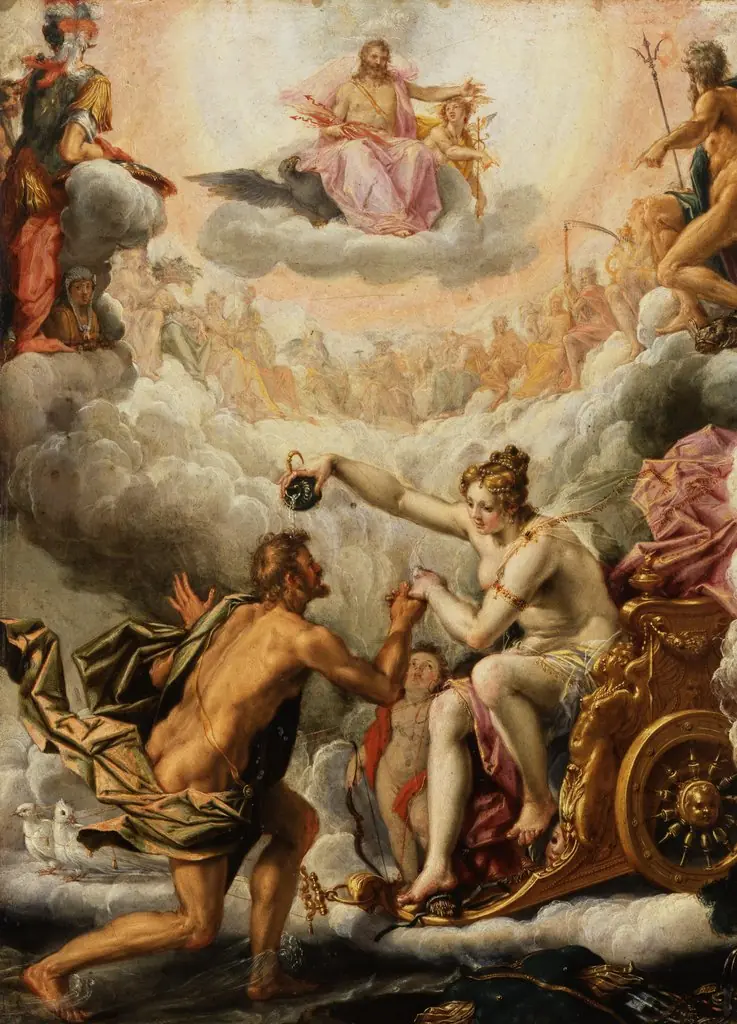 Aeneas wird von Venus in den Olymp aufgenommen
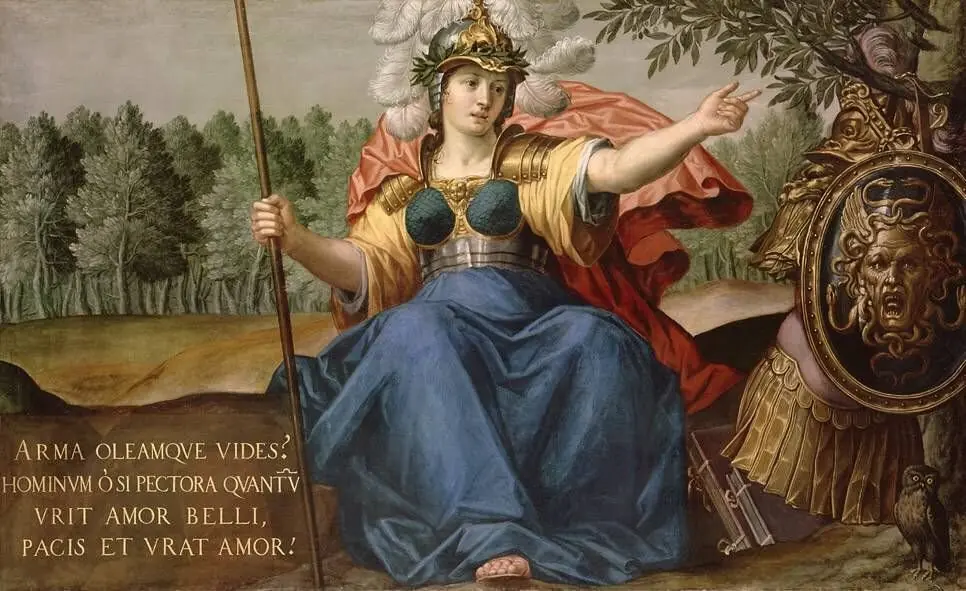 Minerva als Friedensbringerin (Werkstatt)
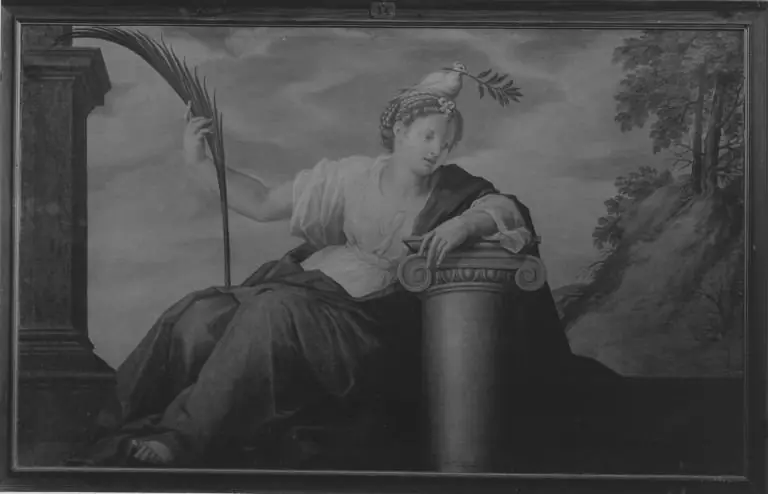 Securitas Publica (Werkstatt)