Artwork
Hanging card advertising the programme for the Empire Theatre, Glasgow, for the week commencing on Monday 4 February, 1963
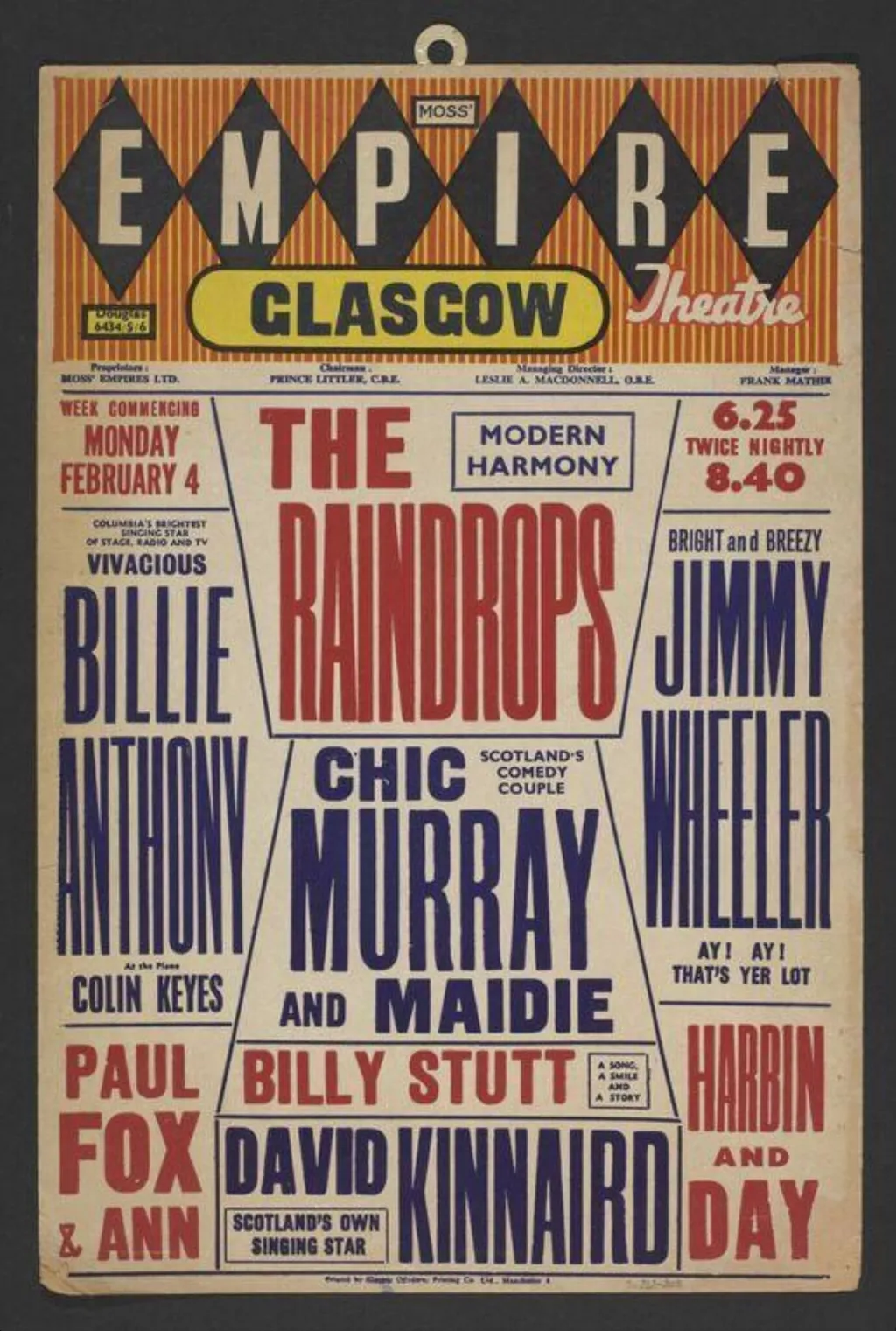
Hanging card advertising the programme for the Empire Theatre, Glasgow, for the week commencing on Monday 4 February, 1963 is a poster by Electric Modern Printing Co. Ltd. It dates from 1963 and is held in the collection of the Victoria and Albert Museum. This poster advertised the weekly variety programme at Glasgow’s Empire Theatre in February 1963.
About this work
This bright, bold poster plugged a Glasgow theatre’s weekly lineup in 1963. It’s a snapshot of Variety shows—lots of acts, two shows a night, and the headliner’s name at the top.
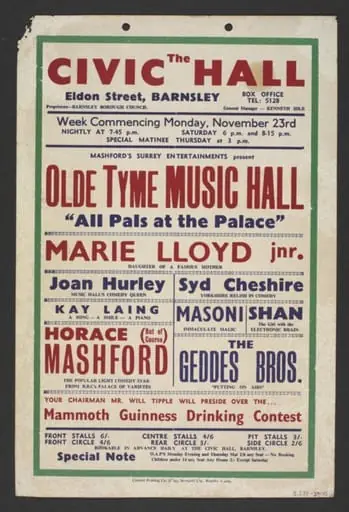
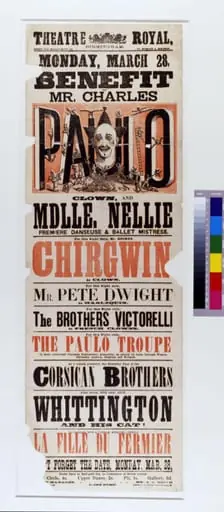
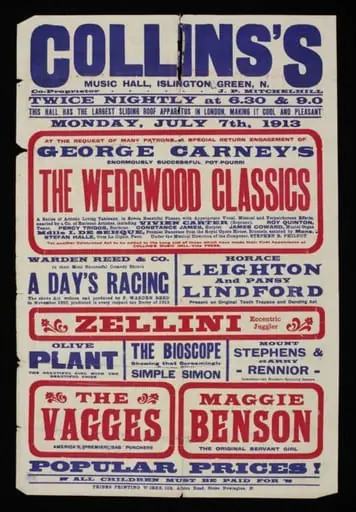
Before TV took over, towns across Britain had these halls. Stars earned big paychecks, and the top name always “topped the bill.”
Check out the Victoria and Albert Museum for more on these eye-catching posters.
Overview
Designed as a hanging card, it listed multiple acts performing twice nightly, reflecting the traditional structure of British variety theatre.
This poster advertised the weekly variety programme at Glasgow’s Empire Theatre in February 1963. Designed as a hanging card, it listed multiple acts performing twice nightly, reflecting the traditional structure of British variety theatre. Its bold typography and clear hierarchy emphasized the headliner, a standard practice in the genre. Though television was reshaping entertainment, such posters still circulated in regional theatres, particularly in Scotland, where variety retained a loyal audience.
Subject & Meaning
The poster promoted a lineup of live performers typical of post-war British variety: singers, comedians, and musical duos. Leading the bill was Billie Anthony, a Scottish recording artist, alongside the comedic pair Chic Murray and Maidie. Their act played on physical contrast—Murray’s height and Maidie’s diminutive stature—enhancing their humor through visual and verbal interplay. The poster’s function was practical: to inform and attract audiences to a live, multi-act evening of entertainment.
Technique & Style
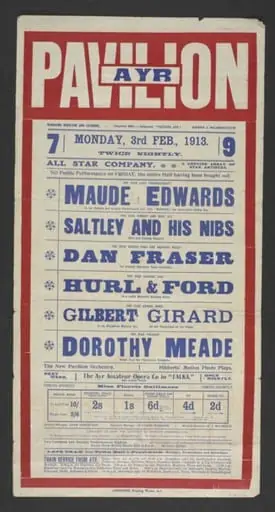
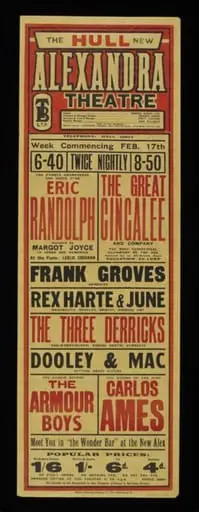
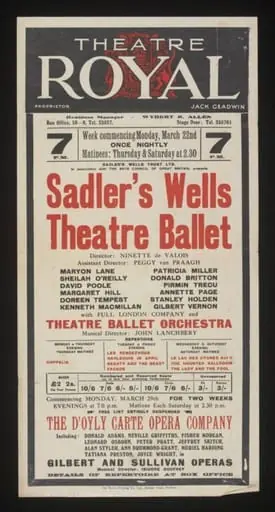
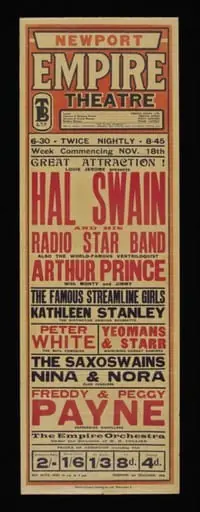
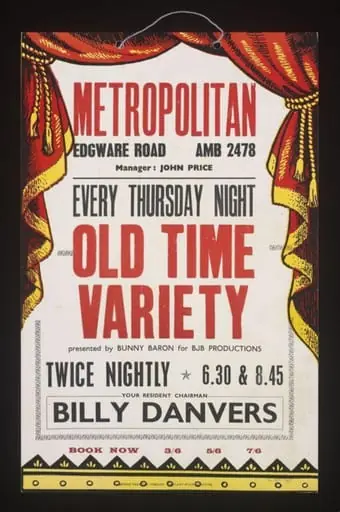
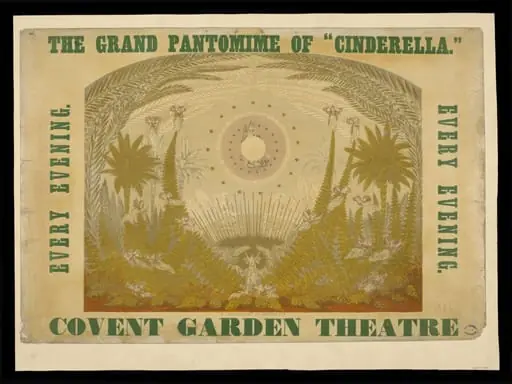
The design relied on strong typographic hierarchy, with the headliner’s name in largest type at the top, followed by descending sizes for supporting acts. Minimal imagery was used; the focus remained on text, arranged in clean, aligned columns. Bright colors and bold sans-serif fonts ensured legibility from a distance, suited to public display. This typographic approach was standard for variety posters, prioritizing clarity and immediate recognition over illustration or elaborate graphics.
History & Provenance
Produced for the Empire Theatre, part of the Moss Empires chain, this poster dates from a period when variety theatres were declining due to television’s rise. Yet in cities like Glasgow and seaside resorts, live variety persisted into the 1960s by adapting to new stars—radio personalities, emerging pop singers, and TV comedians. The poster’s survival suggests it was archived locally, possibly by the theatre or a collector, preserving a record of a fading cultural form.
Context
By 1963, most British towns had lost their music halls or converted them to cinemas. Variety theatre clung on in urban centers and coastal resorts, where audiences still sought live performance. The inclusion of radio and emerging pop figures like Billie Anthony signaled an effort to remain relevant. The format—multiple acts, two shows nightly—was a legacy of 19th-century music hall, now adapted to a media-saturated age.
Legacy
This poster represents one of the last generations of variety theatre advertising before the genre largely vanished from mainstream British culture. It preserves the names and formats of performers who bridged music hall, radio, and early television. Surviving examples like this are now historical artifacts, offering insight into the transition from live performance to broadcast media and the regional endurance of popular entertainment traditions.
Artist & collection
Artist
Electric Modern Printing Co. Ltd
Ever walked past a theatre poster that made you do a double take? The Electric Modern Printing Co. Ltd. in Glasgow cranked out posters like this one for the Empire Theatre in ’63—bold colors, big fonts, just enough…