Artwork
Madonna
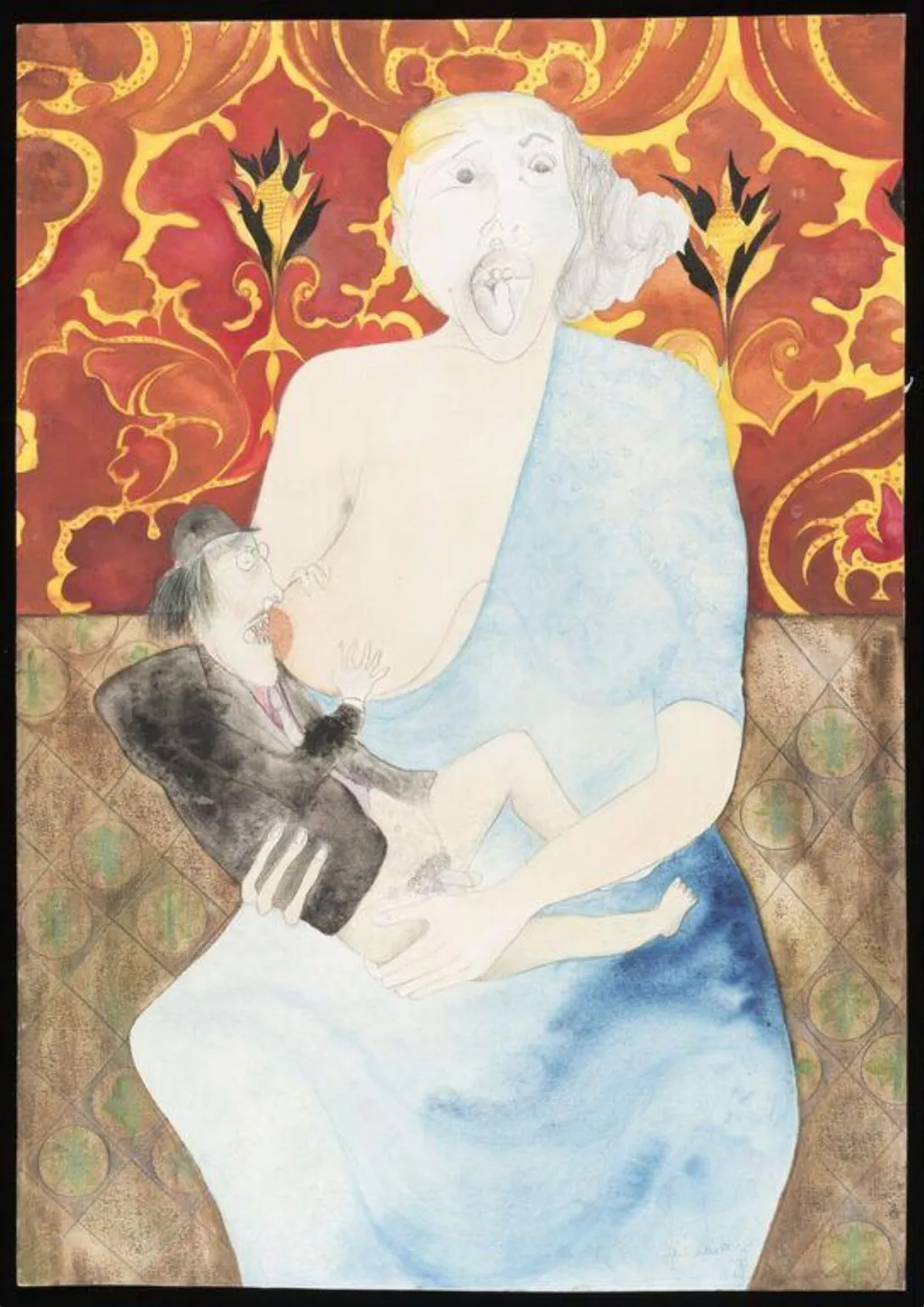
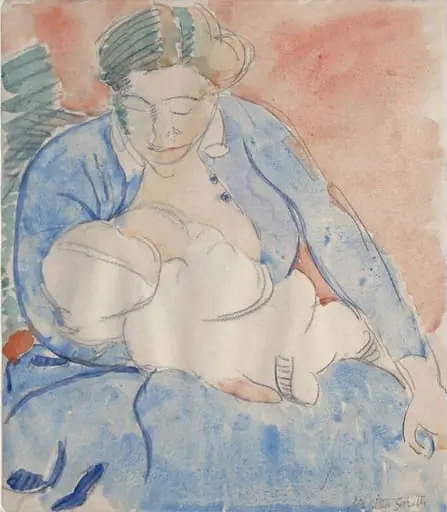
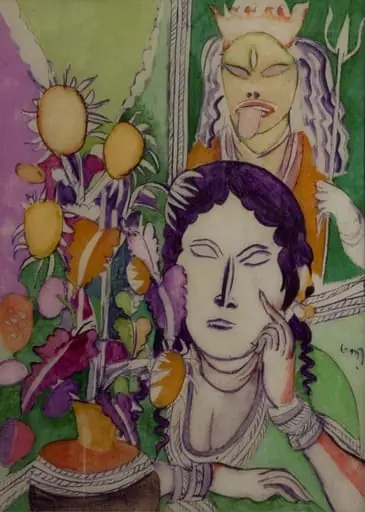
Madonna is a watercolor work on paper by the Contemporary Abstract artist Elena Samperi. It dates from 1979 and is held in the collection of the Victoria and Albert Museum.
About this work
Overview
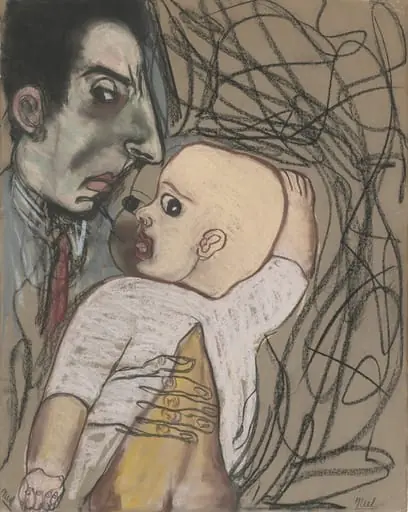
Elena Samperi created this 1979 watercolour as a quiet yet unsettling exploration of care and dependency. The work depicts a seated woman nursing an adult-sized infant, rendered in delicate washes of pigment. The composition balances tenderness with surreal dissonance, using vivid color and pattern to evoke an emotional atmosphere rather than a literal narrative.
Subject & Meaning
The central figure, a woman in blue, cradles a miniature adult male with sharpened teeth, suggesting a distortion of maternal roles. The man behind her, reaching toward the pair, introduces an element of intrusion or observation. The scene resists clear interpretation, inviting contemplation of nurture, power, and the boundaries between caregiver and dependent.
Technique & Style
Samperi employed transparent watercolour to build soft, layered tones, allowing the paper to show through in areas of the woman’s dress and the floor tiles. Gold swirls in the background contrast with the deep red wall, creating a decorative yet hypnotic space. The figures are rendered with simplified forms, emphasizing emotional tone over anatomical precision.
History & Provenance
The painting entered the collection of the Victoria and Albert Museum in the late 20th century, acquired as part of a broader interest in contemporary British watercolours. Its provenance traces back to Samperi’s personal exhibition history in the 1980s, though little public documentation exists about its initial reception or creation context.
Context
Created during a period of renewed interest in feminist and psychological themes in British art, the work reflects broader cultural inquiries into domesticity and the unconscious. Samperi’s use of surreal imagery aligns with artists exploring the emotional undercurrents of everyday rituals, though her approach remains distinct in its lyrical restraint.
Legacy
Though not widely reproduced, the painting has been cited in academic discussions of postwar British watercolour and feminist iconography. Its quiet strangeness continues to resonate in exhibitions focusing on the uncanny in domestic scenes, offering a subtle counterpoint to more overtly political works of its era.
Artist & collection
Artist
Elena Samperi liked to paint with watercolors while sitting outside, even when the wind blew.