Artwork
Peisaj din Hurez
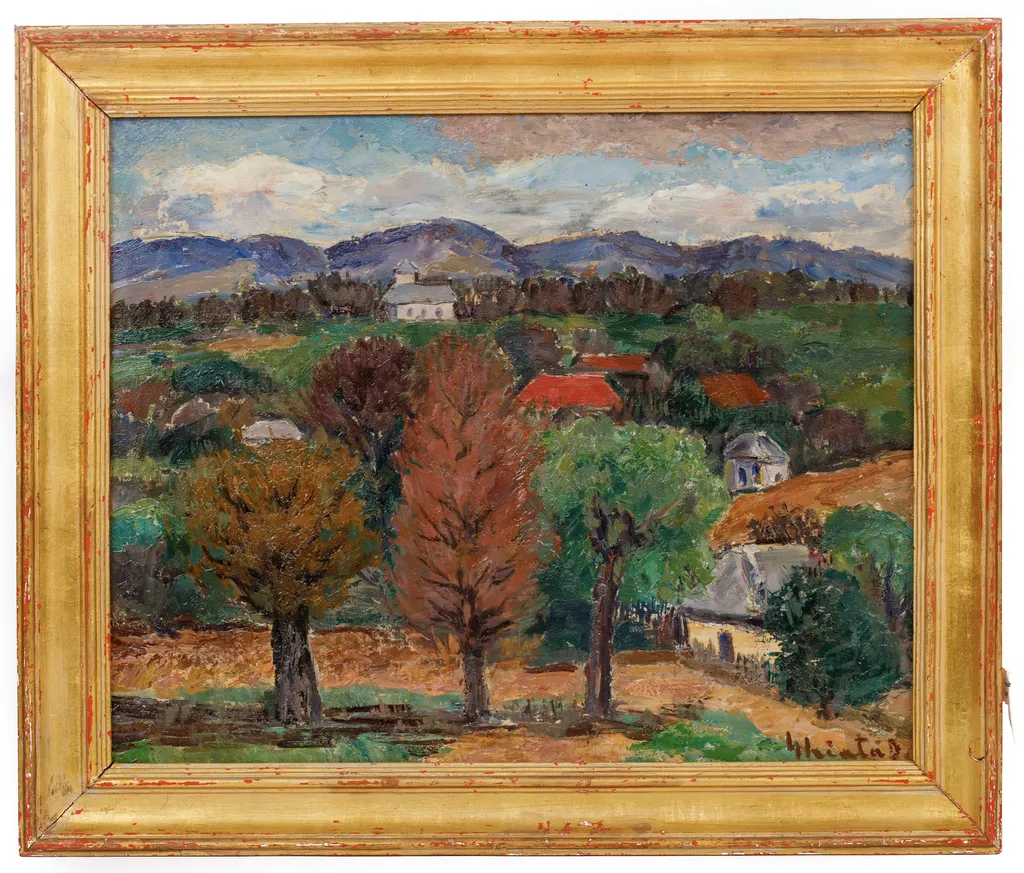
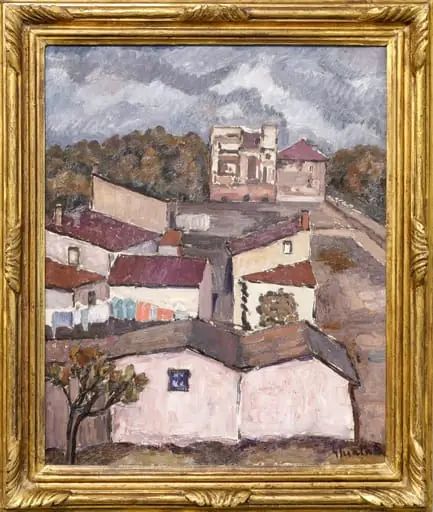
Peisaj din Hurez is an unspecified painting by Dimitrie Ghiață. It dates from 1850 and is held in the collection of the Moldova National Museum Complex.
About this work
Overview
The composition is grounded in natural observation, with a quiet rhythm between foreground elements and distant hills.
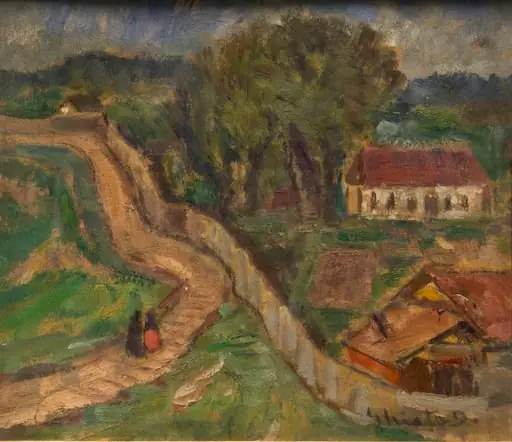
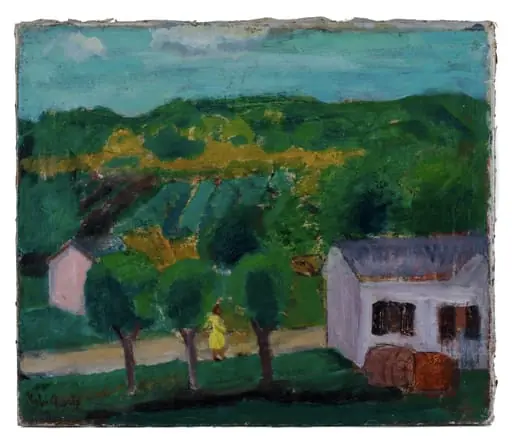
Painted around 1850 by Dimitrie Ghiață, this landscape captures a tranquil rural scene in Hurez, Romania. The composition is grounded in natural observation, with a quiet rhythm between foreground elements and distant hills. The work reflects an early engagement with plein air practices in Romanian art, emphasizing atmosphere over narrative. Its textured surface and restrained palette distinguish it from more formal academic landscapes of the period.
Subject & Meaning
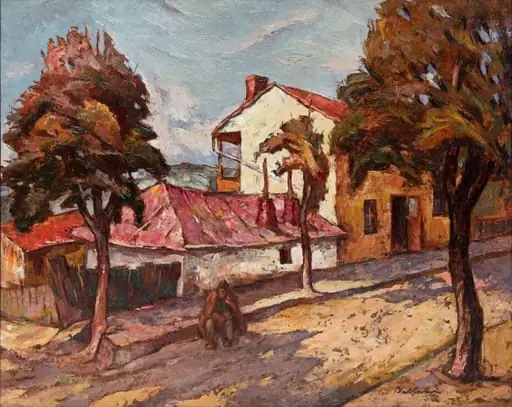
The scene depicts a modest homestead nestled among trees and open fields, suggesting rural life in 19th-century Wallachia. The three trees—two lush, one in seasonal transition—frame the house and imply the passage of time. There is no human presence, yet the dwelling hints at quiet domesticity. The painting conveys a sense of stillness and harmony with nature, avoiding idealization in favor of observed reality.
Technique & Style
Ghiață applied paint thickly using impasto, creating a tactile surface where brushstrokes remain visible and directional. This technique lends depth to the foliage and texture to the sky, enhancing the sense of weather and light. The handling of paint is more expressive than precise, favoring sensory impression over fine detail. The method aligns with emerging European trends that valued physicality in paint as a vehicle for emotional resonance.
History & Provenance
The painting’s early history is not fully documented, but it is associated with Ghiață’s formative years as a landscape painter in southern Romania. Likely created during a period of personal artistic exploration, it may have been kept in private collections before entering institutional holdings. Its survival reflects its significance as one of the earliest Romanian landscapes to employ impasto with such deliberate texture.
Context
In mid-19th century Romania, landscape painting was gaining traction as a genre separate from religious or historical subjects. Ghiață’s work emerged alongside a broader cultural movement seeking to define national identity through local scenery. While influenced by Western European models, his approach remained rooted in regional topography and seasonal change, distinguishing his vision from imported academic styles.
Legacy
Peisaj din Hurez stands as an early example of Romanian artists turning to native landscapes with a personal, tactile technique. Its use of impasto prefigured later developments in Romanian modernism, where texture and light became tools for emotional expression. Though not widely exhibited in its time, it is now recognized as a foundational work in the evolution of Romanian landscape painting.
Artist & collection
Artist
Romanian printmaker whose work gathers everyday life into scenes of towns and landscapes.