Artwork
Peisaj Balcic
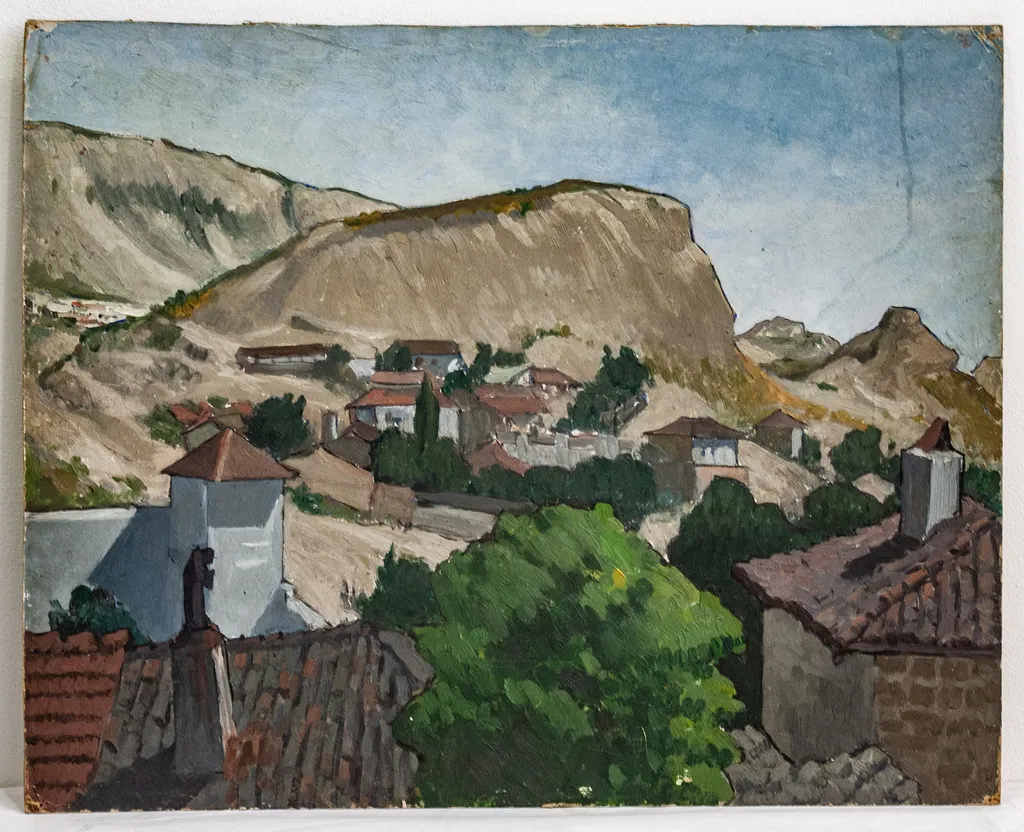
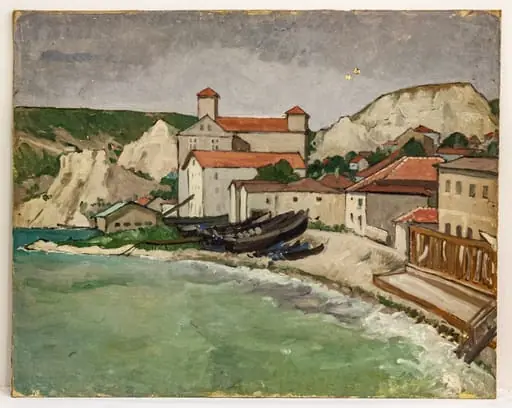
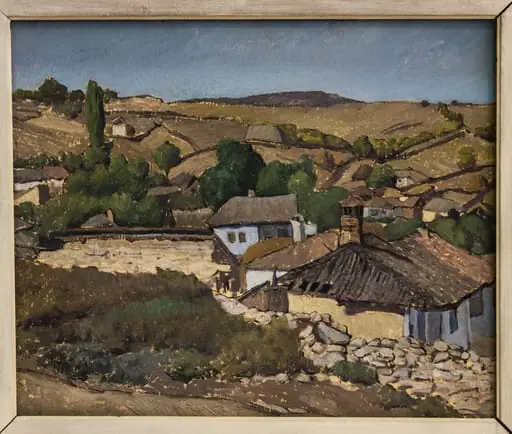
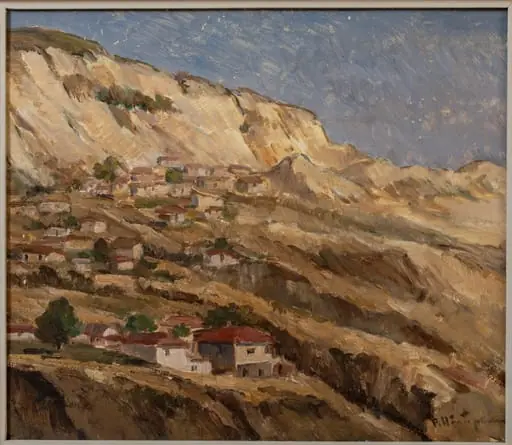
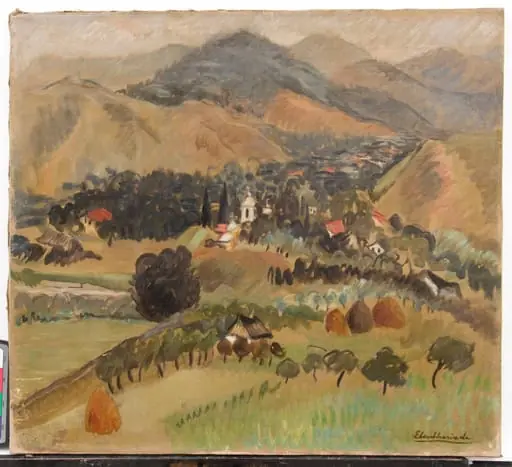
Peisaj Balcic is an unspecified painting by Constantin Petrescu-Dragoe. It is held in the collection of the Gavrila Simion Eco-Museum Research Institute Tulcea. This landscape depicts a quiet village nestled in a valley, surrounded by rolling rocky hills.
About this work
Overview
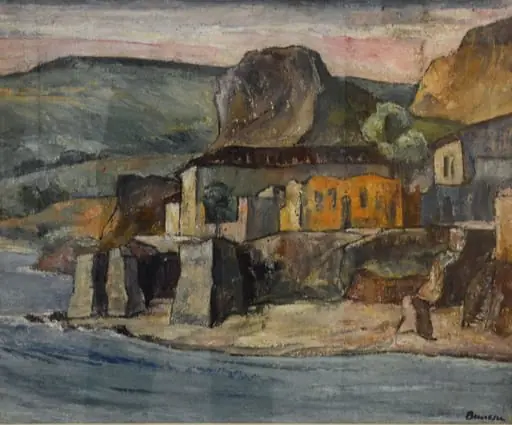
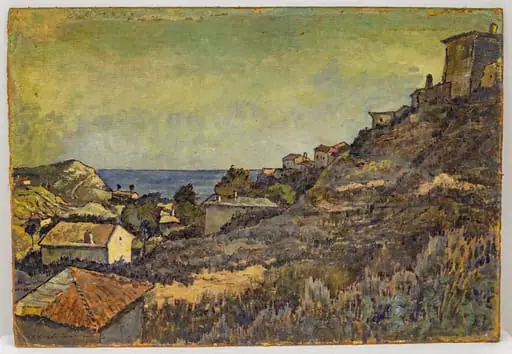
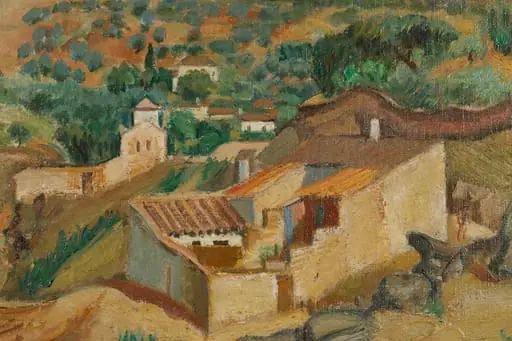
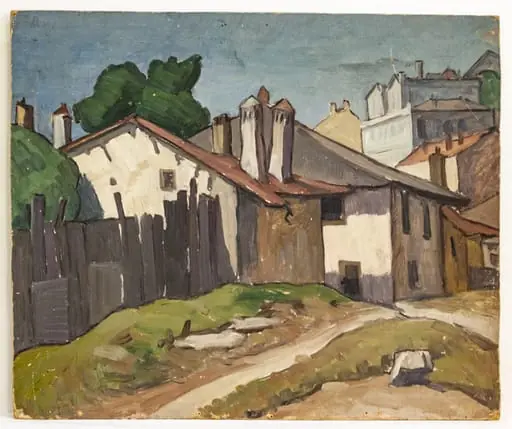
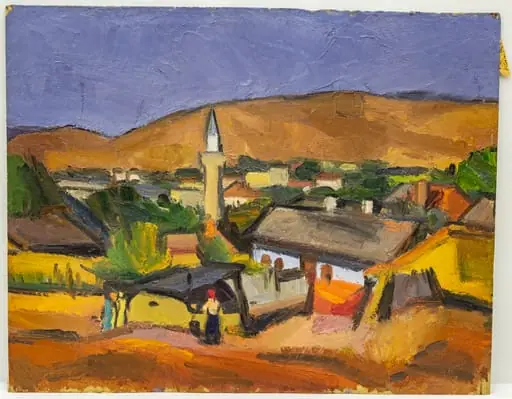
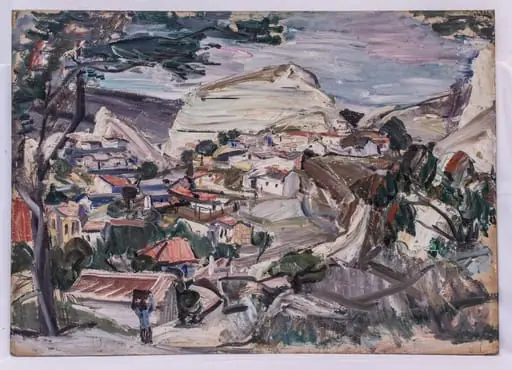
This landscape depicts a quiet village nestled in a valley, surrounded by rolling rocky hills. The scene is rendered in subdued earth tones—browns, greens, and soft blues—with thickly applied paint creating a tactile surface. The composition emphasizes horizontal bands of land, vegetation, and sky, anchoring the viewer in a calm, undisturbed natural setting.
Subject & Meaning
The village, with its red-roofed buildings and stone boundary wall, suggests a modest, enduring rural life. The absence of human figures or activity invites contemplation rather than narrative. The painting conveys stillness and continuity, reflecting a quiet reverence for the land and the simplicity of agrarian existence.
Technique & Style
The artist employs impasto to build texture, particularly in the hills and foliage, where paint is applied in dense, visible strokes. This technique adds physical depth and a sense of the terrain’s roughness. The muted palette and deliberate brushwork avoid theatricality, favoring a restrained, almost meditative approach to natural form.
History & Provenance
The work originates from the artist’s time in Balchik, a coastal town in what is now Bulgaria, during the early 20th century. It was likely painted en plein air, capturing the local topography with direct observation. Its early provenance remains undocumented, but it aligns with regional landscape traditions of the period.
Context
Created during a time when Eastern European artists were turning toward native landscapes as subjects, this piece reflects a broader cultural shift away from academic idealism. The emphasis on local terrain and tactile brushwork connects it to emerging modernist tendencies that valued personal perception over romanticized scenery.
Legacy
Though not widely exhibited, the painting contributes to a lesser-known body of work that documented rural Balkan life with sincerity. Its use of impasto and restrained color influenced regional artists seeking to express place through materiality rather than narrative, leaving a quiet but distinct mark on local modernism.
Artist & collection
Artist
Constantin Petrescu-Dragoe painted gentle scenes of everyday life and quiet landscapes around Balcic, a small town on the Black Sea coast.
Museum
Gavrila Simion Eco-Museum Research Institute Tulcea
Continue through works from the same source collection.