Artwork
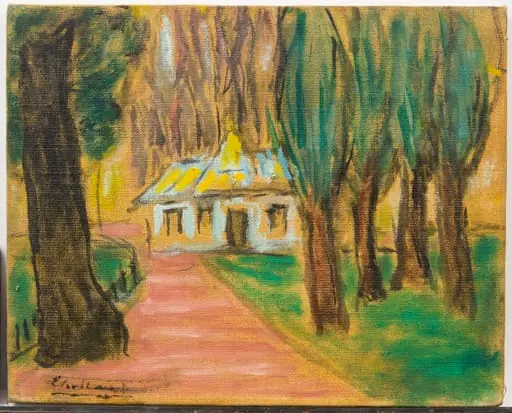
Casă la Muzeul Satului
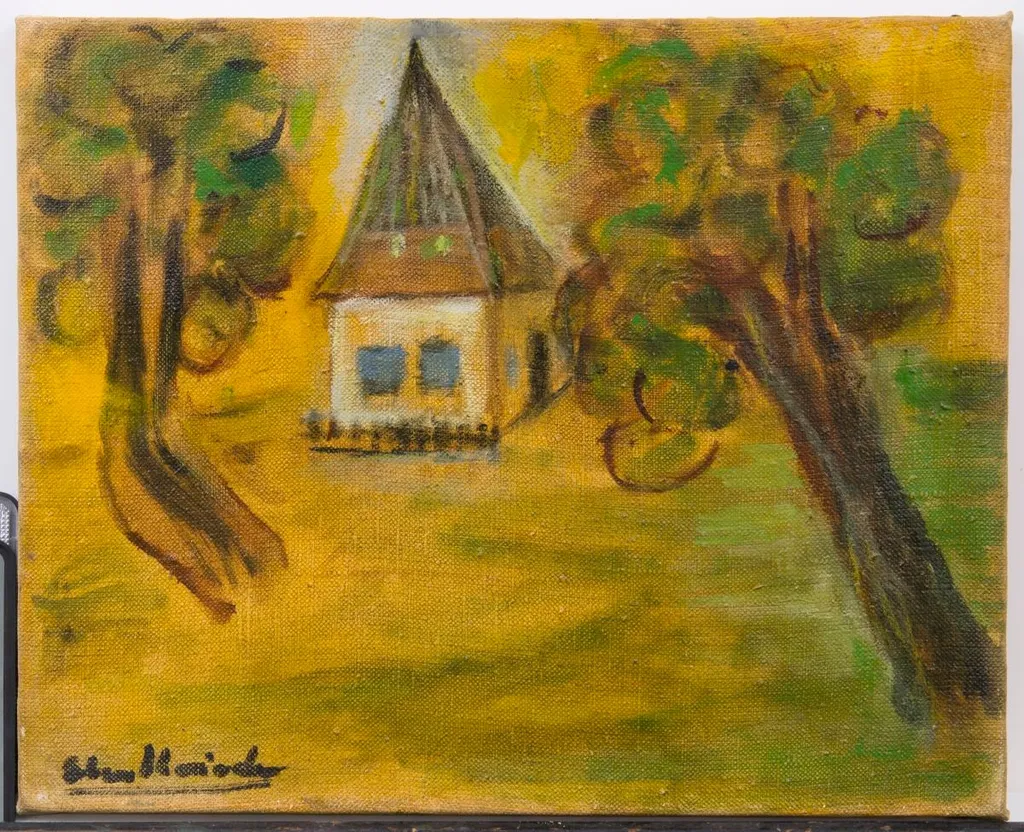
Casă la Muzeul Satului is a print by Micaela Eleutheriade. It dates from 1977 and is held in the collection of the National Museum of Art of Romania.
About this work
Overview
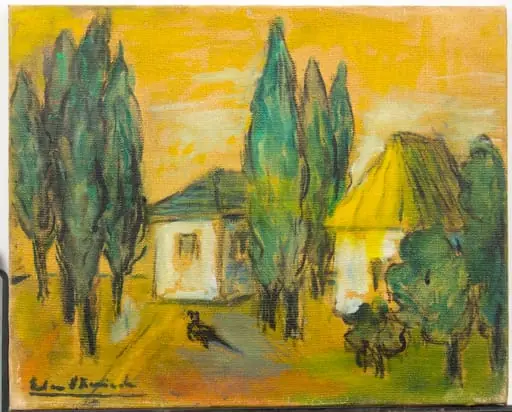
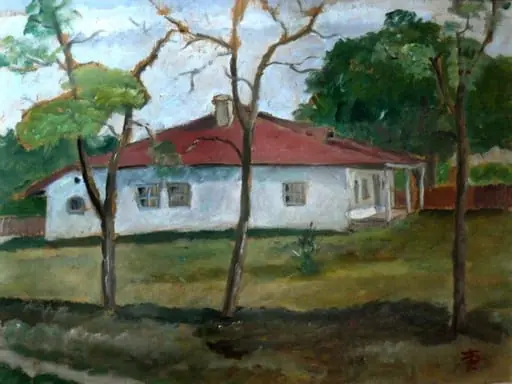
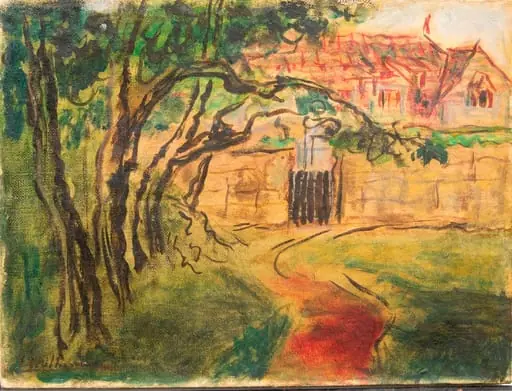
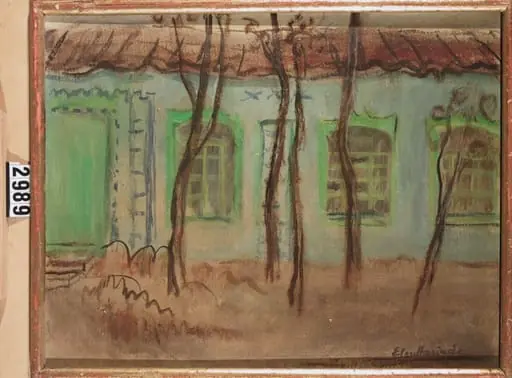
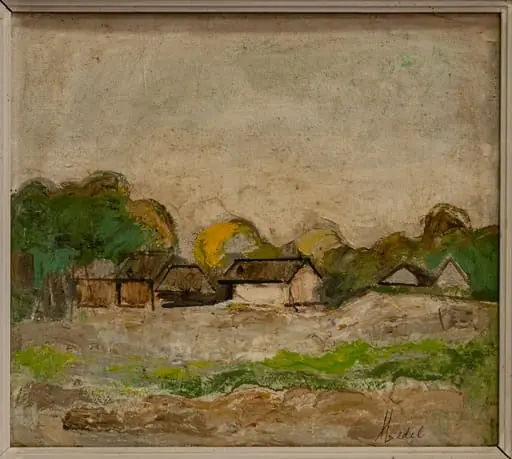
The composition centers on a single structure with a steep, dark roof and two small blue windows, surrounded by towering trees that frame the scene.
Painted around 1977 by Micaela Eleutheriade, this work depicts a modest rural dwelling set within a quiet landscape. The composition centers on a single structure with a steep, dark roof and two small blue windows, surrounded by towering trees that frame the scene. The background glows with a muted yellow-green tone, suggesting daylight filtering through foliage. Brushwork is loose and unrefined, emphasizing texture over precision.
Subject & Meaning
The house represents a typical vernacular dwelling from a Romanian village, evoking a sense of quiet permanence and everyday life. Its simple form and handmade appearance suggest a connection to local building traditions. The enclosing trees imply isolation or seclusion, reinforcing the theme of rural solitude. There is no human presence, yet the structure carries the imprint of domestic life.
Technique & Style
Eleutheriade employs a direct, unembellished painting method with broad, visible brushstrokes and limited color variation. The palette is restrained—dark roof, blue windows, warm background—creating harmony through contrast rather than complexity. The lack of fine detail and the flatness of forms reflect an intentional simplification, aligning with folk-inspired aesthetics rather than academic realism.
History & Provenance
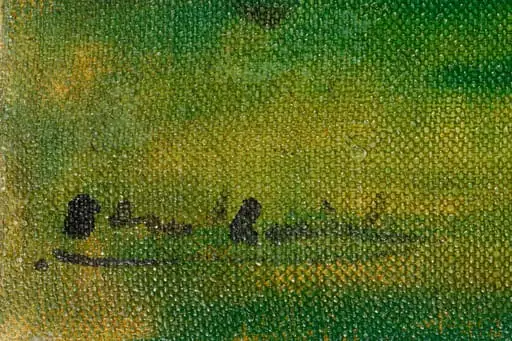
The painting is part of a body of work by Eleutheriade focused on Romanian rural architecture, likely produced during a period of renewed interest in ethnographic subjects. Its presence in the Museum of Ethnography suggests it was collected as a cultural document. The faint signature in the lower left corner indicates the artist’s modest attribution, consistent with regional artistic practices of the time.
Context
Created in the late 1970s under Romania’s communist regime, the work quietly preserves pre-industrial rural life at a time when urbanization and state-led modernization were reshaping the countryside. While not overtly political, its focus on traditional dwellings aligns with state-sanctioned cultural preservation efforts, offering a visual record of vanishing vernacular architecture.
Legacy
The painting contributes to a modest but enduring archive of Romanian folk-inspired art from the 20th century. It reflects an artistic engagement with rural identity that persists beyond political shifts. Though not widely exhibited outside ethnographic contexts, it remains a quiet testament to the visual language of village life as recorded by a local artist.
Artist & collection

Artist
Micaela Eleutheriade (1900–1982) was a noted Romanian painter and engraver. She was a descendant, through her mother, of the painter Gheorghe Tattarescu, the pioneer of neoclassicism in Romania.