Artwork
Peisaj II
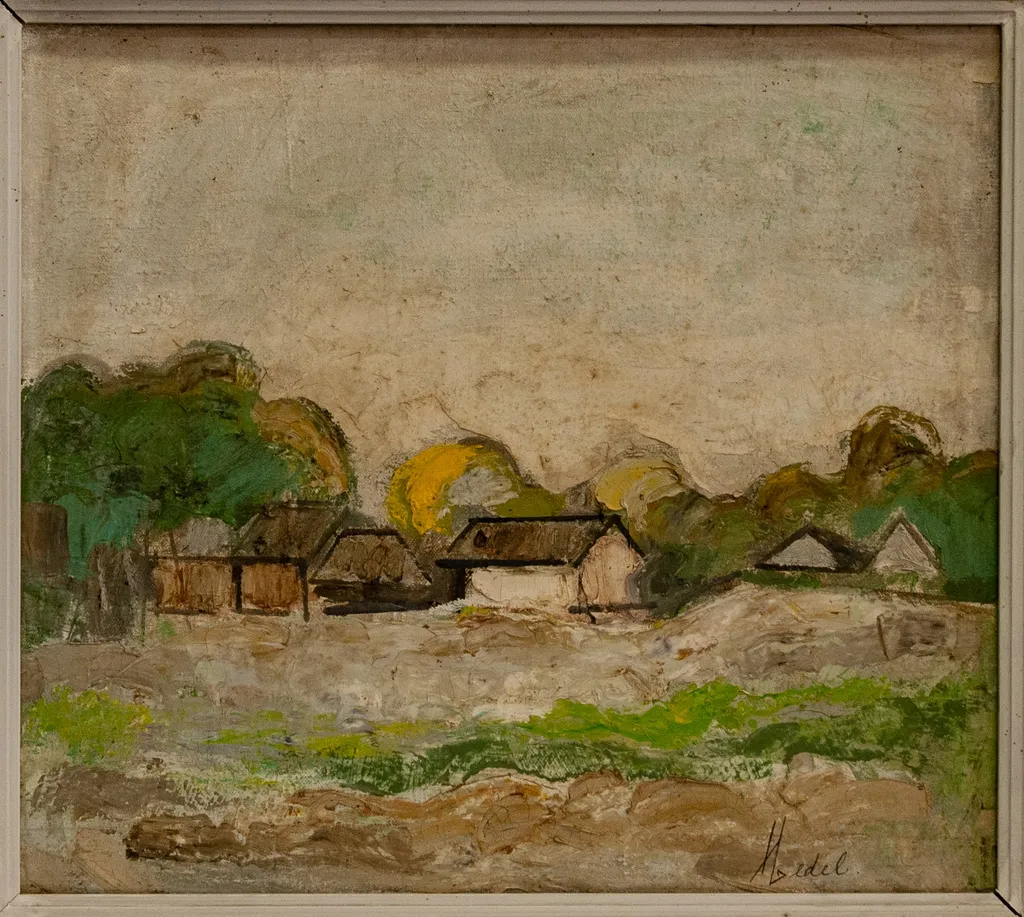
Peisaj II is a print by Nedel Aurel. It is held in the collection of the Gavrila Simion Eco-Museum Research Institute Tulcea.
About this work
Overview
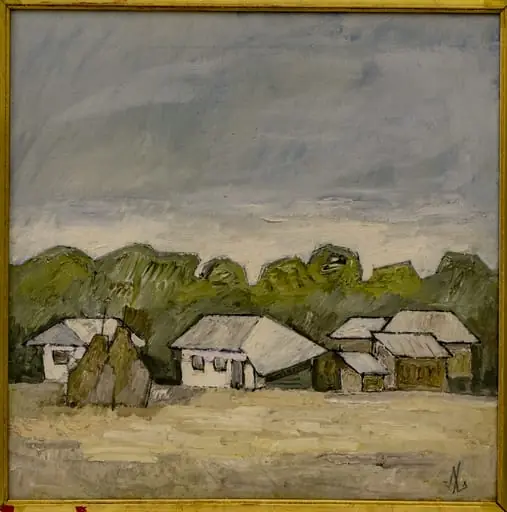
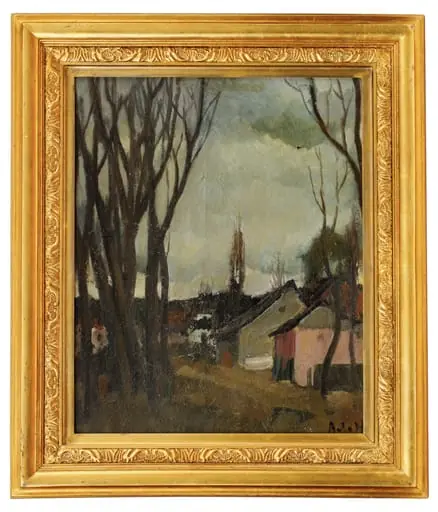
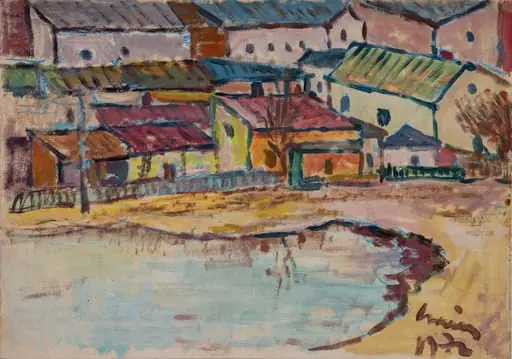
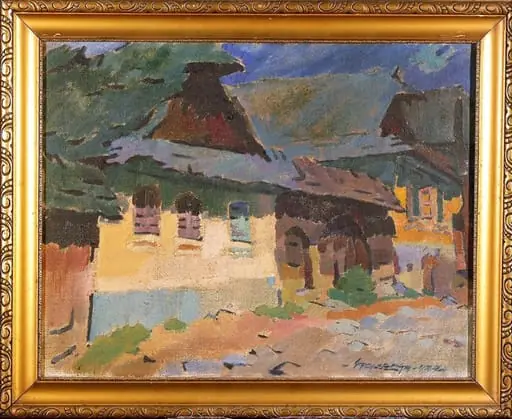
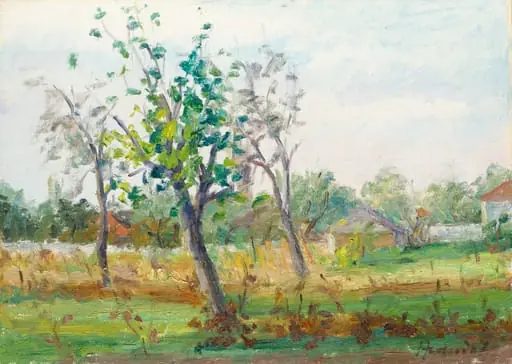
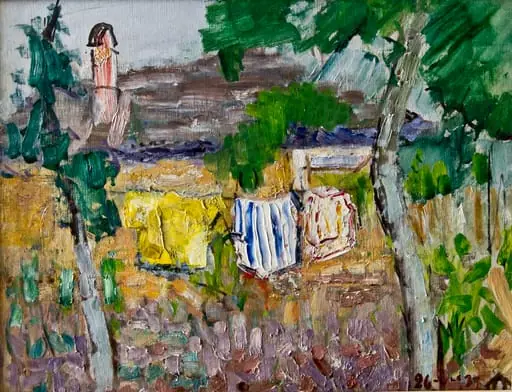
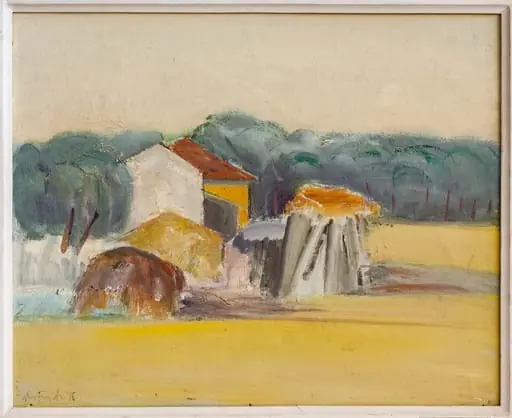
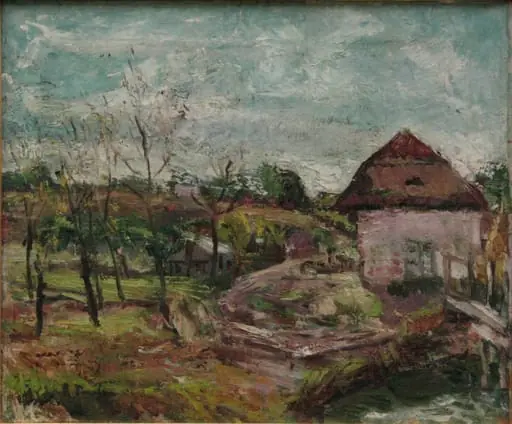
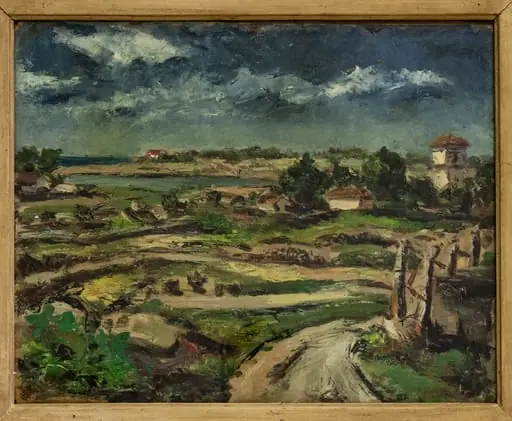
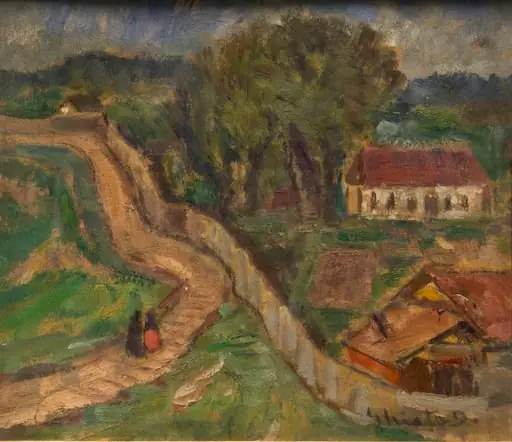
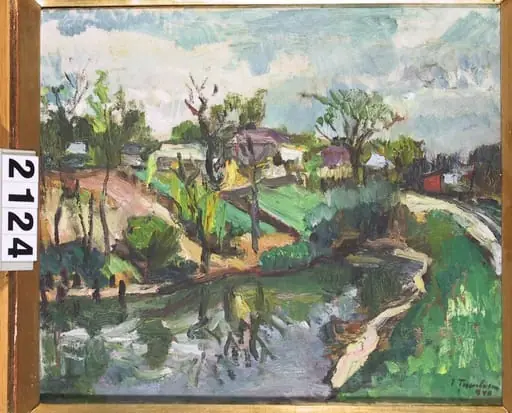
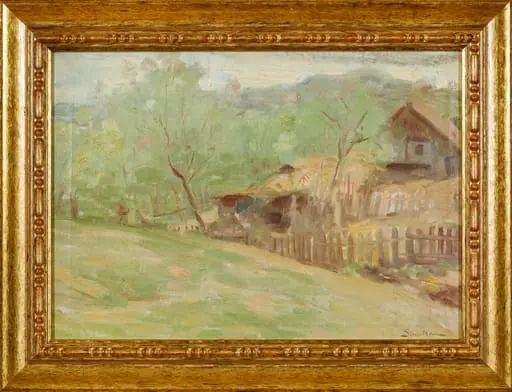
The composition centers on a cluster of modest dwellings nestled among undulating hills, rendered with deliberate roughness.
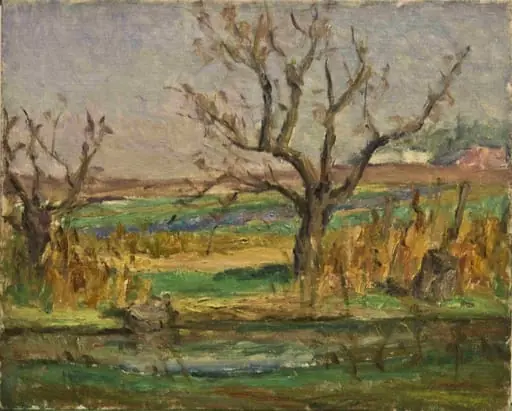
Peisaj II presents a rural landscape with minimal refinement, emphasizing texture over detail. The composition centers on a cluster of modest dwellings nestled among undulating hills, rendered with deliberate roughness. The palette is restrained, dominated by earth tones, with subtle highlights of yellow and white breaking the monotony. The handling of paint suggests immediacy, as if the scene was captured in a single sitting rather than carefully composed.
Subject & Meaning
The subject is a quiet, unidealized village scene, devoid of human figures or narrative action. Its significance lies in its unembellished portrayal of rural life, focusing on structure and environment rather than sentiment. The absence of polish implies an interest in authenticity over ornament, aligning with a broader tendency to value observation over idealization in late 19th-century landscape practice.
Technique & Style
Thick, uneven brushstrokes create a tactile surface, characteristic of impasto. Paint is applied with visible force, leaving ridges and peaks that catch light differently across the surface. The lack of blending or smooth transitions reinforces a sense of spontaneity. This approach prioritizes material presence over illusionistic depth, treating paint as a physical medium rather than a transparent veil.
History & Provenance
The work’s origins are undocumented in public records, and no exhibition history or collector lineage is established. It is cataloged only as an image without attribution to a known artist or date. Its classification as an image rather than a painting suggests it may be a reproduction or a fragment of a larger body of work, possibly from an unpublished sketchbook or regional archive.
Context
The style echoes regional traditions in Eastern European and Balkan folk art, where landscape painting often favored direct observation over academic conventions. Similar approaches appear in the works of lesser-known local artists who worked outside major centers, documenting their surroundings with minimal training and limited materials. The piece reflects a broader, understudied current in rural artistic practice during the late 1800s.
Legacy
Though not widely recognized in mainstream art history, Peisaj II contributes to an emerging understanding of non-academic landscape traditions. Its raw aesthetic has influenced later artists interested in materiality and process, particularly those exploring the boundaries between sketch and finished work. It remains a quiet example of how everyday environments were rendered outside institutional frameworks.
Artist & collection
Artist
Aurel Nedel painted quiet, sunlit scenes along the Danube in the mid-20th century.
Museum
Gavrila Simion Eco-Museum Research Institute Tulcea
Continue through works from the same source collection.