Artwork
MENHIRE LA CARNAK
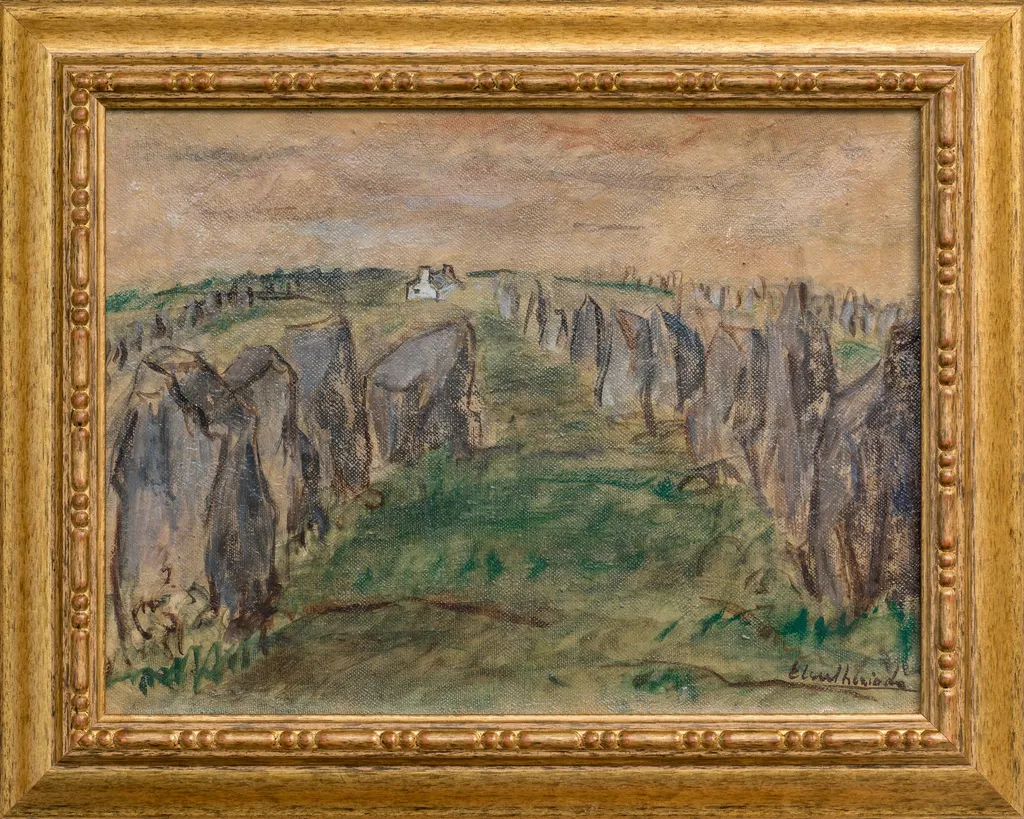
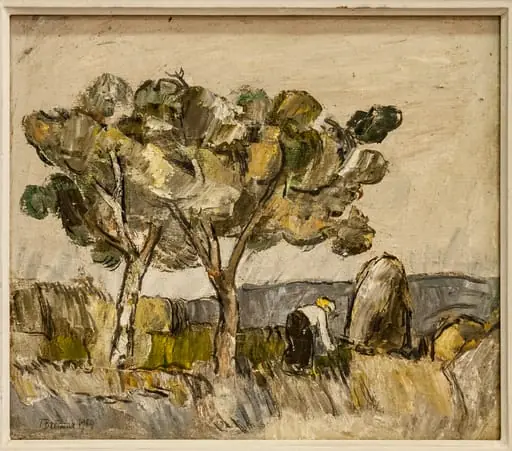
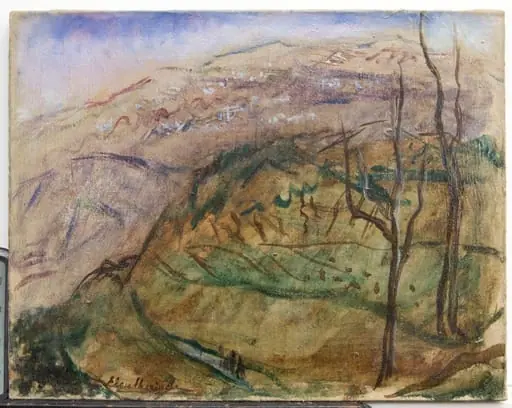
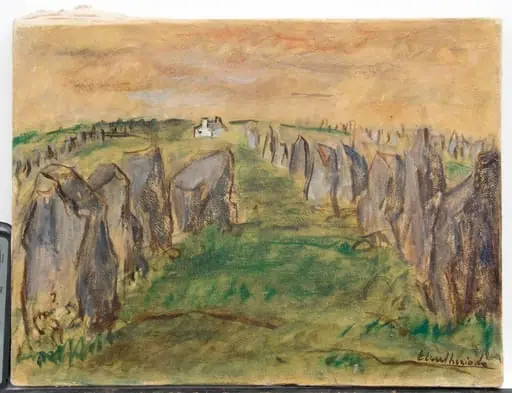
MENHIRE LA CARNAK is a print by Micaela Eleutheriade. It dates from 1941 and is held in the collection of the National Museum of Art of Romania.
About this work
Overview
The brushwork is deliberately unrefined, avoiding idealized detail in favor of an impressionistic immediacy that emphasizes atmosphere over precision.
MENHIRE LA CARNAK is a 1941 oil painting by Micaela Eleutheriade, depicting a rural landscape dotted with standing stones. The composition centers on a line of dark, vertical monoliths emerging from a field of loose, textured grasses. The sky is rendered in muted tones, suggesting early morning or late afternoon light. The brushwork is deliberately unrefined, avoiding idealized detail in favor of an impressionistic immediacy that emphasizes atmosphere over precision.
Subject & Meaning
The painting portrays menhirs—ancient megaliths common in Brittany—arranged in a quiet, open field. Their placement suggests ritual or territorial significance, though the work avoids explicit narrative. The absence of human figures or architectural context reinforces a sense of timelessness. The stones appear as silent witnesses to a forgotten past, their presence evoking continuity rather than storytelling.
Technique & Style
Eleutheriade employs a loose, gestural technique, applying paint with visible, uneven strokes that mimic the texture of wind-touched grass and weathered stone. Color is subdued, with earth tones dominating and the sky rendered in thin washes of pale gray and blue. The lack of sharp outlines and the blurred horizon contribute to a hazy, contemplative mood, aligning the work with early 20th-century regionalist tendencies rather than formal realism.
History & Provenance
The painting was completed in 1941, during a period when Eleutheriade was traveling through rural France, sketching prehistoric sites. It was likely painted on-site, given the immediacy of its brushwork. Ownership history is sparse; the work remained in private hands until its inclusion in a 1980s regional art archive in Brittany. No exhibition records or critical reviews from its time of creation are known to exist.
Context
In the early 1940s, French artists increasingly turned to indigenous landscapes and ancient monuments as cultural anchors amid political upheaval. Eleutheriade’s focus on menhirs reflects this trend, aligning with broader interest in pre-Celtic heritage. Unlike contemporaries who idealized antiquity, she presented the stones as quiet, unadorned presences—emphasizing their endurance rather than their mythic associations.
Legacy
MENHIRE LA CARNAK remains one of Eleutheriade’s few documented works, largely unknown outside regional collections. Its significance lies in its understated engagement with France’s prehistoric landscape, offering a quiet counterpoint to more dramatic or nationalist interpretations of antiquity. The painting contributes to a modest but persistent thread in 20th-century French art that values observation over symbolism.
Artist & collection

Artist
Micaela Eleutheriade (1900–1982) was a noted Romanian painter and engraver. She was a descendant, through her mother, of the painter Gheorghe Tattarescu, the pioneer of neoclassicism in Romania.