Artwork
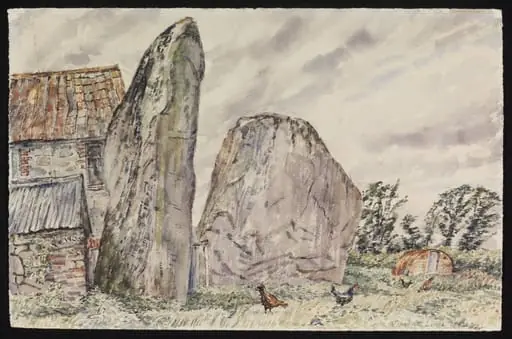
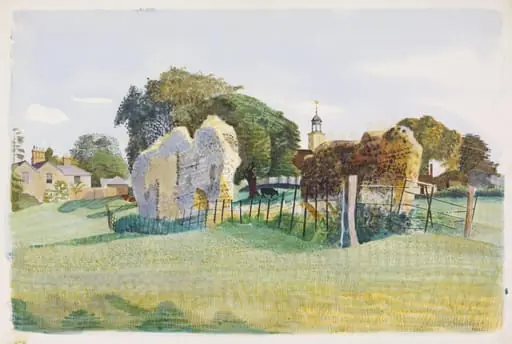
The Southern Circle and Village, Avebury
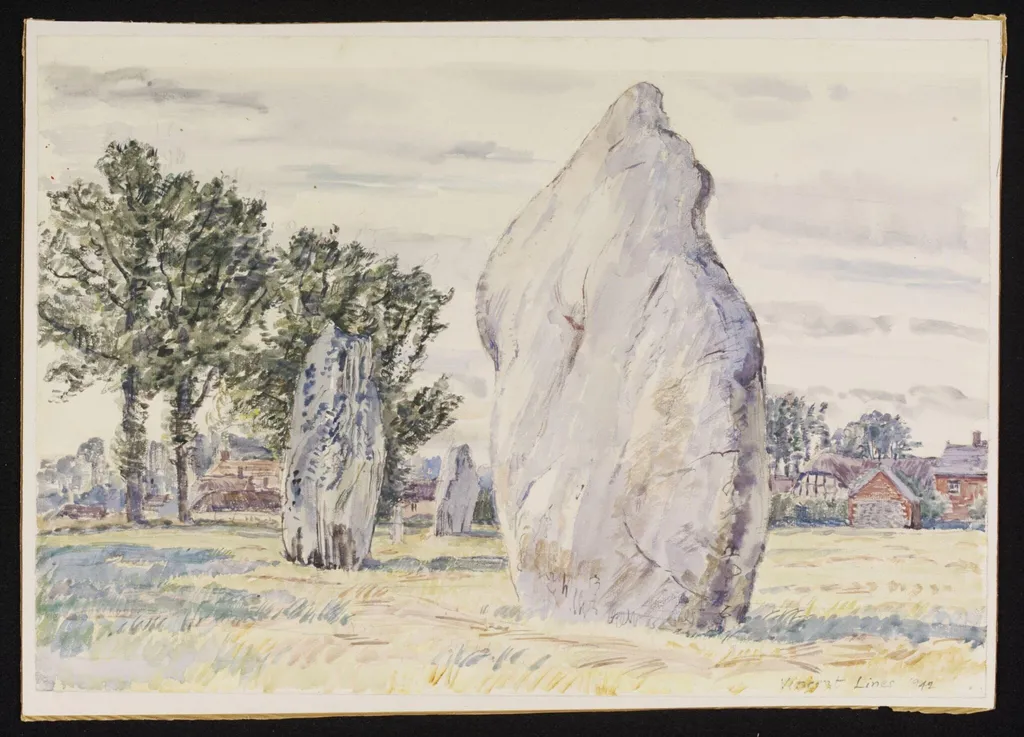
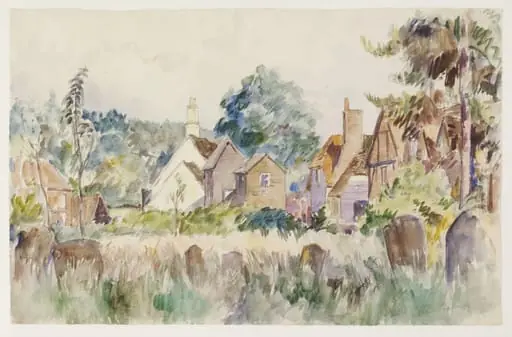
The Southern Circle and Village, Avebury is a watercolor work on paper by the British Romanticist artist Lines. It dates from 1942 and is held in the collection of the Victoria and Albert Museum.
About this work
Overview
Commissioned by the Pilgrim Trust and directed by Sir Kenneth Clark, the initiative enlisted artists to record places at risk from war or modern development.
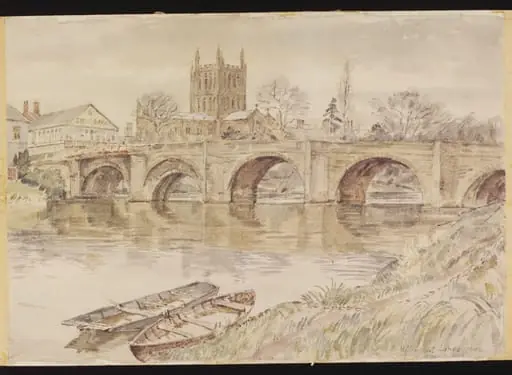
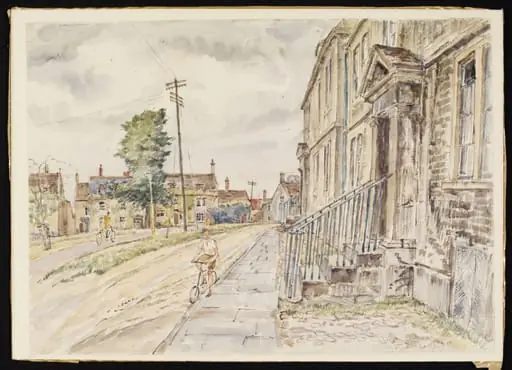
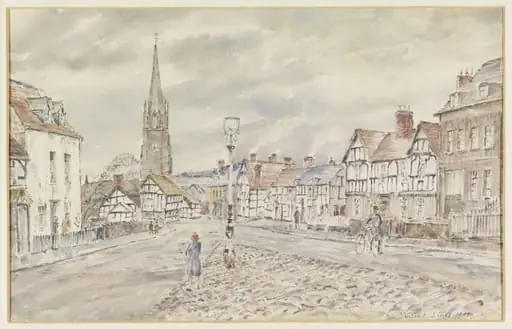
Created in 1942, this watercolour by Lines belongs to the *Recording Britain* project, a wartime effort to visually archive vulnerable landscapes and historic sites. Commissioned by the Pilgrim Trust and directed by Sir Kenneth Clark, the initiative enlisted artists to record places at risk from war or modern development. The work is one of more than 1,500 pieces produced, forming a collective visual inventory of England’s rural and architectural heritage during a time of national uncertainty.
Subject & Meaning
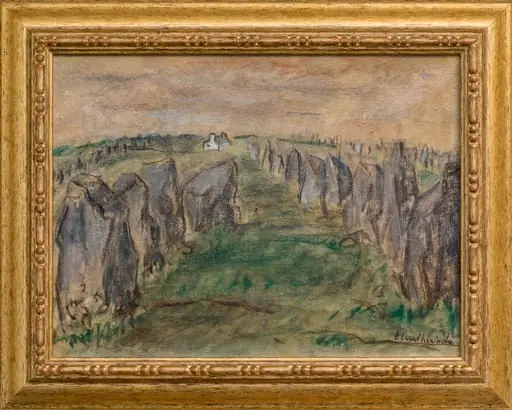
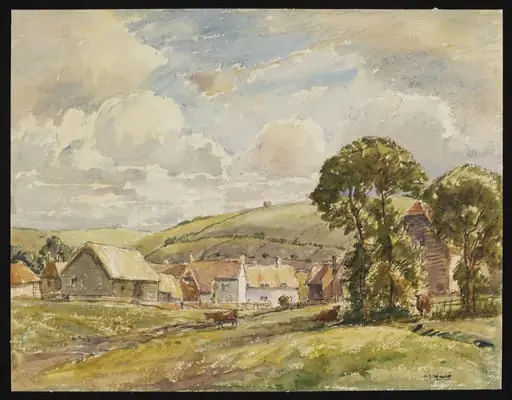
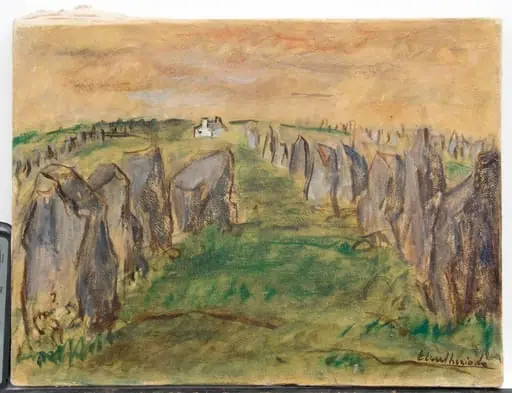
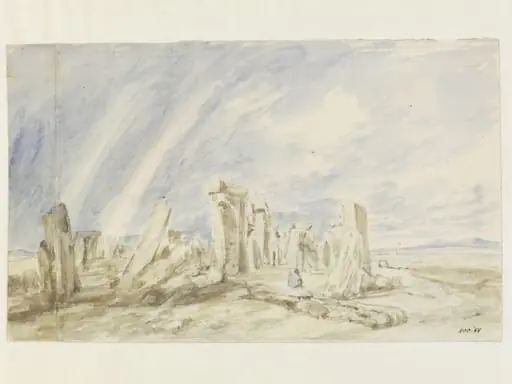
The painting depicts Avebury’s Neolithic stone circle and the modest village that surrounds it, capturing a quiet moment in the English countryside. The arrangement of ancient stones amid domestic dwellings suggests a continuity between prehistoric monument and everyday life. Rather than emphasizing grandeur, the scene conveys quiet endurance—offering a subtle meditation on permanence amid the upheavals of war and social change.
Technique & Style
Executed in watercolour, the work employs loose, fluid brushwork and a restrained palette of muted blues, greens, and earth tones. Forms are simplified, with the standing stones rendered as soft, rounded masses that suggest draped fabric rather than carved stone. The sky and landscape blend gently, avoiding sharp contrasts. This approach prioritizes atmosphere over precision, aligning with the project’s emphasis on emotional resonance over topographical accuracy.
History & Provenance
The painting was produced during the Second World War as part of the *Recording Britain* initiative, which sought to preserve images of places deemed vulnerable to destruction or neglect. It entered the Victoria and Albert Museum’s collection alongside other works from the scheme, where it remains today. The project’s records indicate Lines was among the 97 artists commissioned, though little is known of their personal background beyond their contribution to this collective effort.
Context
In 1942, Britain faced widespread disruption from bombing, rationing, and mobilization. The *Recording Britain* project emerged as a cultural countermeasure, aiming to reinforce national identity through the documentation of enduring landscapes. By focusing on rural sites like Avebury, the initiative subtly resisted the erasure of historical continuity, offering the public a visual anchor to tradition during a period of profound instability.
Legacy
The *Recording Britain* collection endures as a significant archive of mid-20th-century British visual culture. Lines’s watercolour contributes to a broader understanding of how artists interpreted heritage during wartime—not through heroic narratives, but through quiet observation. Today, the work is valued for its historical record and its understated emotional tone, reflecting a generation’s attempt to preserve what might otherwise be lost.
Artist & collection