Artwork
Peisaj
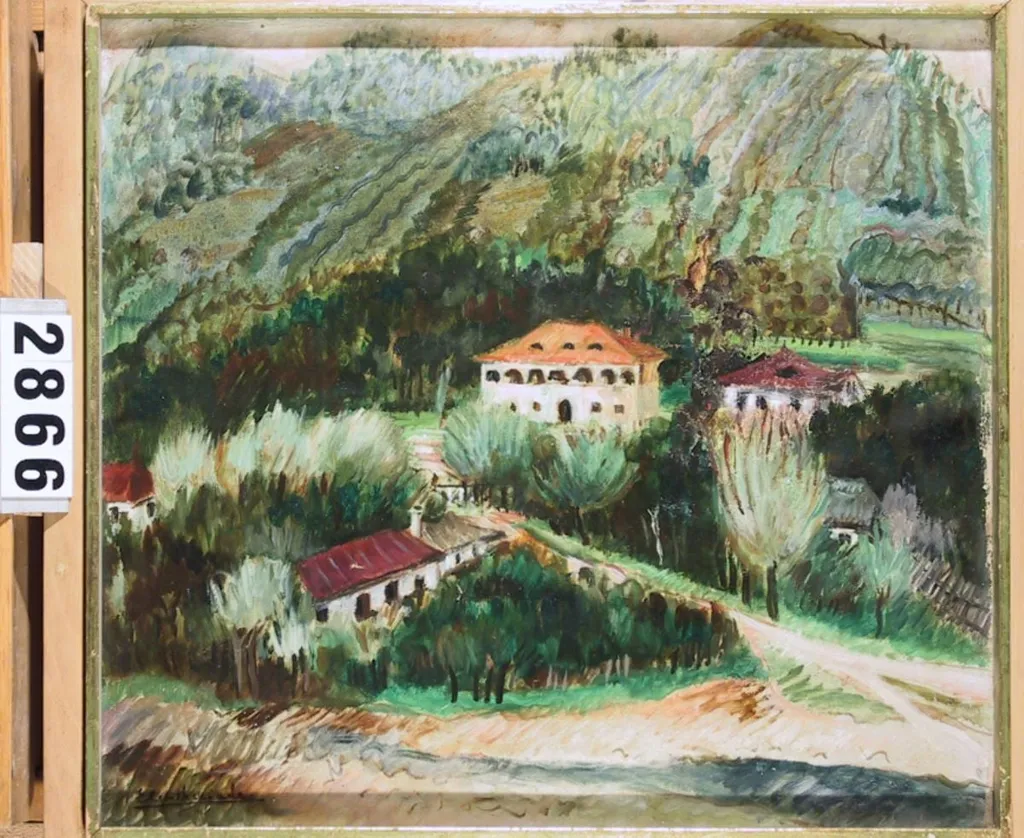
Peisaj is an unspecified painting by Micaela Eleutheriade. It dates from 1950 and is held in the collection of the Brukenthal National Museum.
About this work
Overview
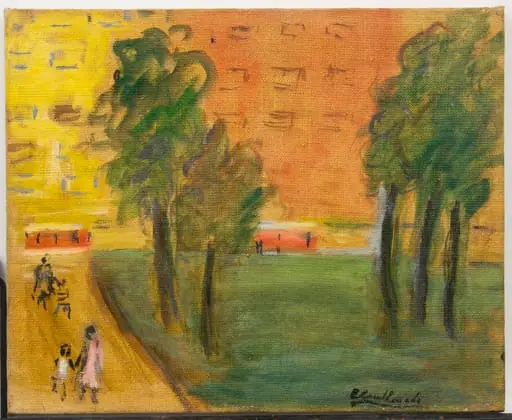
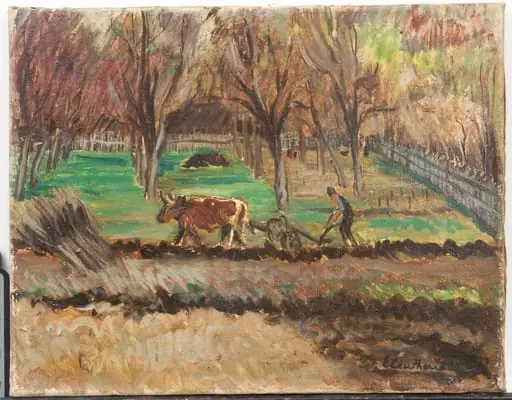
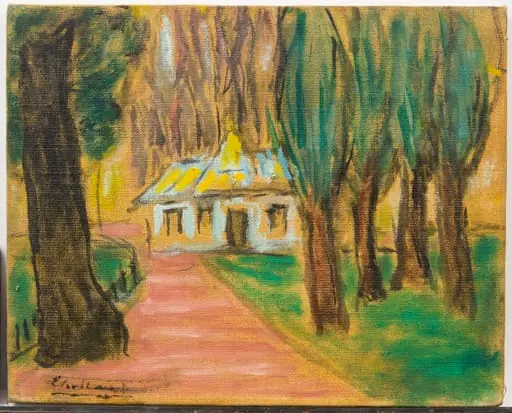
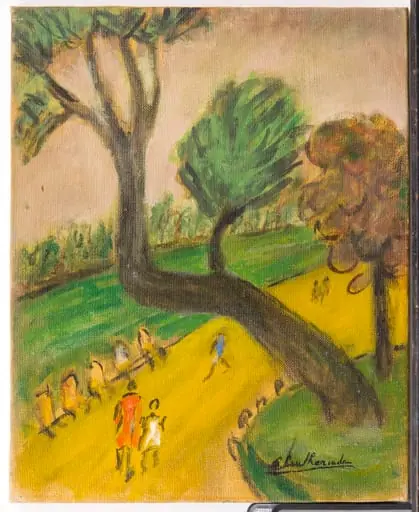
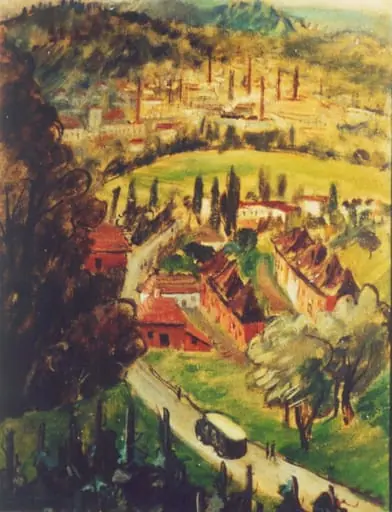
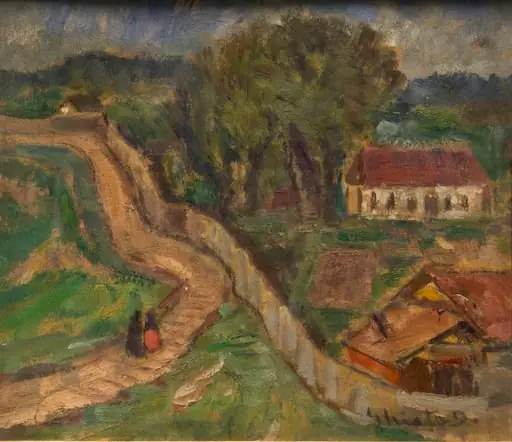
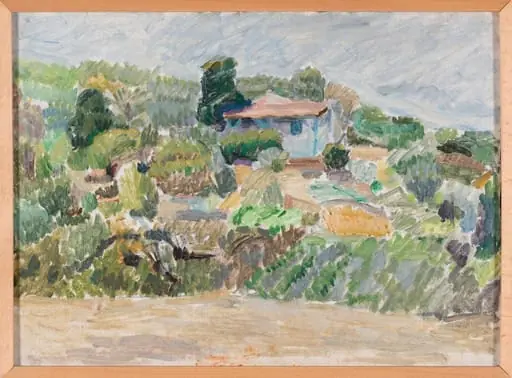
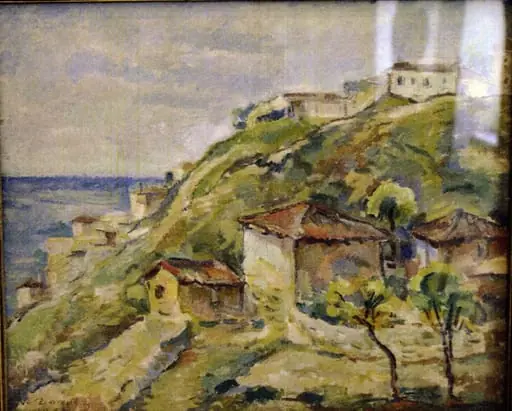
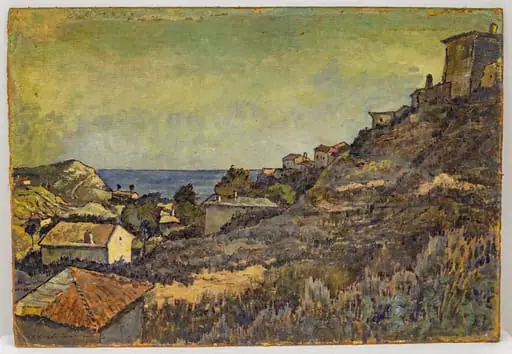
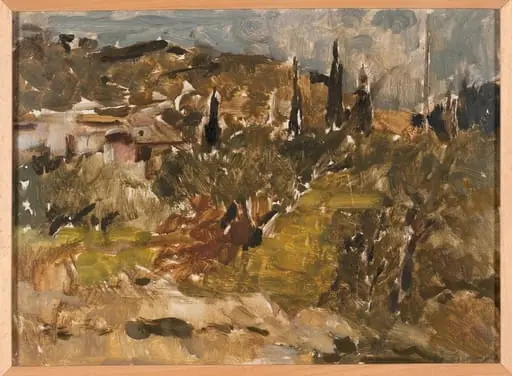
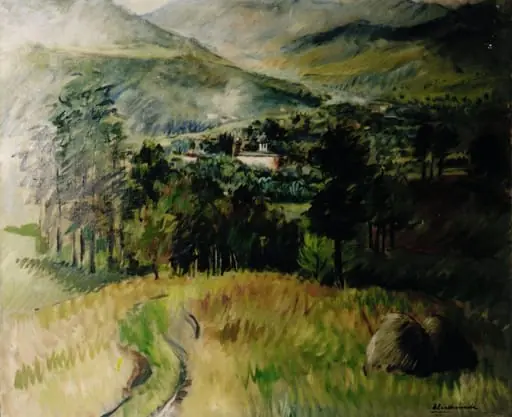
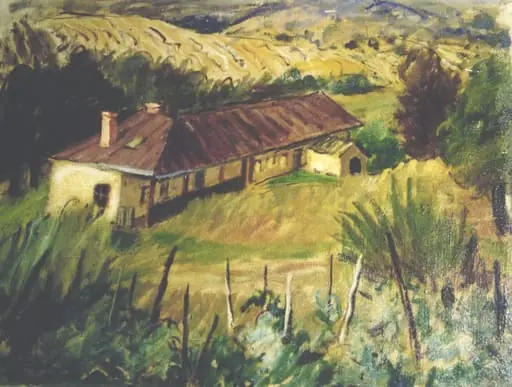
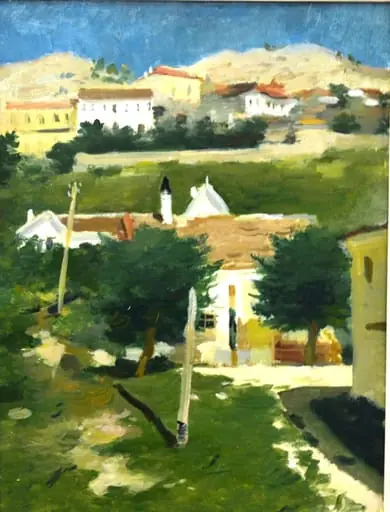
Peisaj, created circa 1950 by Micaela Eleutheriade, is a landscape painting depicting a serene village scene set within a verdant valley.
Subject & Meaning
The subject is a tranquil village nestled in a lush valley, with a winding road leading to a group of small, white, red-roofed buildings and a larger, similarly hued structure on a hill, conveying a sense of peaceful, rural life.
Technique & Style
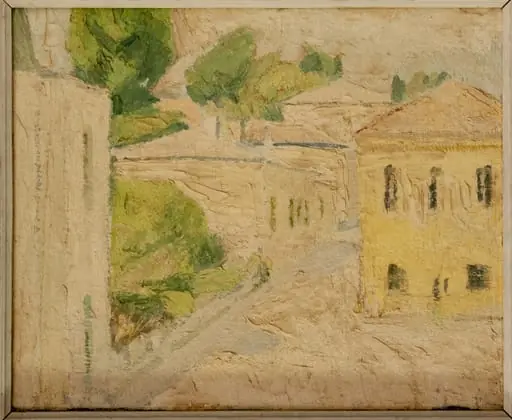
The painting features thick, textured brushstrokes and impasto techniques, imparting a dynamic, lifelike quality to the scene. The predominantly earthy color palette is accented with red and white, emphasizing the village's structures.
History & Provenance
Created circa 1950 by Micaela Eleutheriade, specific details regarding the work's history and ownership prior to its current status are not provided.
Context
Peisaj reflects mid-20th-century landscape painting tendencies, emphasizing expressive brushwork and textured surfaces, while its serene subject matter may suggest a post-war inclination towards tranquility.
Legacy
The legacy of Peisaj is not extensively detailed in available information, though it exemplifies the artist's contribution to mid-century expressive landscape painting.
Artist & collection

Artist
Micaela Eleutheriade (1900–1982) was a noted Romanian painter and engraver. She was a descendant, through her mother, of the painter Gheorghe Tattarescu, the pioneer of neoclassicism in Romania.