Artwork
Recoltarea verzei
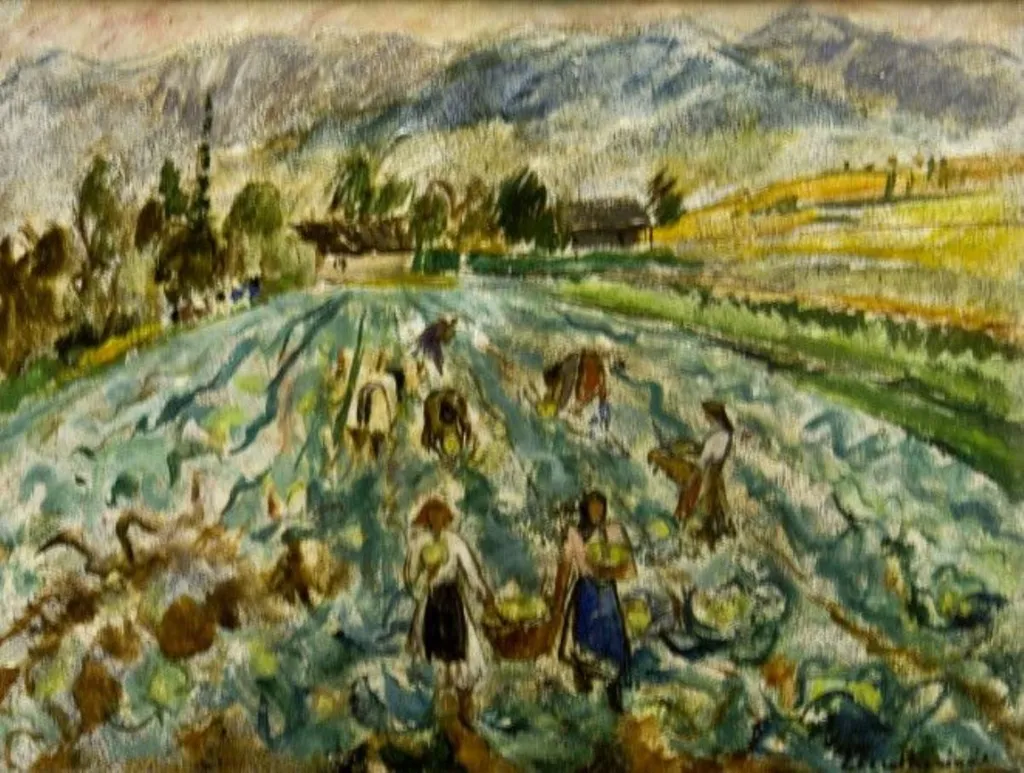
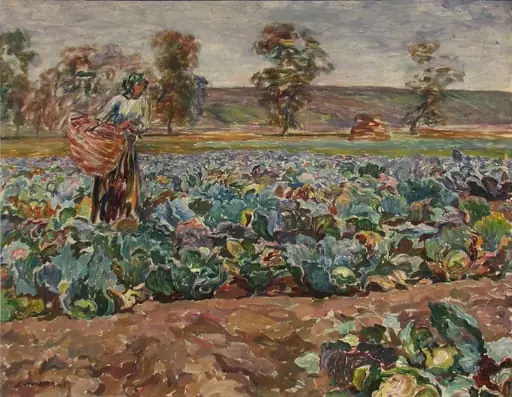
Recoltarea verzei is an unspecified painting by Micaela Eleutheriade. It dates from 1950 and is held in the collection of the National Museum of Art of Romania.
About this work
Overview
Thick application of paint contributes to a tactile sense of the land and weather, grounding the image in physical presence rather than narrative flourish.
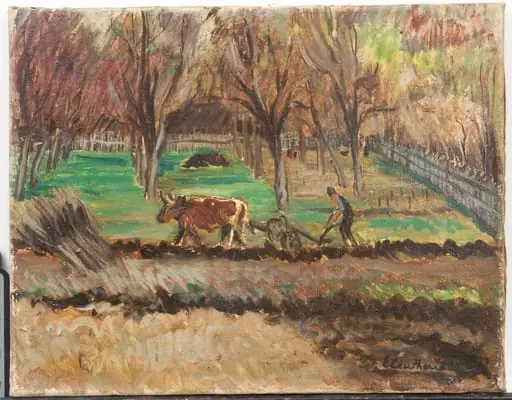
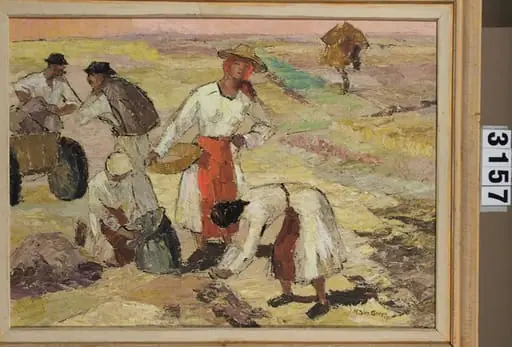
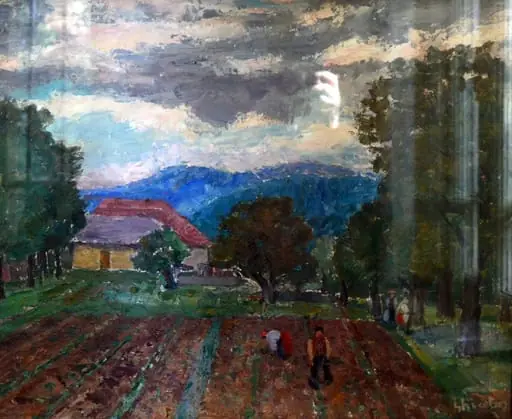
Recoltarea verzei, dated around 1950, is a painting by Micaela Eleutheriade depicting rural labor in a Romanian countryside setting. The scene captures a group of workers engaged in the harvest of cabbage, set against a muted, atmospheric sky. The composition avoids idealization, presenting daily toil with quiet realism. Thick application of paint contributes to a tactile sense of the land and weather, grounding the image in physical presence rather than narrative flourish.
Subject & Meaning
The painting centers on collective agricultural labor, emphasizing endurance over spectacle. Figures are shown bent or carrying baskets, their actions unembellished and routine. No individual is singled out; the focus remains on the group’s shared effort. The absence of ornament or symbolic elements reinforces a commitment to depicting the unvarnished rhythm of rural life, where human activity is inseparable from the soil and seasons.
Technique & Style
Eleutheriade employs impasto to build texture in the sky and rolling hills, giving the atmosphere a tangible weight. Brushstrokes are deliberate and uneven, suggesting movement and climate rather than precise detail. The palette is restrained—earthy greens, muted blues, and browns—allowing the land and labor to dominate visually. This method prioritizes emotional resonance through materiality, aligning with regional modernist tendencies that valued sensory truth over polish.
History & Provenance
Created in the early postwar period, the work reflects the cultural priorities of Romanian art under shifting political conditions. While exact ownership history is not widely documented, its subject matter aligns with state-supported themes of socialist realism during the 1950s, though its stylistic rawness distinguishes it from official propaganda. The painting likely emerged from regional artistic circles rather than institutional patronage.
Context
In mid-20th century Romania, rural life remained central to national identity, even as urbanization accelerated. Artists like Eleutheriade turned to peasant labor not as nostalgia but as a record of lived experience. The painting’s subdued tones and unidealized figures contrast with more heroic depictions of workers promoted by the state, suggesting a quieter, more personal engagement with agrarian reality.
Legacy
Recoltarea verzei stands as an example of regional modernism that resisted both academic convention and ideological rigidity. Though not widely exhibited internationally, it contributes to a broader understanding of Romanian art that valued authenticity over spectacle. Its emphasis on texture and labor continues to inform contemporary readings of rural representation in Eastern European visual culture.
Artist & collection

Artist
Micaela Eleutheriade (1900–1982) was a noted Romanian painter and engraver. She was a descendant, through her mother, of the painter Gheorghe Tattarescu, the pioneer of neoclassicism in Romania.