Artwork
Târg la Bran
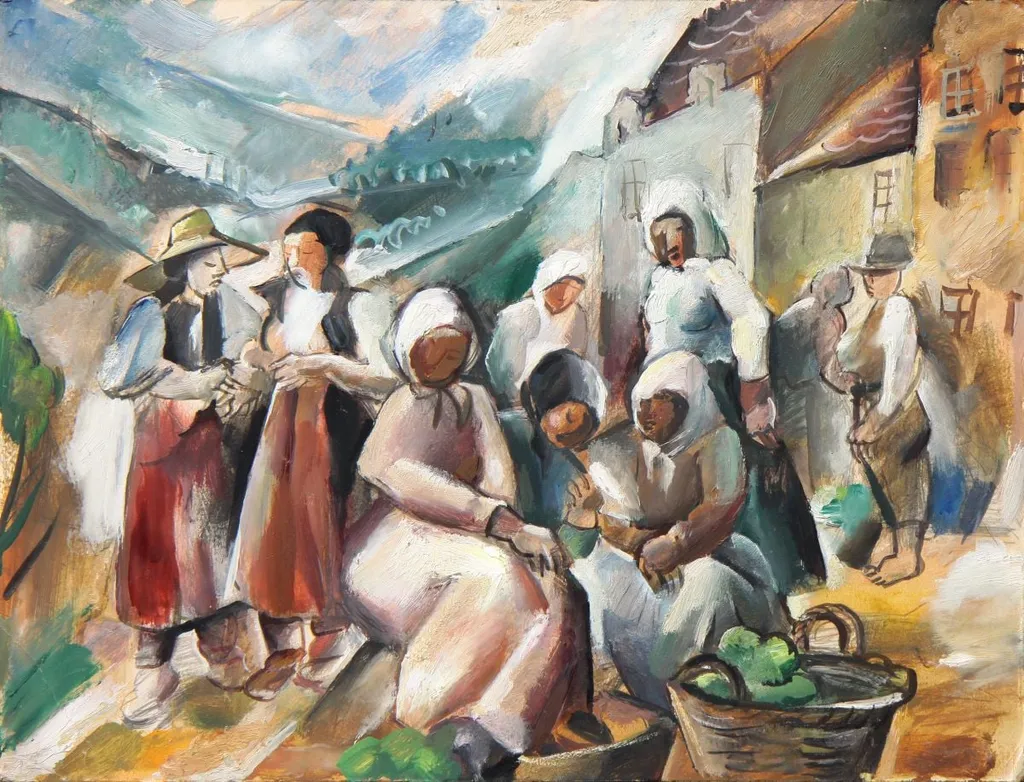
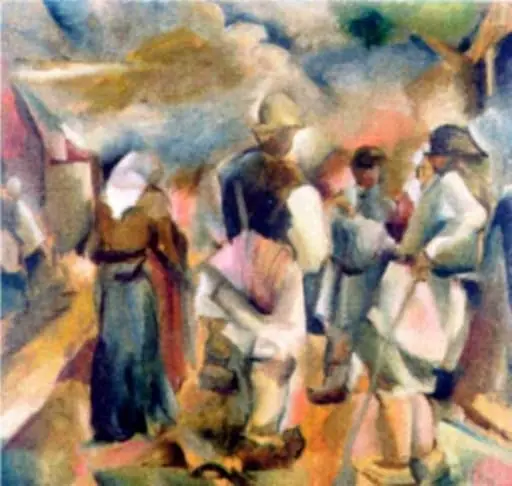
Târg la Bran is a print by Elena Popea. It dates from 1920 and is held in the collection of the Museum of Art Cluj-Napoca.
About this work
Overview
The work reflects her engagement with contemporary European movements while remaining rooted in the rhythms of Transylvanian communities.
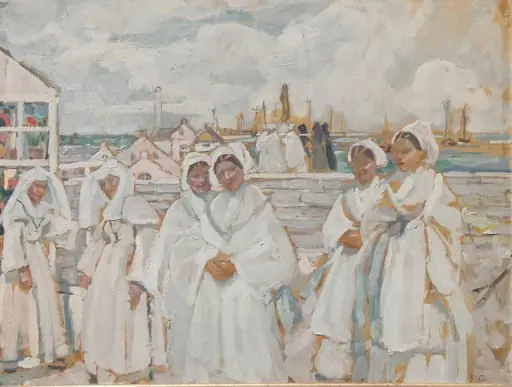
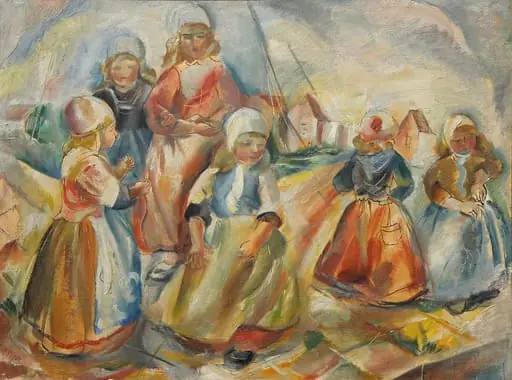
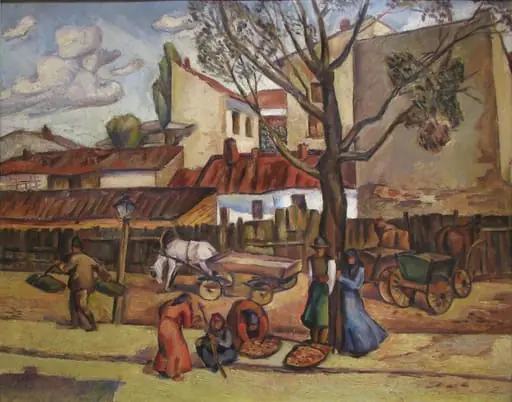
Târg la Bran, painted around 1920 by Elena Popea, captures a rural market scene in the village of Bran, Romania. As a Modernist artist trained under Austro-Hungarian influences, Popea turned her attention to local life, blending observations of everyday commerce with stylistic experimentation. The work reflects her engagement with contemporary European movements while remaining rooted in the rhythms of Transylvanian communities.
Subject & Meaning
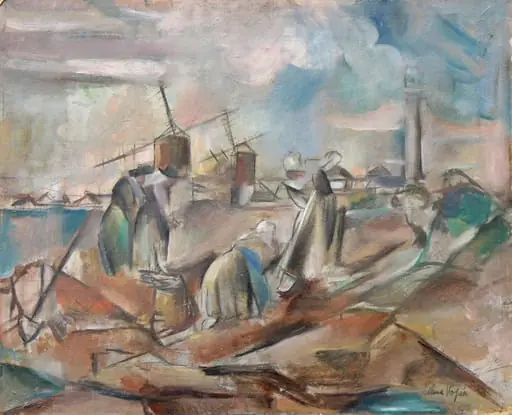
The painting portrays a gathering of villagers engaged in trade and social interaction, centered around a seated woman surrounded by others carrying baskets and wearing regional attire. Rather than idealizing rural life, Popea presents it as lived and unembellished—emphasizing quiet routines over spectacle. The scene suggests the market as both economic hub and social anchor, where tradition persists amid broader cultural change.
Technique & Style
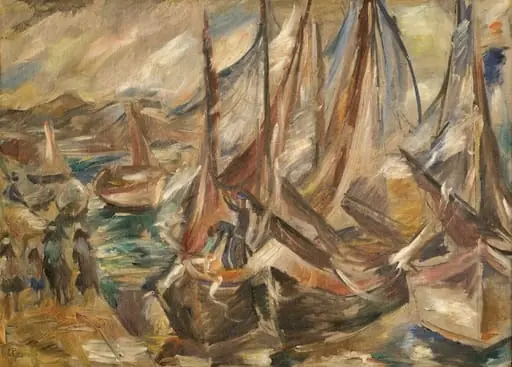
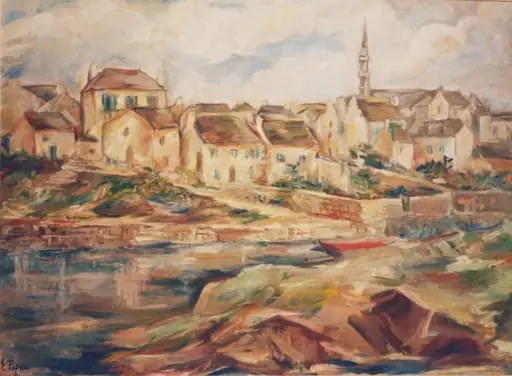
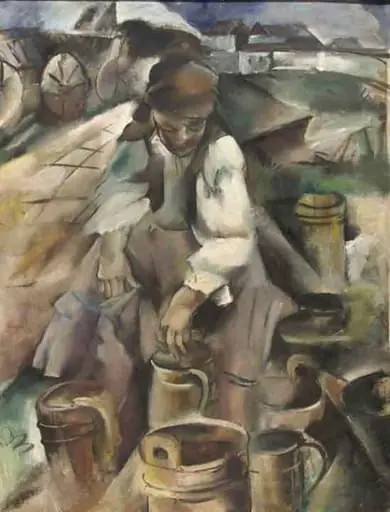
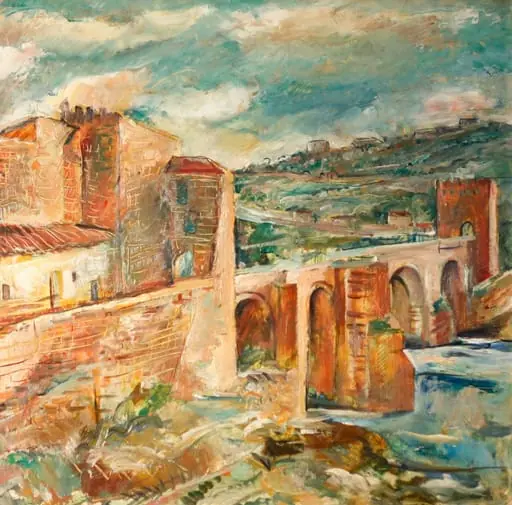
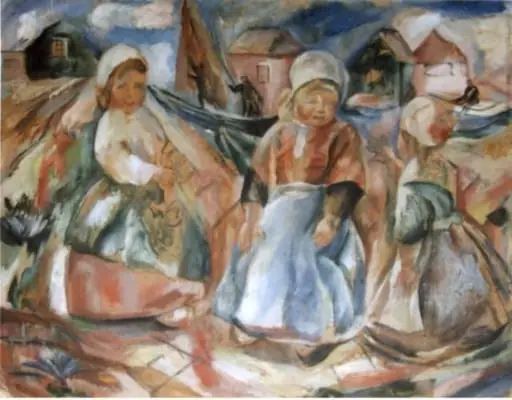
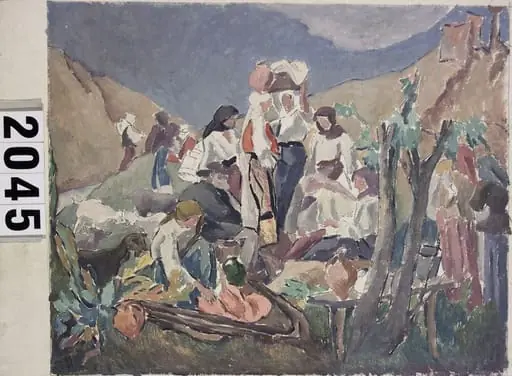
Popea employs loose, expressive brushwork and a restrained palette of earthy browns, muted greens, and soft blues to convey texture and atmosphere. Forms are simplified yet dynamic, showing traces of Impressionist light and Expressionist emotion, with subtle Cubist fragmentation in the arrangement of figures and architecture. The composition avoids rigid perspective, favoring a flattened, intimate space that draws viewers into the immediacy of the moment.
History & Provenance
Created during a period of national consolidation in Romania, the painting entered the collection of the Museum of Ethnography in Bucharest, where it remains today. Its acquisition reflects institutional interest in documenting folk culture through art. Popea’s work, though not widely exhibited during her lifetime, gained recognition posthumously as part of a broader reassessment of early 20th-century Romanian women artists.
Context
In the decades following World War I, Romanian artists increasingly turned to local subjects as part of a cultural reawakening. Popea’s focus on rural markets aligned with efforts to define a national identity through vernacular life. Unlike urban-focused modernists, she found inspiration in Transylvania’s villages, capturing traditions that were rapidly changing under industrialization and migration.
Legacy
Târg la Bran stands as a quiet testament to Popea’s commitment to portraying ordinary life with emotional honesty. While not part of mainstream modernist canons, her work contributes to a more inclusive history of Romanian art. Scholars now view her as a bridge between European modernism and regional authenticity, offering a nuanced counterpoint to romanticized depictions of peasant life.
Artist & collection
Artist
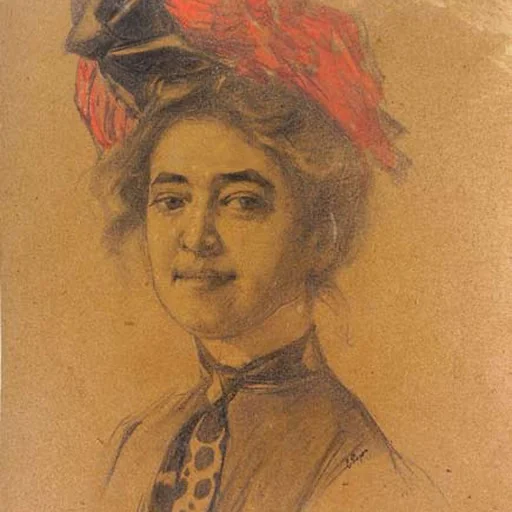
Elena Popea (15 April 1879, Brașov – 19 June 1941, Bucharest) was an Austro-Hungarian-born Romanian Modernist painter whose influences included Impressionism, Expressionism and Cubism.