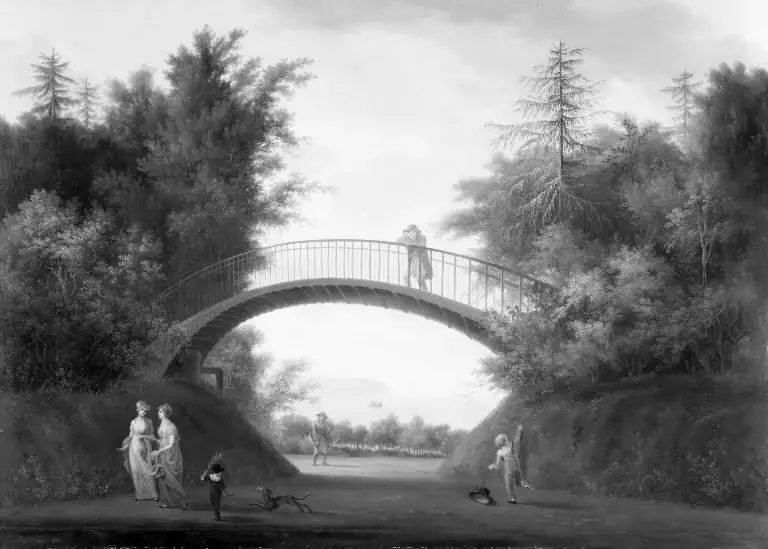
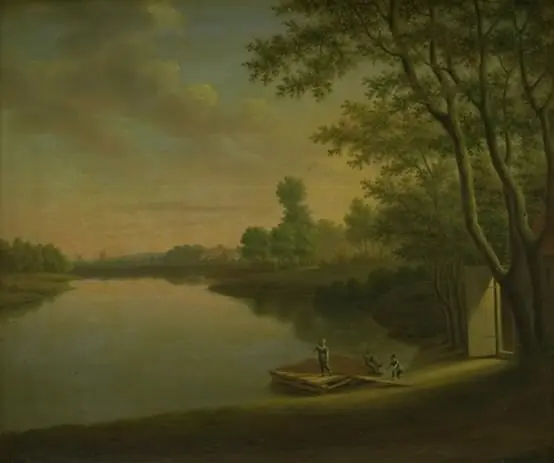
En bro over et vandløb ved Skodsborgvej
1808
oil
canvas
From the collection of Statens Museum for Kunst
1808
oil
canvas
From the collection of Statens Museum for Kunst
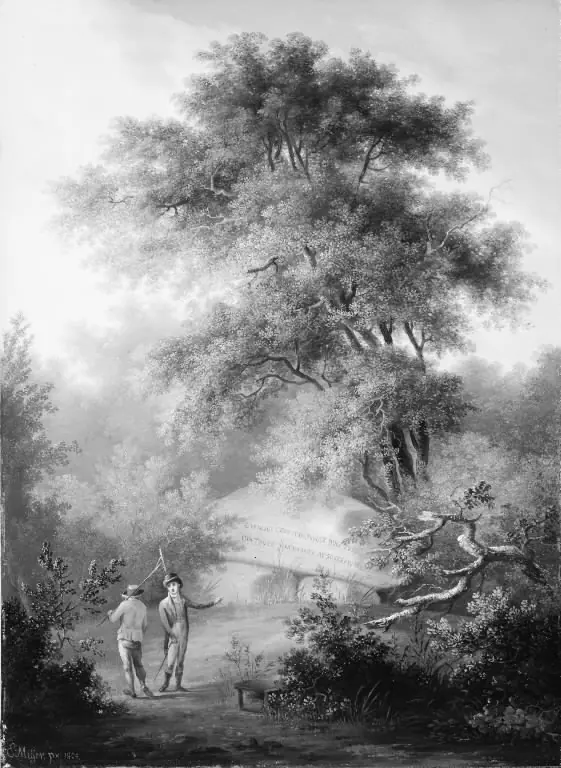
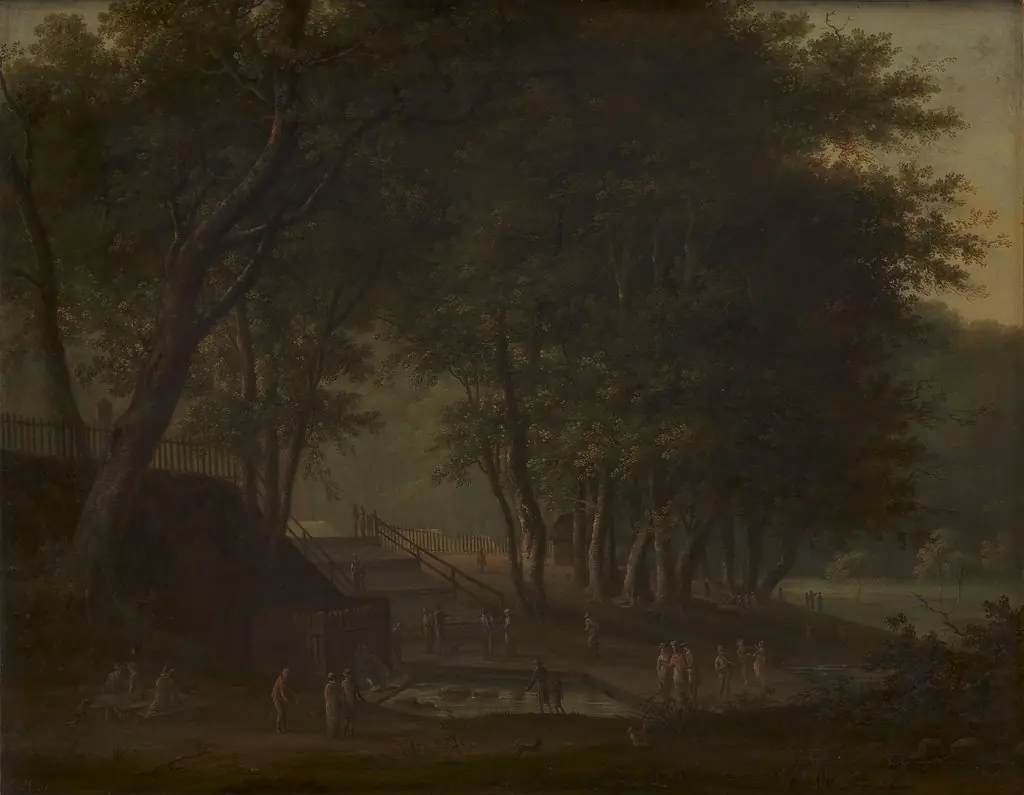
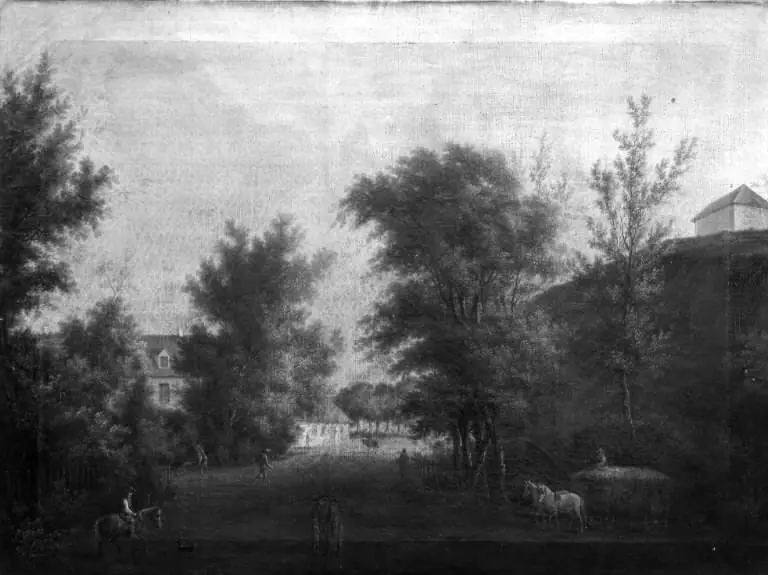
En bro over et vandløb ved Skodsborgvej is a 1808 oil by Elias Meyer, a Biedermeier work, held at Statens Museum for Kunst.
This painting shows a serene landscape with a bridge over a stream. In the foreground, a large tree leans to the left, its branches stretching out over the water. A few animals are scattered in the grassy area to the right of the tree. In the background, a bridge spans the stream, with trees lining the opposite bank. The sky above is cloudy and hazy, with the sun peeking through the clouds. The painting's use of chiaroscuro creates a sense of depth and atmosphere, drawing the viewer's eye into the tranquil scene. If you're interested in learning more about this technique, look up chiaroscuro.
Painted in 1808 by Elias Meyer, this oil on canvas depicts a quiet rural scene near Skodsborgvej. The work captures a modest bridge crossing a narrow stream, framed by natural elements that suggest a calm, undisturbed landscape. It is part of the permanent collection at Statens Museum for Kunst in Copenhagen, reflecting early 19th-century Danish interest in localized, observational landscape painting.
The scene presents an unidealized view of the Danish countryside, emphasizing quietude over drama. A leaning tree dominates the foreground, its form directing attention toward the bridge and distant bank. Scattered animals and soft vegetation imply human presence without figures, suggesting harmony between land and livelihood. The composition avoids narrative, instead inviting contemplation of everyday nature.
Meyer employs subtle chiaroscuro to model forms and suggest atmospheric depth, particularly in the hazy sky and the play of light across the water and grass. Brushwork is restrained, with soft transitions between tones rather than sharp definition. The muted palette and diffuse lighting reflect a preference for naturalism over romantic exaggeration, aligning with emerging Nordic tendencies in landscape representation.
Created in 1808, the painting entered the collection of Statens Museum for Kunst in the 19th century, likely through state acquisition or donation. Its preservation suggests early recognition of its quiet significance within Danish art. No major exhibitions or documented ownership changes are recorded, indicating its role as a steady, understated presence in the national collection.
Painted during Denmark’s post-Napoleonic era, the work reflects a cultural turn toward domestic landscapes as expressions of national identity. Artists like Meyer moved away from grand historical themes, favoring intimate, local views. This shift paralleled broader European trends but retained a distinctly Danish sensibility—unadorned, attentive to seasonal light and modest terrain.
Though not widely reproduced or publicly celebrated, the painting remains a representative example of early Danish landscape painting. It contributes to the understanding of how regional artists documented their surroundings with restraint and sincerity. Its continued presence in the national museum underscores its value as a quiet record of Denmark’s natural and artistic heritage.
Read the full account in the museum source.
Elias Meyer (1763–1809) was an artist, born in Copenhagen.
See the richer artist page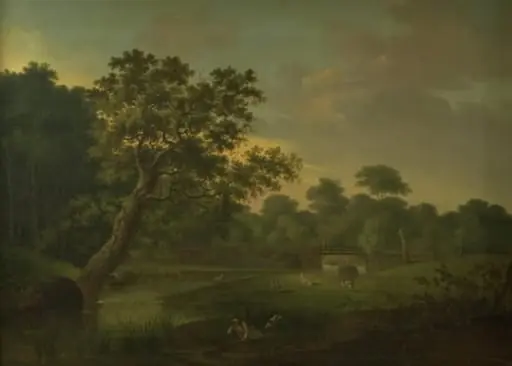
En bro over et vandløb ved Skodsborgvej
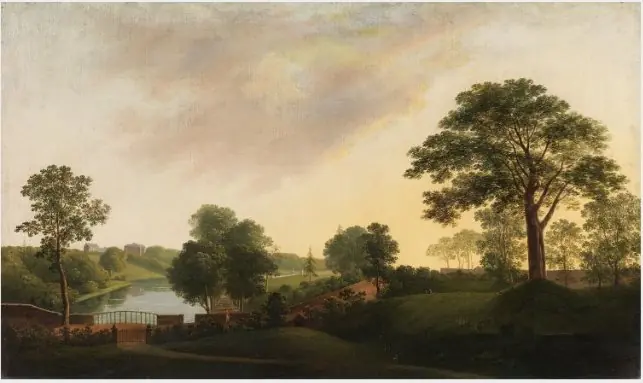
Pleasure Grounds, Ballinrobe
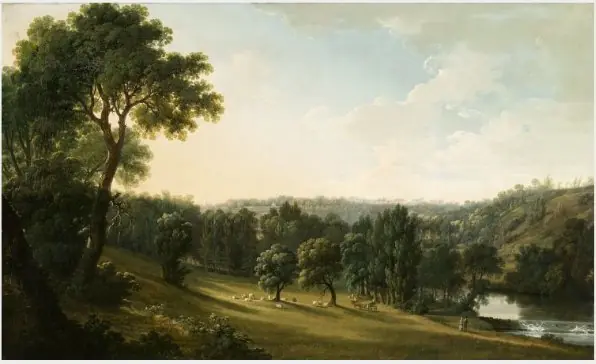
A View in Lucan House Demesne
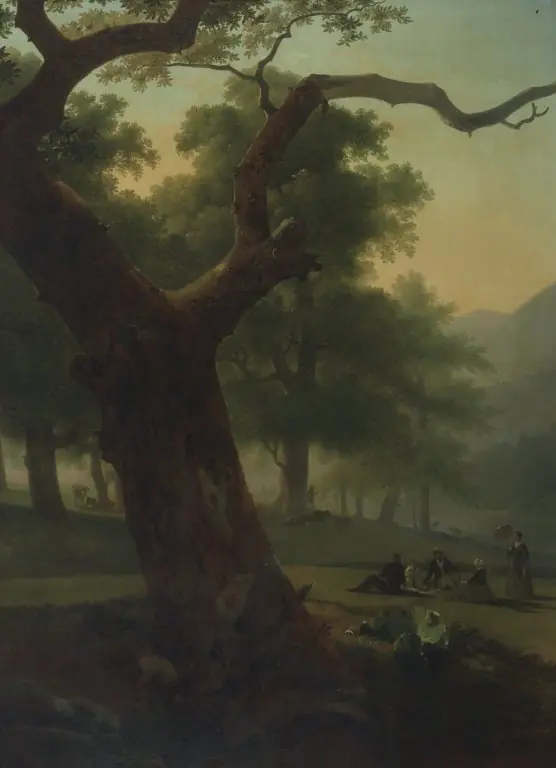
Picnic in the Catskills
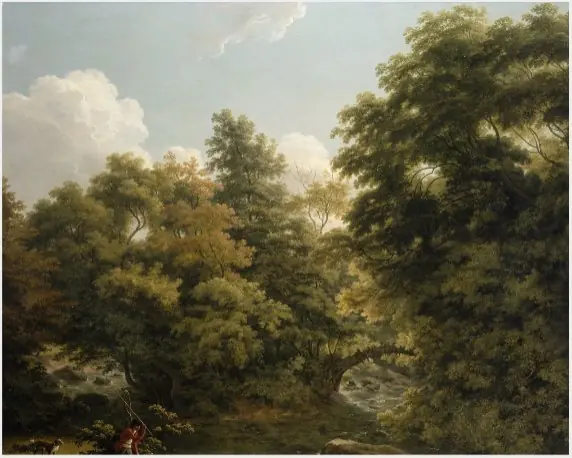
The River in the Demesne at Charleville
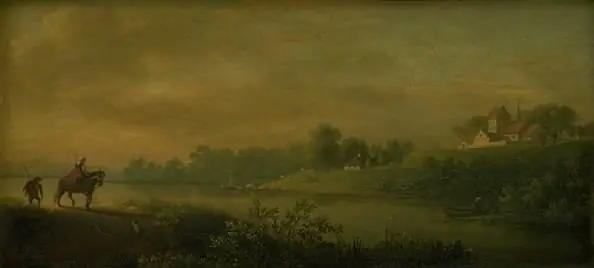
Et vadested ved foden af en kirke
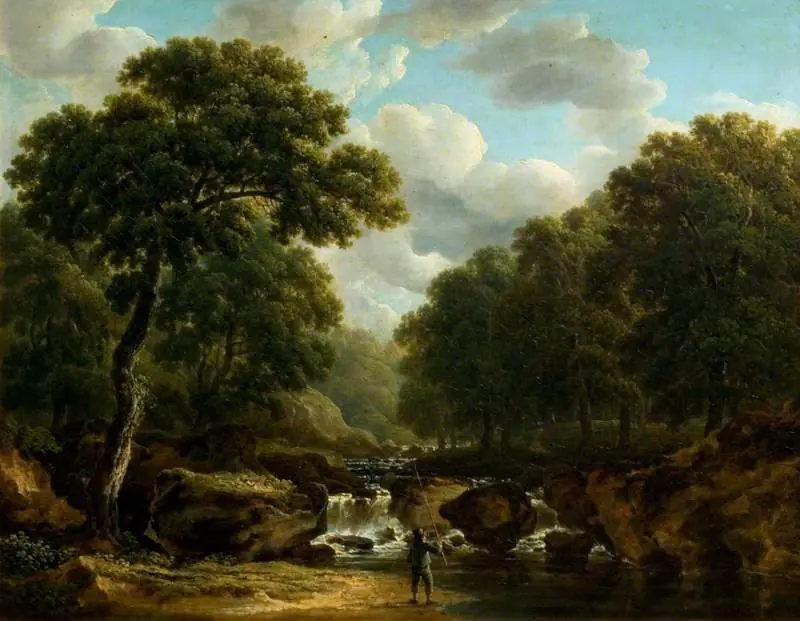
The Devil's Glen, County Wicklow
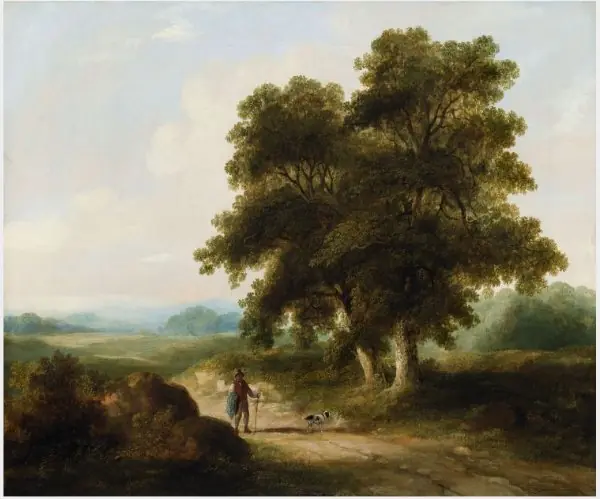
A Landscape, Homeward Bound
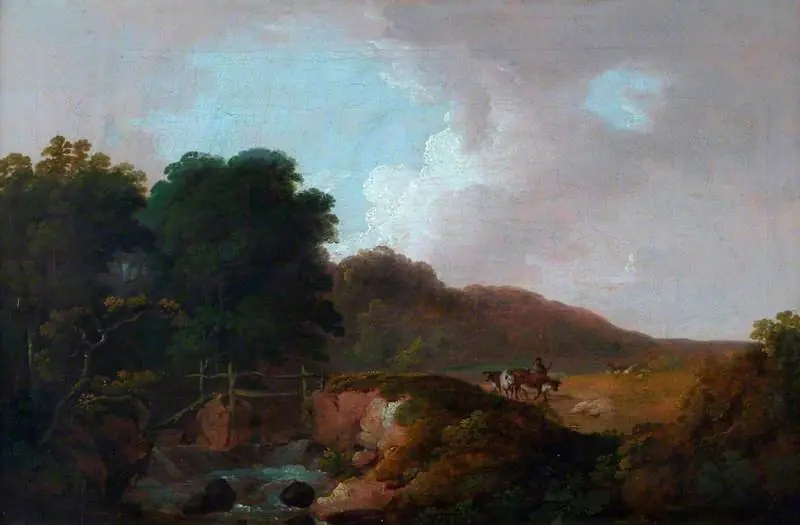
Landscape with a Rustic Bridge and a Stream
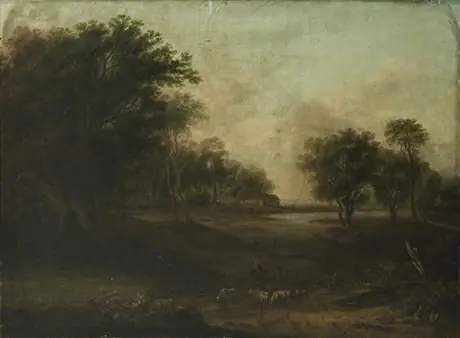
Ideallandschaft
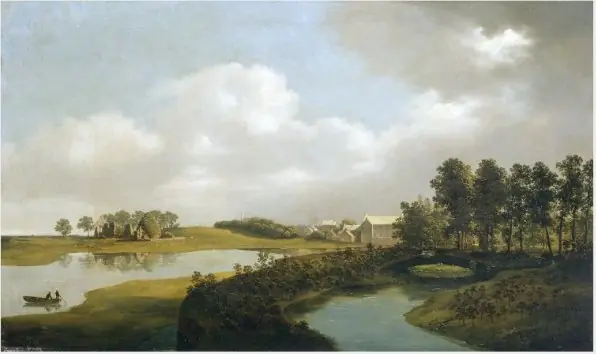
The Mill, Ballinrobe
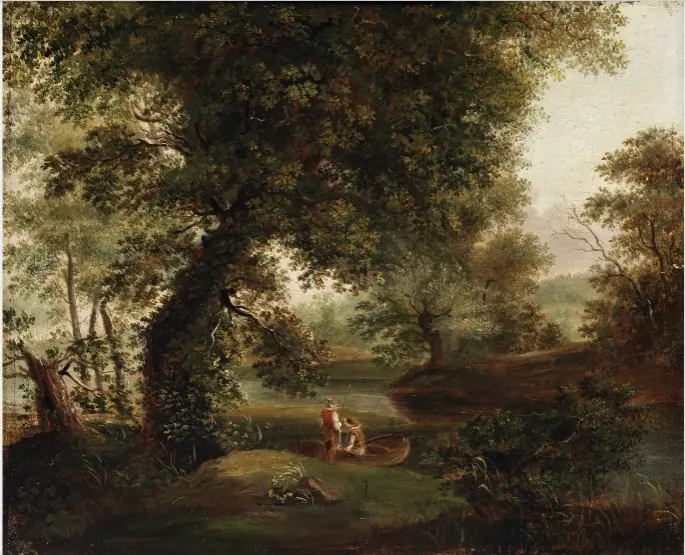
A Woodland Scene
Your cart is empty
Explore artworks →