Artwork
Picnic in the Catskills
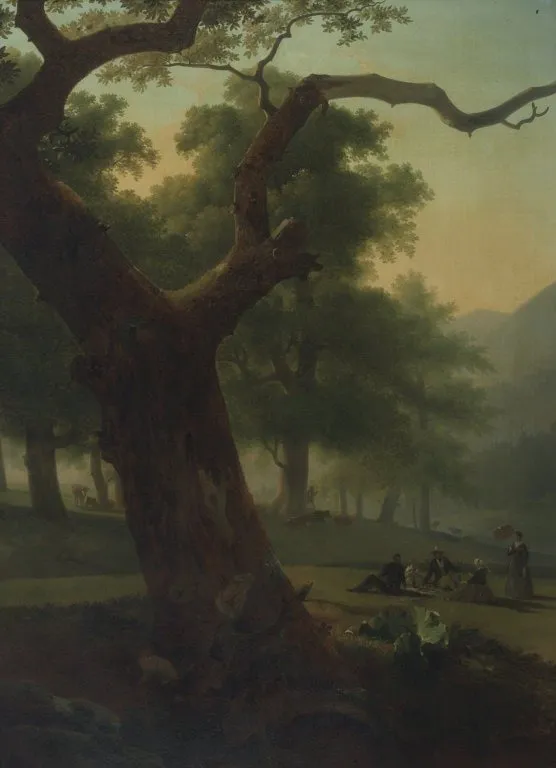
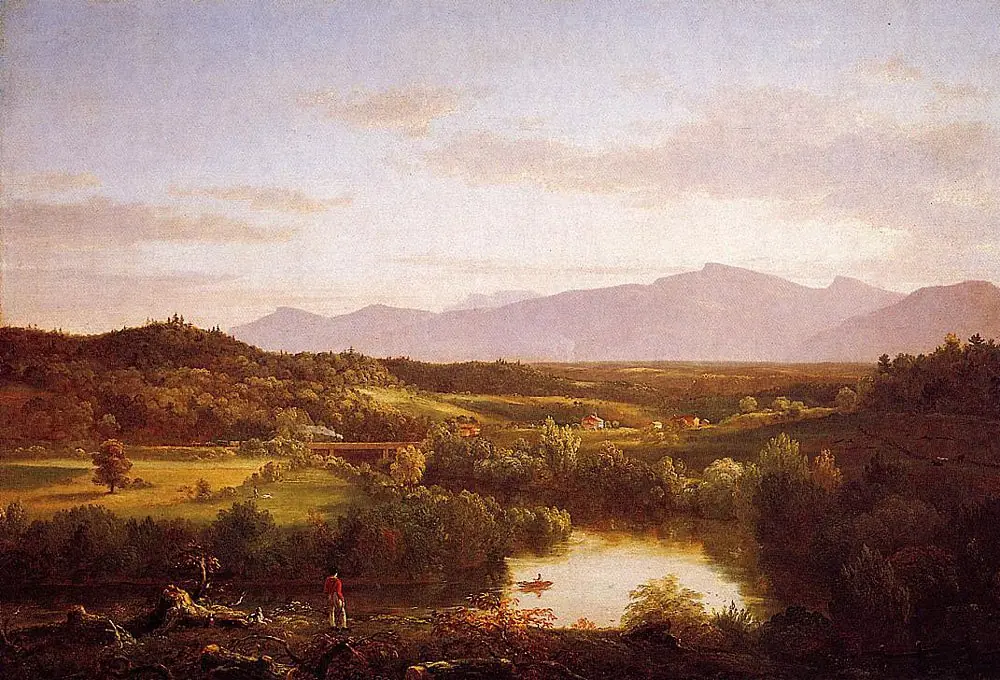
Picnic in the Catskills is an oil painting by the Hudson River School artist Unknown. It dates from 1840 and is held in the collection of the Brooklyn Museum.
About this work
Overview
The artist’s controlled brushwork and layered pigments create a sense of spatial depth without overt drama, favoring subtlety over spectacle.
This oil painting captures a quiet moment of leisure in the Catskill Mountains, where a small group rests on the forest floor amid dense trees and distant water. The composition emphasizes stillness and harmony with nature, guided by soft, directional sunlight filtering through the canopy. The artist’s controlled brushwork and layered pigments create a sense of spatial depth without overt drama, favoring subtlety over spectacle.
Subject & Meaning
The scene portrays an intimate, uneventful gathering—figures seated casually, engaged in quiet companionship. There is no narrative climax or symbolic gesture; instead, the focus lies in the ordinary rhythm of outdoor repose. The setting suggests a retreat from urban life, reflecting 19th-century ideals of nature as a restorative space, though without overt moral or religious overtones.
Technique & Style
The painting employs smooth, deliberate brushwork and a restrained palette to model form through gradual tonal shifts. Multiple thin layers of transparent pigment, likely applied via glazing, enhance the luminosity of the light and the richness of the foliage. The absence of visible brushstrokes contributes to a polished, almost idealized realism, characteristic of academic landscape traditions of the period.
History & Provenance
The work’s origin is tied to mid-19th-century American artists who frequented the Catskills, drawn by the region’s unspoiled scenery. While specific ownership records are not documented here, its style aligns with contemporaries who sought to depict American landscapes with technical precision and quiet dignity, often for private collectors rather than public exhibition.
Context
Created during a time when American artists were defining a distinct visual identity, this painting reflects the influence of European landscape traditions adapted to local topography. The Catskills, popularized by writers and painters alike, became a symbol of national pride and natural beauty, offering a counterpoint to industrialization and urban growth.
Legacy
Though not widely exhibited or reproduced, the painting contributes to a broader body of work that helped establish landscape painting as a serious genre in American art. Its emphasis on tranquility and technical refinement influenced later generations who valued observation over sentiment, laying groundwork for the tonalist movement that followed.
Artist & collection

 Domestic Scene
 Giacomo and Cardinal Marco, investing Andrea, Abbot of San Zeno, with his Benefice
 The Nymph of Fontainebleau
 Portrait of a Woman
 Madonna and Child with Saints in the Enclosed Garden
 Venus and Minerva
 Family Group of Four on Sofa
 Wall painting from Room H of the Villa of P. Fannius Synistor at Boscoreale
 En bro over et vandløb ved Skodsborgvej
 Italianate Landscape
 The River in the Demesne at Charleville
 Landscape with a Rustic Bridge and a Stream
 Landscape with a Waterfall and Anglers
 Landscape with Trees in the Foreground and Distant Hills
 Wooded Landscape
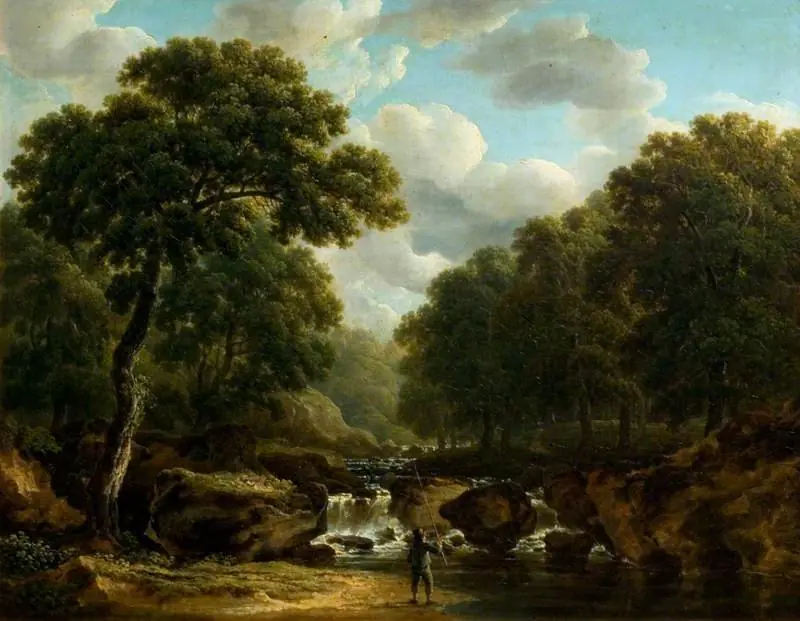 The Devil's Glen, County Wicklow
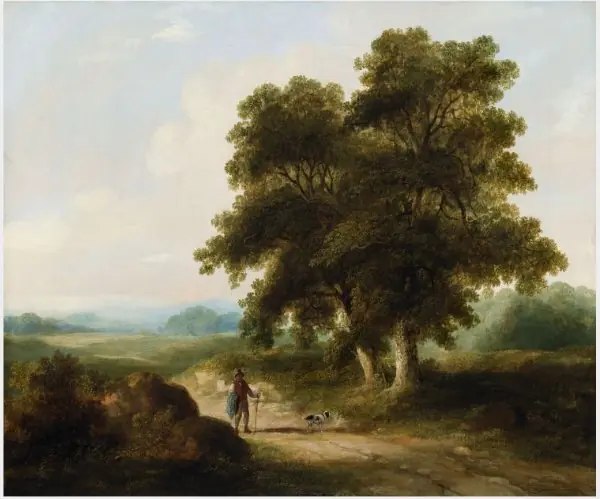 A Landscape, Homeward Bound
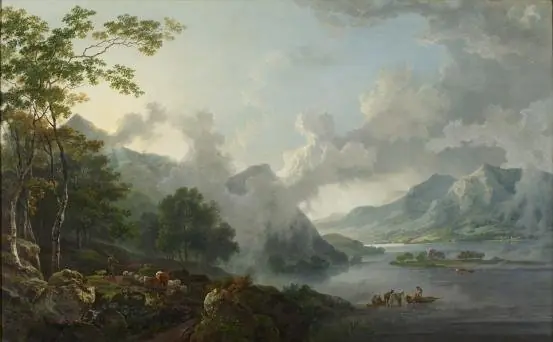 View of Windermere Lake, early morning
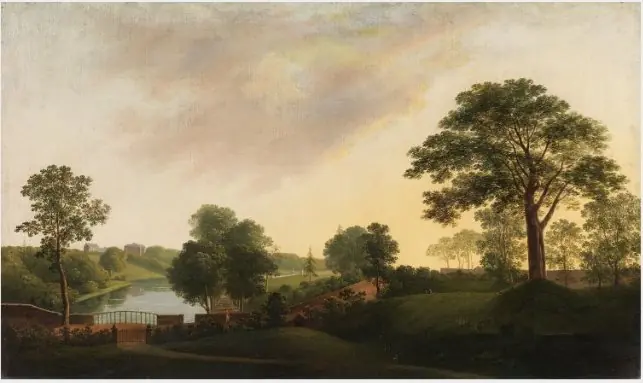 Pleasure Grounds, Ballinrobe
 River in the Catskills