Artwork
Still Life with a Hare, a Heron and Other Birds
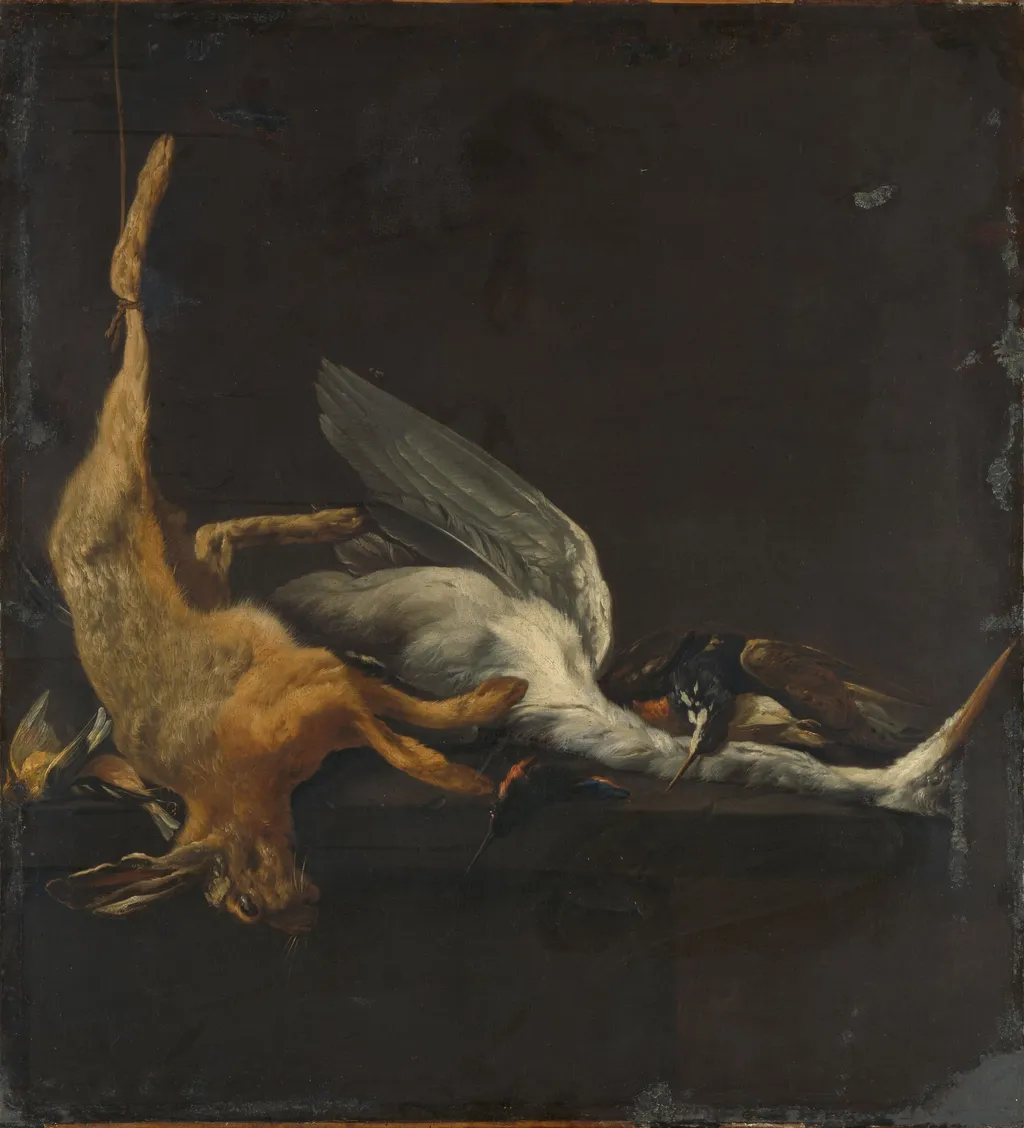
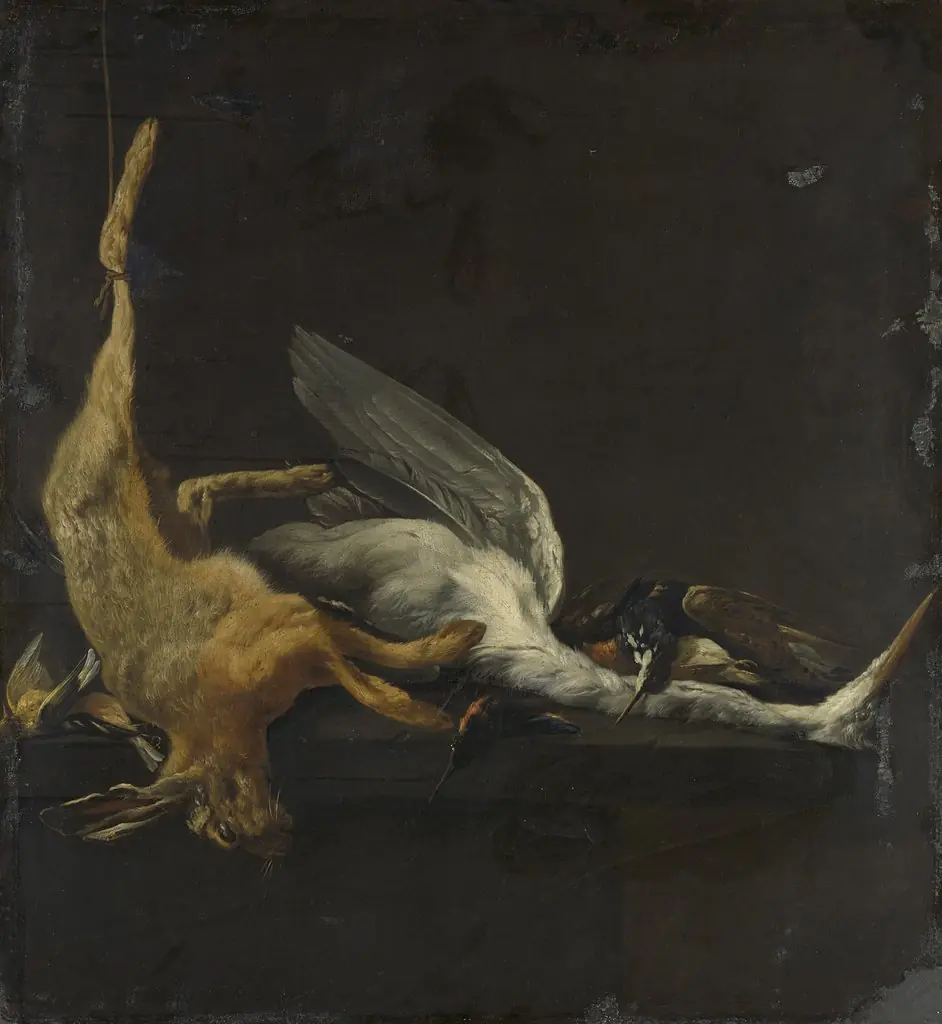
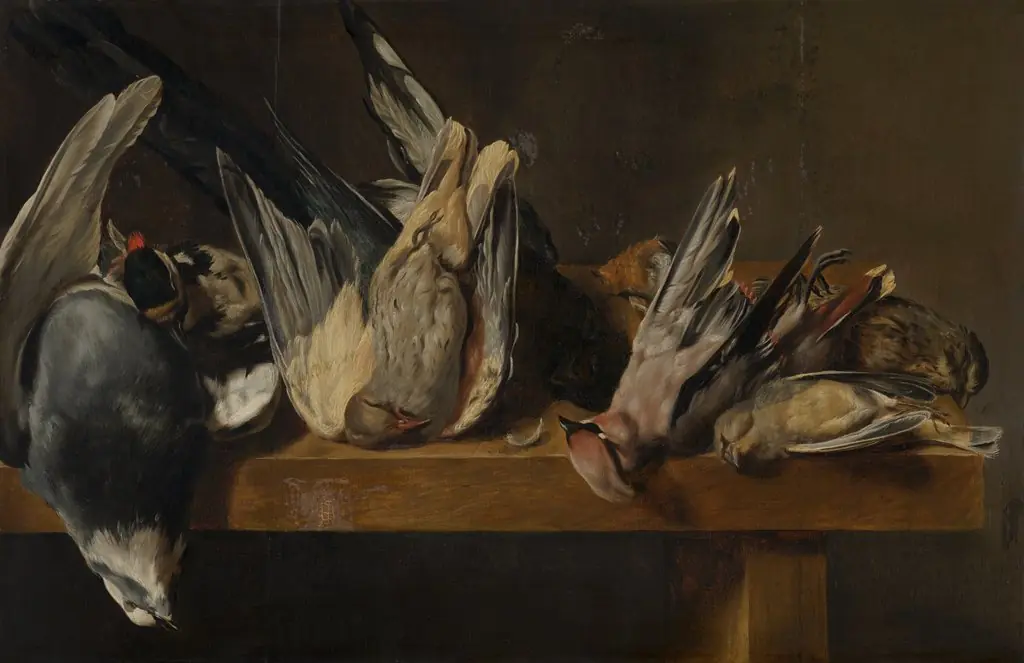
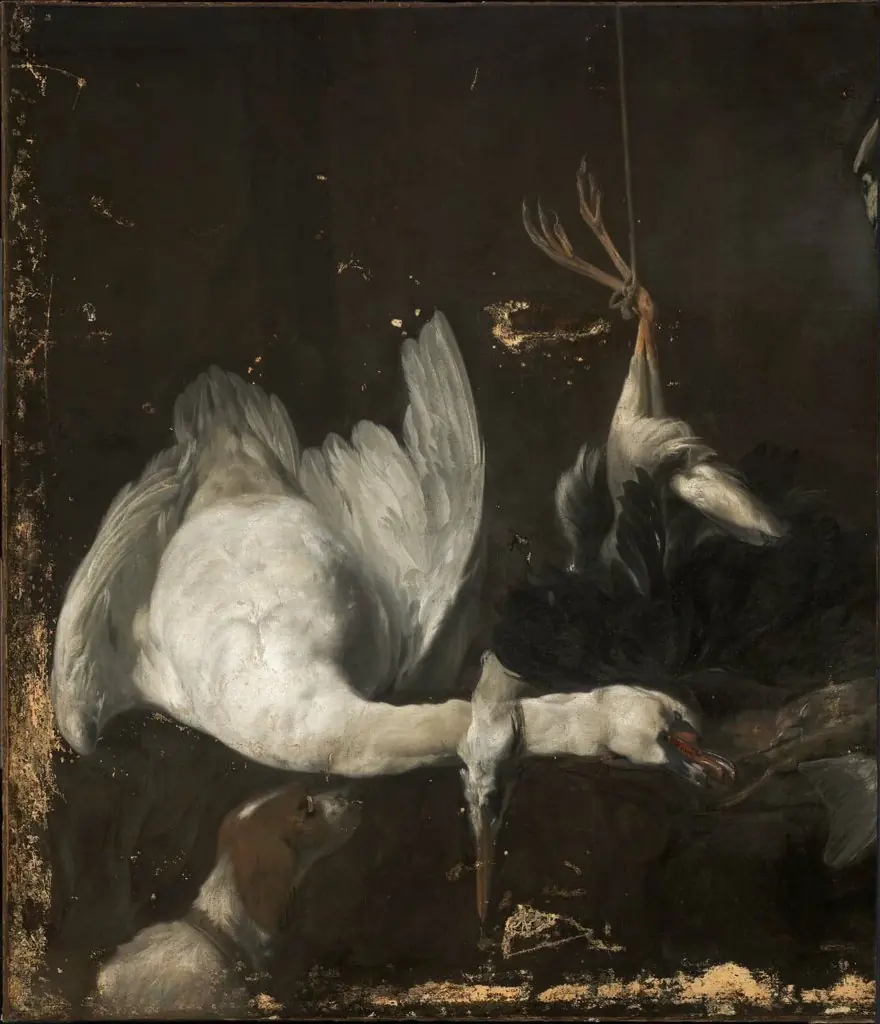
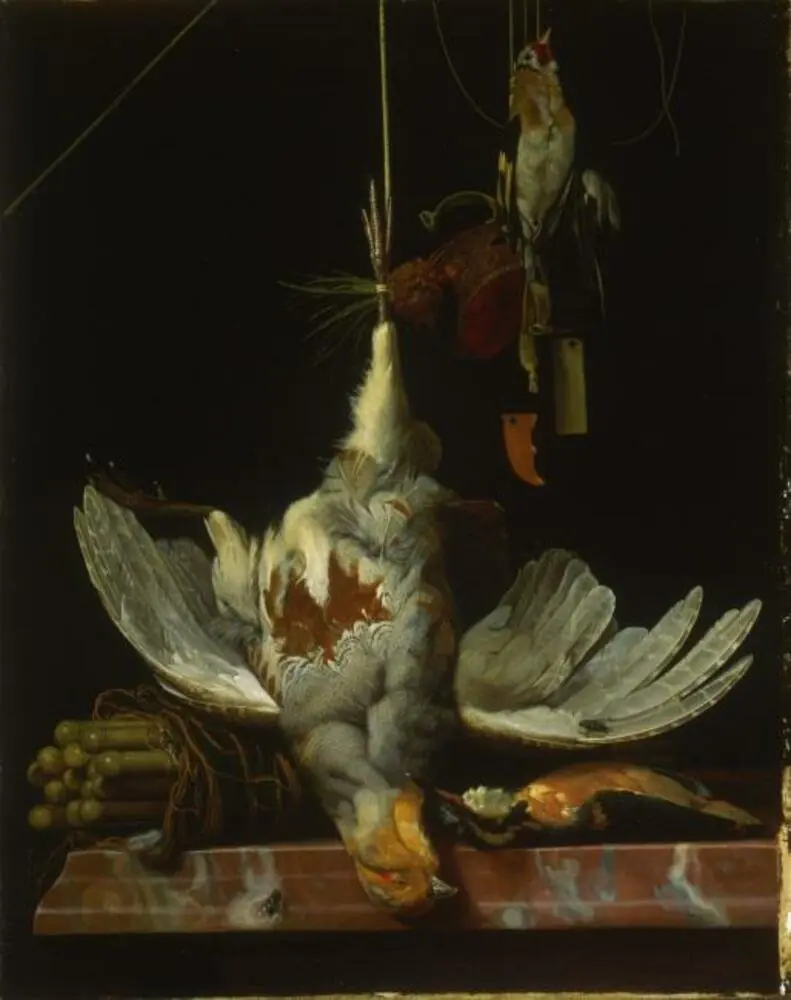
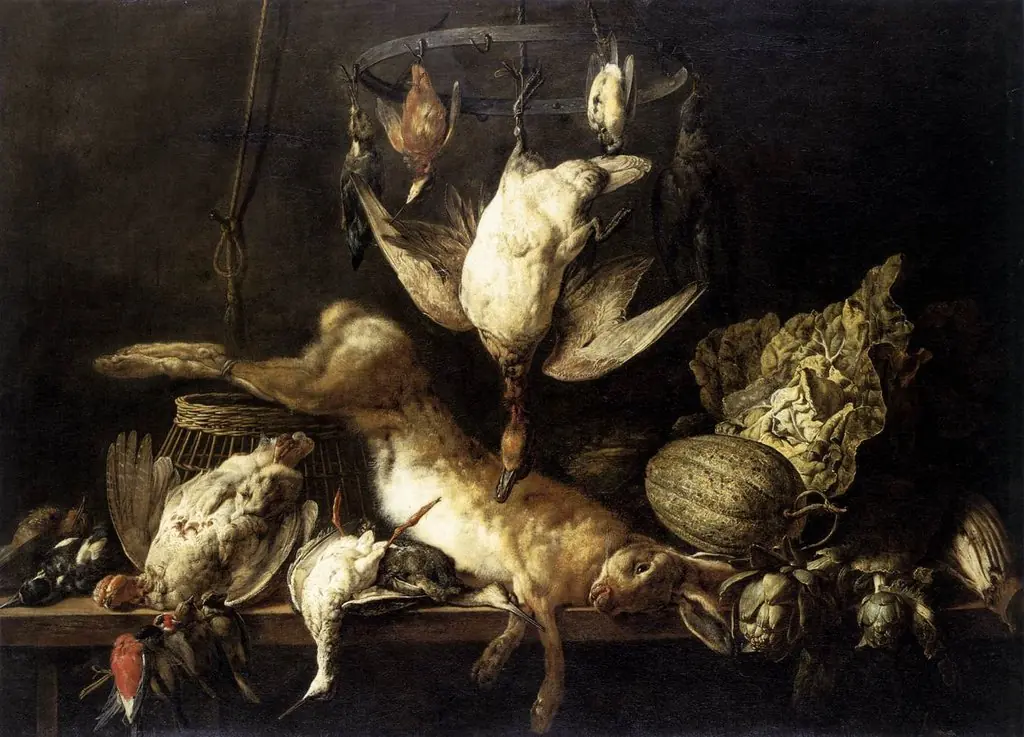
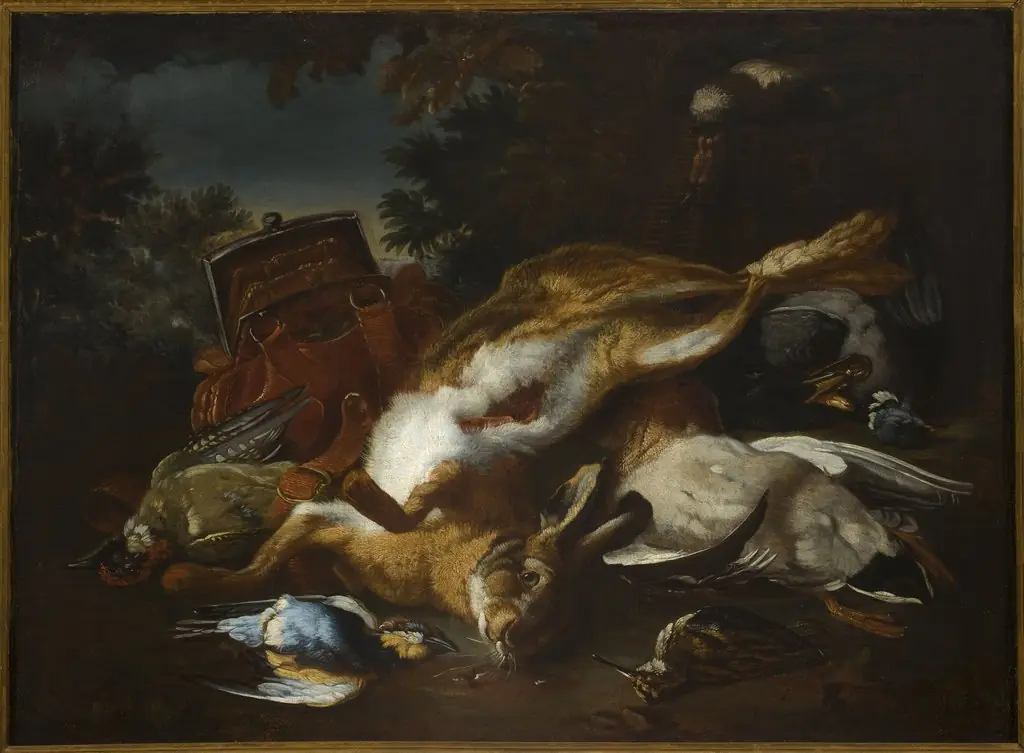
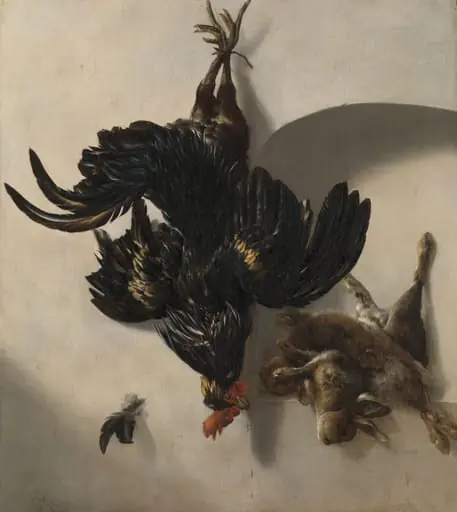
Still Life with a Hare, a Heron and Other Birds is an unspecified painting by the Dutch Golden Age artist Elias Vonck. It dates from 1645 and is held in the collection of the Rijksmuseum. A composition of game birds and a hare arranged on a wooden table, this painting presents a quiet still life of hunted animals.
About this work
Overview
A composition of game birds and a hare arranged on a wooden table, this painting presents a quiet still life of hunted animals.
A composition of game birds and a hare arranged on a wooden table, this painting presents a quiet still life of hunted animals. The subjects lie still, their plumage and fur rendered with close attention to texture and light. No signature or inscription identifies the artist, leaving the work anonymous despite its precision. The arrangement suggests a moment after the hunt, frozen in observation rather than celebration.
Subject & Meaning
The hare and heron, along with smaller birds, represent the spoils of a hunt, likely intended as provisions for a meal. Their placement on a plain surface evokes a practical inventory rather than a symbolic allegory. The intact feathers and unblemished skin imply freshness, emphasizing the animals’ recent demise. There is no indication of human presence, focusing attention solely on the natural forms themselves.
Technique & Style
The artist employed fine brushwork to capture the sheen of feathers, the softness of fur, and the subtle variations in surface tone. Light falls evenly across the scene, enhancing the tactile realism of each element. Shadows are minimal, avoiding dramatic contrast, which reinforces the calm, observational tone. The composition is tightly controlled, with no background to distract from the arranged forms.
History & Provenance
The painting entered the Rijksmuseum’s collection in the 19th century, with no documented history prior to that. Its origins remain uncertain, though stylistic analysis places it within the Dutch still-life tradition of the 17th century. No records link it to a known artist or patron, and its early ownership is untraceable. It has been consistently attributed to an anonymous hand within the broader circle of Dutch painters of the period.
Context
This work aligns with a Dutch artistic interest in natural detail and the material culture of the table. While many still lifes of the era included luxury items or religious symbolism, this piece focuses purely on the physical presence of game. It reflects a broader cultural appreciation for the natural world as both resource and subject of quiet study, common among urban elites with access to hunting grounds.
Legacy
Though unsigned and unattributed, the painting contributes to the understanding of anonymous artists who specialized in naturalistic observation. Its emphasis on texture and form without embellishment distinguishes it from more ornate contemporaries. It remains a quiet example of how Dutch painters found significance in the ordinary, preserving the dignity of the hunted through careful representation.
Own this work as a print
Artist & collection