Artwork
Wedding Procession
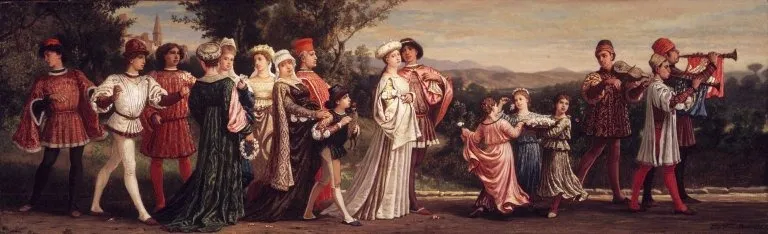
Wedding Procession is an oil painting by the American Impressionist artist Elihu Vedder. It dates from 1872 and is held in the collection of the Brooklyn Museum.
About this work
Overview
Elihu Vedder, an American painter active in the late 19th century, completed the oil work titled *Wedding Procession* in 1872. The canvas, now part of the Brooklyn Museum’s holdings, exemplifies Vedder’s early forays into narrative painting before his later fame as an illustrator.
Subject & Meaning
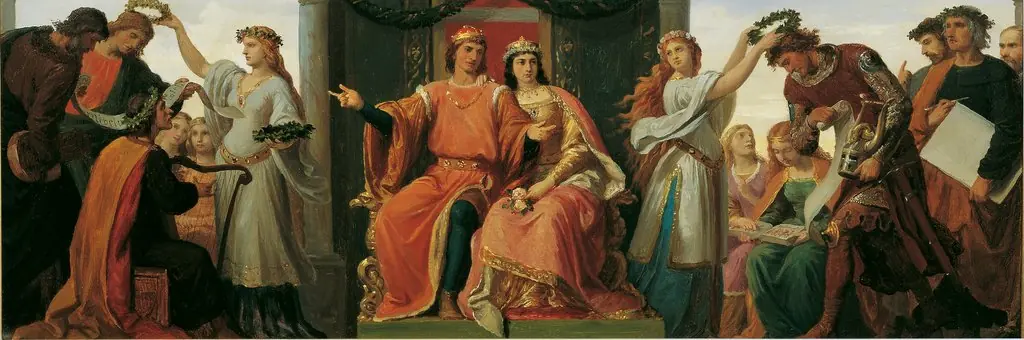
The scene depicts a procession of figures dressed in elaborate Renaissance-inspired attire, moving together as if en route to a ceremony. A central female figure, distinguished by a flowing gown and ornate headpiece, suggests the bride, while musicians with a lute and horn accompany the group, underscoring the celebratory atmosphere.
Technique & Style
Rendered in oil, the painting showcases meticulous attention to fabric folds, intricate patterns, and the play of light across textured surfaces. Though Vedder is often linked to Symbolism, this work reflects the softer brushwork and color sensibility associated with American Impressionism of the period.
History & Provenance
After its creation, *Wedding Procession* entered private collections before being acquired by the Brooklyn Museum, where it remains on display. The painting’s provenance traces a typical trajectory for Vedder’s works, moving from the artist’s studio to public institutions.
Context
Created during a decade when American artists were exploring European historical themes, the piece aligns with a broader fascination for medieval and Renaissance motifs. Vedder’s choice of a wedding scene mirrors contemporary interests in romanticized historical narratives.
Artist & collection

Artist
Elihu Vedder (26 February 1836 – 29 January 1923) was an American symbolist painter, book illustrator and poet from New York City.

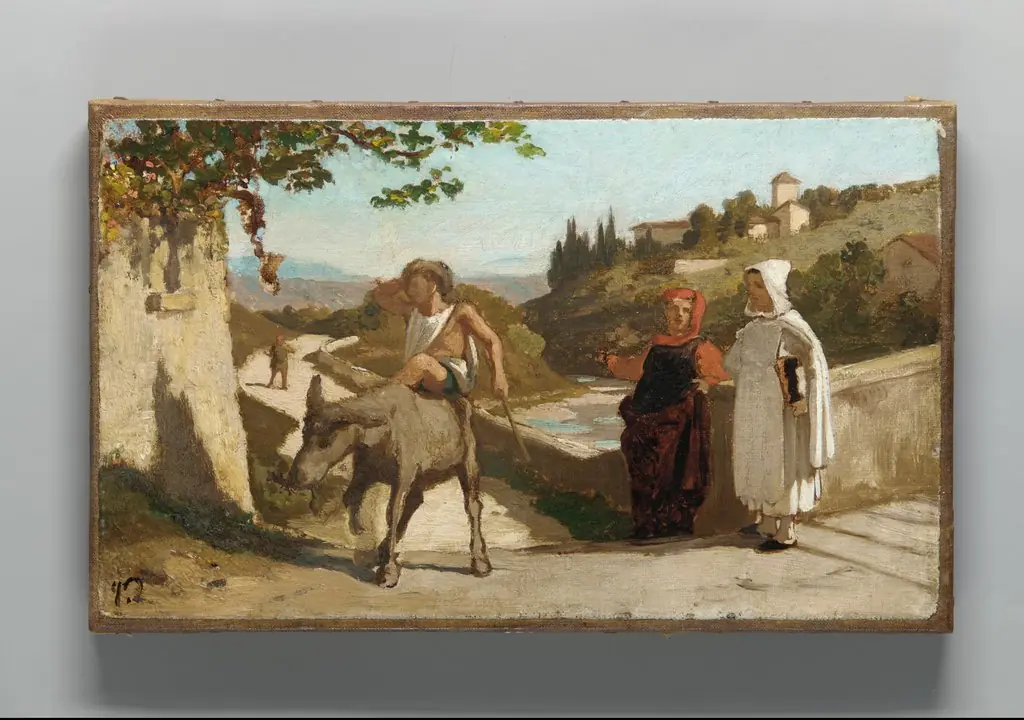 The Fable of the Miller, His Son, and the Donkey
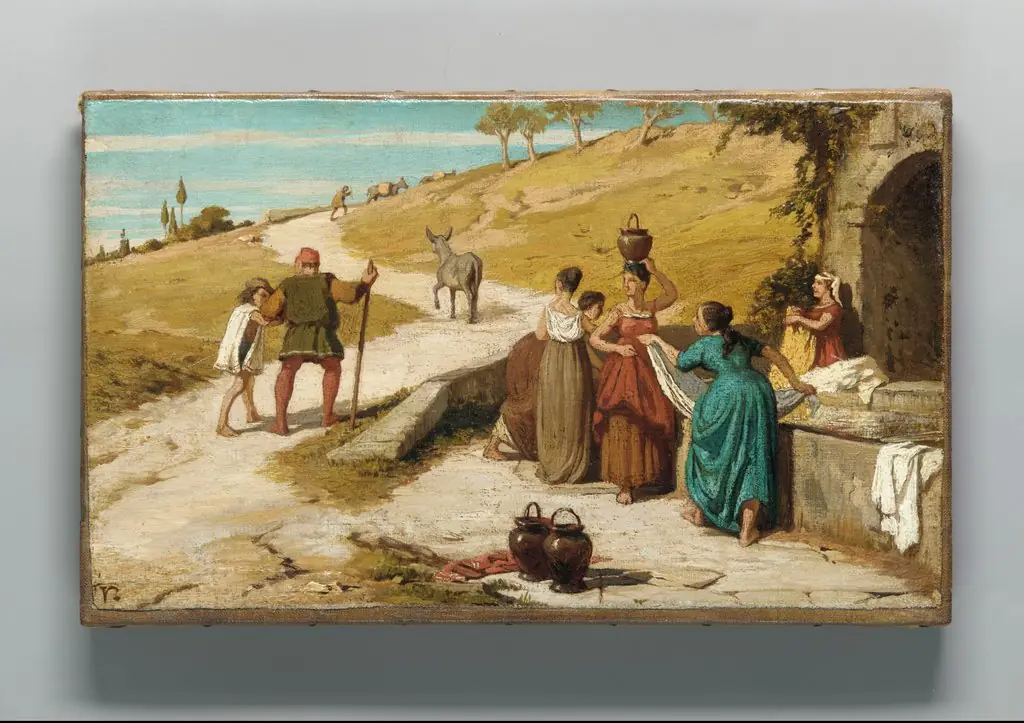 The Fable of the Miller, His Son, and the Donkey
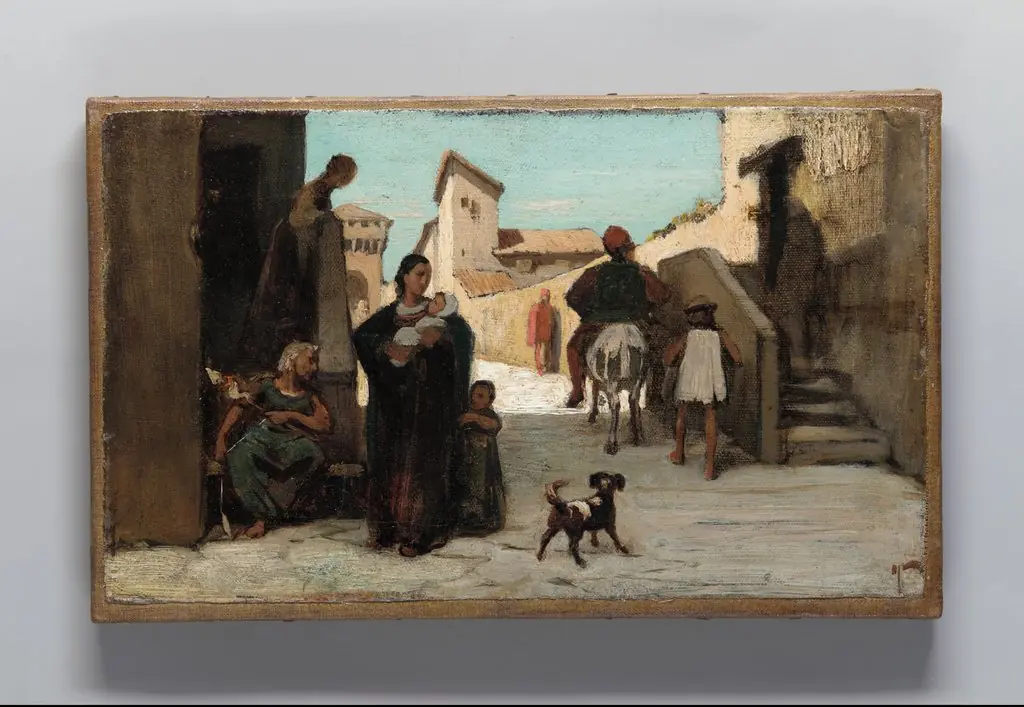 The Fable of the Miller, His Son, and the Donkey
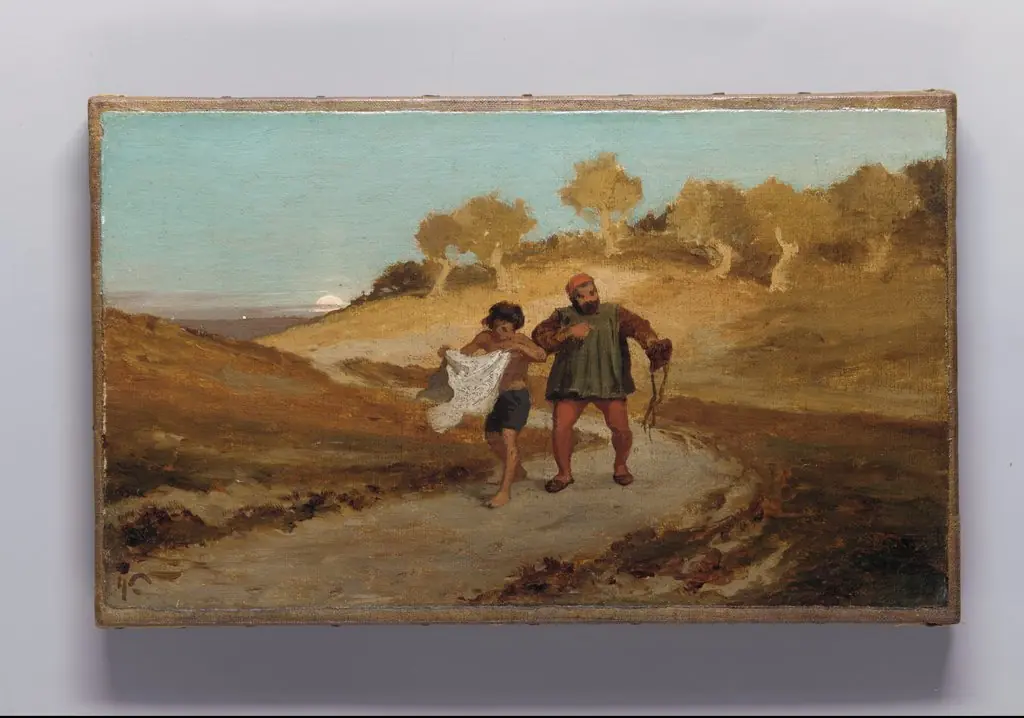 The Fable of the Miller, His Son, and the Donkey
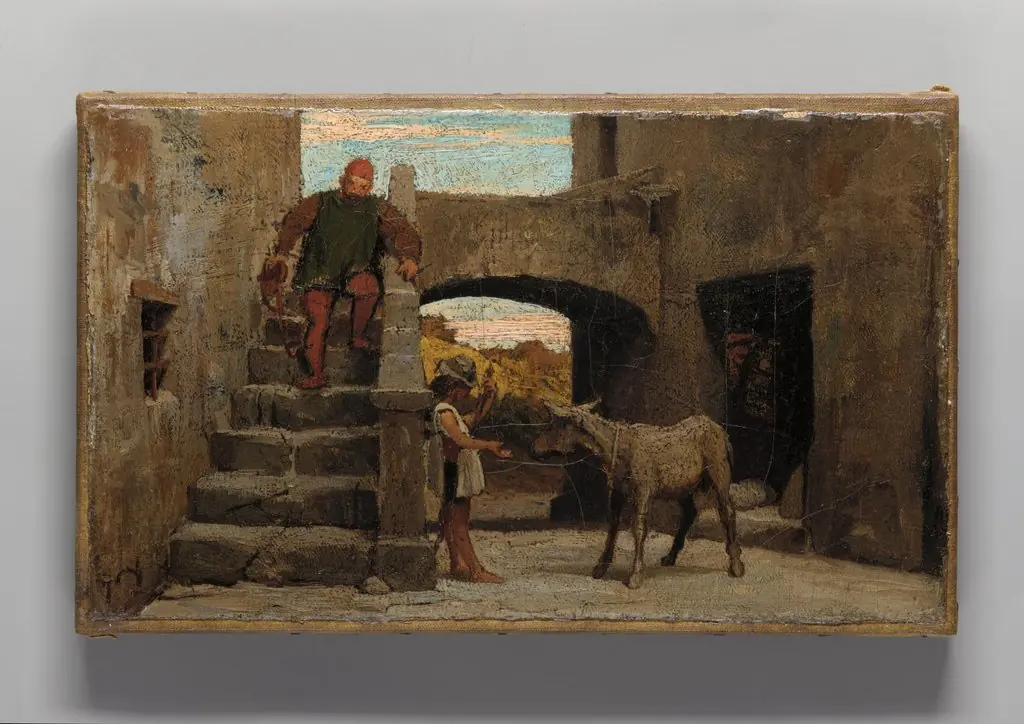 The Fable of the Miller, His Son, and the Donkey
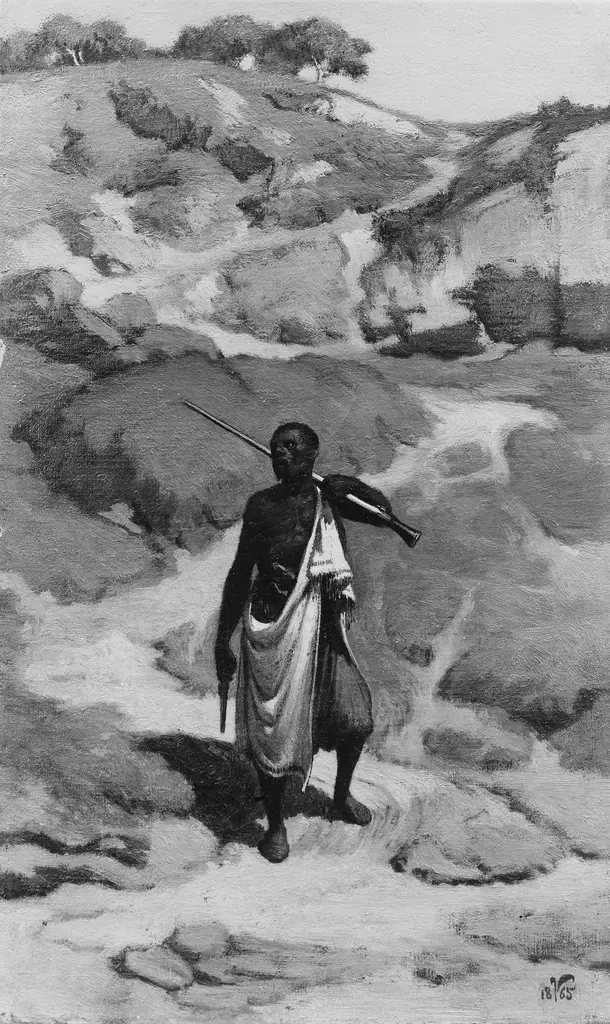 The African Sentinel
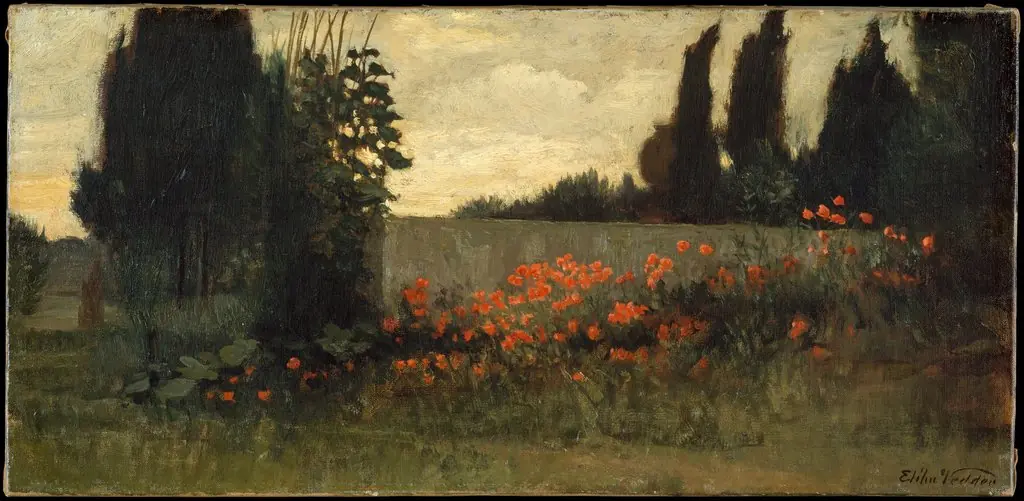 Cypress and Poppies
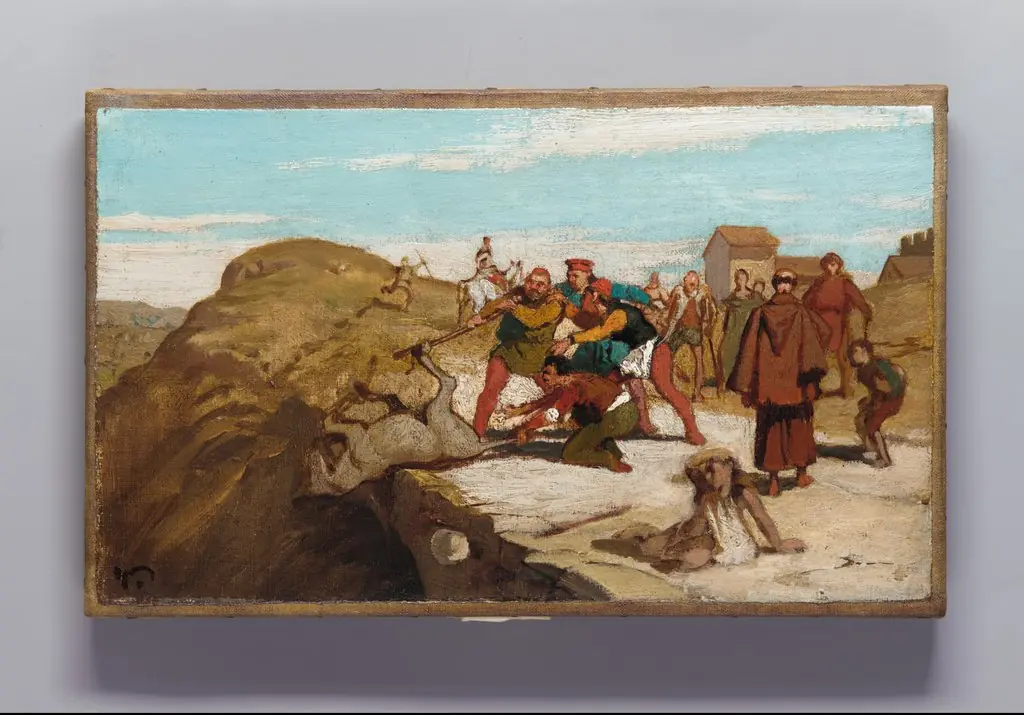 The Fable of the Miller, His Son, and the Donkey
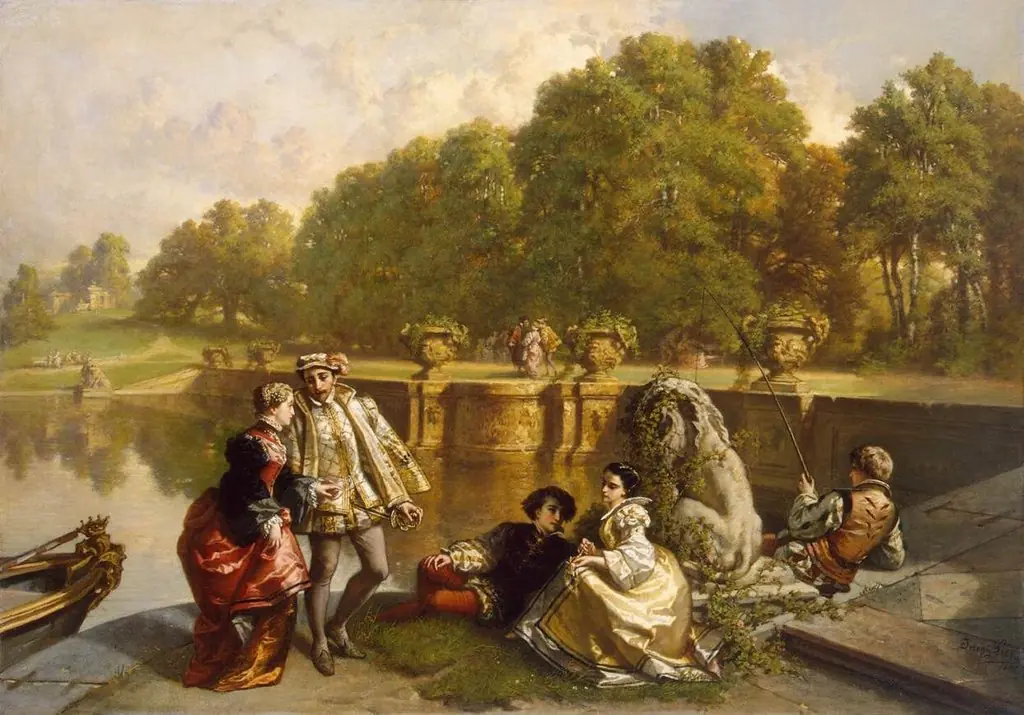 Scene in a Park
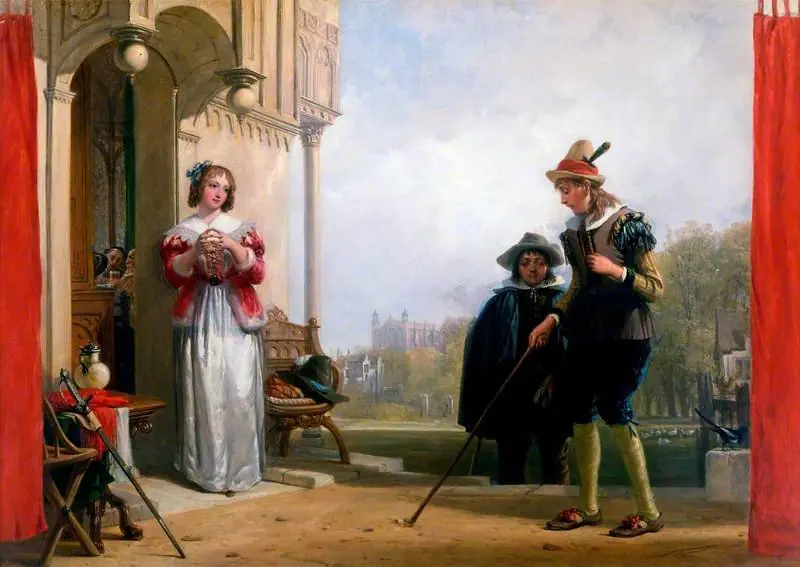 Slender and Anne Page (from 'The Merry Wives of Windsor' by William Shakespeare)
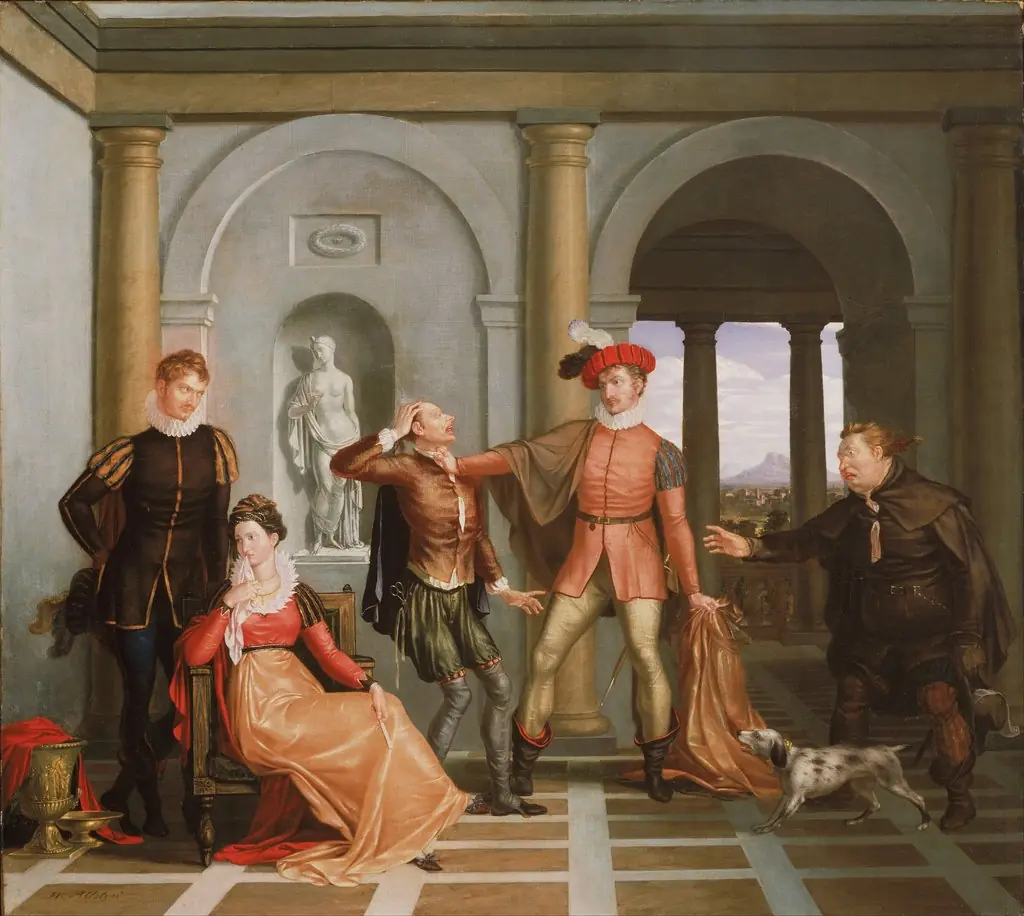 Katharina and Petruchio (Scene from Shakespeare's "The Taming of the Shrew")
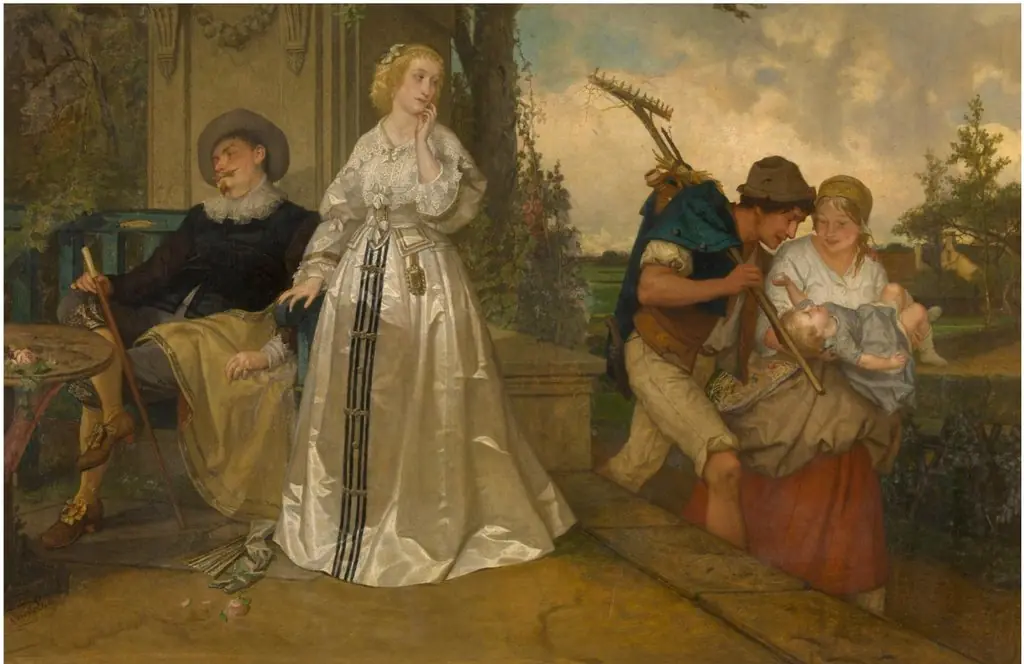 A contrast
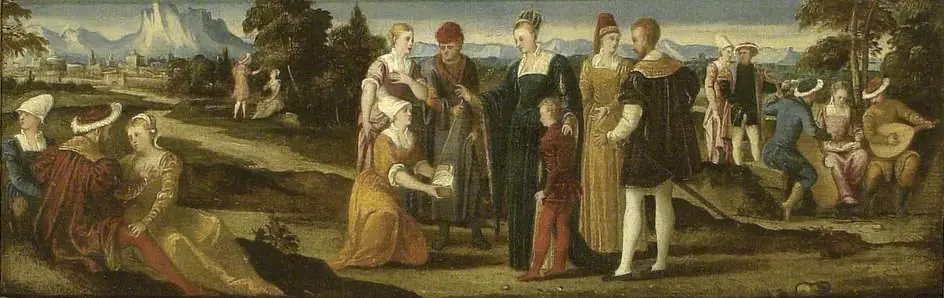 Moses brought before Pharaoh's Daughter
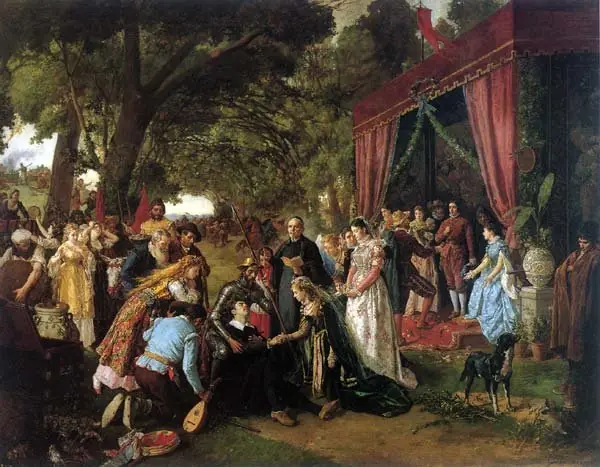 Casamiento de Basilio y Quiteria (Don Quijote capítulo XXI)
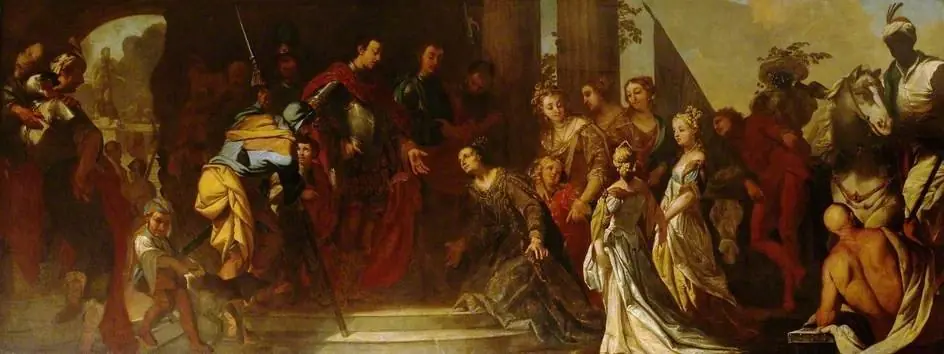 The Family of Darius before Alexander the Great
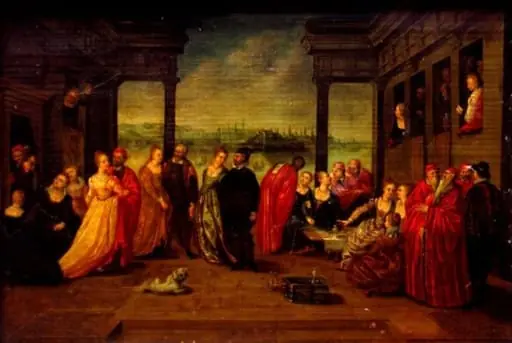 Petrecere venețiană
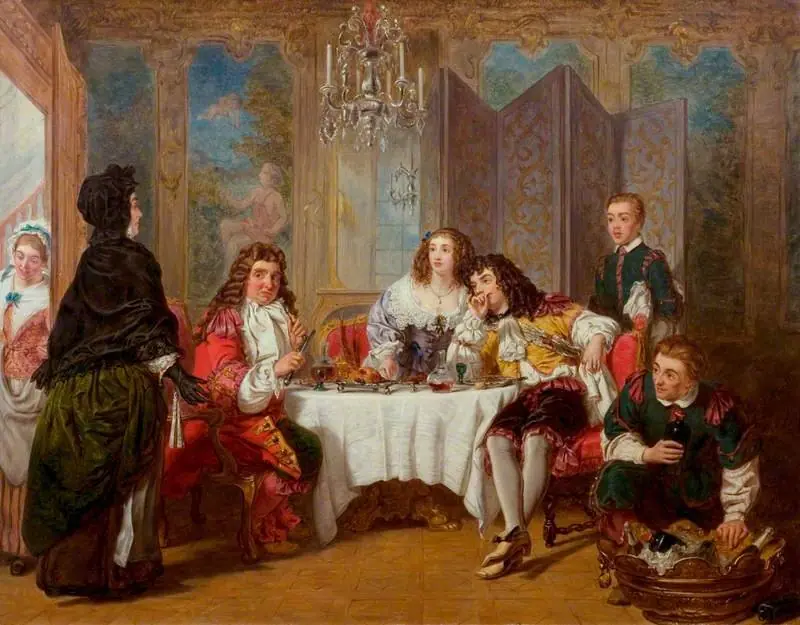 Madame Jourdain Finds Her Husband Entertaining Dorimène and Dorante (from Molière's 'Le Bourgeois Gentilhomme')
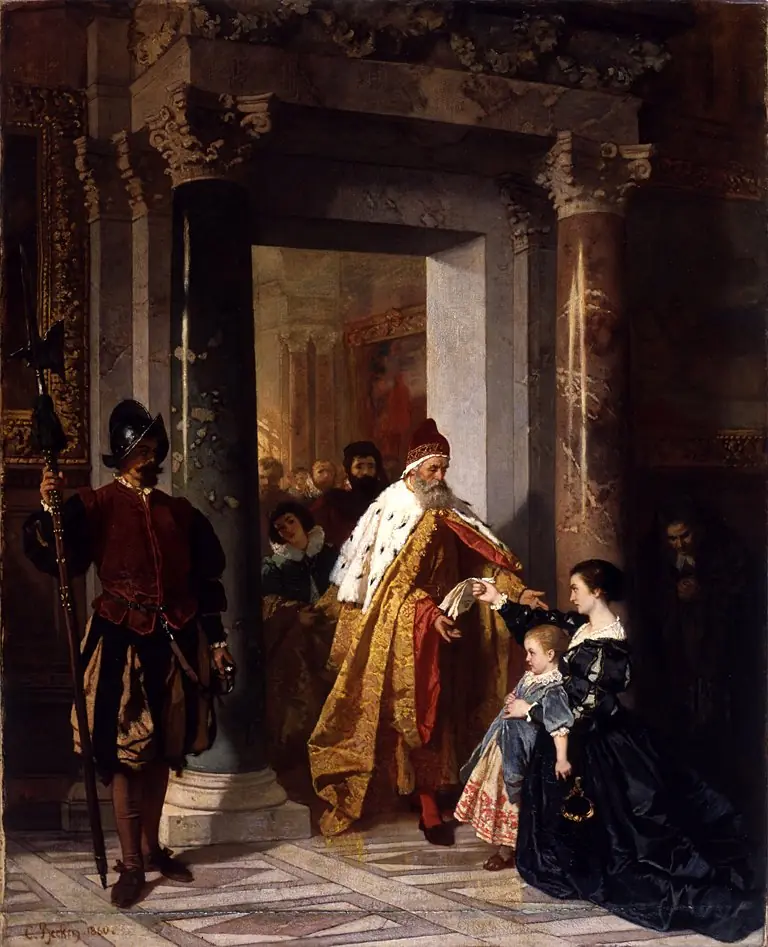 The Petition to the Doge
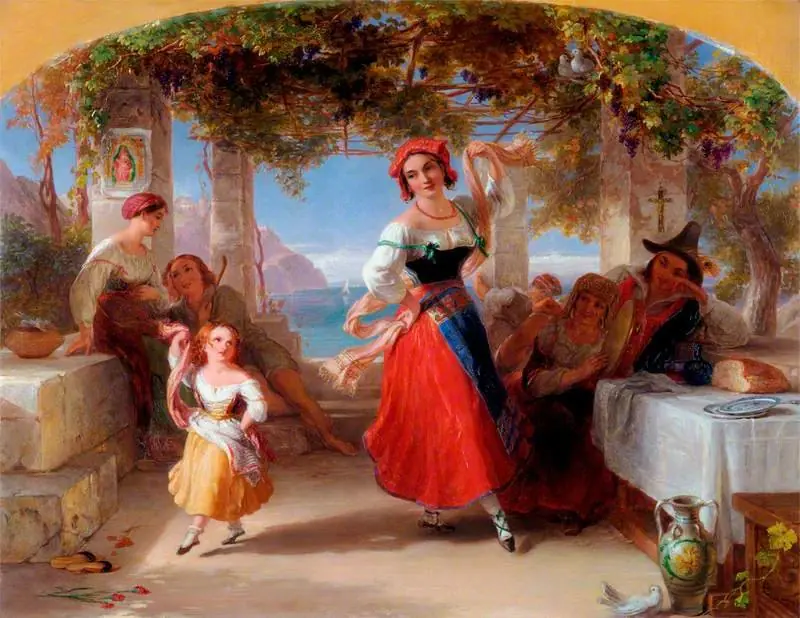 An Italian Mother Teaching Her Child the Tarantella
 Leopold the Glorious as patron of the arts and sciences