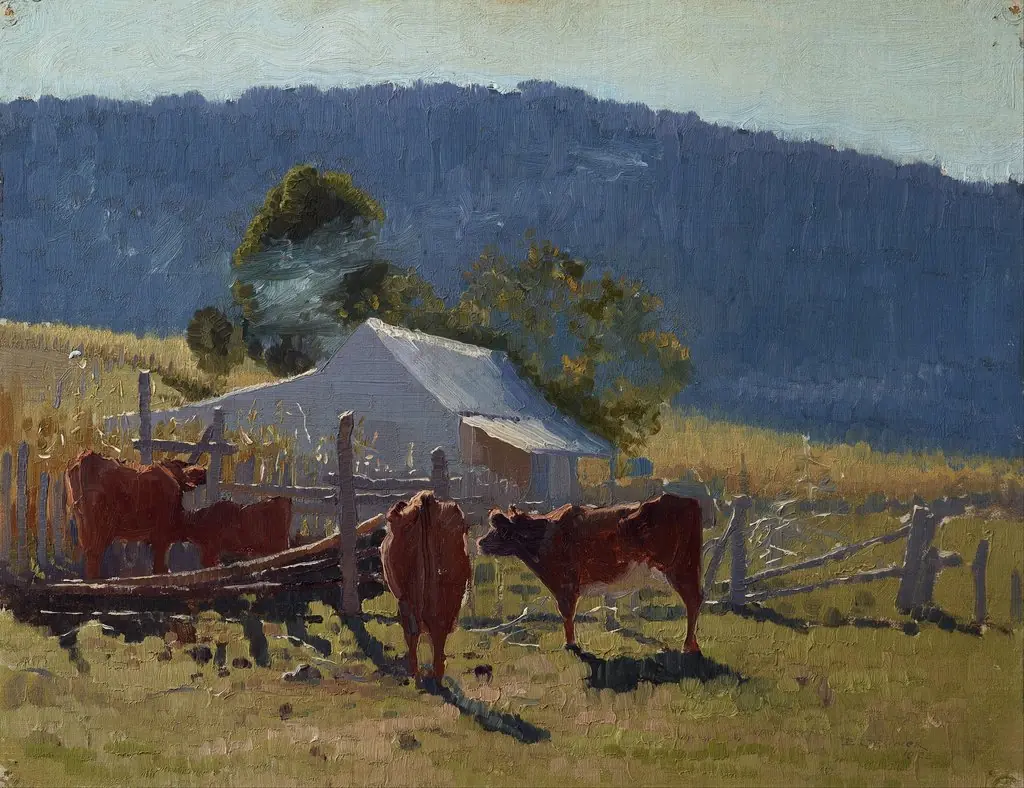
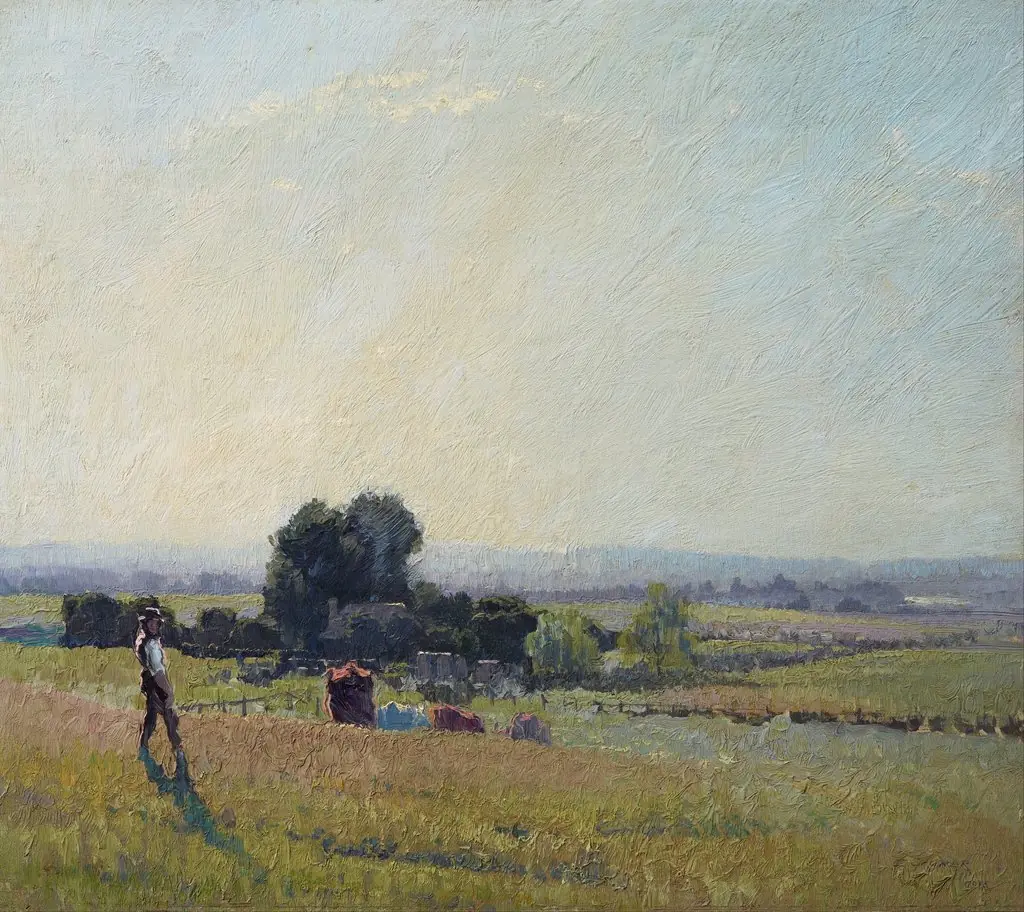
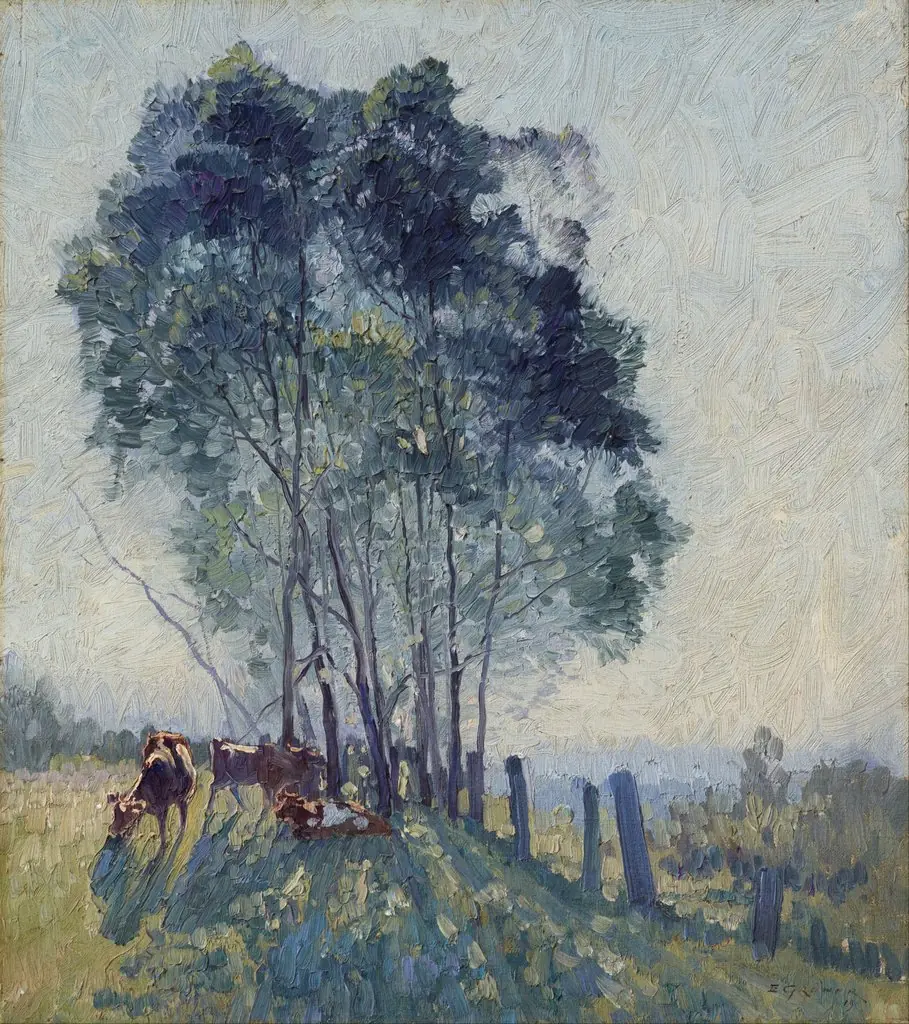
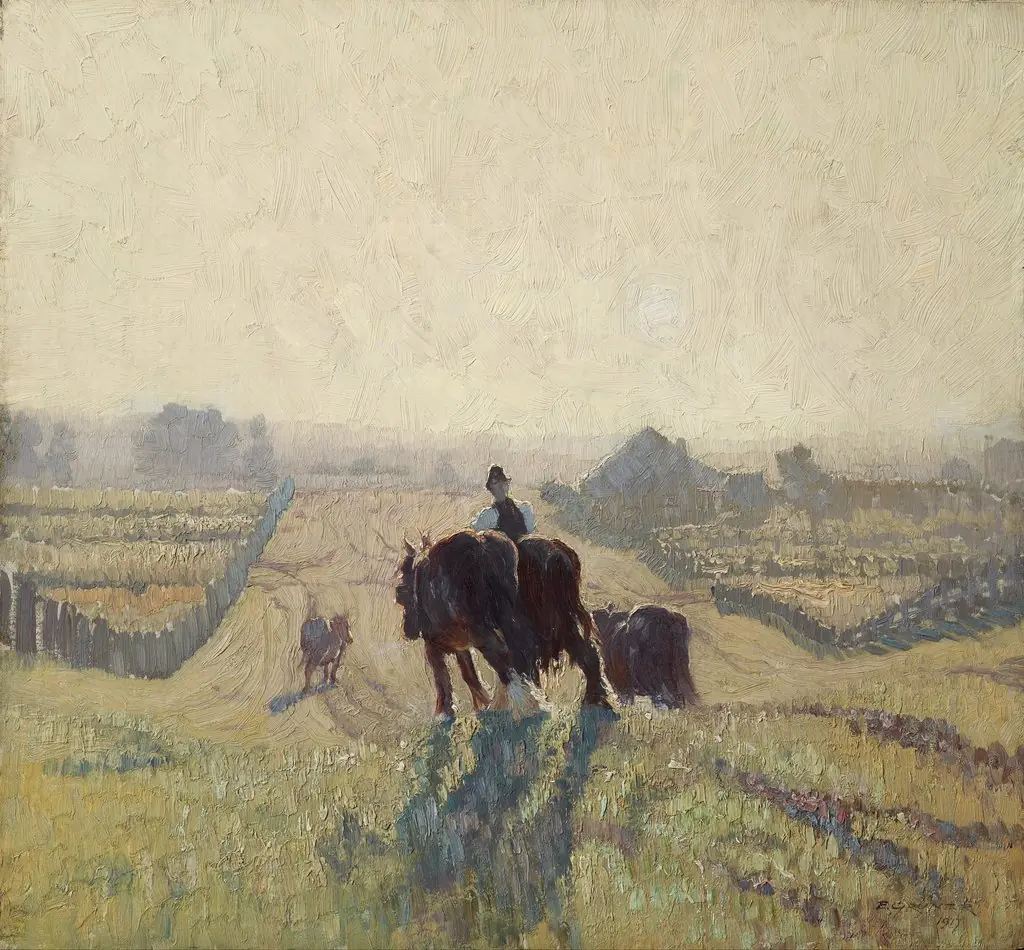
Artwork
Bondi Beach
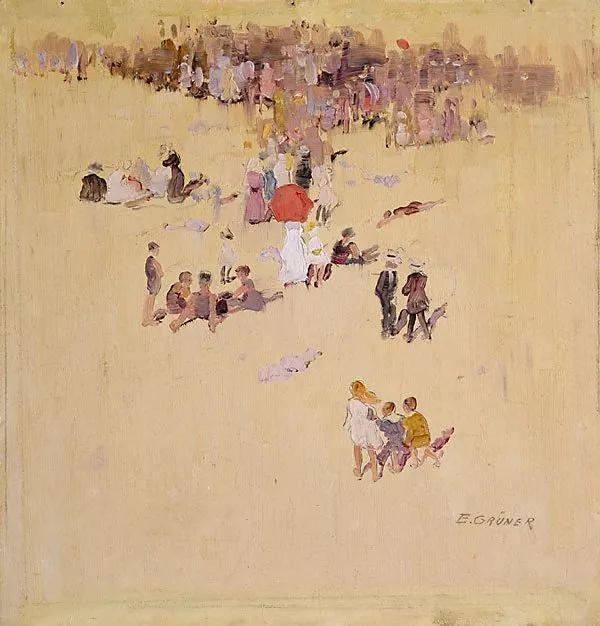
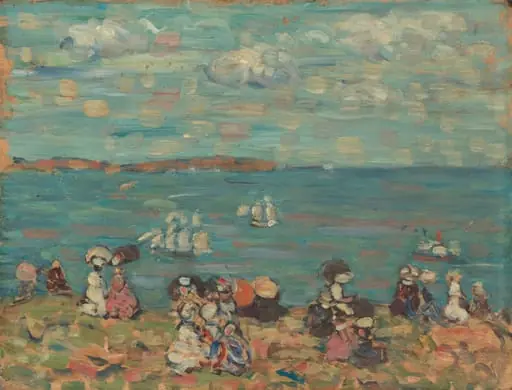
Bondi Beach is an unspecified painting by the Impressionist artist Elioth Gruner. It dates from 1912 and is held in the collection of the Art Gallery of New South Wales.
About this work
Overview
Elioth Gruner completed *Bondi Beach* in 1912, a landscape painting rooted in the Australian plein air tradition.
Elioth Gruner completed *Bondi Beach* in 1912, a landscape painting rooted in the Australian plein air tradition. Though associated with the Heidelberg School’s emphasis on natural light, Gruner developed a distinctive approach marked by refined tonal harmony and careful observation of atmospheric shifts. The work exemplifies his repeated success in the Wynne Prize, awarded for landscape painting that captured the essence of the Australian environment with technical precision and emotional restraint.
Subject & Meaning
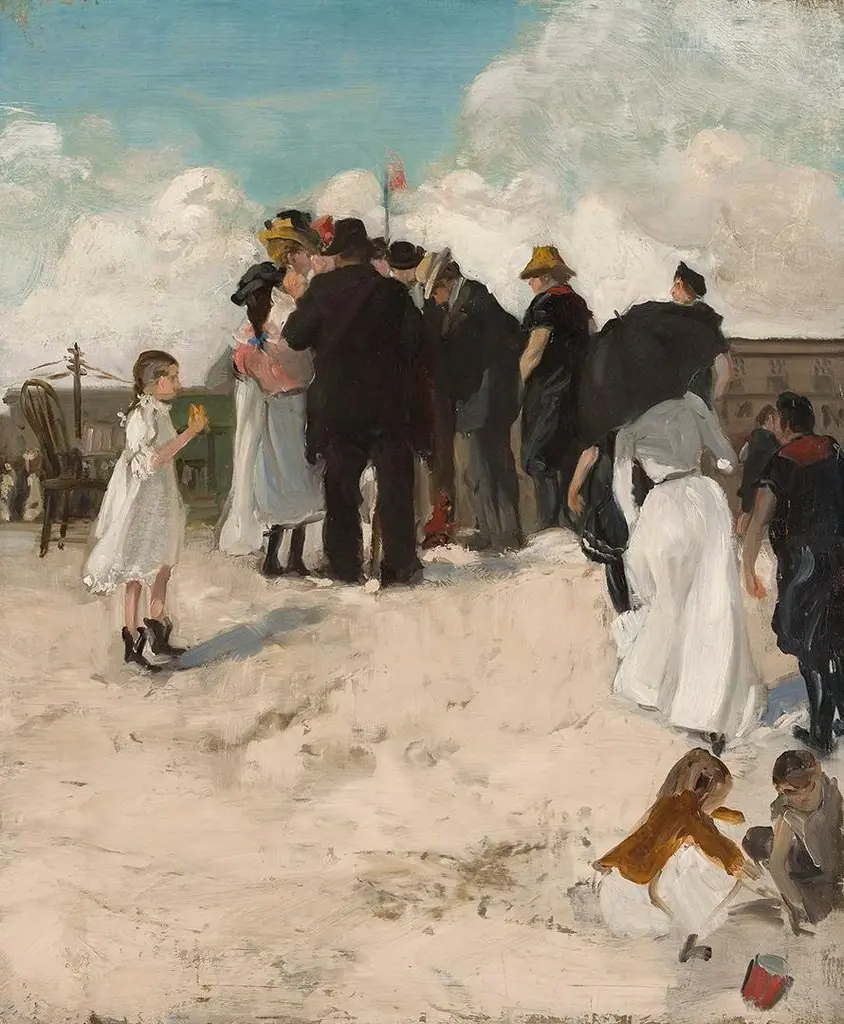
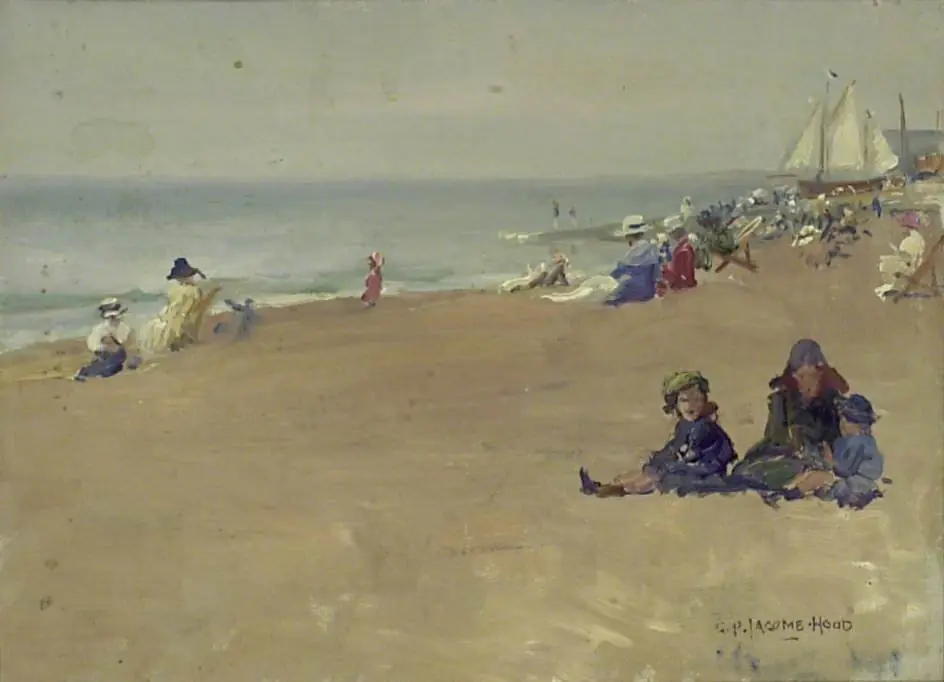
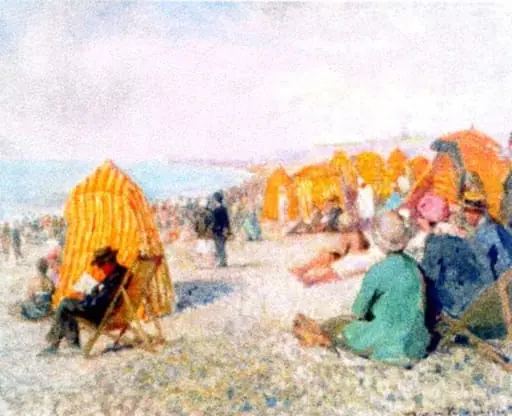
The painting portrays a quiet moment at Bondi Beach, with figures dispersed along the shore—some seated, others standing or strolling. Their presence suggests leisure without narrative drama, emphasizing the ordinary rhythm of seaside recreation. Gruner avoids idealization; instead, he renders human activity as a subtle element within the broader environmental scene, reinforcing a sense of calm coexistence between people and the coastal landscape.
Technique & Style
Gruner employed a high-key palette to convey the clarity of Australian sunlight, balancing warm ochres and pale sands against the cool, muted blues of the sea and sky. His brushwork is controlled yet responsive, capturing the diffusion of light across surfaces without overt Impressionist fragmentation. The composition directs the eye gently from foreground figures toward the horizon, where atmosphere softens forms, reflecting his mastery in rendering transient light conditions with quiet authority.
History & Provenance
Painted during a period when Australian artists were increasingly turning to coastal subjects, *Bondi Beach* was created shortly after Gruner’s first Wynne Prize win in 1910. It remained in private hands for much of the 20th century before entering a public collection. Its preservation reflects its status as a representative example of early 20th-century Australian landscape painting, valued for its technical discipline rather than sensationalism.
Context
In early 1900s Australia, beach culture was emerging as a symbol of national identity, tied to health, recreation, and the natural environment. Gruner’s work aligns with this shift, yet differs from more romanticized depictions by focusing on subdued realism. His approach resonated with contemporaries who sought to document the Australian landscape with scientific observation and emotional nuance, distinguishing his vision from both European Impressionism and nationalist myth-making.
Legacy
Gruner’s *Bondi Beach* endures as a quiet benchmark in Australian landscape painting, admired for its restraint and perceptiveness. While less celebrated than some of his peers’ more dramatic works, it influenced later artists interested in the interplay of light, atmosphere, and everyday life. Its enduring presence in institutional collections underscores its role as a measured, enduring record of a specific time and place in Australia’s cultural history.
Artist & collection

Artist
Elioth Lauritz Leganyer Gruner (16 December 1882 – 17 October 1939) was an Australian artist.