Artwork
Untitled
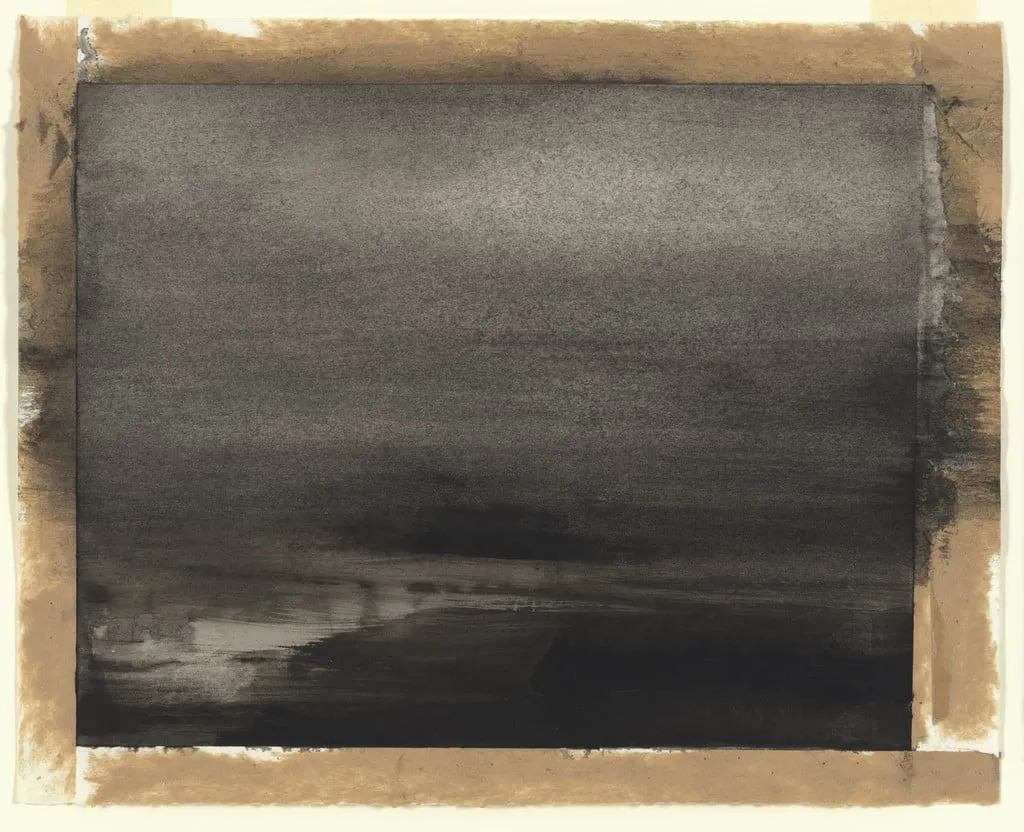
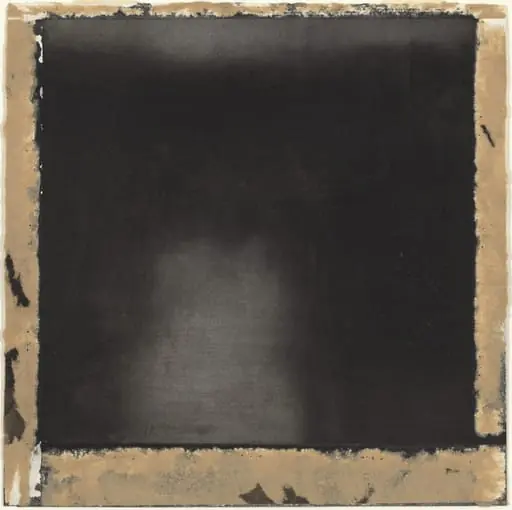
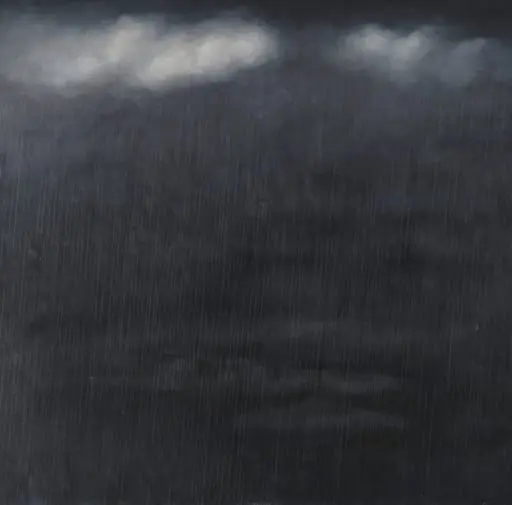
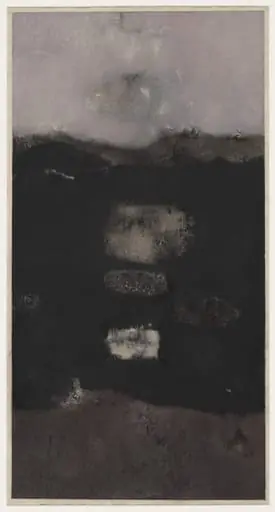
Untitled is a gouache drawing by Ellen Phelan. It dates from 1982 and is held in the collection of the Museum of Modern Art.
About this work
Overview
Its rectangular format and minimal elements align with formalist concerns, while the subtle shifts in value suggest depth without literal representation.
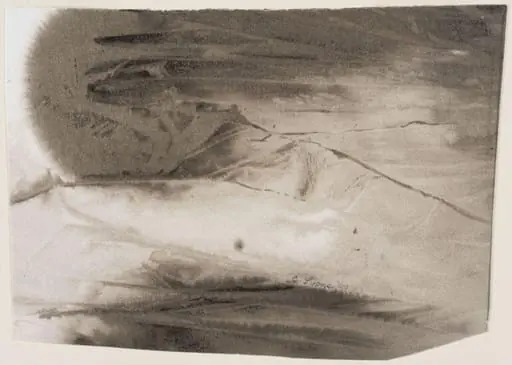
Ellen Phelan’s 1982 gouache on paper, untitled, is a restrained study in tonal gradation and spatial ambiguity. Executed in a limited palette of dark greys and blacks, the work reflects her interest in quiet, meditative forms. Its rectangular format and minimal elements align with formalist concerns, while the subtle shifts in value suggest depth without literal representation. The piece resides in The Museum of Modern Art’s collection as part of her broader exploration of abstraction and psychological atmosphere.
Subject & Meaning
Though non-representational, the work evokes a sense of enclosure or horizon, with a dark lower field contrasting a lighter upper zone. The absence of identifiable objects invites contemplation rather than narrative. The white streaks in the lower left may suggest light breaking through, or residue of process, introducing tension into an otherwise somber field. Phelan’s approach prioritizes mood over subject, encouraging introspection through color and form alone.
Technique & Style
Phelan applied gouache with deliberate control, building layers to achieve smooth transitions between shades. The dark lower section is uniformly opaque, while the upper half shows a gradual lightening, possibly through diluted washes. White streaks were likely scraped or reserved, adding texture against the flat fields. The thick tan border, though external, frames the work as a discrete visual object, reinforcing its autonomy as a studied composition.
History & Provenance
Created in 1982, this work emerged during a period when Phelan was refining her abstract language, moving between figurative and non-objective modes. It entered The Museum of Modern Art’s collection shortly after its creation, reflecting institutional recognition of her contributions to post-minimalist drawing. The piece has not been widely exhibited, maintaining a quiet presence within the museum’s holdings of 20th-century American works on paper.
Context
In the early 1980s, American artists were re-examining abstraction after the dominance of conceptual and pop movements. Phelan’s work responded to this shift by emphasizing materiality and emotional resonance over ideology. Her use of gouache—less common than oil or acrylic—aligned with a renewed interest in intimate, hand-made surfaces. This piece shares affinities with contemporaries exploring tonal subtlety, such as Agnes Martin and Brice Marden.
Legacy
Though not among Phelan’s most publicly recognized works, this drawing exemplifies her sustained engagement with quiet abstraction. Its inclusion in MoMA’s collection affirms its role in documenting a quieter strand of American art from the 1980s—one that valued restraint, material presence, and psychological nuance over spectacle. It continues to inform discussions on the emotional potential of minimal form in drawing.
Artist & collection
Artist
Ellen Phelan (born 1943) is an American artist known especially as a painter of formalist abstractions, psychologically charged scenes enacted by dolls, and landscapes.