Artwork
Scene from <i>Macbeth</i> by William Shakespeare
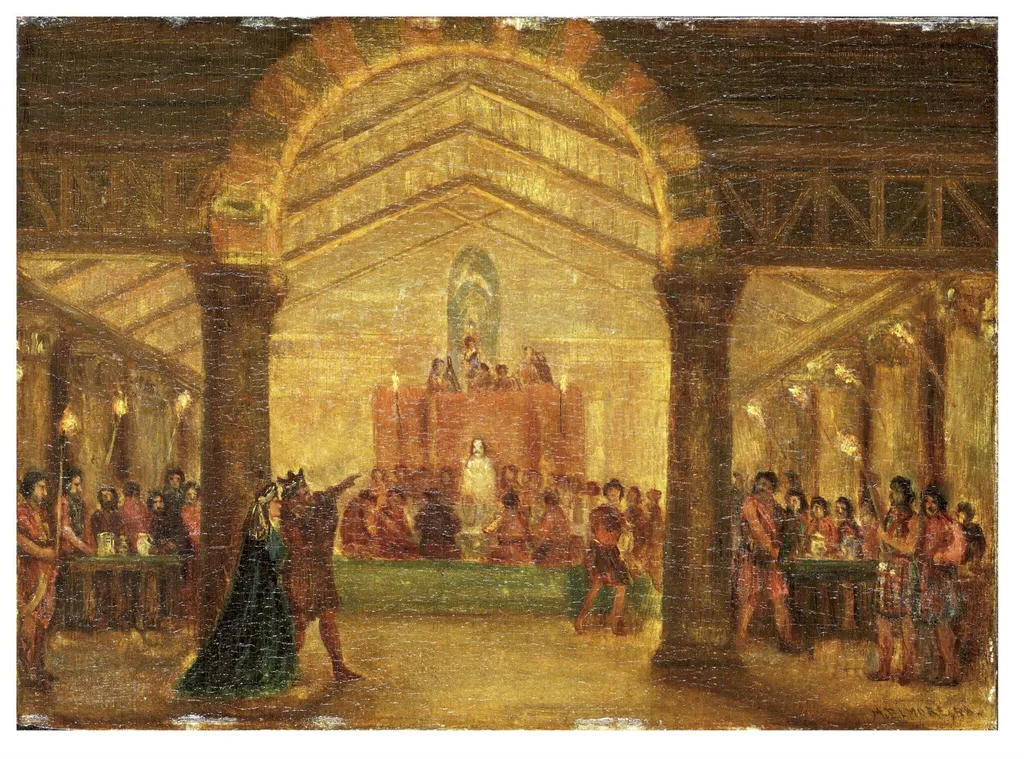
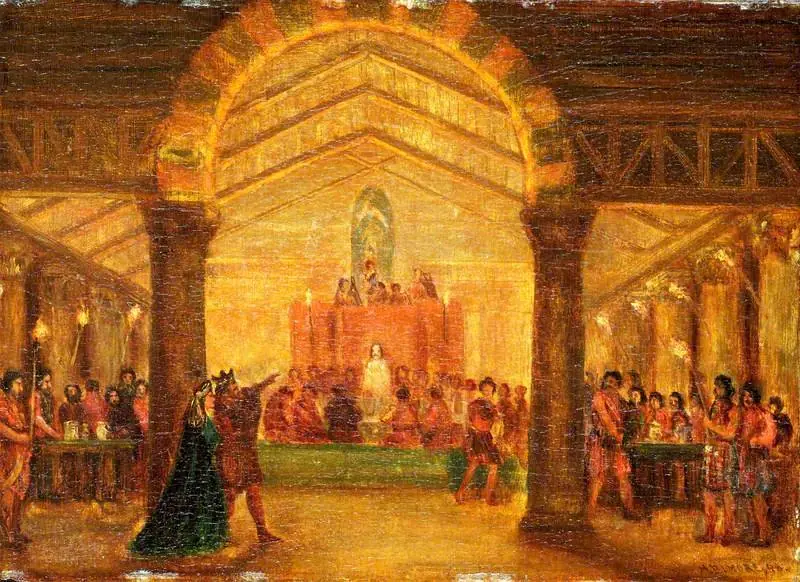
Scene from <i>Macbeth</i> by William Shakespeare is a paint painting by the British Romanticist artist Alfred W. Elmore. It dates from 1853 and is held in the collection of the Victoria and Albert Museum.
About this work
This painting shows the banquet scene from *Macbeth*. Lady Macbeth sits pale at a long table while a ghostly dagger floats above the empty seat. The guests stare in shock at nothing.
It’s based on a real 1853 stage production with actor Charles Kean. The painting captures the moment Macbeth sees Banquo’s ghost.
Look up the Victoria and Albert Museum to see this work.
Overview
This painting depicts a pivotal moment from Act III, scene iv of Shakespeare's *Macbeth*, specifically the banquet scene as staged in Charles Kean's 1853 production. The work captures the dramatic instant when Macbeth confronts the ghost of Banquo.
Subject & Meaning
The scene focuses on Lady Macbeth's distress, shown pale and seated at a long table, while a ghostly apparition (Banquo's ghost, unseen by the guests) manifests above an empty seat, symbolizing Macbeth's guilt and the supernatural consequences of his actions. The guests' reactions highlight the disconnect between the visible and the supernatural.
Technique & Style
While specific technical details of the painting are not provided, the depiction of a staged production suggests a blend of theatrical and artistic representation. The use of a ghostly figure floating above an empty seat implies the use of subtle, suggestive techniques to convey the supernatural element within a realistically rendered scene.
History & Provenance
Created in 1853, the painting is directly inspired by Charles Kean's theatrical production of *Macbeth* from the same year. It is part of the collection at the Victoria and Albert Museum.
Context
The painting reflects the mid-19th-century interest in Shakespearean theater and the artistic practice of capturing staged performances. It also highlights the era's fascination with the dramatic and the supernatural as depicted in literature.
Legacy
As a visual record of a specific historical theatrical production, the painting provides valuable insight into 19th-century stage design and the interpretation of Shakespeare's works during that time. Its presence in the Victoria and Albert Museum ensures its contribution to the study of both art and theater history.
Own this work as a print
Artist & collection
Artist
Alfred W. Elmore loved painting scenes where everyday life felt like a play. He once showed two women on a balcony wrapped in green and red curtains, their ordinary moment framed by medieval buildings and a bright sky.…

 Scenă istorică
 Scenă alegorică
 Belshazzar's Feast
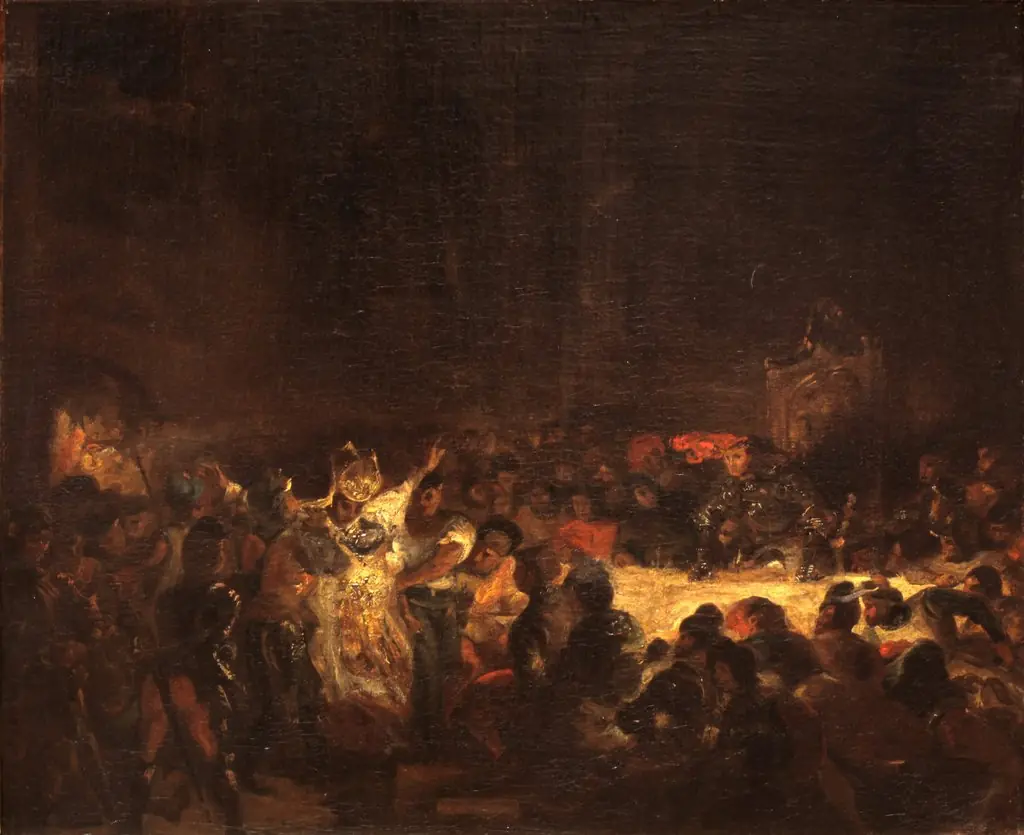 Assassination of the Bishop of Liège
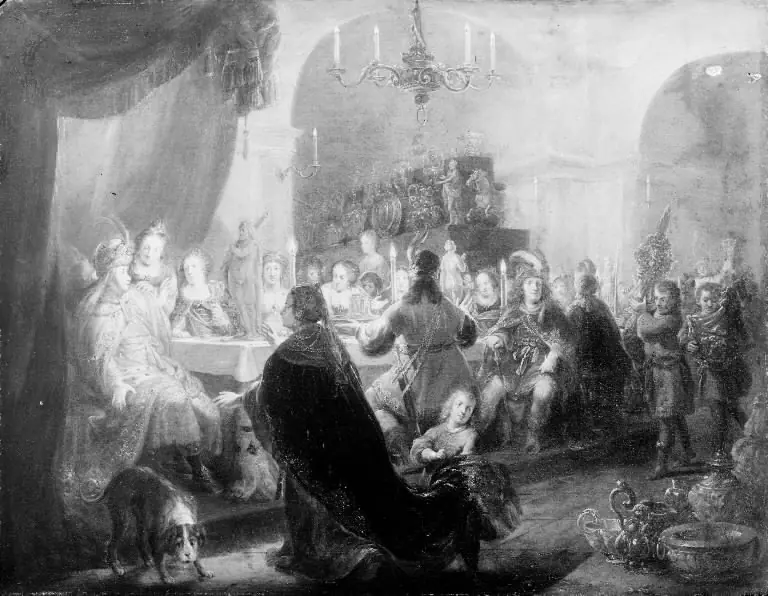 Belshazzar's Vision
 Belshazzar's Vision
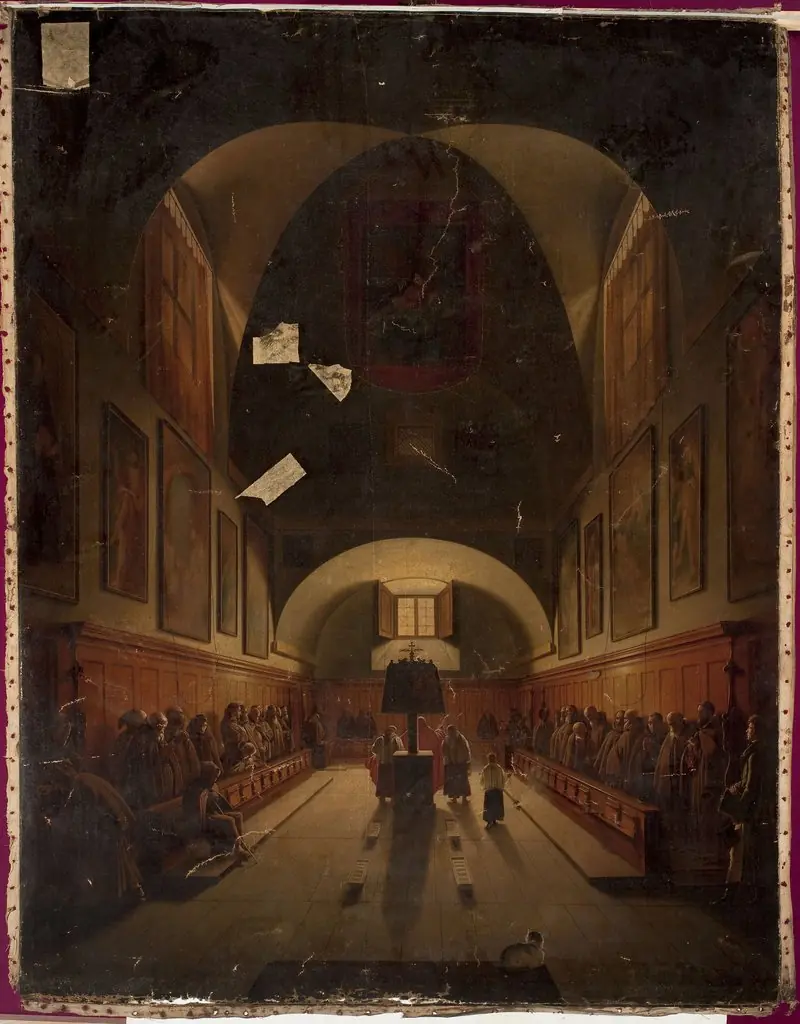 Choir in the Capuchin church in Rome
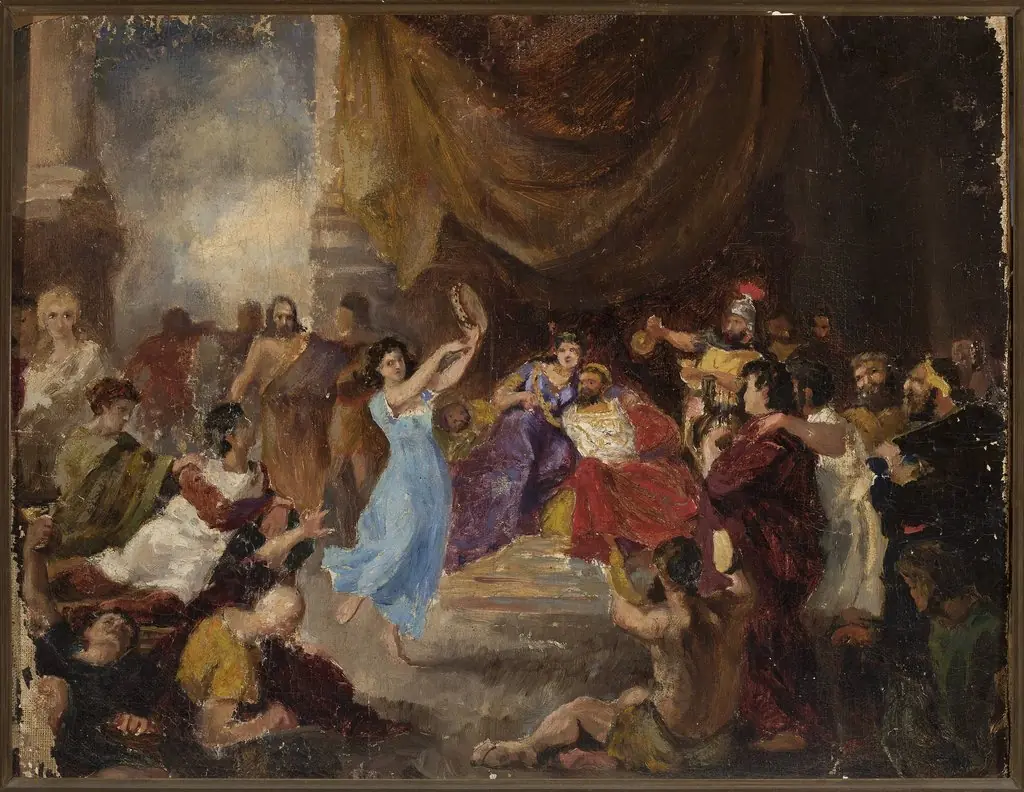 Salome's dance before Herod, sketch
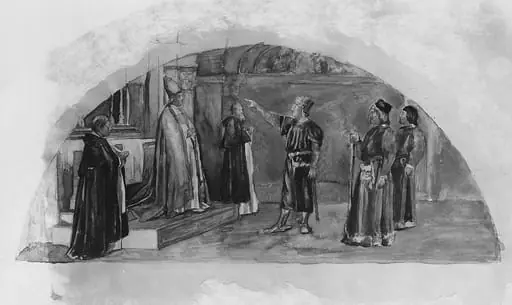 The Adjustment of Conflicting Interests: Count Raymond of Toulouse Swears at the Altar to Observe the Liberties of the City;ì Color Study for Mural, Supreme Court Room, Minnesota State Capitol,ì Saint Paul
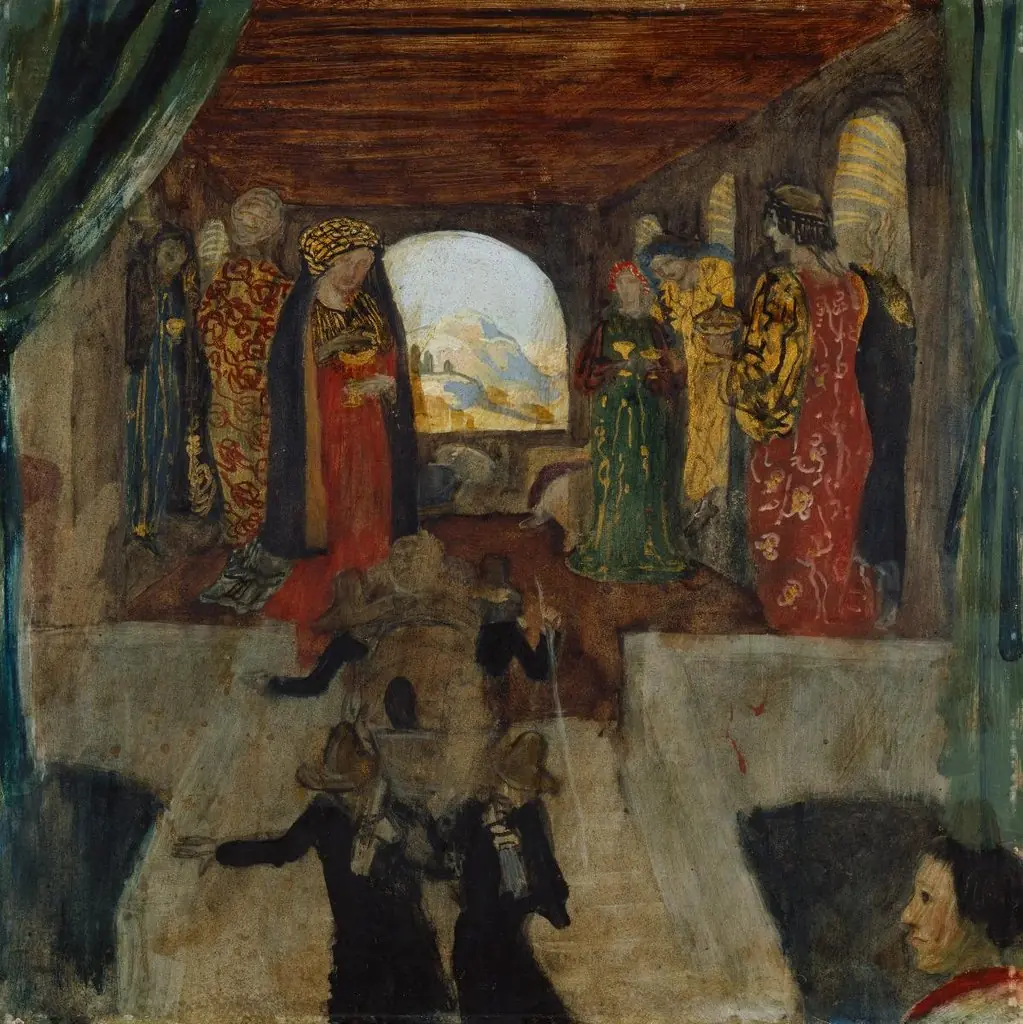 Auszug der Penaten. Entwurf
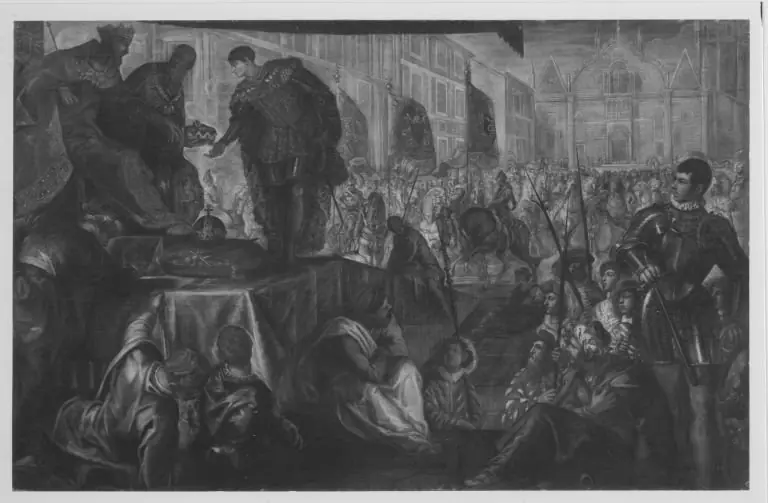 Gonzaga cycle
 Scene from 'Macbeth' by William Shakespeare