Artwork
Gonzaga cycle
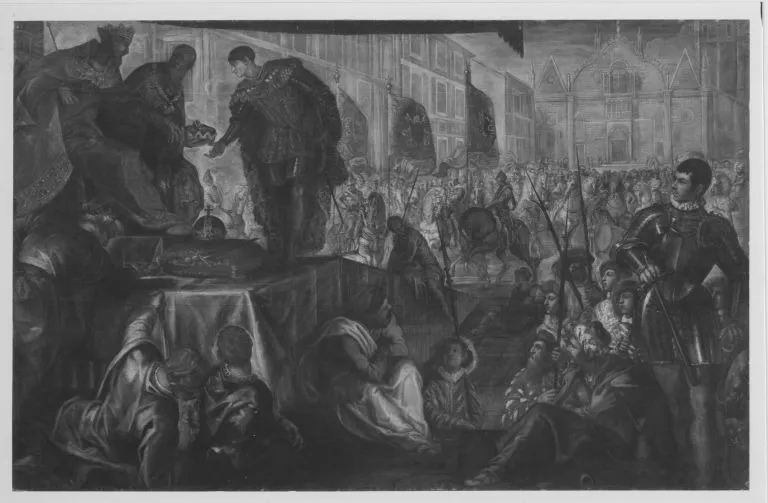
Gonzaga cycle is an unspecified painting by the Mannerist artist Jacopo Tintoretto. It dates from 1590 and is held in the collection of the Bavarian State Painting Collections.
About this work
Overview
Painted circa 1590, the Gonzaga cycle consists of a series of canvases by Jacopo Tintoretto, commissioned to honor the ruling Gonzaga family of Mantua.
Painted circa 1590, the Gonzaga cycle consists of a series of canvases by Jacopo Tintoretto, commissioned to honor the ruling Gonzaga family of Mantua. These works were originally intended for a private palace setting before entering the collection of the Alte Pinakothek in Munich. The cycle exemplifies late Mannerist tendencies in Venetian painting, marked by dynamic composition and emotional intensity.
Subject & Meaning
The cycle portrays scenes from the lives of the Gonzaga rulers, emphasizing their authority, lineage, and civic virtues. Rather than straightforward portraiture, Tintoretto rendered these figures within allegorical and mythological frameworks, blending historical narrative with symbolic imagery to elevate their status. Courtly rituals and martial achievements are depicted with theatrical grandeur, reinforcing the family’s political legitimacy.
Technique & Style
Tintoretto employed swift, energetic brushwork and exaggerated spatial perspectives to heighten drama. Figures are rendered with muscular tension and angular poses, characteristic of Mannerist aesthetics. Light is used not for naturalism but to isolate key actions and direct the viewer’s gaze, creating a sense of movement and psychological urgency within crowded, vertically oriented compositions.
History & Provenance
Commissioned by Duke Vincenzo I Gonzaga, the paintings were displayed in the Ducal Palace of Mantua. After the decline of the Gonzaga line, the series was dispersed; several panels eventually entered the Bavarian royal collection in the early 19th century. They were later consolidated in the Alte Pinakothek, where they remain as part of a broader European collection of Renaissance and Mannerist works.
Context
Created during a period of political instability in northern Italy, the cycle served as both propaganda and cultural assertion. Tintoretto’s style, though rooted in Venetian colorism, diverged from Titian’s harmony in favor of expressive distortion. The Gonzaga commission reflects how regional courts sought to align themselves with artistic innovation to project power beyond their territorial limits.
Legacy
The Gonzaga cycle illustrates Tintoretto’s influence on the transition from High Renaissance ideals to Baroque dynamism. While less celebrated than his religious works, these secular commissions reveal his adaptability and command of narrative complexity. Art historians recognize the series as a key example of how Mannerist techniques were deployed in courtly contexts to convey authority through visual spectacle.
Artist & collection
Artist
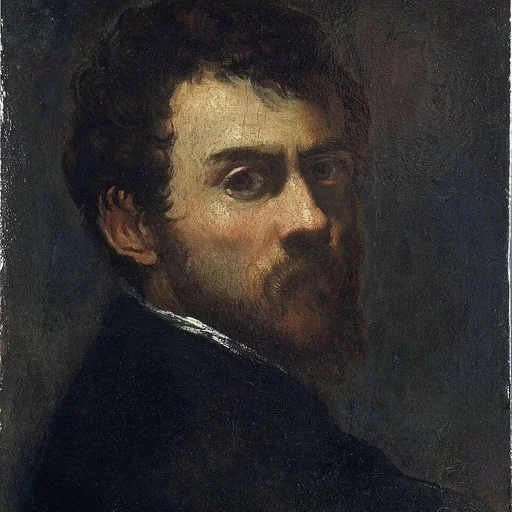
Jacopo Robusti (late September or early October 1518 – 31 May 1594), best known as Tintoretto ( TIN-tə-RET-oh; Italian: ; Venetian: ), was an Italian Renaissance painter of the Venetian school.

 Ecce homo
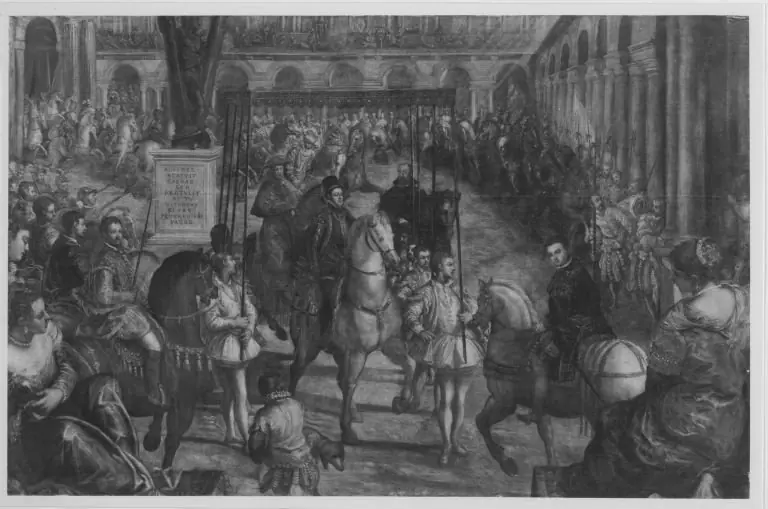 Gonzaga-Zyklus, II. Reihe, 4. Einzug Philipps II. in Mantua
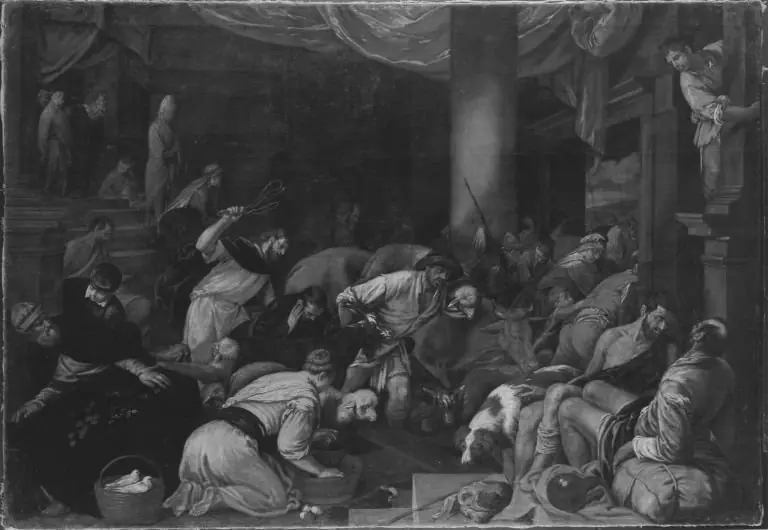 Vertreibung der Händler aus dem Tempel
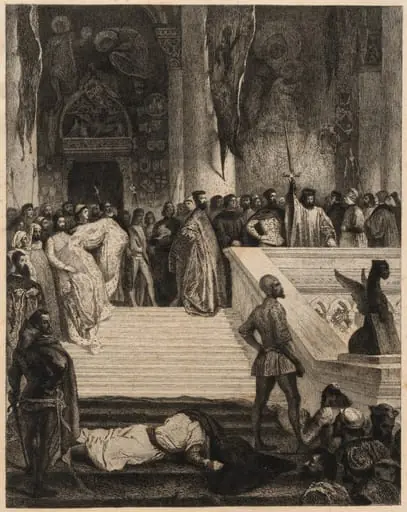 The Death of Doge Marino Faliero
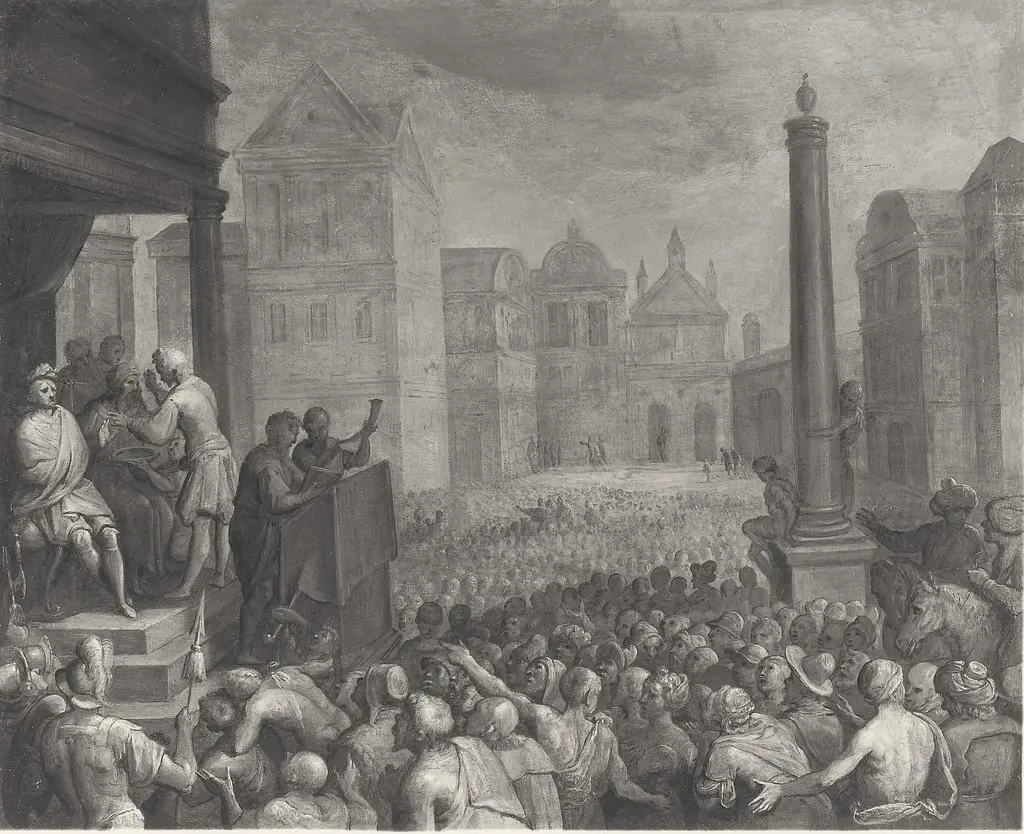 The Judgement of Zaleucus
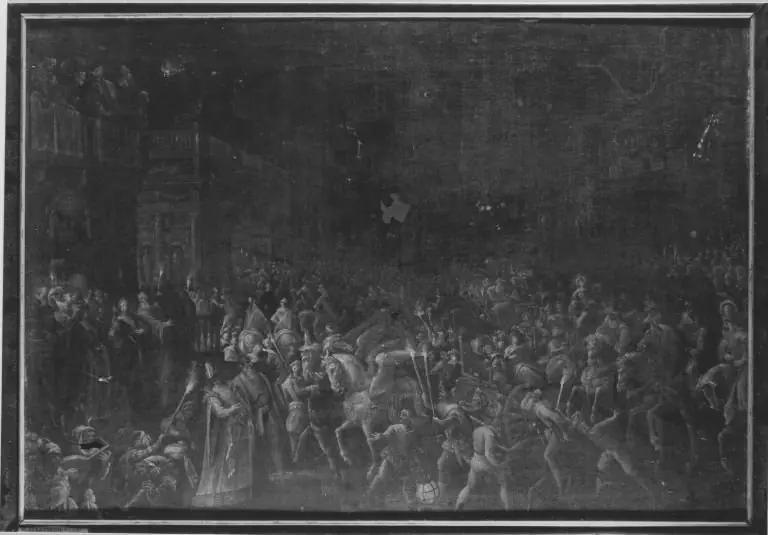 Maskenfest
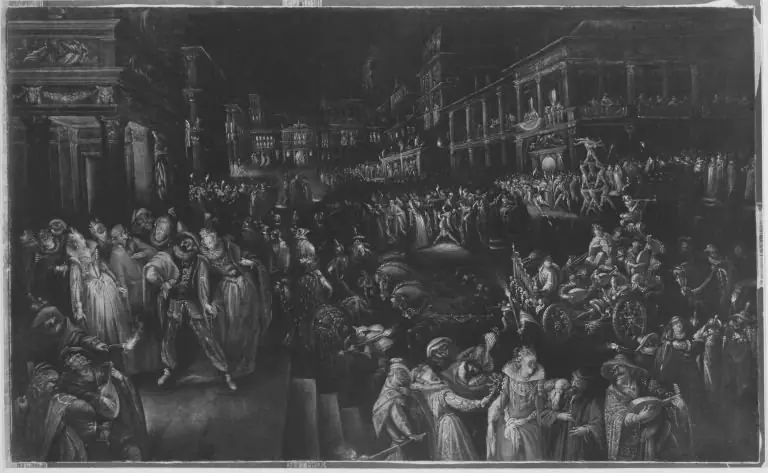 Nächtliche Karnevalsszene
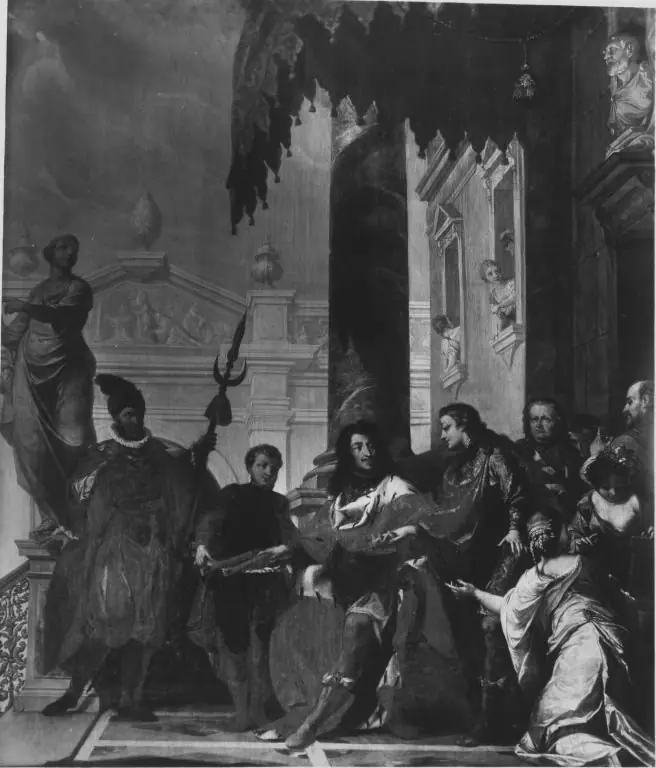 Kurfürst Johann Wilhelm übergibt den Kommandostab
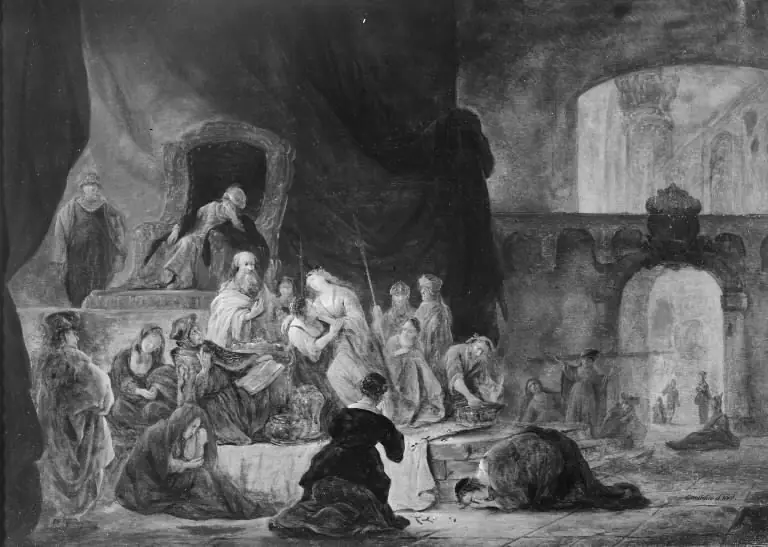 Jephta's Daughter Being Led to the Altar
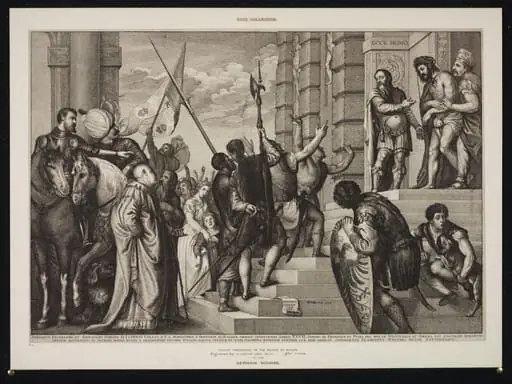 Christ Presented to the People
![Margaret of Austria Giving Audience to a Nobleman [verso], by Raffaello Schiaminossi](https://artifactworldgallery.com/img/raffaello-schiaminossi--margaret-of-austria-giving-audience-to-a-nobleman-verso--86ac2347af277f00-w320.webp) Margaret of Austria Giving Audience to a Nobleman [verso]
Margaret of Austria Giving Audience to a Nobleman [verso] Christ before Pilate: Large Plate