Artwork
Interior of an Imaginary Catholic Church
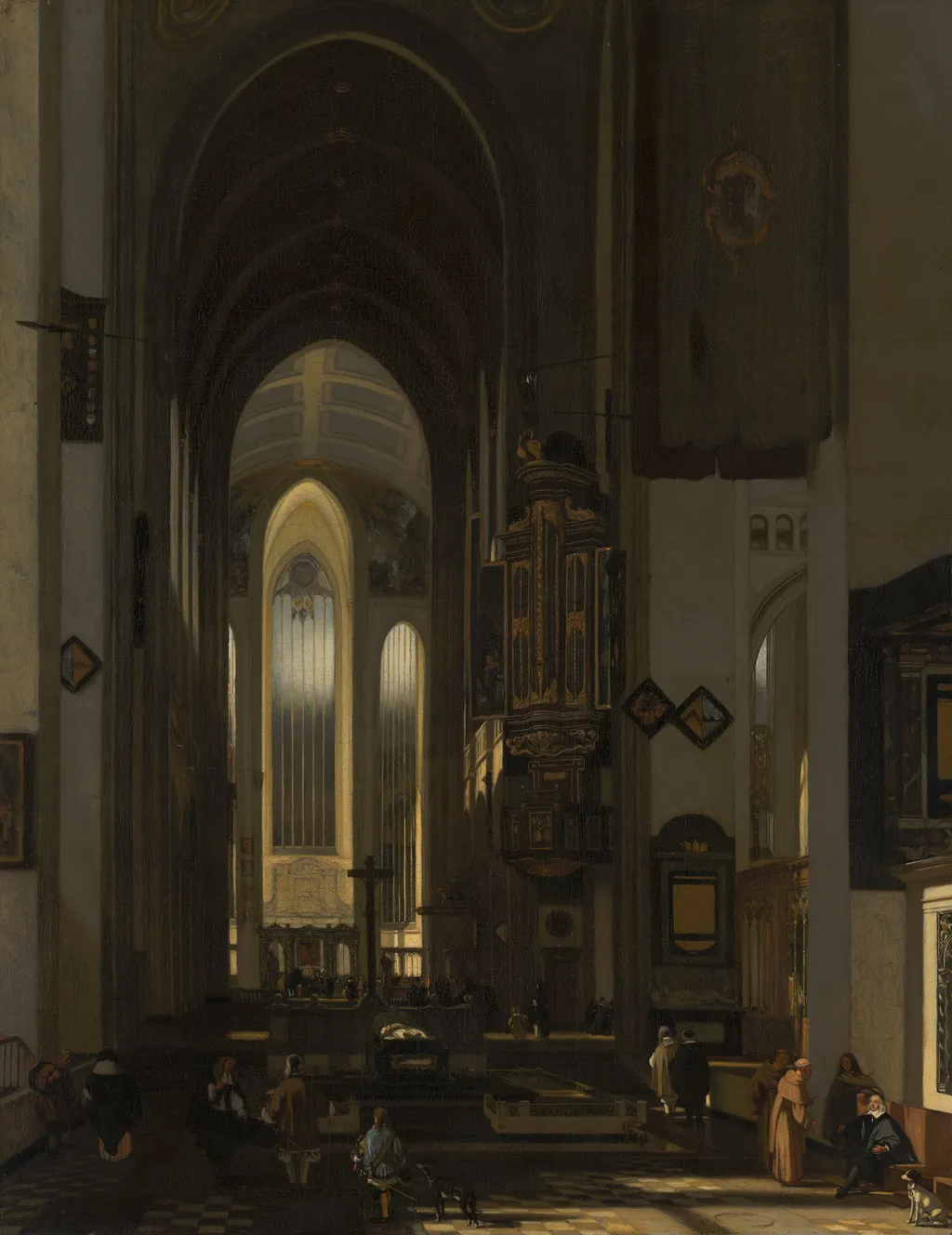
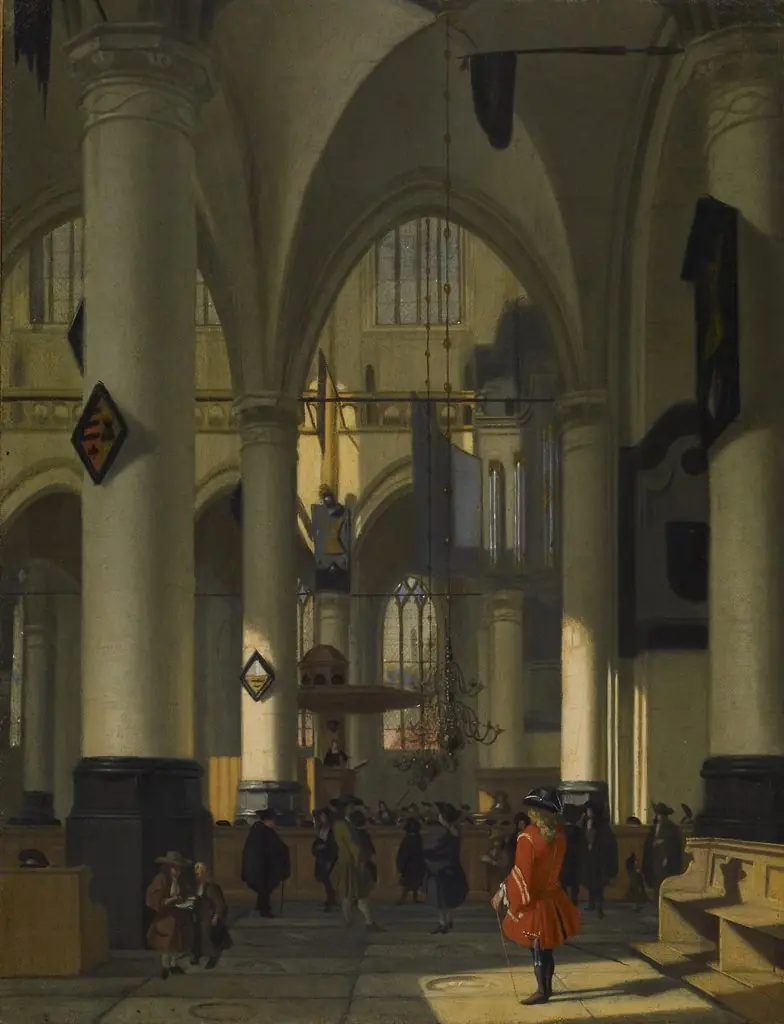
Interior of an Imaginary Catholic Church is an oil painting by the Dutch Golden Age artist Emanuel de Witte. It dates from 1668 and is held in the collection of the Mauritshuis.
About this work
Overview
The painting reflects a Dutch interest in sacred architecture during a period when Catholic worship was restricted in the Protestant Netherlands.
Painted in 1668 by Emanuel de Witte, this oil on canvas depicts a fictional Catholic church interior. The work resides in the Mauritshuis in The Hague. De Witte captures an architectural space not tied to any specific real building, blending observed details with imaginative composition to evoke a quiet, reverent atmosphere. The painting reflects a Dutch interest in sacred architecture during a period when Catholic worship was restricted in the Protestant Netherlands.
Subject & Meaning
The scene presents an empty yet inhabited church, with figures engaged in quiet, mundane activities—sitting, standing, or walking. A dog in the foreground introduces an unposed, domestic element, grounding the sacred space in daily life. The absence of religious iconography or ritual suggests a focus on architecture as a vessel for contemplation, rather than worship. The painting invites reflection on solitude, stillness, and the passage of time within sacred spaces.
Technique & Style
De Witte employs precise linear perspective to structure the vast interior, guiding the eye toward the distant altar. Light enters through high windows, casting soft gradients across stone floors and vaulted ceilings. Shadows deepen corners and arches, enhancing spatial depth. Brushwork is restrained, favoring clarity over texture, allowing architectural forms and luminous effects to dominate. The composition balances symmetry with subtle asymmetries in human placement, avoiding theatricality.
History & Provenance
The painting entered the Mauritshuis collection in the 19th century, having passed through private Dutch hands since its creation. It was likely acquired during a period of renewed interest in 17th-century Dutch interiors. No record suggests it was commissioned for a specific patron; instead, it appears to have been made for the open market, appealing to collectors drawn to architectural precision and atmospheric calm.
Context
During the mid-17th century, Dutch artists frequently painted church interiors despite the Protestant Reformation’s suppression of Catholic worship. These works served as studies in space, light, and human presence rather than devotional images. De Witte, among the most skilled in this niche, drew from real churches he had seen, recombining elements into idealized, neutral spaces that resonated with contemporary viewers’ fascination with order and quietude.
Legacy
De Witte’s approach influenced later artists interested in architectural interiors and the interplay of light and structure. His ability to convey serenity without narrative or symbolism set a precedent for 18th-century views of sacred and civic buildings. Though not widely copied, his method of combining observation with imaginative reconstruction became a touchstone for those seeking to capture the emotional weight of empty spaces.
Artist & collection

Artist
Emanuel de Witte was born circa 1617 in Alkmaar, the son of Pieter de Wit, a local schoolmaster.

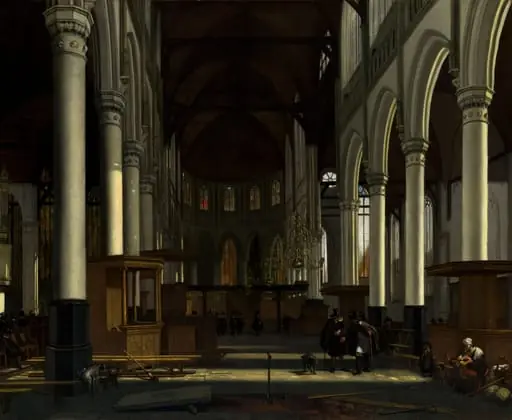 The Interior of the Oude Kerk, Amsterdam
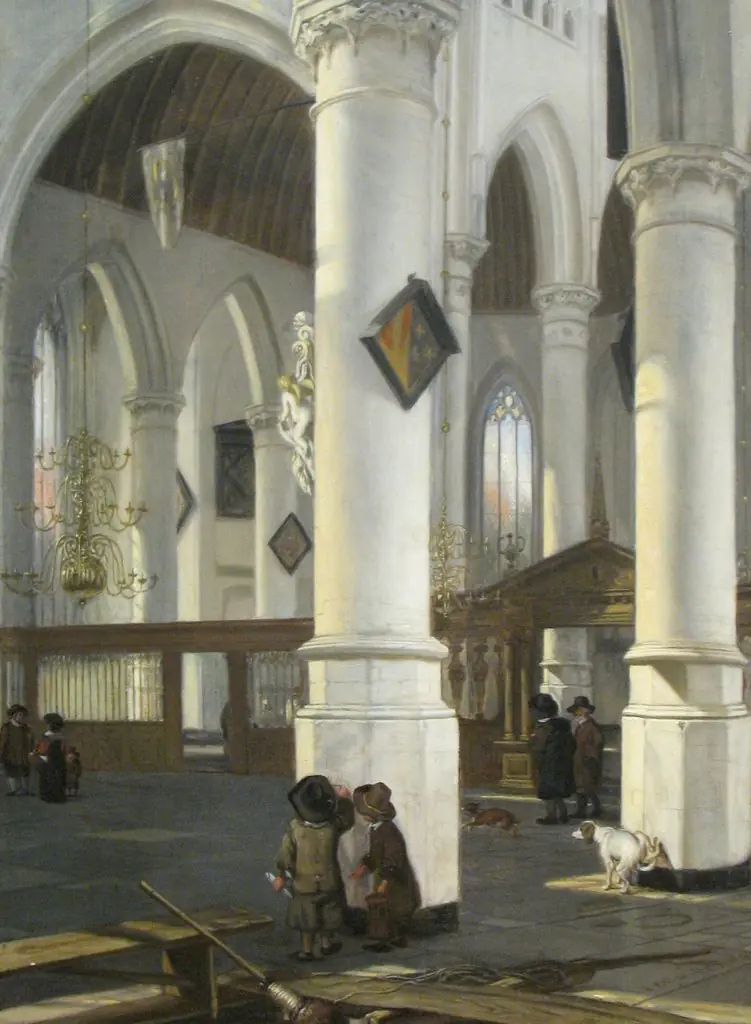 Interior of the Oude Kerk, Delft
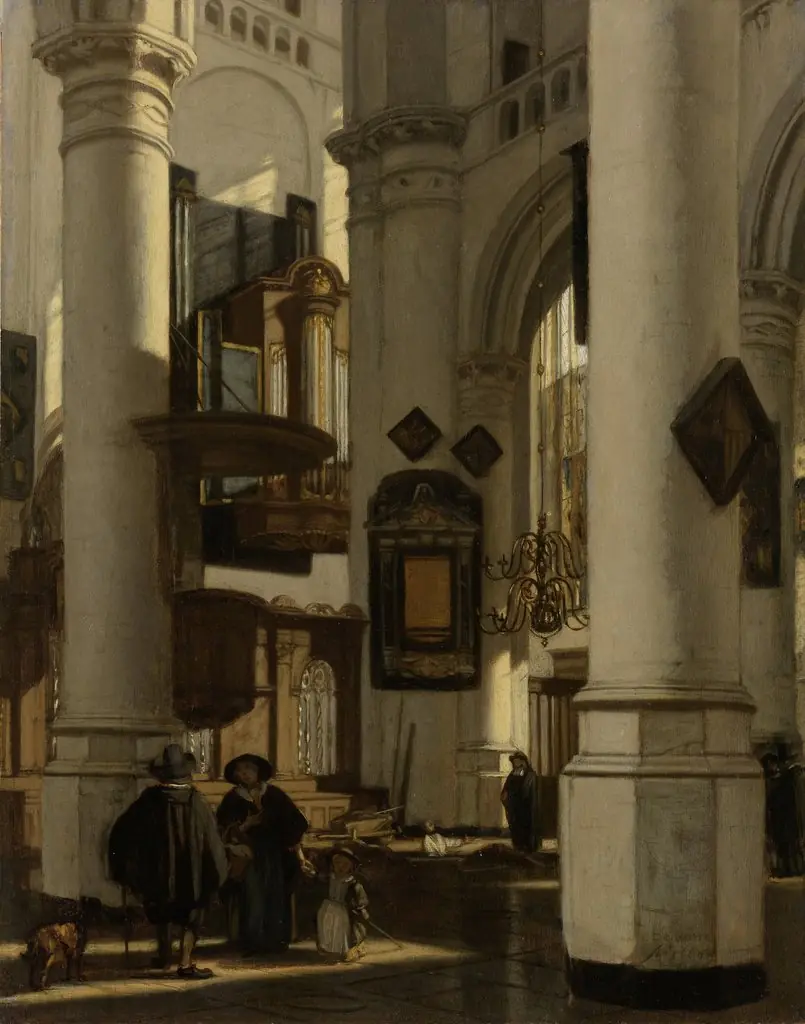 Interior of a Protestant, Gothic Church, with a Gravedigger in the Choir
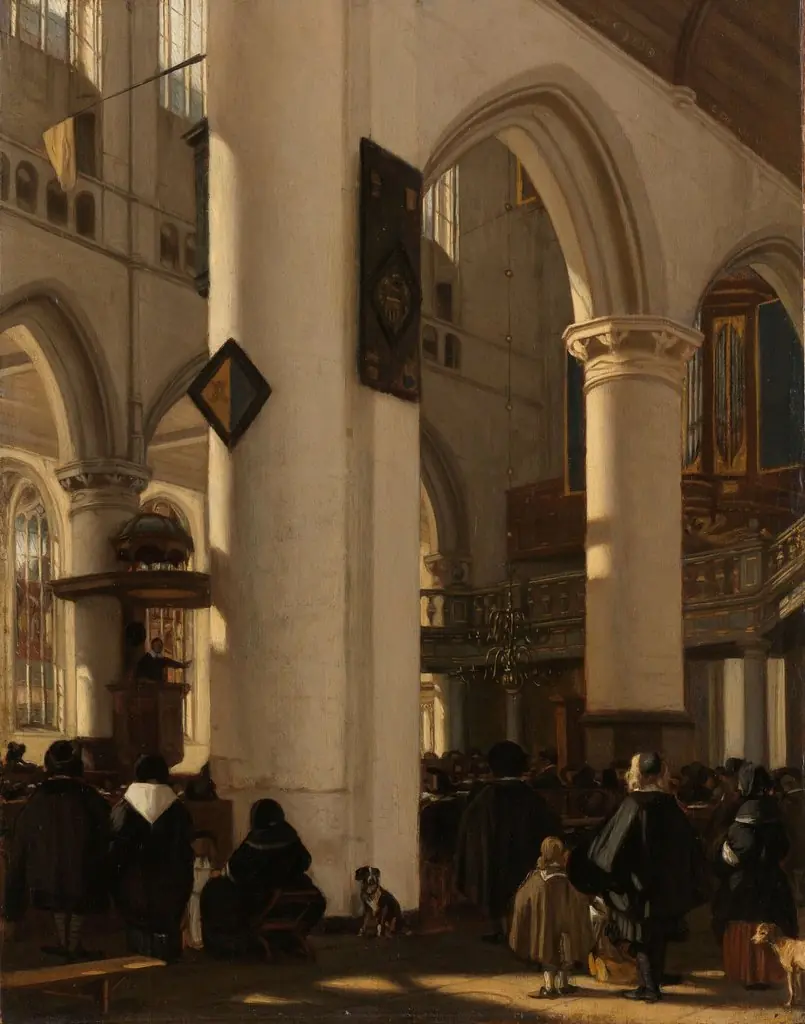 Interior of a Protestant, Gothic Church during a Service
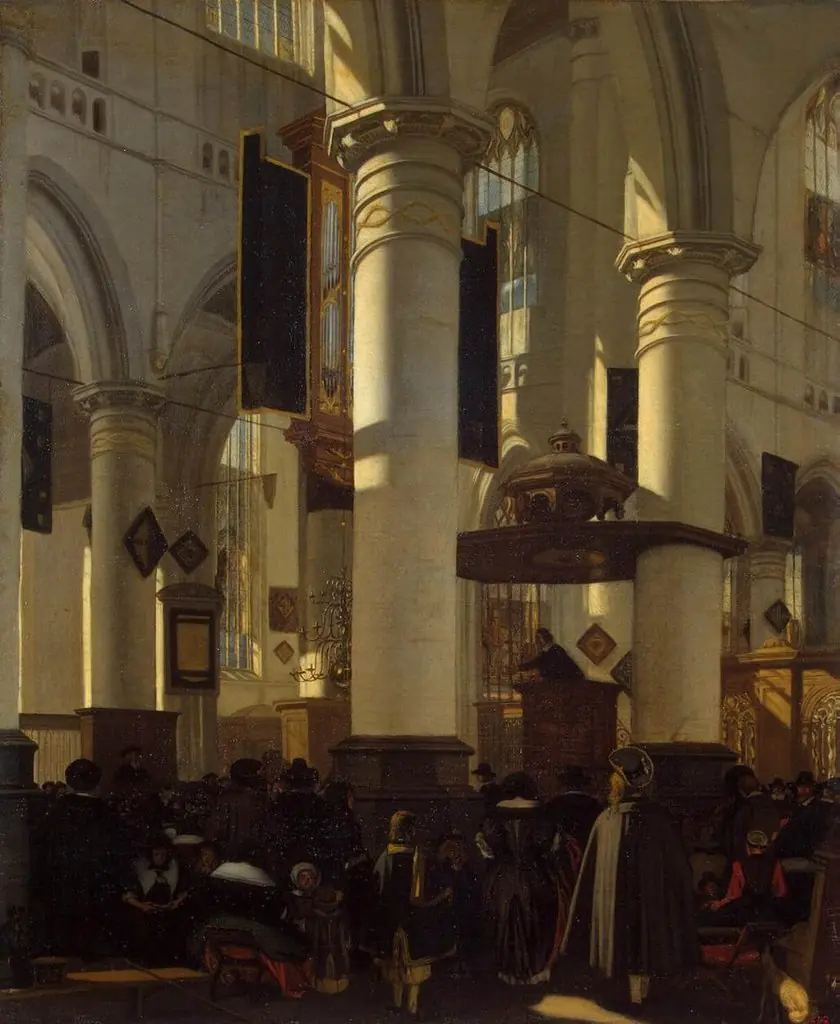 Interior of a Church
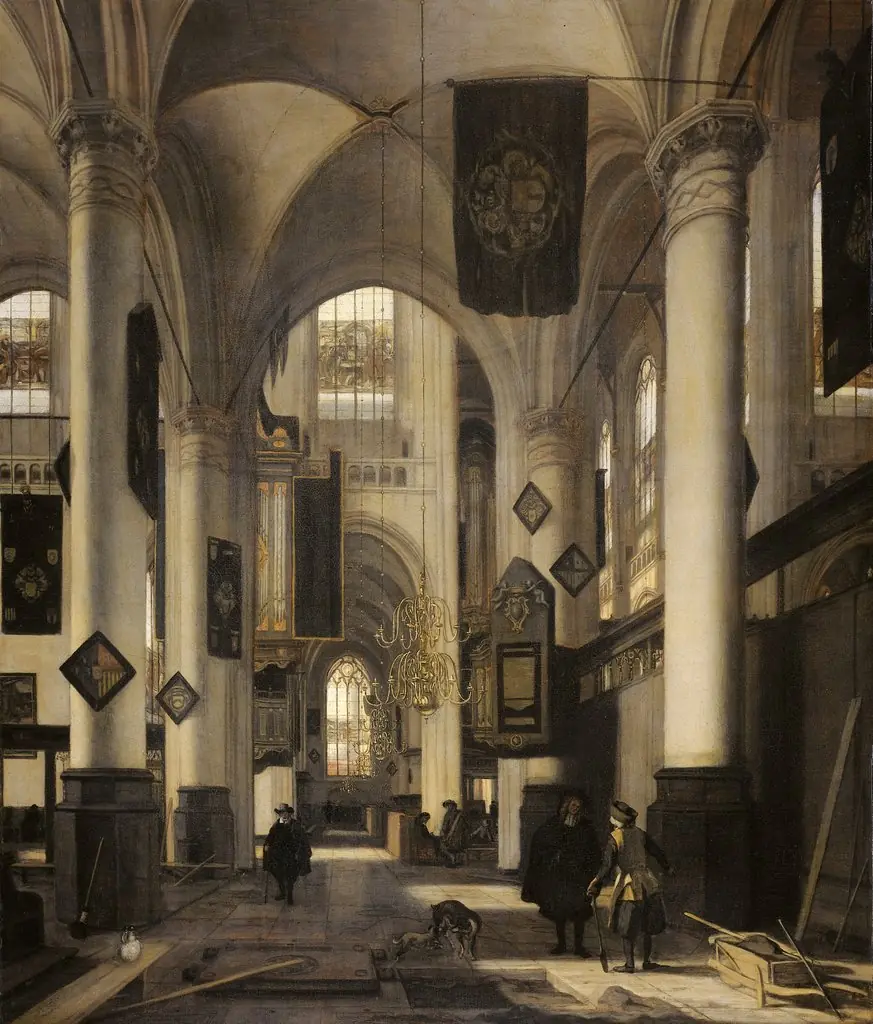 Interior of a Protestant Gothic Church
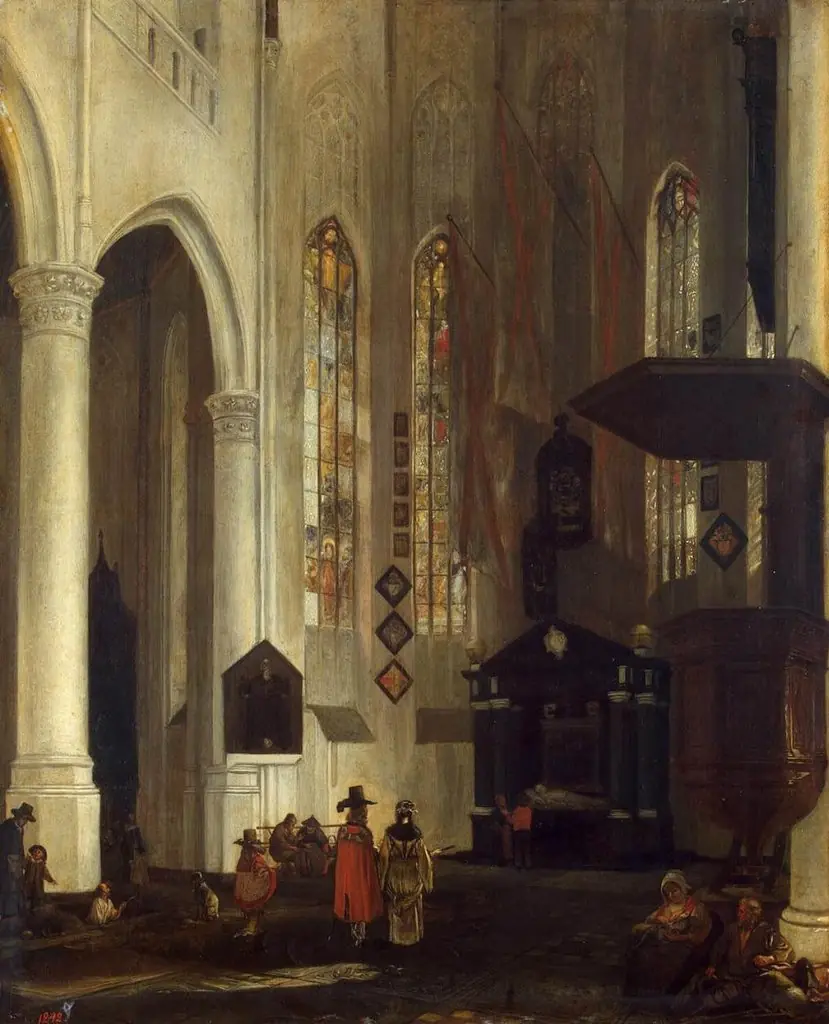 Old Church (Oudekerk) in Delft with the Tomb of Admiral Pieter Pieterszoon Hein (Heyn)
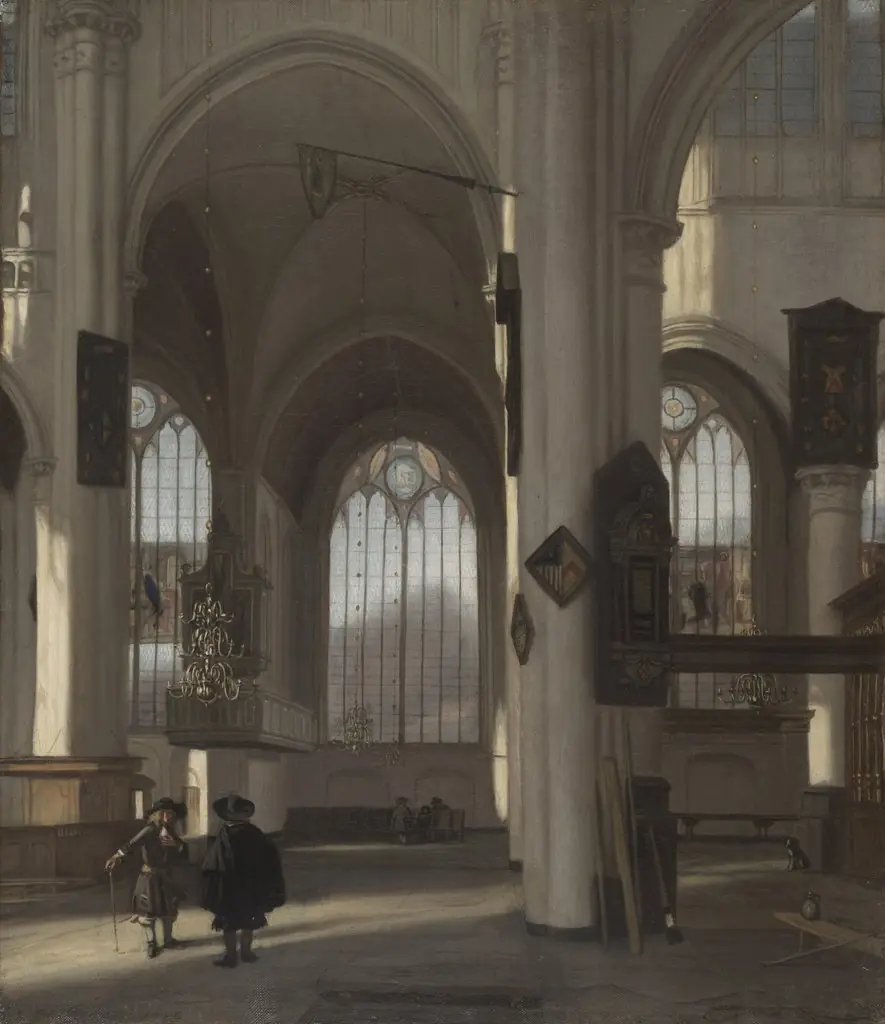 Interior of a Church