Artwork
Interior of the Portuguese Synagogue in Amsterdam
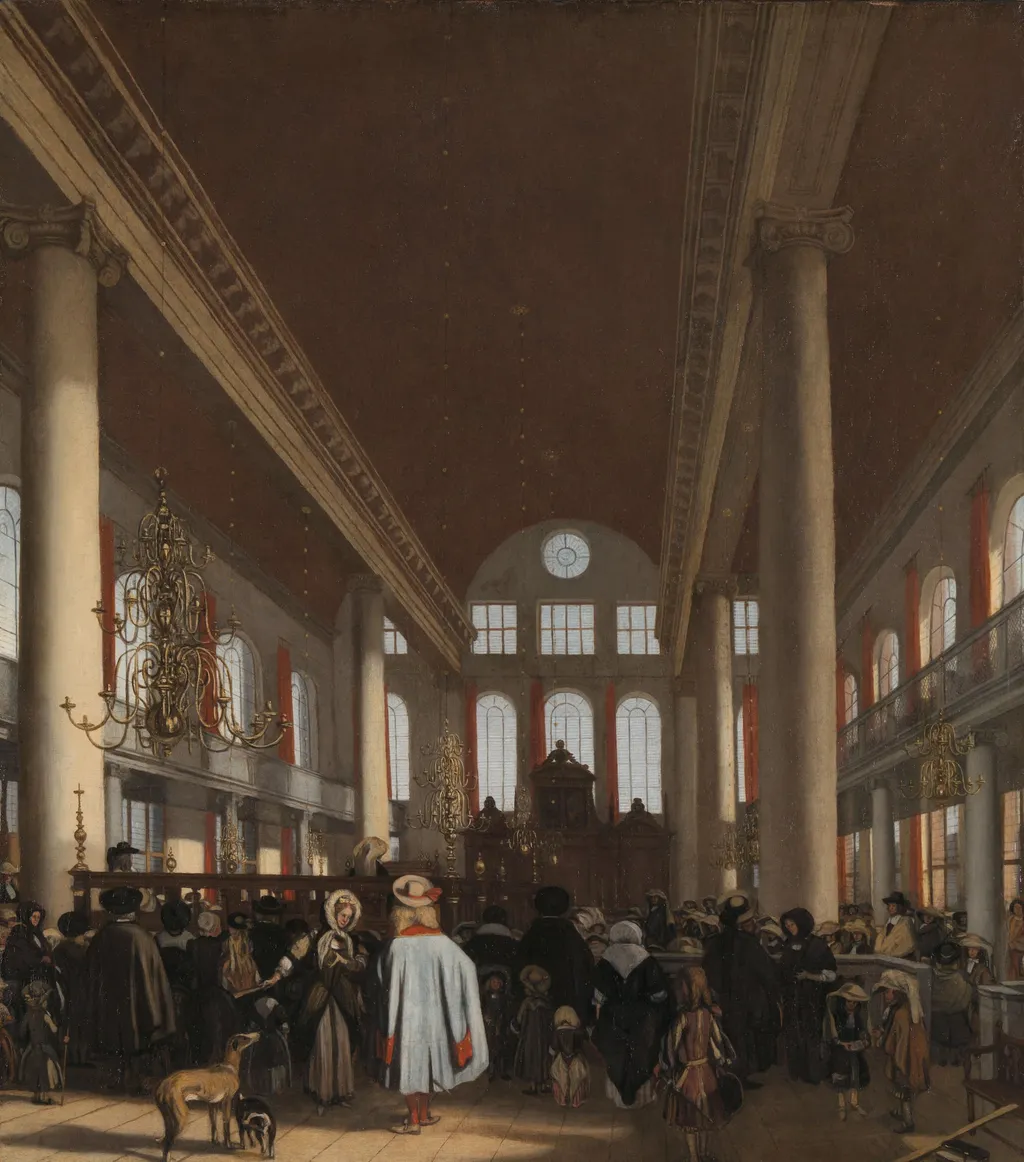
Interior of the Portuguese Synagogue in Amsterdam is an unspecified painting by the Dutch Golden Age artist Emanuel de Witte. It dates from 1680 and is held in the collection of the Rijksmuseum. The canvas depicts the interior of Amsterdam’s Portuguese Synagogue as it appeared in the late seventeenth century.
About this work
This painting shows Amsterdam’s Portuguese Synagogue in 1680, a place where Jewish families who fled Spain and Portugal could worship freely.
You see a big, sunlit room with wooden benches, tall windows, and people in dark clothes—some praying, some just watching. Kids and dogs wander near the front.
This painting shows Amsterdam’s Portuguese Synagogue in 1680, a place where Jewish families who fled Spain and Portugal could worship freely. The artist didn’t sign it, so we don’t know who painted this quiet moment of daily life.
To see more like it, visit the Rijksmuseum.
Overview
The canvas depicts the interior of Amsterdam’s Portuguese Synagogue as it appeared in the late seventeenth century. Sunlight streams through the high windows, illuminating rows of wooden benches and a spacious nave. A group of onlookers, accompanied by children and a few dogs, occupies the foreground, while other figures are engaged in prayer or observation.
Subject & Meaning
The scene captures a moment of communal worship and everyday activity within a Jewish house of prayer. By including families, youngsters, and even pets, the artist emphasizes the synagogue’s role as a social hub for the Portuguese‑Jewish diaspora, reflecting both religious devotion and the domestic atmosphere of the congregation.
Technique & Style
Executed in oil on canvas, the work employs a restrained palette of muted earth tones contrasted with bright daylight. Careful modeling of light on the wooden furnishings and the figures’ garments creates a sense of depth, while the loose handling of background details suggests a focus on human presence rather than architectural precision.
History & Provenance
The painting dates to circa 1680, a period when the Portuguese Jewish community in Amsterdam enjoyed relative religious freedom. The artist’s identity remains unknown, as the work bears no signature. It entered the Rijksmuseum collection in the early twentieth century, where it has been conserved as part of the museum’s Dutch Golden Age holdings.
Context
The Portuguese Synagogue, completed in 1675, served refugees who fled the Inquisition in Spain and Portugal. Its grand interior, modeled after the Sephardic tradition, became a symbol of the community’s resilience. The artwork provides visual documentation of the synagogue’s original layout and the daily life of its congregants during a formative era.
Own this work as a print
Artist & collection

Artist
Emanuel de Witte was born circa 1617 in Alkmaar, the son of Pieter de Wit, a local schoolmaster.

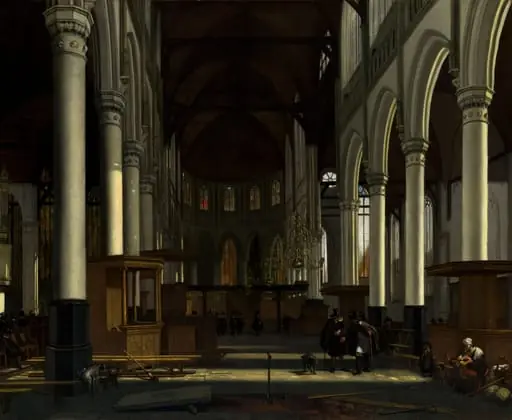 The Interior of the Oude Kerk, Amsterdam
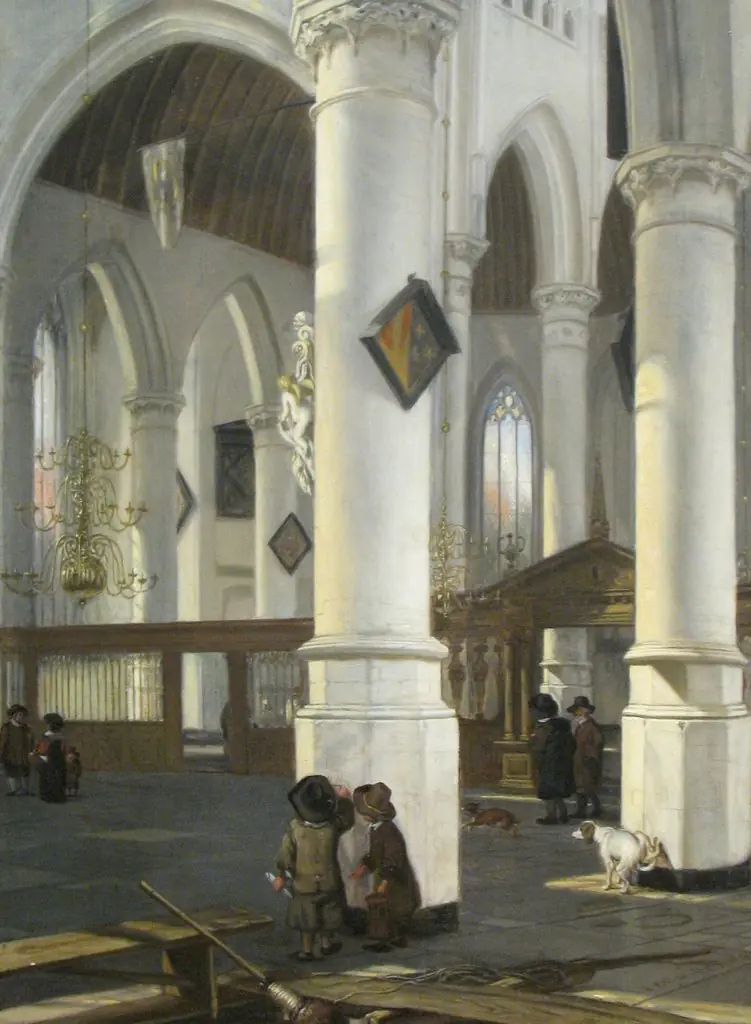 Interior of the Oude Kerk, Delft
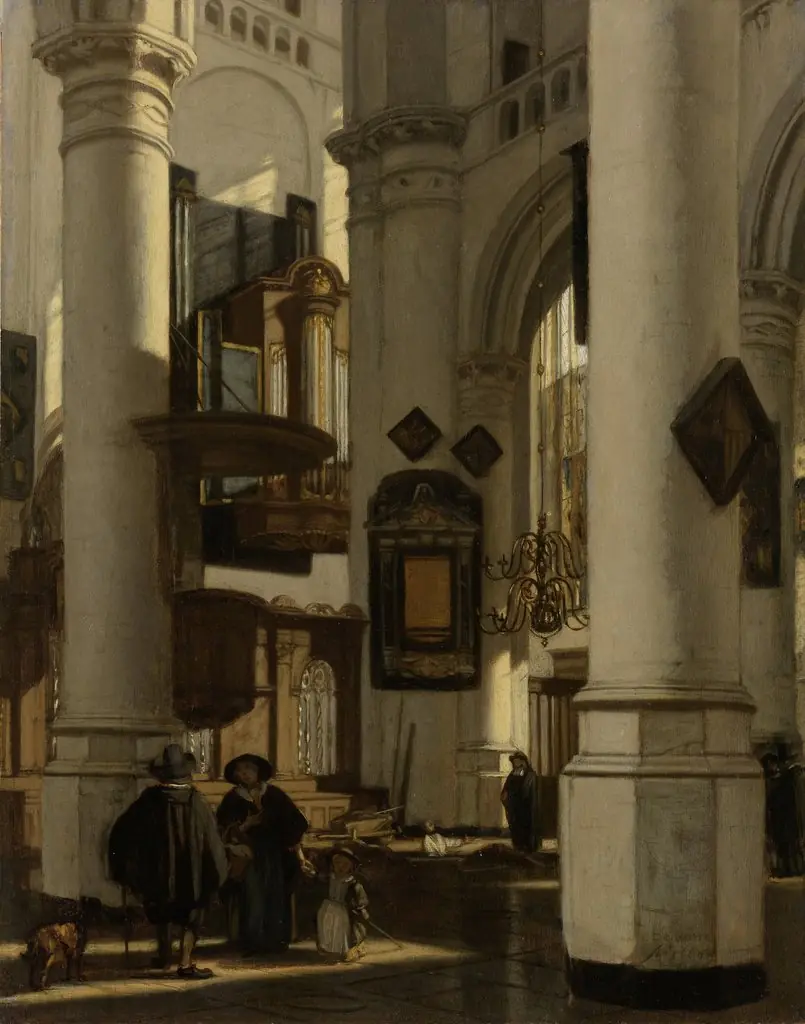 Interior of a Protestant, Gothic Church, with a Gravedigger in the Choir
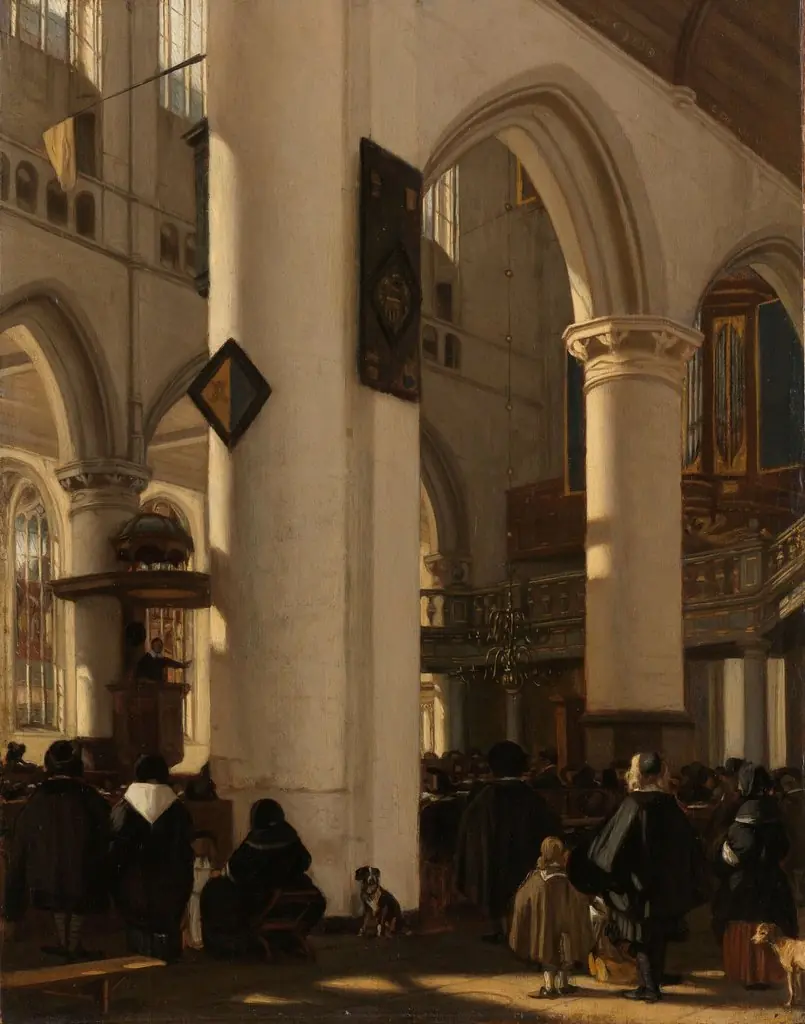 Interior of a Protestant, Gothic Church during a Service
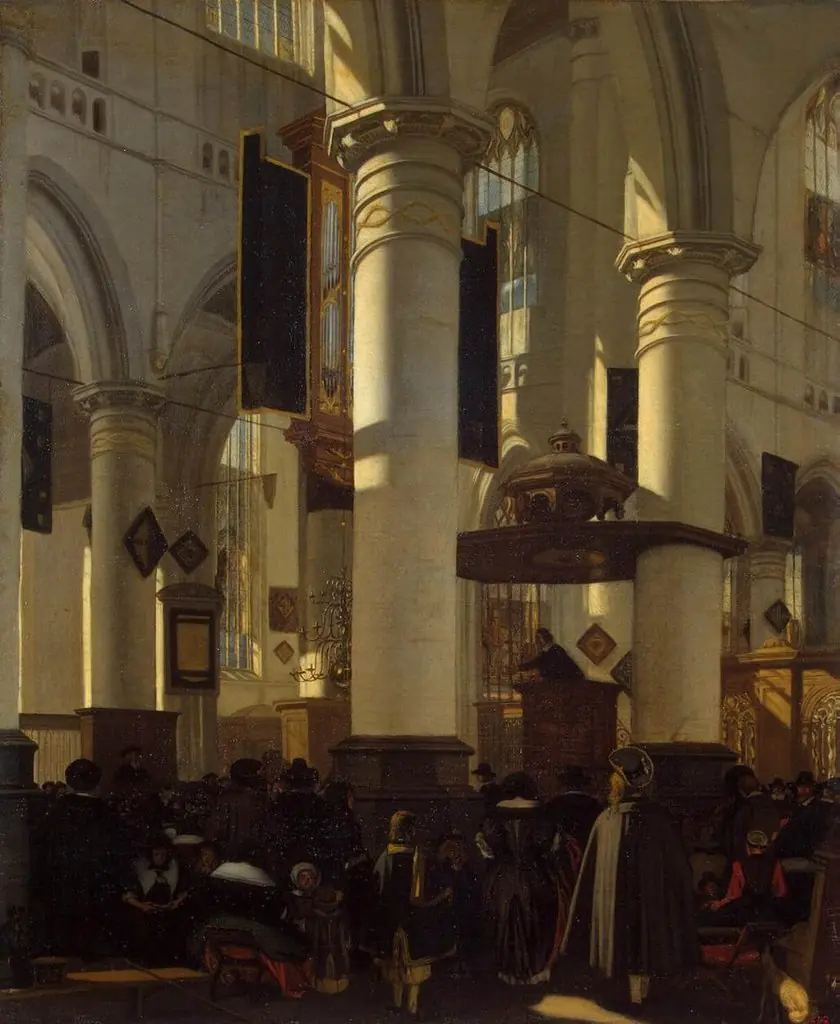 Interior of a Church
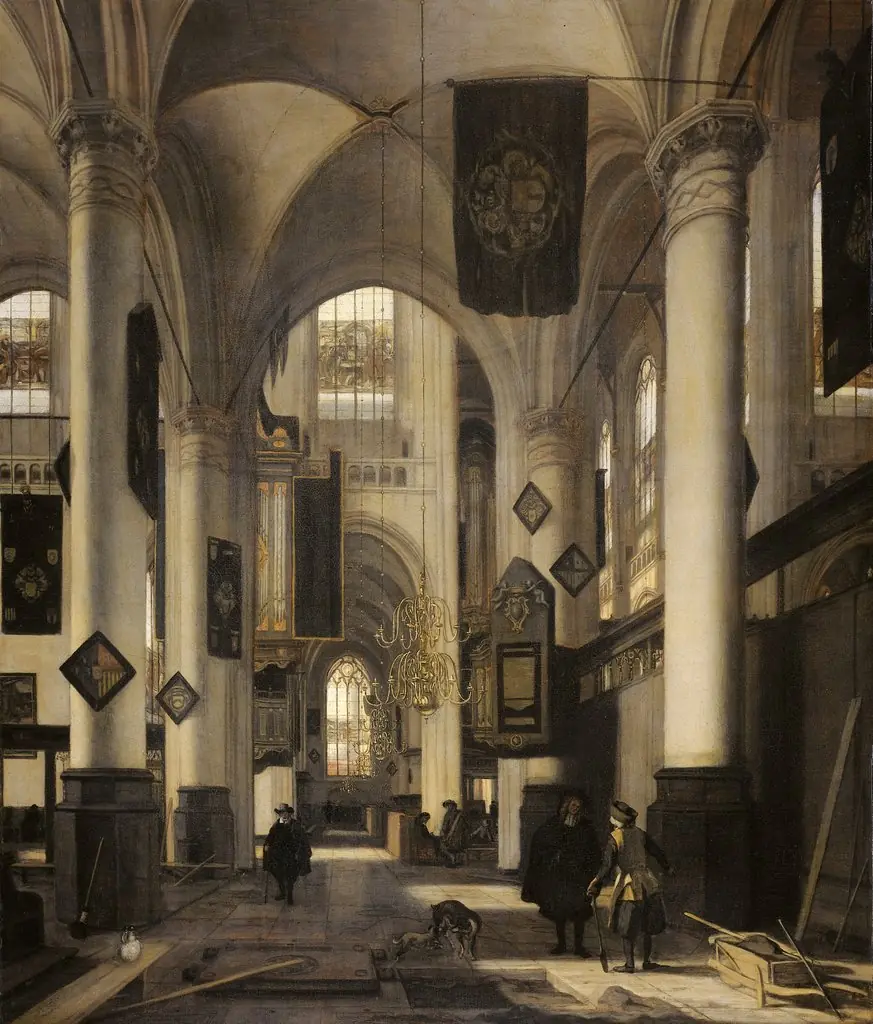 Interior of a Protestant Gothic Church
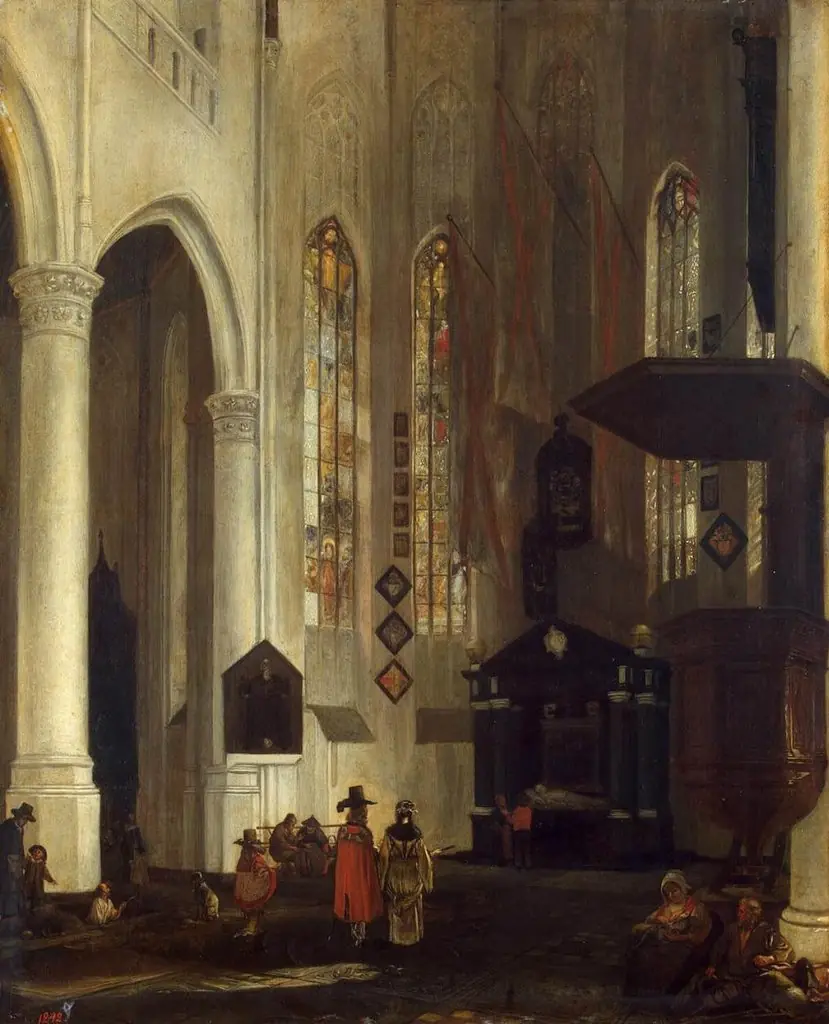 Old Church (Oudekerk) in Delft with the Tomb of Admiral Pieter Pieterszoon Hein (Heyn)
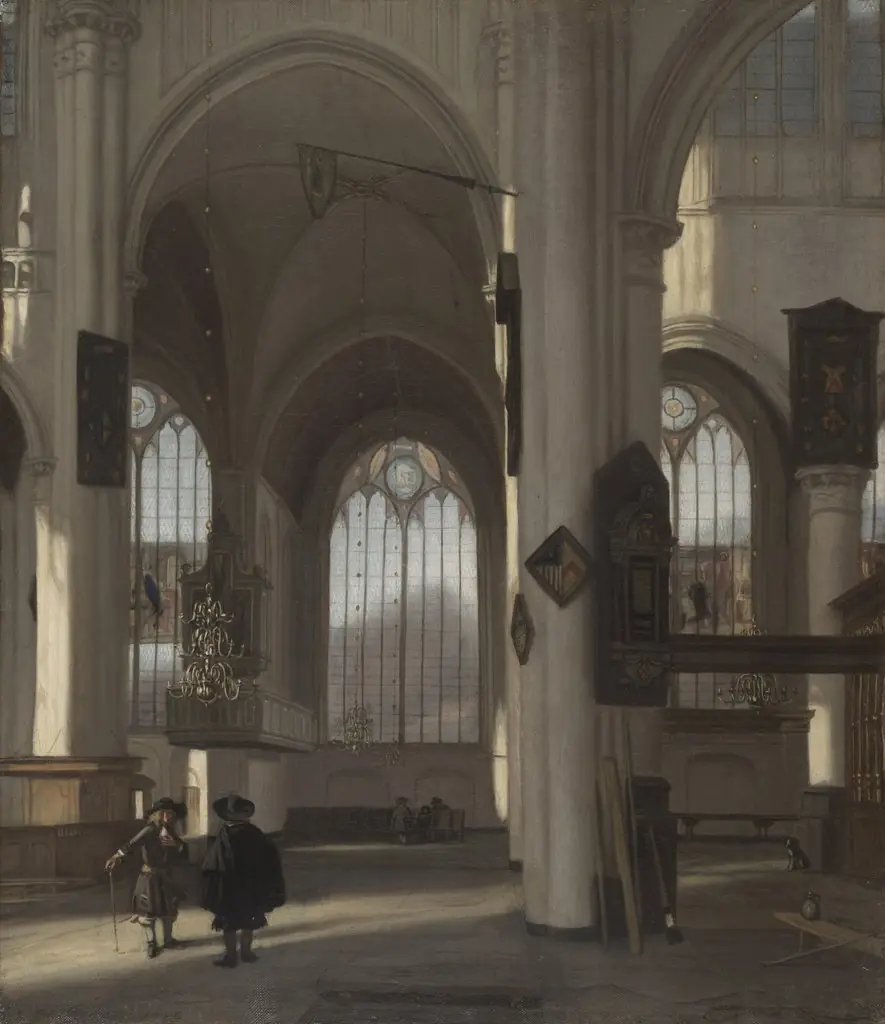 Interior of a Church