Artwork
Kitchen Interior
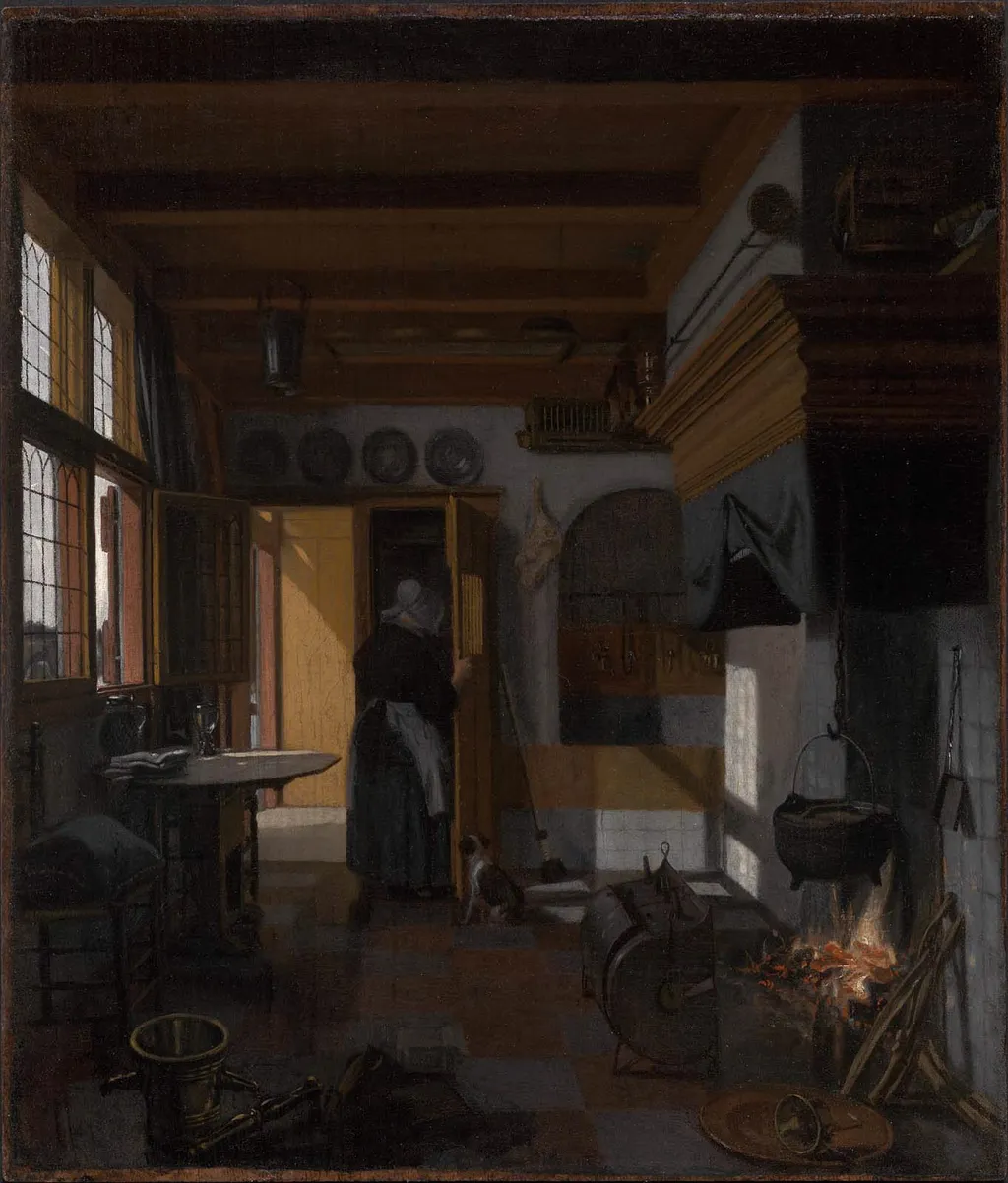
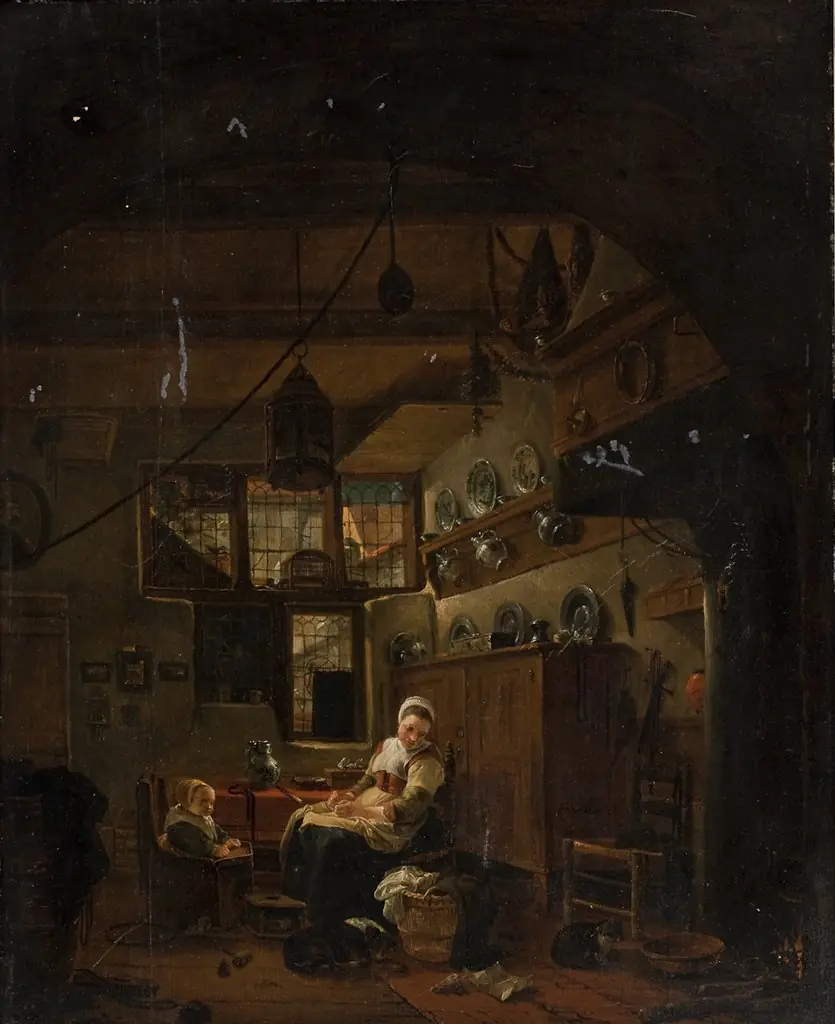
Kitchen Interior is an oil painting by the Dutch Golden Age artist Emanuel de Witte. It dates from 1665 and is held in the collection of the Museum of Fine Arts Boston.
About this work
Overview
Emanuel de Witte’s 1665 oil on canvas, titled Kitchen Interior, depicts a modest domestic space. The composition centers on a woman in a long dress and apron, standing beside an open doorway that leads to an adjoining room. The scene is rendered with subdued lighting, emphasizing the quiet atmosphere of everyday life.
Subject & Meaning
The work presents a domestic kitchen, complete with a tiled floor, a modest table covered by a white cloth, and a hanging pot above a fireplace. The woman’s turned back suggests a moment of routine activity, perhaps checking on tasks in the neighboring room, inviting viewers to contemplate the ordinary rhythms of 17th‑century household life.
Technique & Style
De Witte employs a restrained palette and careful modeling of light and shadow, allowing daylight to filter through left‑hand windows and illuminate the interior. The subtle chiaroscuro creates depth, while the precise rendering of tiles, fabrics, and metal surfaces reflects the artist’s attention to material detail.
History & Provenance
Painted in 1665, Kitchen Interior entered the collection of the Museum of Fine Arts, Boston, where it remains on display. The painting’s provenance prior to its acquisition by the museum is not extensively documented, but it has been recognized as part of de Witte’s broader oeuvre of interior scenes.
Context
Emanuel de Witte is best known for his church interiors, yet this work demonstrates his interest in domestic architecture and everyday settings. The composition aligns with the Dutch Golden Age’s focus on genre scenes that celebrate the modest, well‑ordered home as a moral and social ideal.
Own this work as a print
Artist & collection

Artist
Emanuel de Witte was born circa 1617 in Alkmaar, the son of Pieter de Wit, a local schoolmaster.

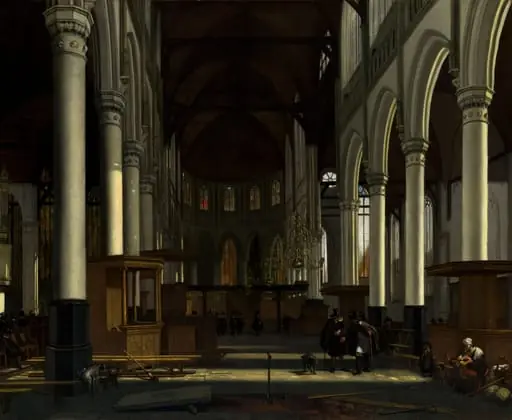 The Interior of the Oude Kerk, Amsterdam
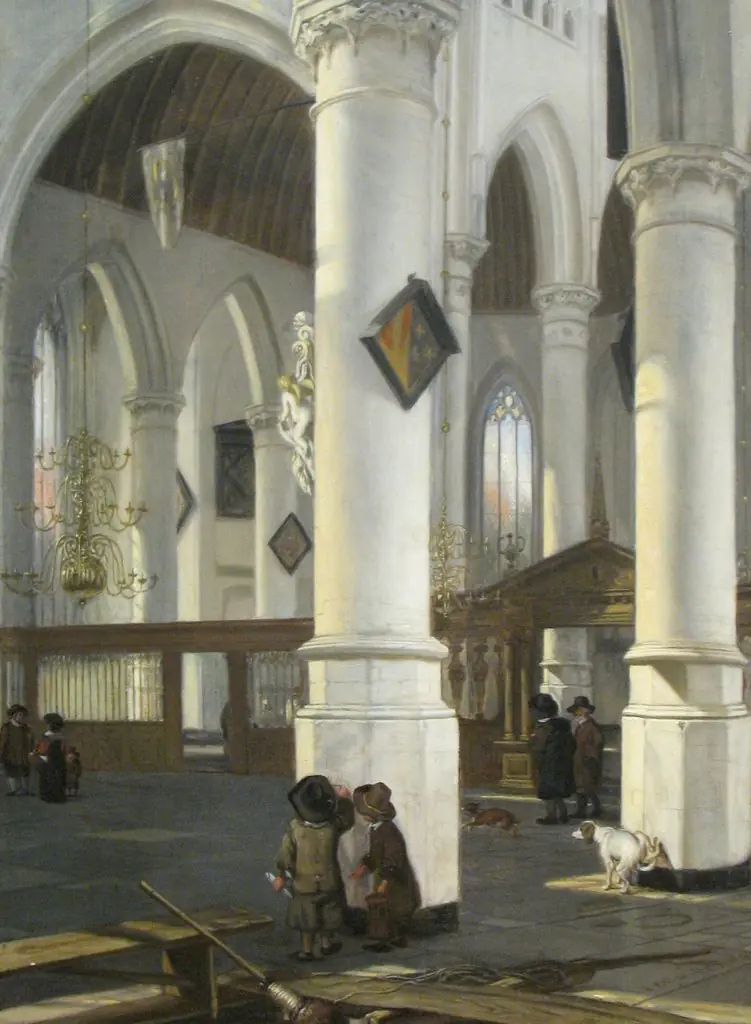 Interior of the Oude Kerk, Delft
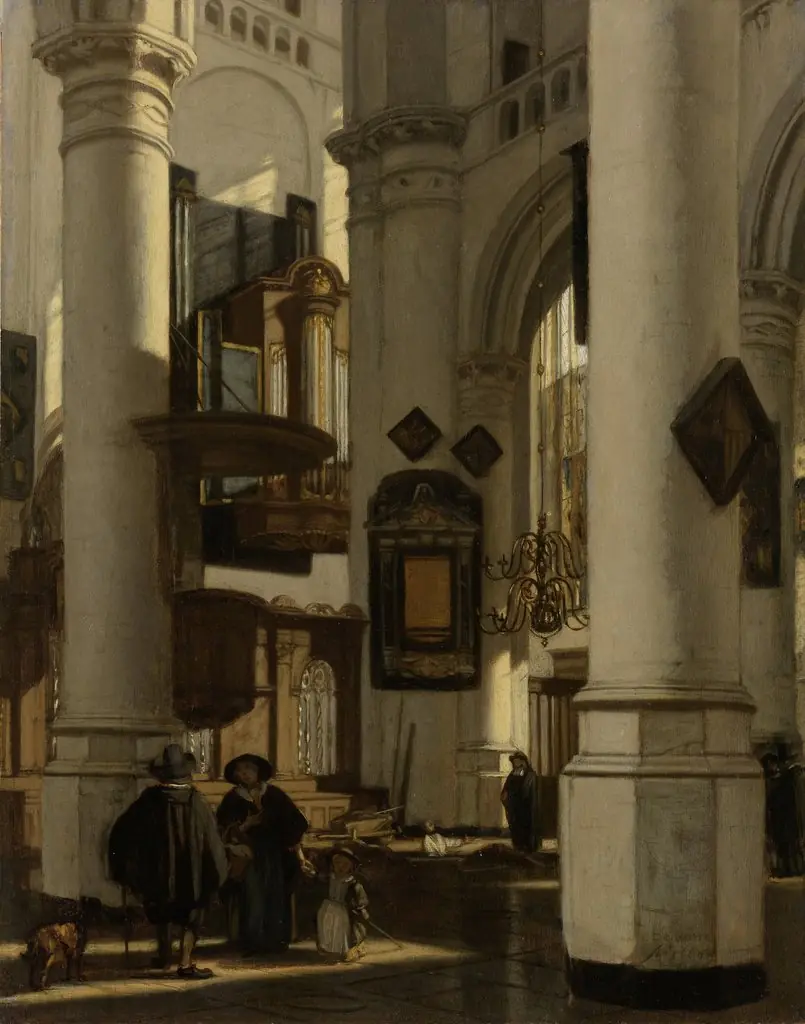 Interior of a Protestant, Gothic Church, with a Gravedigger in the Choir
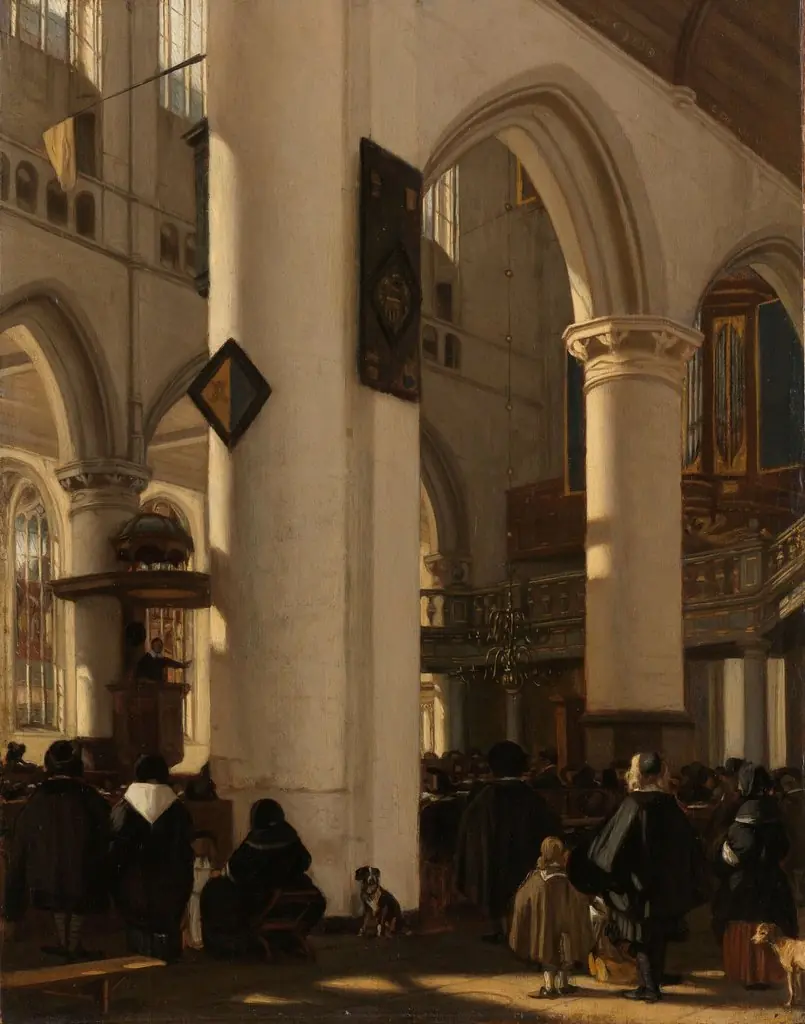 Interior of a Protestant, Gothic Church during a Service
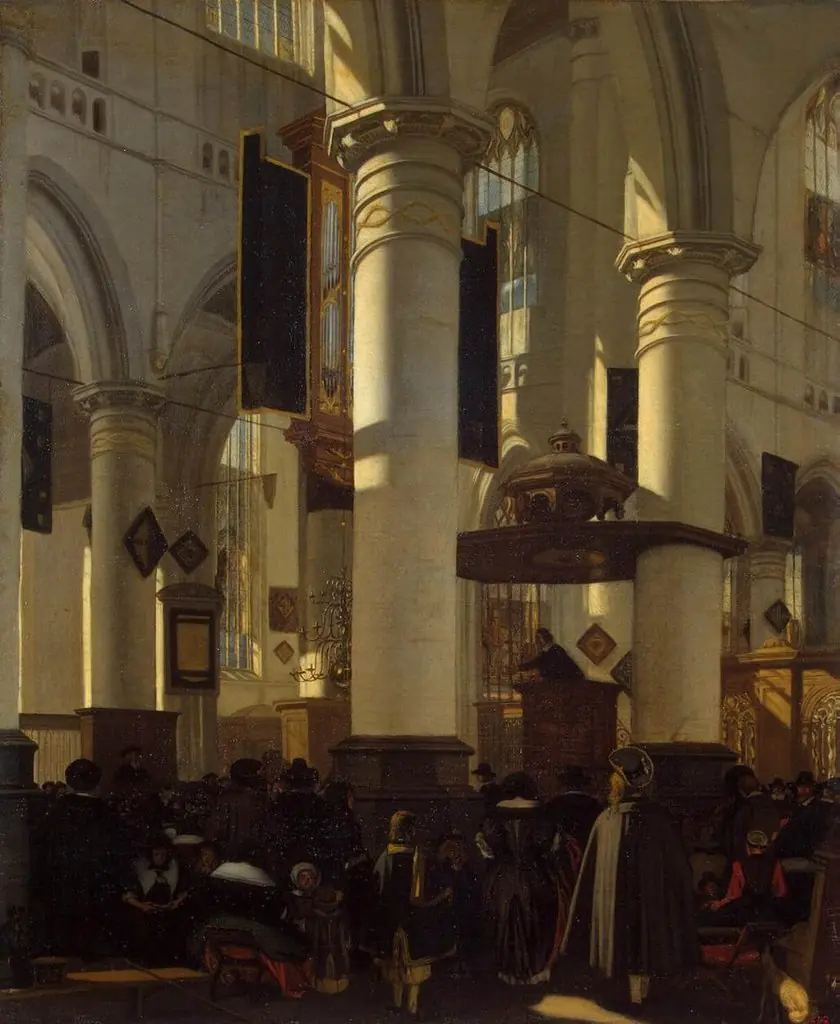 Interior of a Church
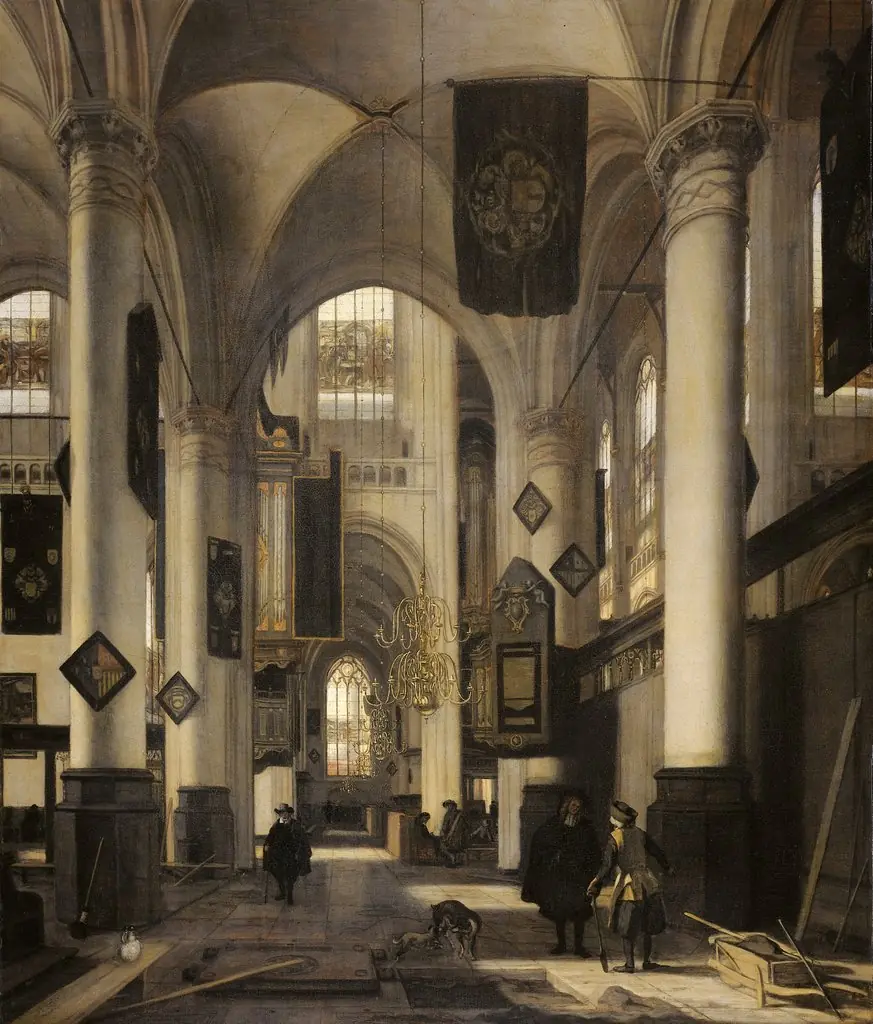 Interior of a Protestant Gothic Church
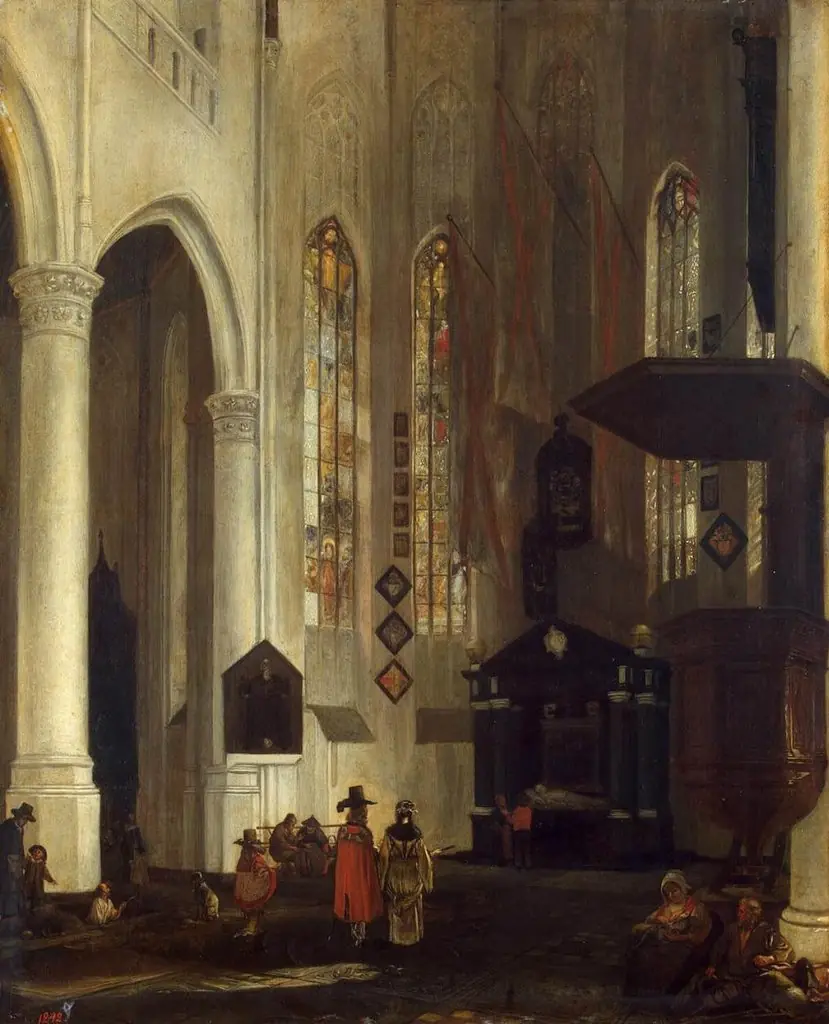 Old Church (Oudekerk) in Delft with the Tomb of Admiral Pieter Pieterszoon Hein (Heyn)
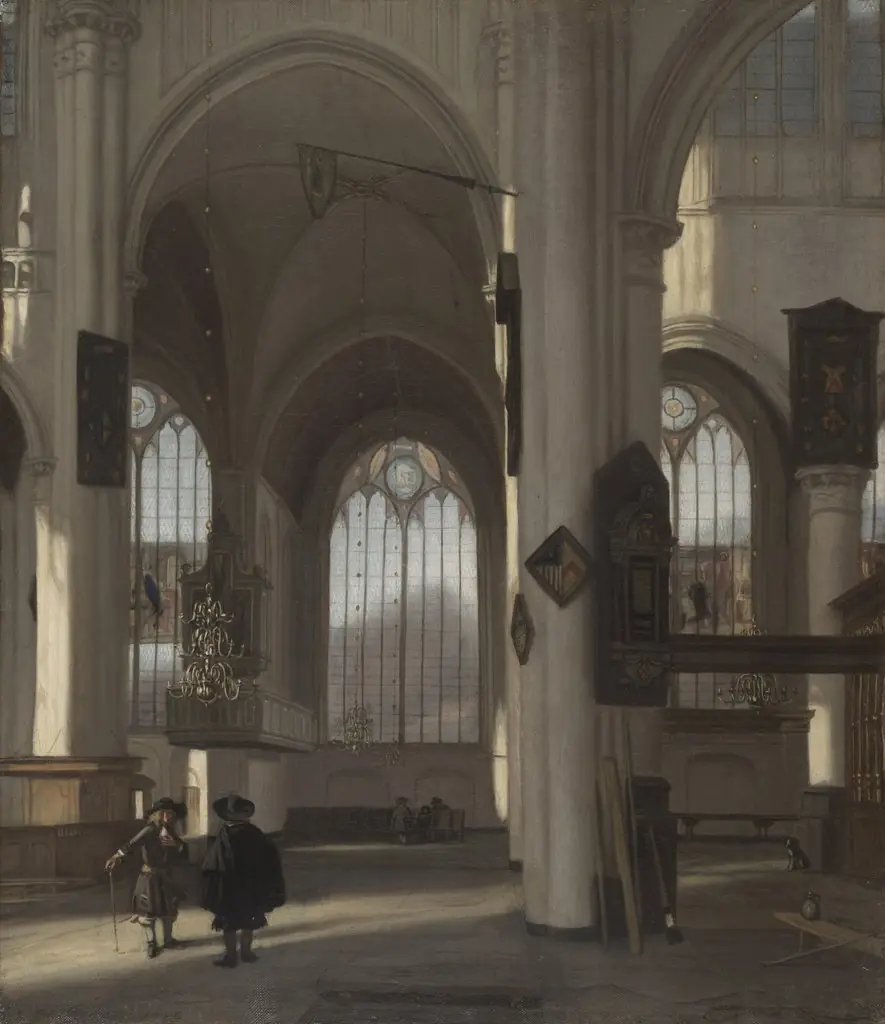 Interior of a Church
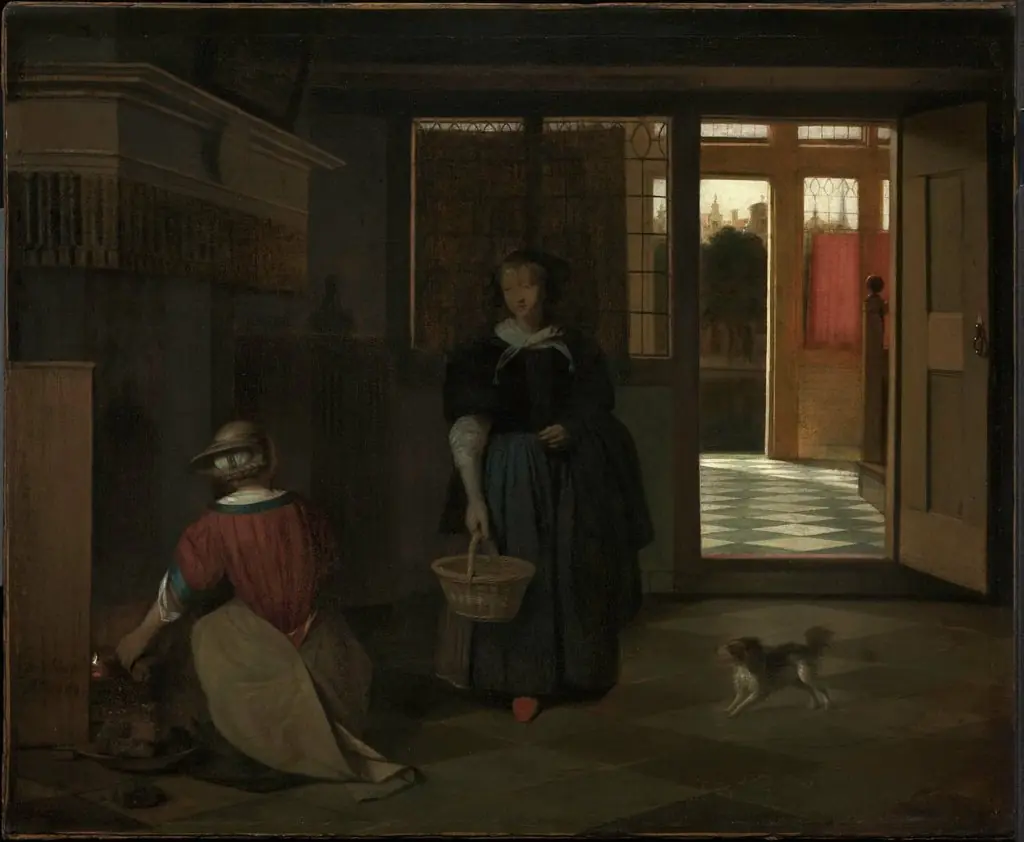 Interior of a Dutch house with a woman kneeling by a fire conversing with a woman standing
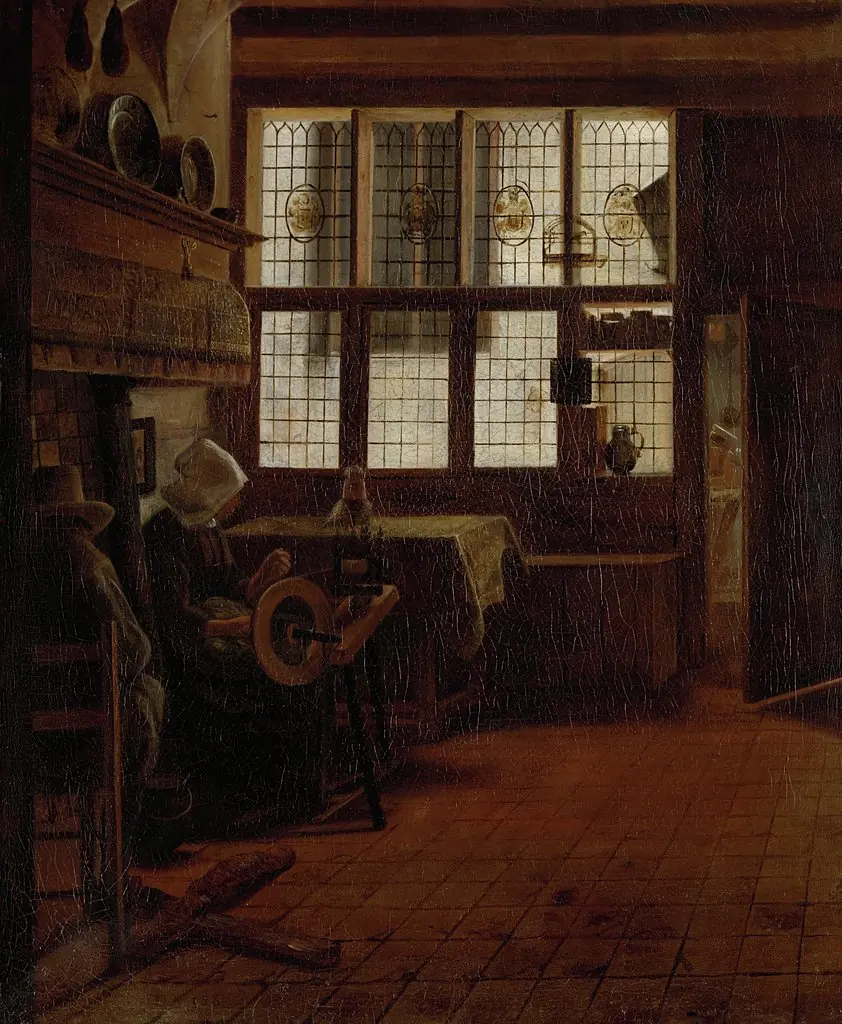 Interior with Woman at the Spinning Wheel
 Interior with Woman at the Spinning Wheel
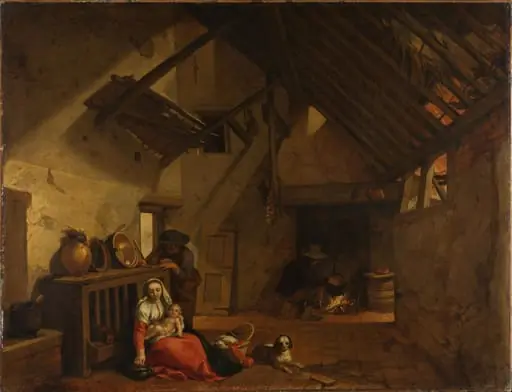 The Rest on the Flight into Egypt
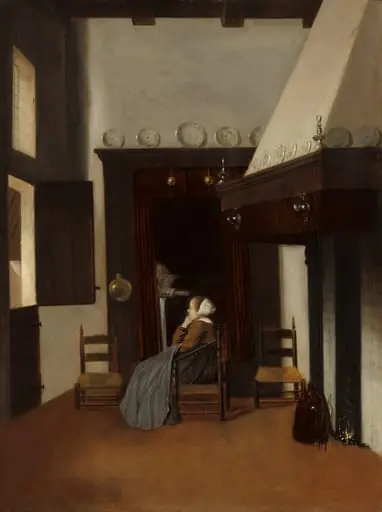 Young Woman in an Interior
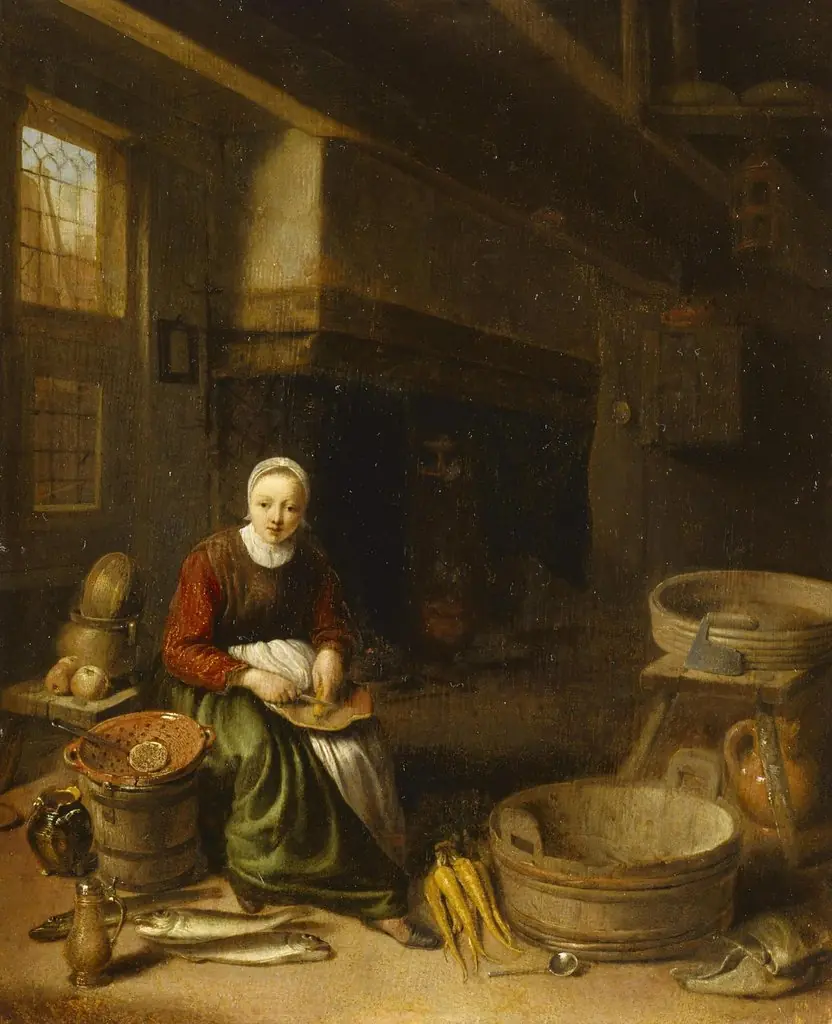 Kitchen Scene
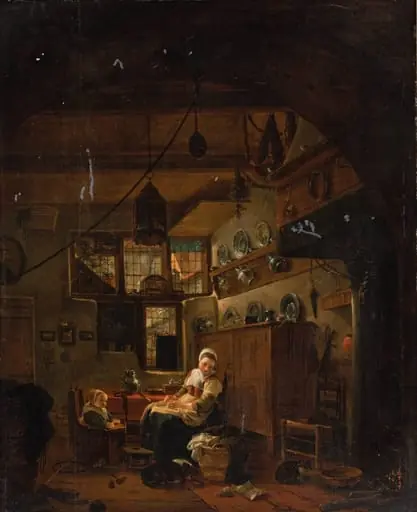 Interior of a Dutch Farm Cottage
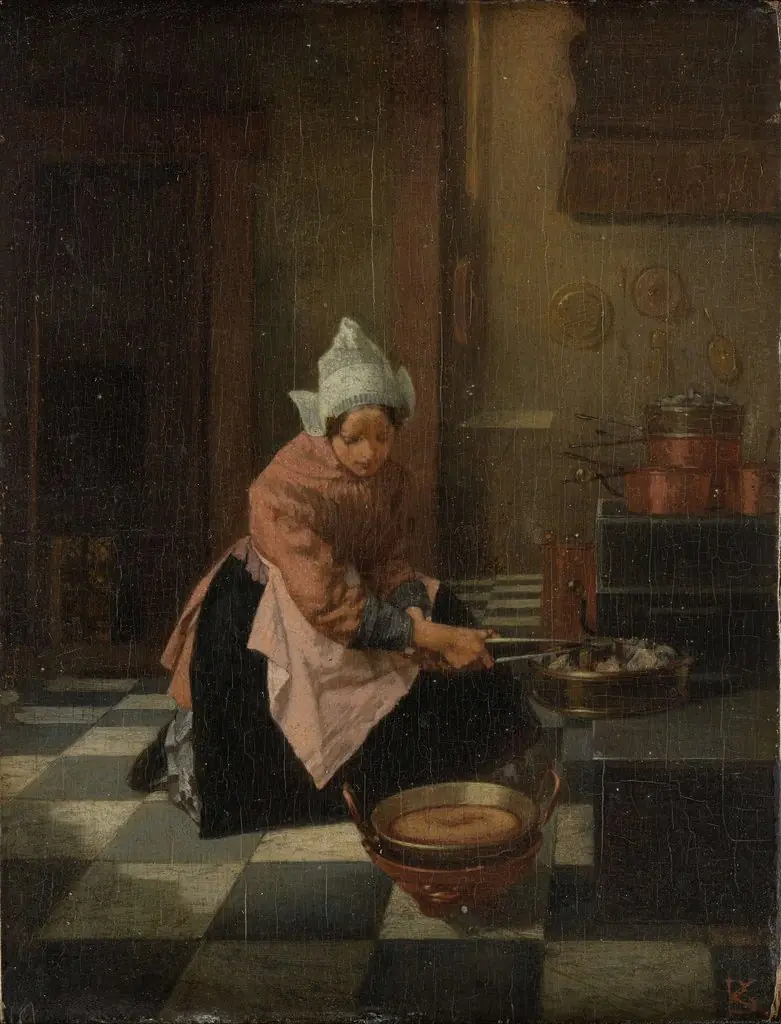 The Waffle Maker
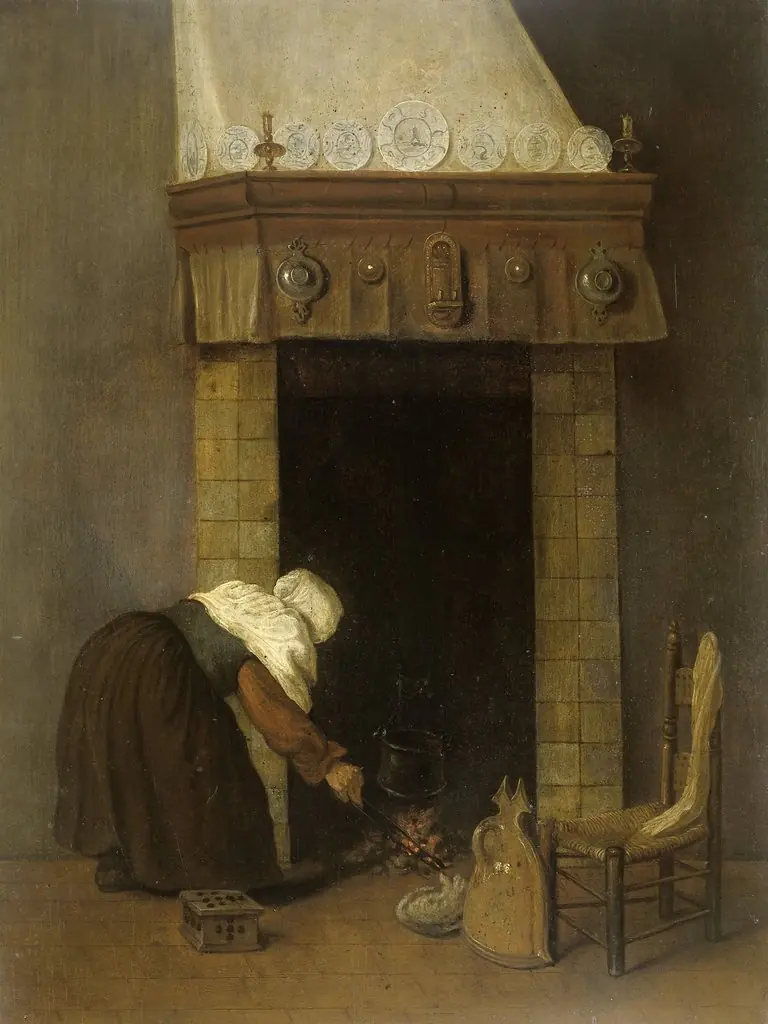 Woman at the hearth
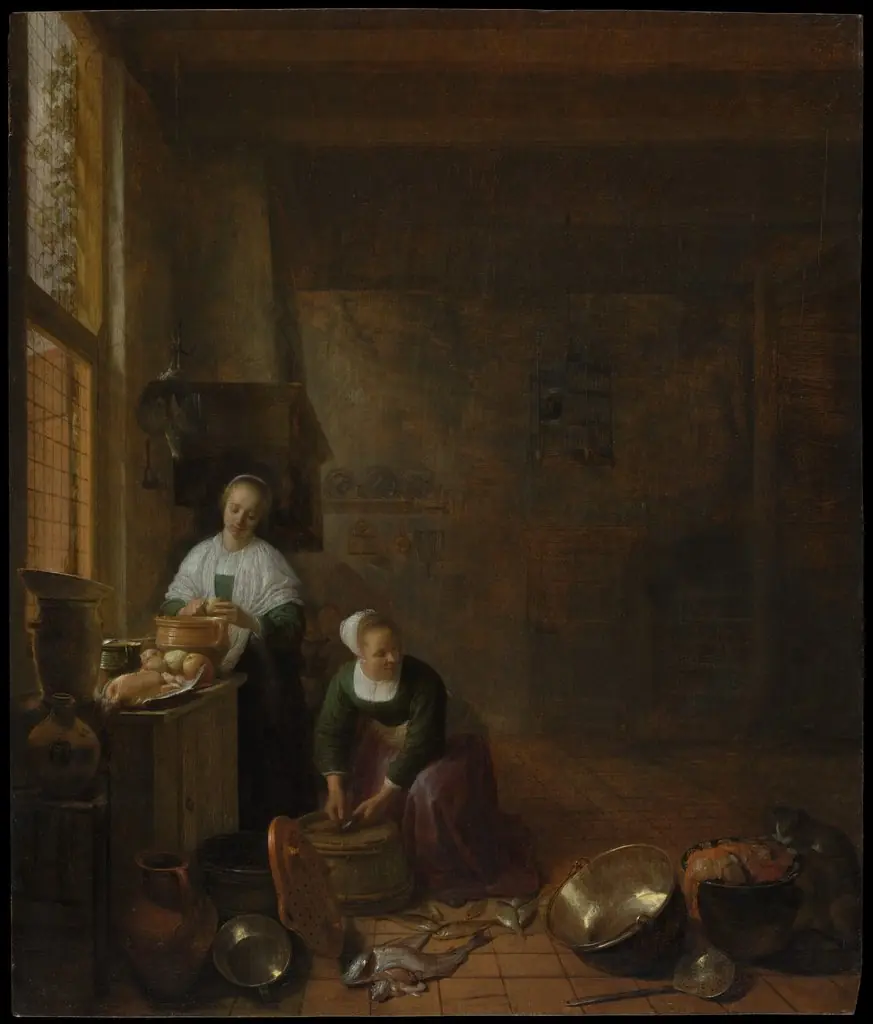 A Kitchen
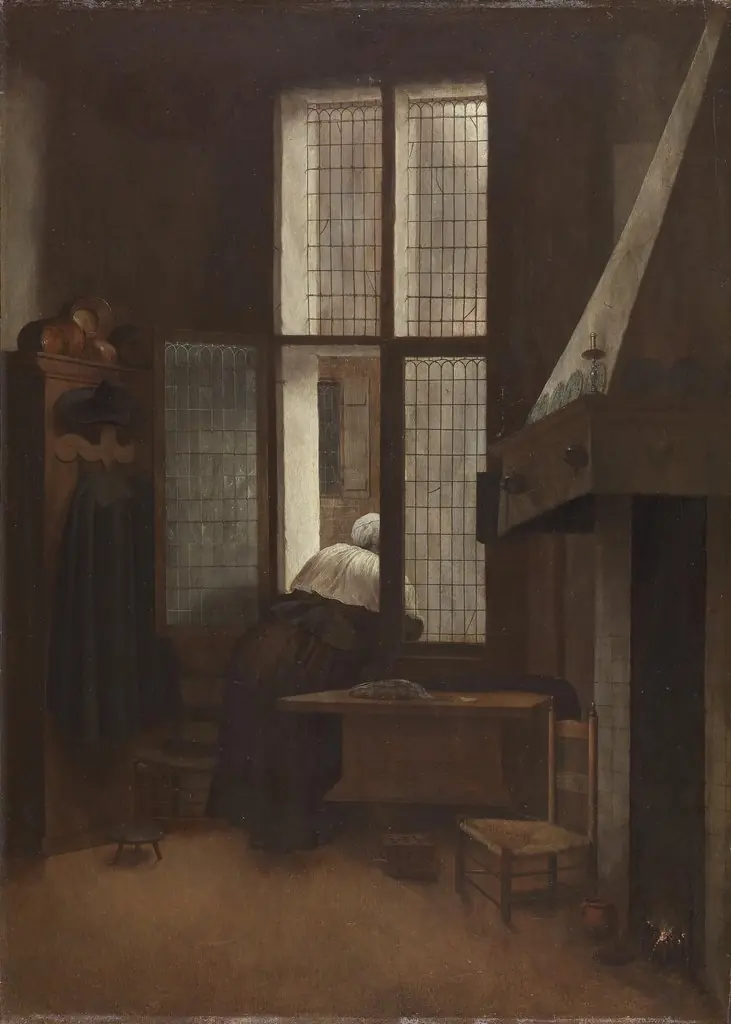 Women at the window
 Interior of a Dutch Farm Cottage