Artwork
Untitled
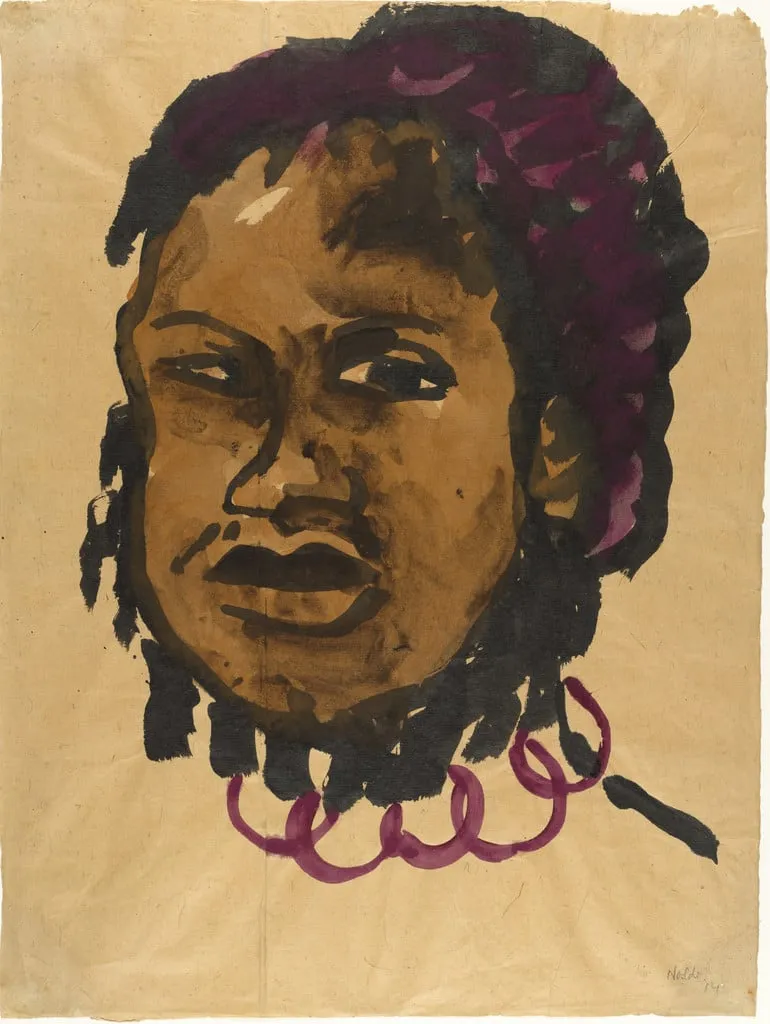
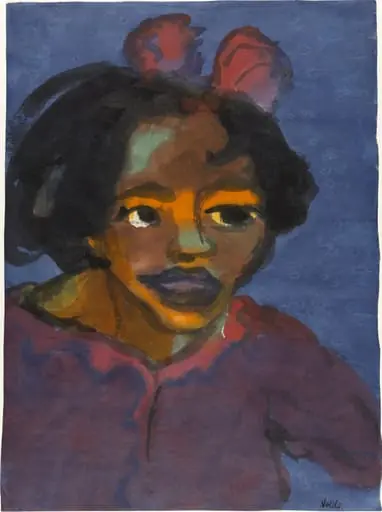
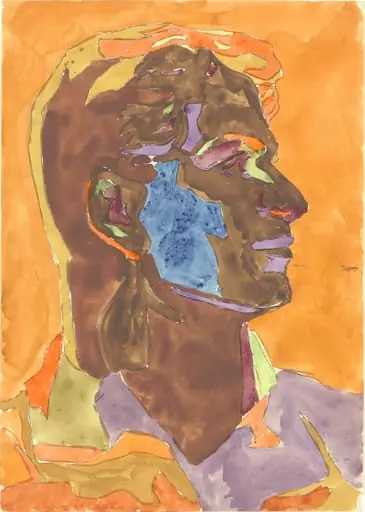
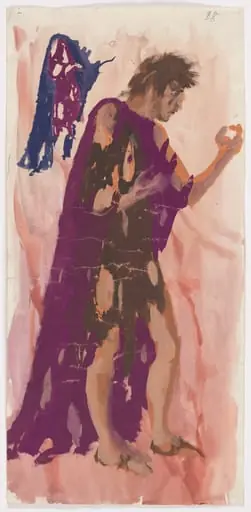
Untitled is a watercolor drawing by Emil Nolde. It dates from 1914 and is held in the collection of the Museum of Modern Art.
About this work
Overview
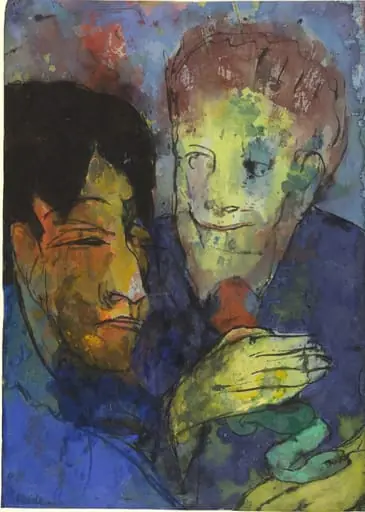
Created in 1914, this watercolor on paper is a portrait by Emil Nolde, part of The Museum of Modern Art’s collection. It presents a tightly framed facial study, emphasizing expression over detail. The work reflects Nolde’s interest in psychological presence and his move away from naturalism, using simplified forms and heightened color to convey inner state rather than physical accuracy.
Subject & Meaning
The subject is an anonymous figure, rendered with intense focus and minimal context. The wide, dark eyes and slightly parted lips suggest contemplation or quiet tension. Nolde avoids idealization, instead capturing a raw, unmediated presence. The lack of identifying features invites interpretation as a universal human expression rather than a specific individual portrait.
Technique & Style
Dark outlines define facial features, while the hair incorporates streaks of purple against black, adding subtle chromatic dissonance.
Nolde applied watercolor with bold, uneven strokes, building form through layered washes and abrupt edges. Dark outlines define facial features, while the hair incorporates streaks of purple against black, adding subtle chromatic dissonance. The background, a pale, irregular tan, lacks detail, forcing attention onto the face. Texture emerges from the paper’s absorbency and the artist’s deliberate, unpolished brushwork.
History & Provenance
The work was produced during a period when Nolde was deeply engaged with expressive portraiture, prior to his involvement with the Expressionist group Die Brücke. It entered The Museum of Modern Art’s collection in the mid-20th century, among other works by Nolde acquired as part of efforts to document early modernist experimentation in German art.
Context
In 1914, European artists were redefining representation through emotional intensity and formal simplification. Nolde’s approach aligned with broader Expressionist tendencies, rejecting academic realism in favor of subjective vision. His use of watercolor—often considered a delicate medium—was unconventional, chosen here for its immediacy and capacity for bold, unrefined mark-making.
Legacy
This watercolor exemplifies Nolde’s enduring contribution to modern portraiture: the elevation of psychological depth through stripped-down visual language. Though less known than his oil paintings, such works influenced later artists exploring emotional resonance in non-traditional media. The piece remains a quiet but forceful statement on the power of minimal means to convey complex inner life.
Artist & collection

Artist
Emil Nolde was a German painter and printmaker. He was one of the first Expressionists, a member of Die Brücke, and was one of the first oil painting and watercolor painters of the early 20th century to explore color.…