Artwork
Χωρίς τίτλο (recto) Αυτοπροσωπογραφία (verso)
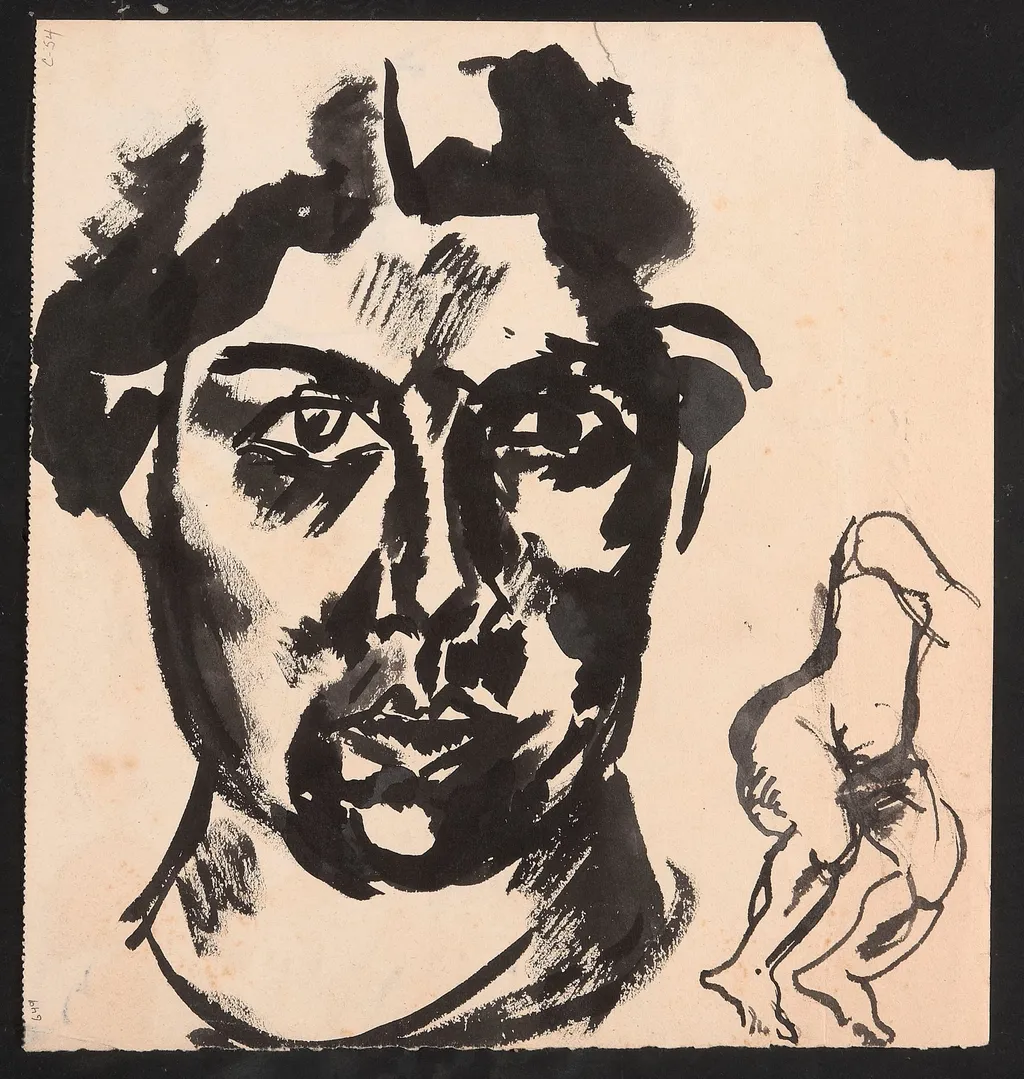
Χωρίς τίτλο (recto) Αυτοπροσωπογραφία (verso) is an unspecified painting by Liubov Popova. It dates from 1916 and is held in the collection of the Metropolitan Organisation of Museums of Visual Arts of Thessaloniki – MOMus.
About this work
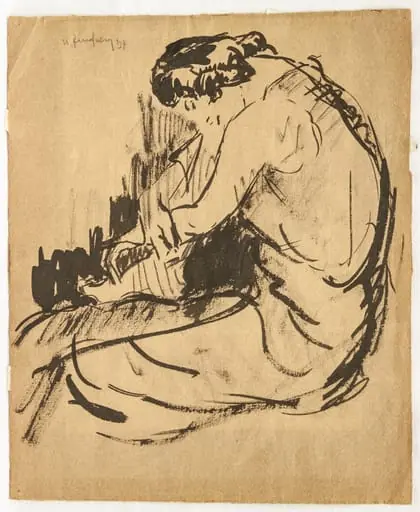
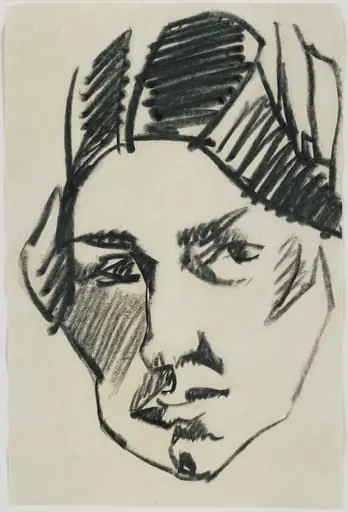
The overall style of the painting is loose and expressive, with a focus on capturing the subject's essence rather than creating a highly realistic portrait.
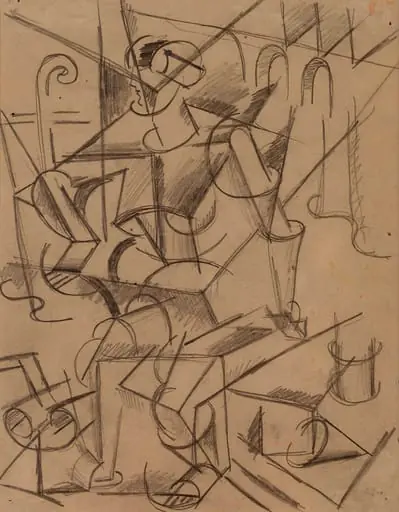
The painting features a black-and-white sketch of a person's face, with bold brushstrokes and a focus on expressive lines. The subject's eyes are cast downward, and their hair is pulled back. To the right of the face, a small sketch of a person in motion is visible, with their arms and legs extended.
The overall style of the painting is loose and expressive, with a focus on capturing the subject's essence rather than creating a highly realistic portrait. The use of bold lines and simple shading creates a sense of energy and movement.
If you're interested in learning more about the artist's work, you might want to explore the paintings of Popova, Liubov (1889-1924).
Overview
Created around 1916, this double-sided work by Liubov Popova consists of an untitled image on the front and a self‑portrait on the reverse. Both sides are executed in black‑and‑white drawing, and the piece is part of the collection of the Museum of Ethnography.
Subject & Meaning
The front presents a stylised human face, eyes lowered and hair pulled back, while a small figure in motion appears beside it, arms and legs extended. The reverse shows the artist herself, suggesting a dialogue between an external observation of a figure and an introspective self‑representation.
Technique & Style
Popova employs bold, expressive lines and minimal shading, favoring gestural strokes over detailed modeling. The composition relies on strong contour work to convey energy and movement, emphasizing the psychological presence of the subjects rather than photographic realism.
History & Provenance
The drawing dates to the tumultuous years of the First World War, a period when Popova was exploring abstraction and constructivist ideas. It entered the Museum of Ethnography’s holdings sometime after the artist’s death in 1924, where it remains on display as part of the early 20th‑century Russian avant‑garde collection.
Artist & collection
Museum
Metropolitan Organisation of Museums of Visual Arts of Thessaloniki – MOMus
Continue through works from the same source collection.