Artwork
Union Army Veteran
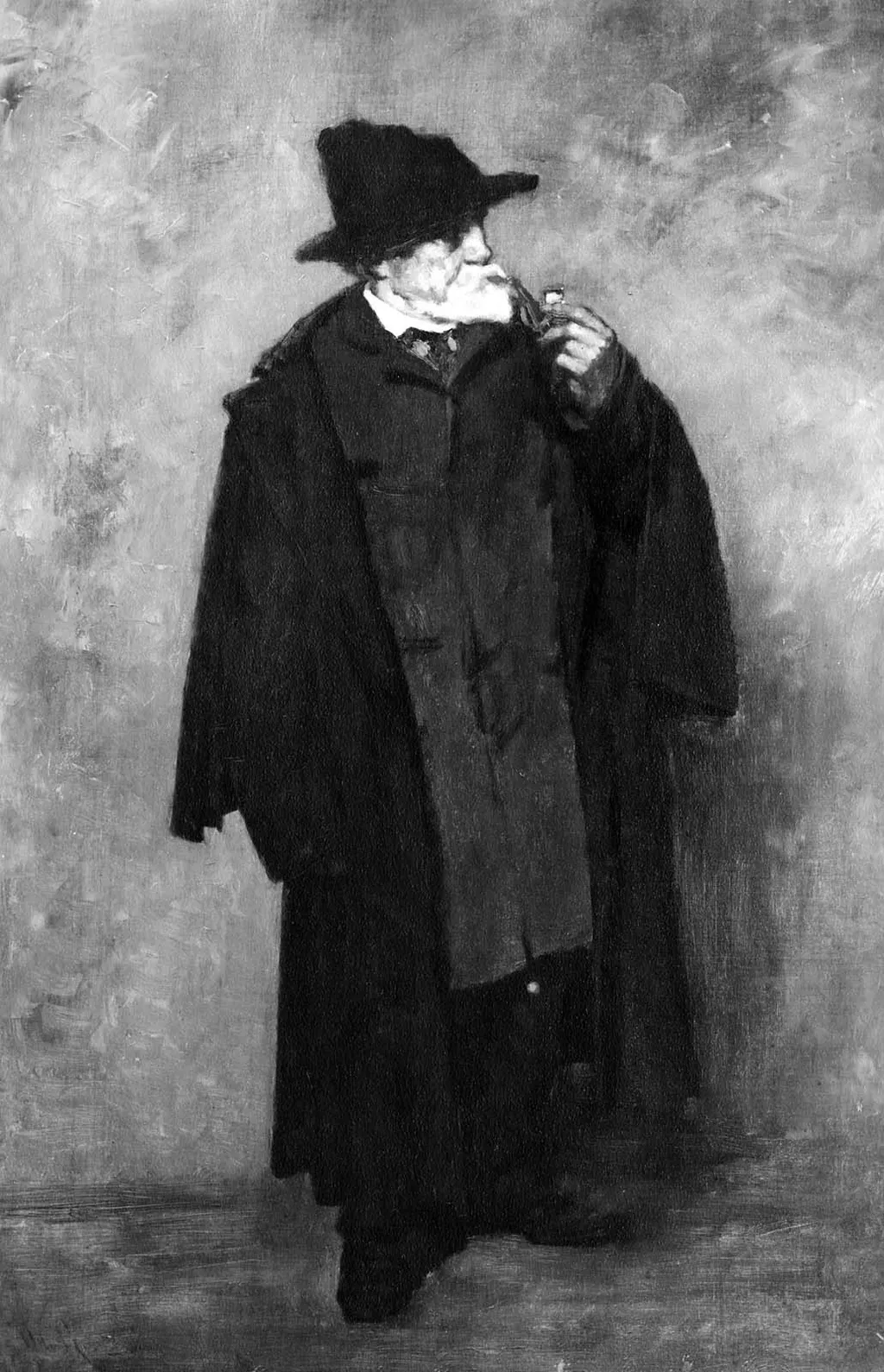
Union Army Veteran is an oil painting by Emil Otto Grundmann. It dates from 1877 and is held in the collection of the Museum of Fine Arts Boston.
About this work
Overview
Grundmann, a German artist trained in Antwerp and Düsseldorf, was then the first director of the School of the Museum of Fine Arts, Boston.
Painted around 1877 by Emil Otto Grundmann, this oil portrait captures a former Union soldier in the aftermath of the American Civil War. Grundmann, a German artist trained in Antwerp and Düsseldorf, was then the first director of the School of the Museum of Fine Arts, Boston. He brought European academic traditions to American art education, and this work reflects his disciplined approach to portraiture within a distinctly American historical context.
Subject & Meaning
The subject is a middle-aged or elderly man, likely a veteran of the Union Army, rendered with quiet dignity. His dark coat, white beard, and neutral expression suggest reflection rather than heroism. The pipe in his hand and the plain scarf hint at civilian life after service. The lack of military insignia and the soft, undefined background emphasize his identity as a private individual, not a public symbol, aligning with postwar efforts to reintegrate soldiers into ordinary society.
Technique & Style
Grundmann employed oil paint with restrained brushwork and subtle tonal gradations, characteristic of academic portraiture. The face is deliberately softened, avoiding sharp detail to evoke introspection. The dark clothing contrasts with the pale, neutral background, drawing focus to the figure’s presence without distraction. The use of glazing—layering thin, transparent pigments—creates depth in the shadows and a muted, atmospheric quality consistent with 19th-century European training.
History & Provenance
The painting has remained in the collection of the Museum of Fine Arts, Boston, since its creation. It was likely acquired shortly after completion, during Grundmann’s tenure as director of the school. Its preservation within the institution underscores its role as both an artistic example and a historical document, representing the school’s early commitment to integrating European techniques with American subjects.
Context
Created a decade after the Civil War’s end, the portrait emerges during a period of national reconciliation and veteran reintegration. While many public monuments celebrated military leadership, this intimate portrait focuses on the quiet resilience of the common soldier. Grundmann’s European background offered a detached, observational lens, avoiding sentimentality and instead presenting the veteran as a contemplative, unadorned figure of everyday life.
Legacy
Though not widely exhibited outside Boston, the painting stands as a quiet testament to Grundmann’s influence on American art education. It exemplifies how European academic methods were adapted to portray American historical themes with restraint and psychological nuance. Its endurance in the museum’s collection reflects its value as a study in character, technique, and the understated commemoration of civilian veterans in postwar America.
Artist & collection
Artist
Professor Emil Otto Grundmann (1844 – 27 August 1890) was a German painter. He was born in Meissen and studied in Antwerp under Baron Hendrik Leys, and in Düsseldorf before moving to America where he became a noted…

 The Architect Carl Petersen
 The Architect Carl Petersen
 Retrat de Joan Baptista Parés (1847-1926) (Museu Nacional d'Art de Catalunya, inv 010150-000)
 Un cavaler - Porthos
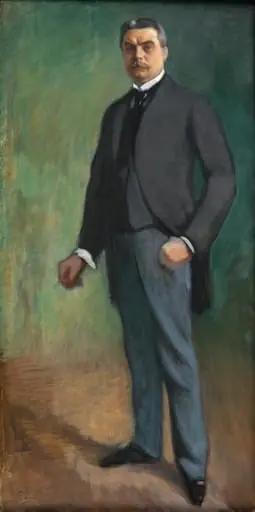 Albert Edelfelt
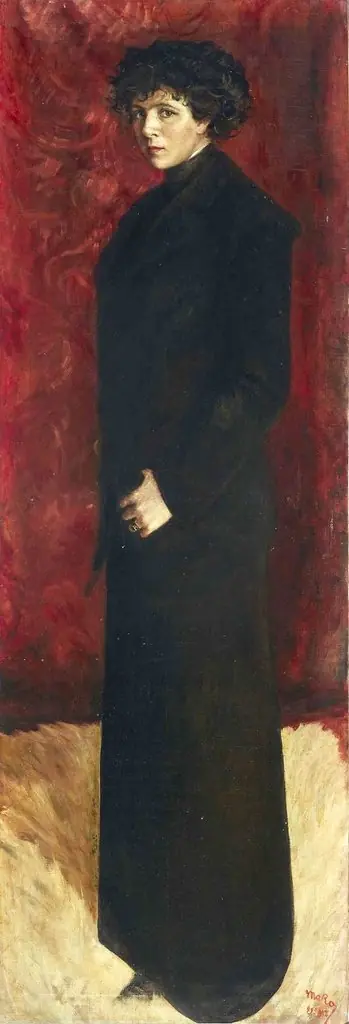 Autorretrato de cuerpo entero (María Roësset Mosquera)
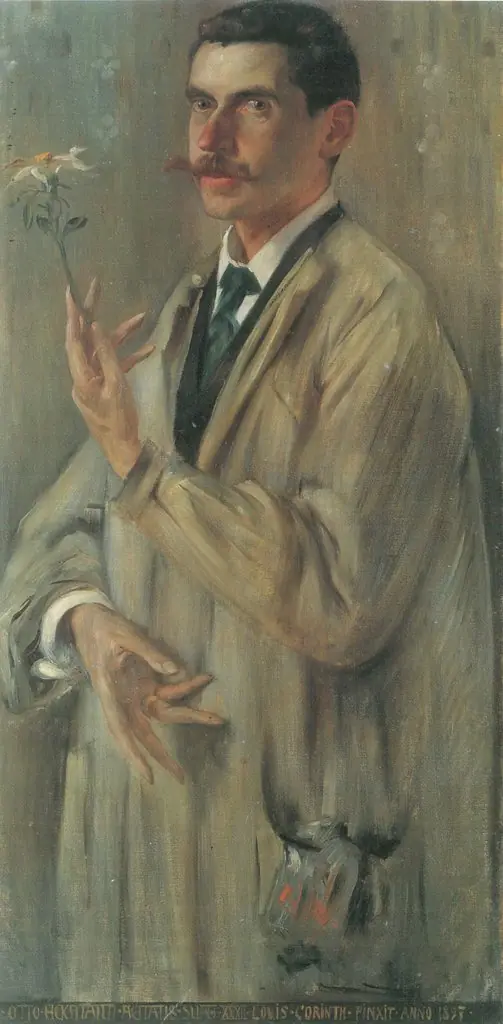 Portrait of Otto Eckmann
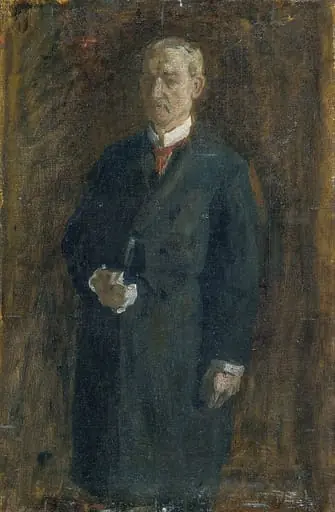 James MacAlister (Sketch)
 Edward Guthrie Kennedy
 Study: Joseph Pennell
 Portrait of George A. Lucas
 Man in Top Hat, Smoking a Cigar