Artwork
Two rivals for the rose of a forester
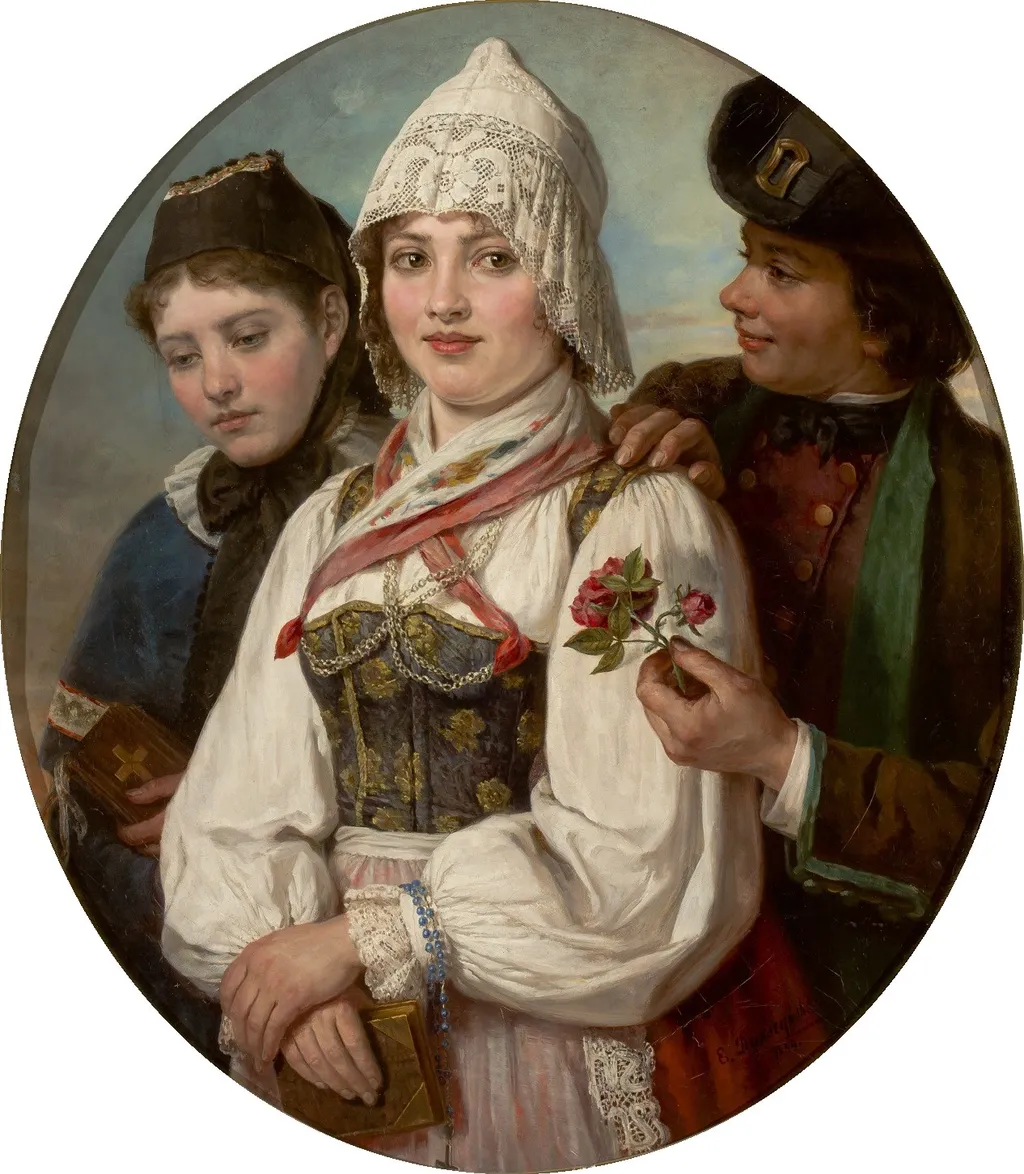
Two rivals for the rose of a forester is an oil painting by the Impressionist artist Emilia Dukszyńska-Dukszta. It dates from 1892 and is held in the collection of the National Museum in Warsaw.
About this work
Overview
Painted in 1892 by Emilia Dukszyńska-Dukszta, this oil work is part of the National Museum in Warsaw’s collection.
Painted in 1892 by Emilia Dukszyńska-Dukszta, this oil work is part of the National Museum in Warsaw’s collection. It presents a quiet yet charged moment between three figures in a rural setting. The composition centers on a woman flanked by two men, their gestures suggesting competition for her attention. The subdued palette and intimate scale emphasize psychological tension over narrative detail.
Subject & Meaning
The painting portrays a woman holding a single rose, caught between two men who rest their hands on her shoulders. Her expression is unreadable, and the men’s postures imply rivalry, though their identities remain ambiguous. The rose may symbolize desire, choice, or fleeting beauty, while the lack of clear context invites interpretation of social or emotional dynamics within a domestic or folk setting.
Technique & Style
Dukszyńska-Dukszta employs soft, muted tones to create a hazy, atmospheric background that isolates the figures. Brushwork is restrained, favoring smooth transitions over texture, which enhances the painting’s stillness. Light falls evenly across the scene, avoiding dramatic contrasts, yet the alignment of hands and gaze generates subtle tension. The clothing and setting suggest late 19th-century Polish rural life, rendered with quiet realism.
History & Provenance
The painting was completed in 1892 and entered the National Museum in Warsaw’s collection shortly thereafter. It has remained in public ownership since, with no record of private sale or relocation. Its consistent presence in the museum’s holdings suggests early institutional recognition, though it has received limited scholarly attention compared to contemporaneous works by male artists of the period.
Context
Created during a time when Polish art was navigating national identity under partition, the scene reflects rural life with emotional nuance rather than overt patriotism. Dukszyńska-Dukszta, one of few documented female painters of her generation in Poland, focused on intimate domestic and interpersonal moments. This work aligns with broader European trends in psychological realism but retains a distinctly local sensibility in dress and setting.
Legacy
Though not widely exhibited outside Poland, the painting endures as a quiet example of late 19th-century Polish genre painting by a female artist. It contributes to a growing recognition of women’s contributions to national art traditions, particularly in portraying private emotional landscapes. Its understated power continues to resonate in discussions of gender, agency, and visual narrative in Polish art history.
Artist & collection
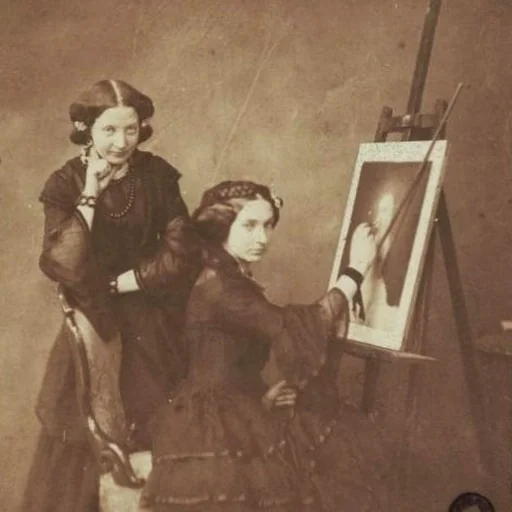
Artist
Emilia Dukszyńska-Dukszta (1837–1898) was an artist, born in Saint Petersburg.