Artwork
Totem and Forest
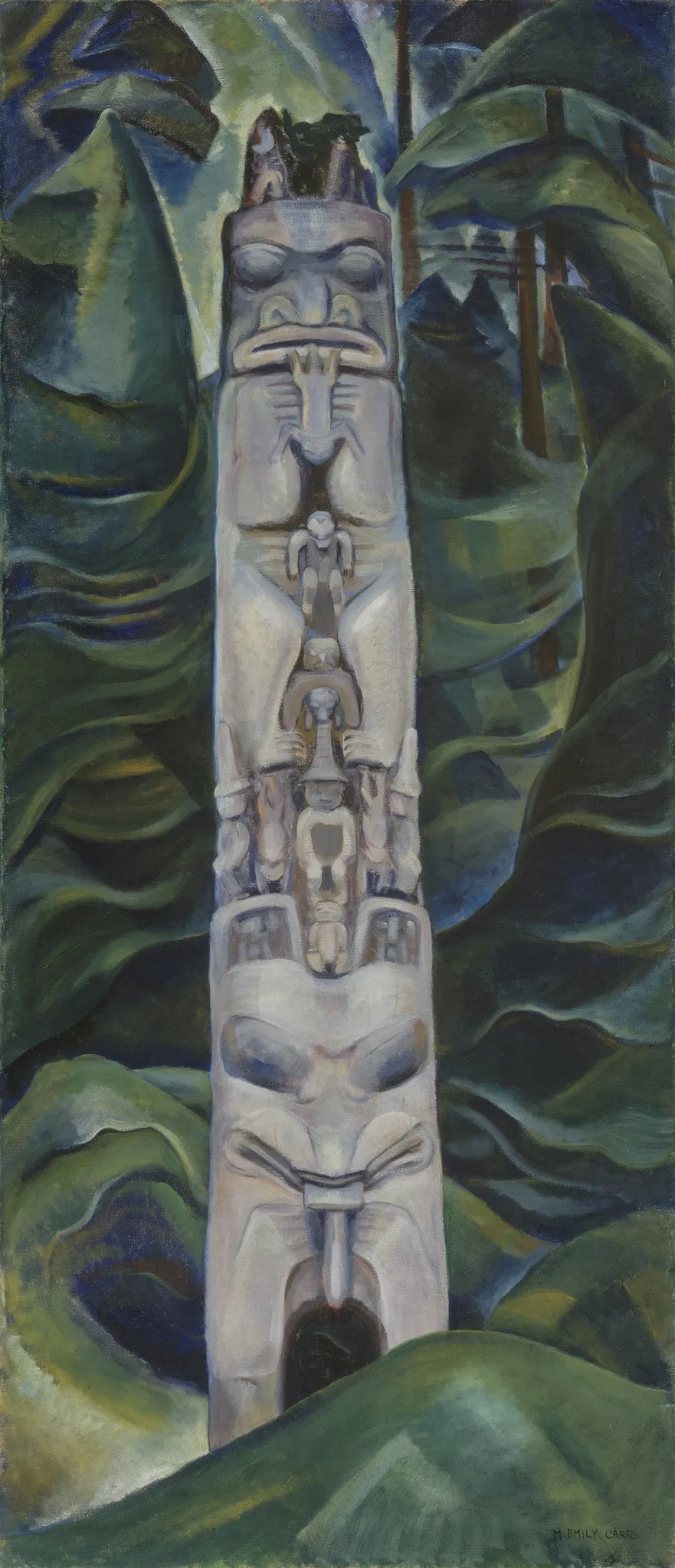
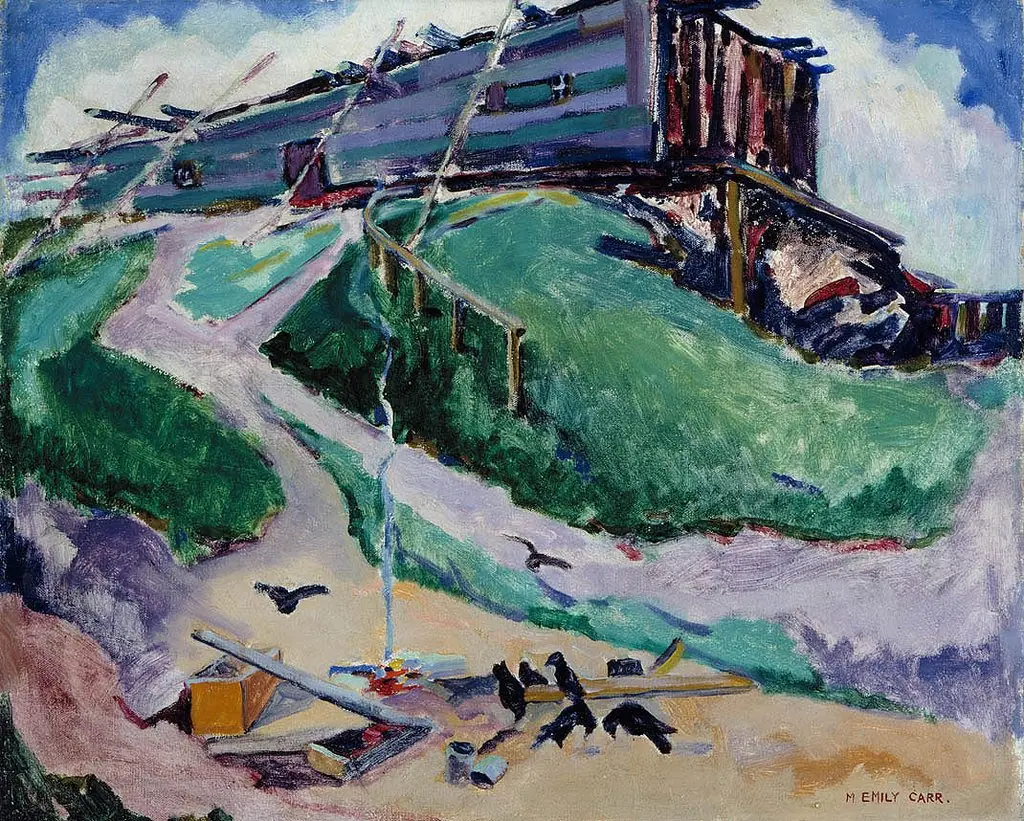
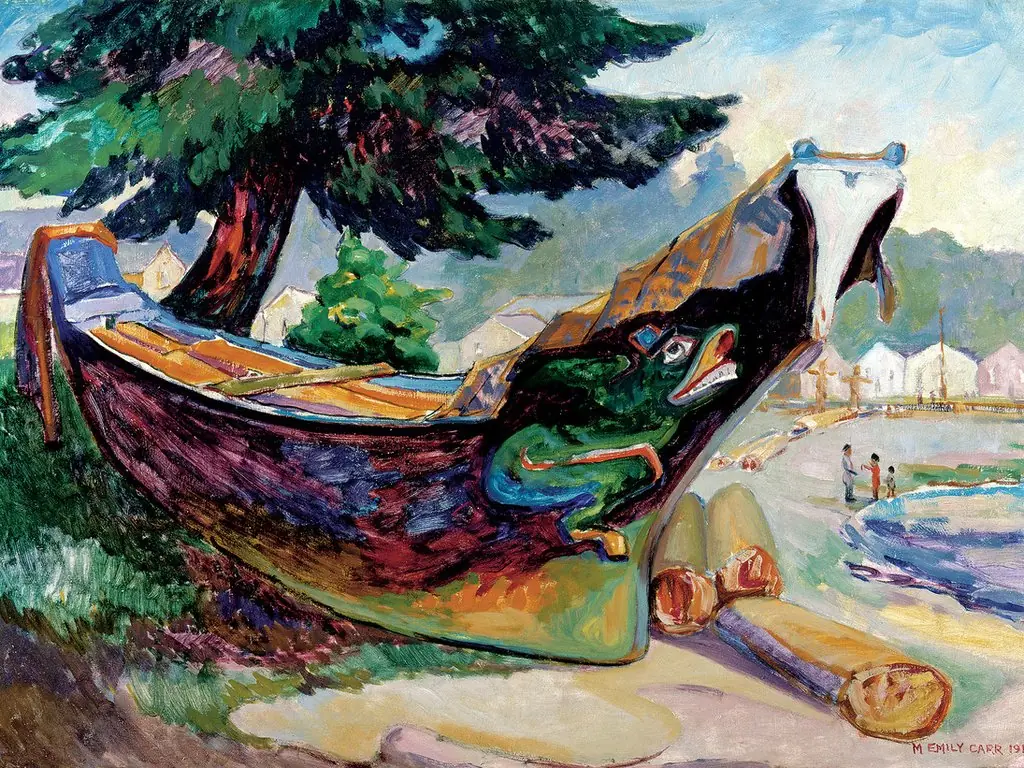
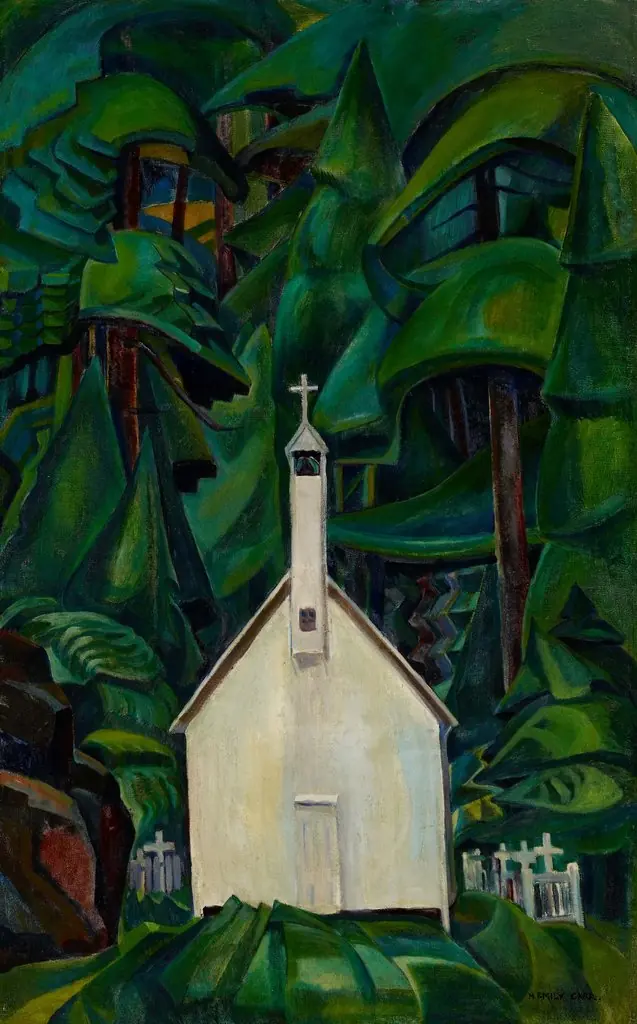
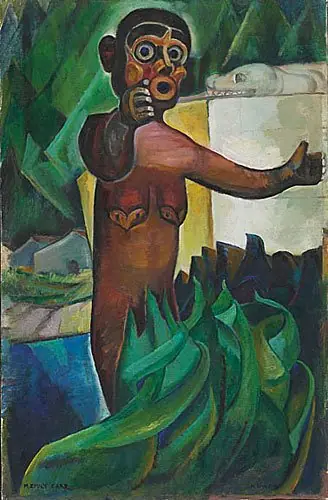
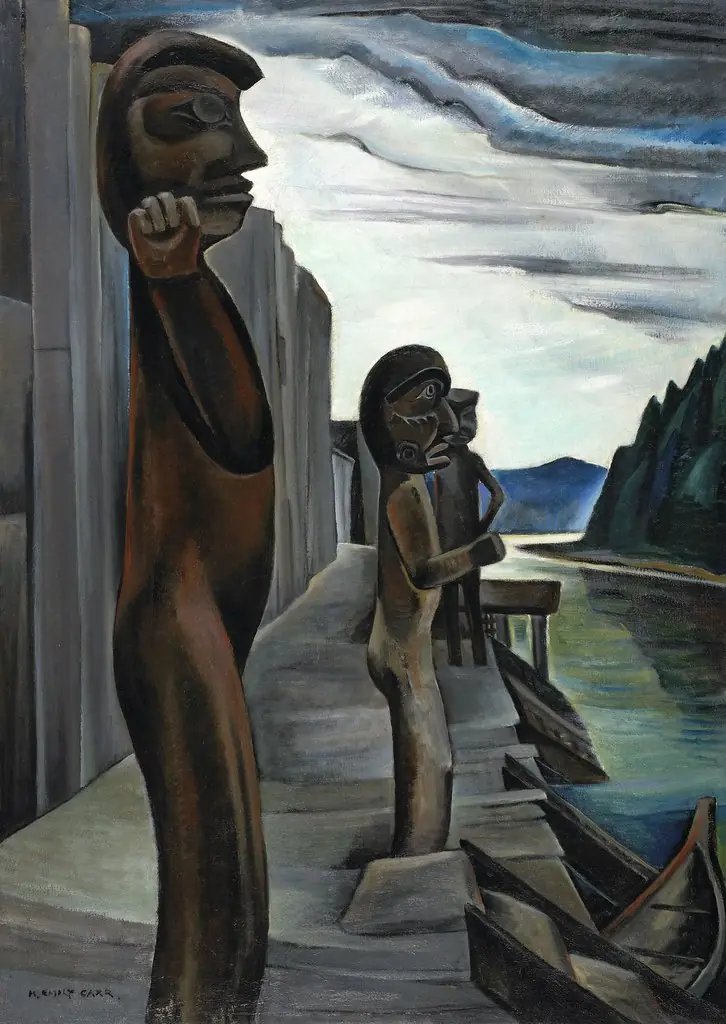
Totem and Forest is an oil painting by the Post-Impressionist artist Emily Carr. It dates from 1931 and is held in the collection of the Vancouver Art Gallery.
About this work
Overview
The painting belongs to the Vancouver Art Gallery’s permanent collection and represents a key moment in her artistic development during the early 20th century.
Emily Carr painted *Totem and Forest* in 1931 using oil on canvas, capturing the dense coastal forests of British Columbia alongside a central totem pole. Her work emerged from direct observation during travels to Indigenous communities, reflecting a deep engagement with the natural and cultural landscape. The painting belongs to the Vancouver Art Gallery’s permanent collection and represents a key moment in her artistic development during the early 20th century.
Subject & Meaning
The painting centers on a carved totem pole, its surface layered with figures of birds, fish, and human forms, standing amid towering evergreens. Carr did not depict the pole as a relic but as a living presence within the forest, suggesting continuity between Indigenous heritage and the natural environment. The composition implies reverence for the pole’s spiritual significance, while the surrounding trees frame it as an integral part of the landscape rather than an isolated artifact.
Technique & Style
Carr employed thick, expressive brushwork and layered oil paint to convey texture and depth. The totem pole’s intricate carvings are rendered with careful attention to detail, contrasting with the more fluid, rhythmic strokes of the forest. She used a rich palette of greens, blues, and yellows, with strong tonal contrasts to model form and suggest atmospheric space. Her style blends post-impressionist structure with a personal sensitivity to the emotional weight of the scene.
History & Provenance
Created after several trips to Indigenous villages in British Columbia, *Totem and Forest* reflects Carr’s evolving focus on First Nations art during the 1920s and 1930s. She documented carvings and architecture with sketches and photographs, later translating them into studio paintings. The work entered the Vancouver Art Gallery’s collection in the mid-20th century and has remained a cornerstone of its Canadian art holdings, representing Carr’s commitment to preserving cultural memory through visual art.
Context
In the early 20th century, Canadian artists began turning away from European traditions to explore local subjects. Carr’s work emerged alongside broader efforts to recognize Indigenous art as worthy of serious artistic attention. Though not Indigenous herself, she sought to honor the cultural integrity of the totem poles she encountered, resisting romanticized or exoticized portrayals common at the time. Her approach aligned with a growing national interest in defining a distinct Canadian artistic identity.
Legacy
Carr’s paintings, including *Totem and Forest*, helped shift public perception of Indigenous art in Canada, encouraging appreciation beyond ethnographic curiosity. Her writings, particularly *Klee Wyck*, further contextualized her visual work with personal narratives of encounter and respect. Today, her paintings are studied for their formal innovation and ethical engagement with cultural heritage, influencing generations of artists and scholars interested in land, memory, and representation.
Artist & collection
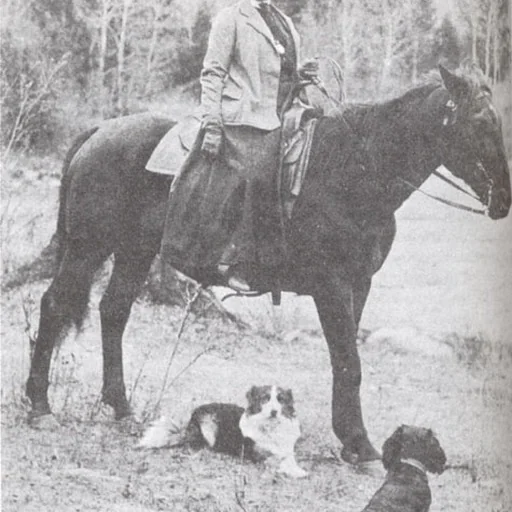
Artist
Emily Carr (December 13, 1871 – March 2, 1945) was a Canadian artist who was inspired by the monumental art and villages of the First Nations and the landscapes of British Columbia.