Artwork
Nameless and Friendless. “The rich man’s wealth is his strong city, etc.” - Proverbs, x, 15
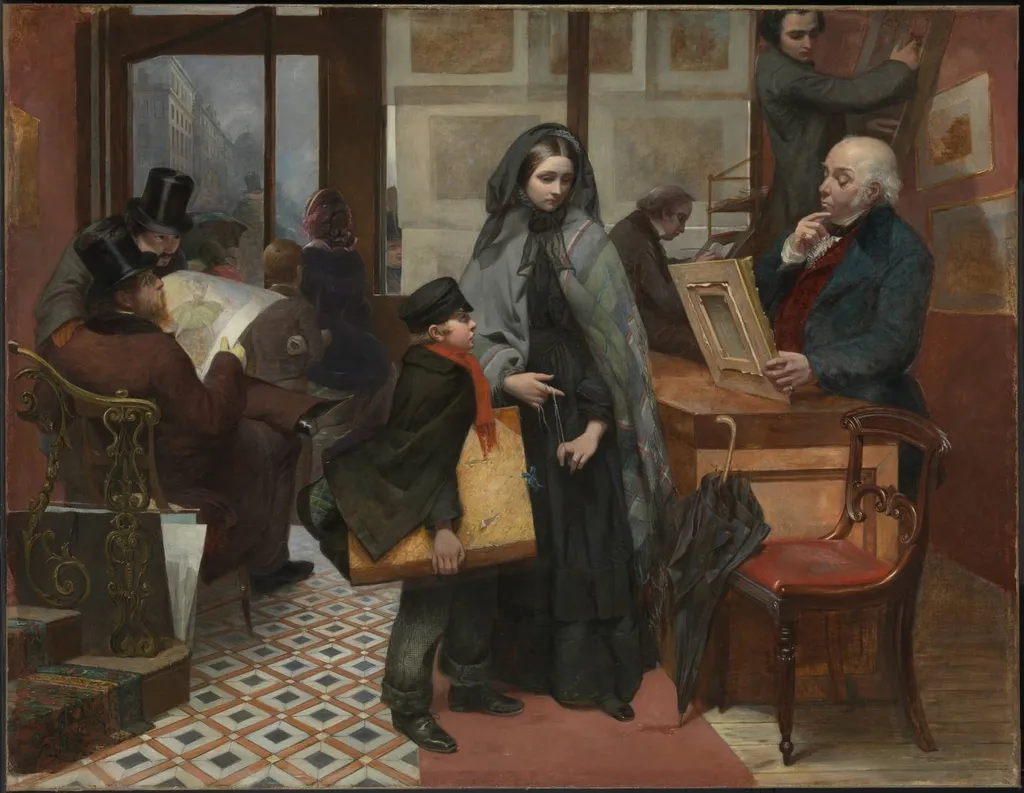
Nameless and Friendless. “The rich man’s wealth is his strong city, etc.” - Proverbs, x, 15 is an oil painting by the Realist artist Emily Mary Osborn. It dates from 1857 and is held in the collection of the Tate Britain.
About this work
Overview
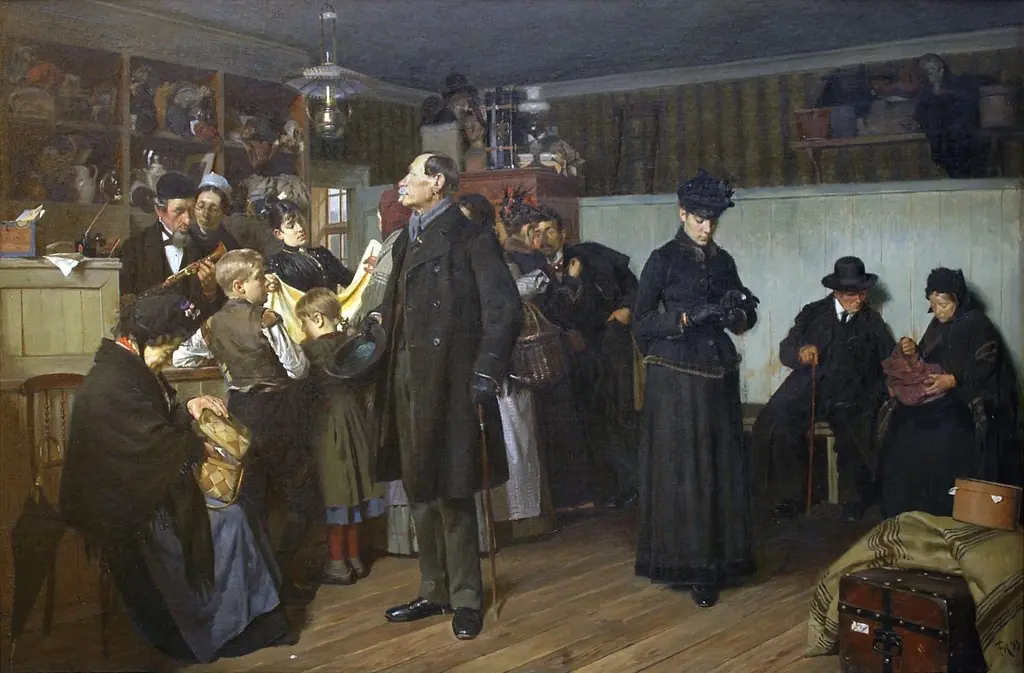
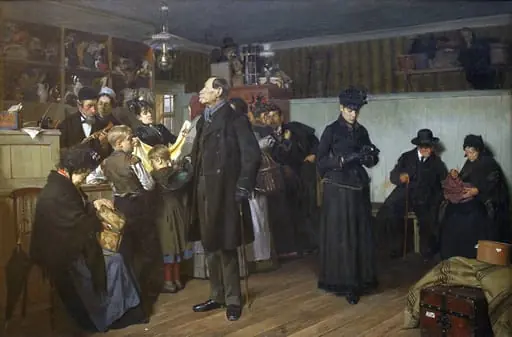
Emily Mary Osborn’s 1857 oil painting *Nameless and Friendless* presents a solitary young woman in black amid a group of men inside a London interior. She clutches a canvas while the surrounding figures turn away or regard her with indifference, creating a tense atmosphere that foregrounds her isolation and vulnerability within a space suggestive of an art dealer’s shop.
Subject & Meaning
The central figure appears to be a woman of modest means—perhaps a seamstress or aspiring artist—confronted with the economic and social obstacles confronting women in mid‑nineteenth‑century England. Her downcast expression and withdrawn posture convey a sense of abandonment, echoing the biblical proverb cited in the title that links wealth with security, thereby highlighting her lack of both.
Technique & Style
Osborn employs a restrained Realist palette, using chiaroscuro to draw light onto the woman’s form while the surrounding men recede into shadow. The contrast between illuminated figure and darker background intensifies the drama and underscores the disparity between the subject’s hardship and the implied affluence of the male patrons.
History & Provenance
Created during the height of Osborn’s career, the work reflects her ongoing interest in genre scenes that address contemporary social concerns. *Nameless and Friendless* entered the collection of Tate Britain, where it remains part of the museum’s holdings of Victorian art, illustrating the period’s engagement with gender and class issues.
Artist & collection
Artist
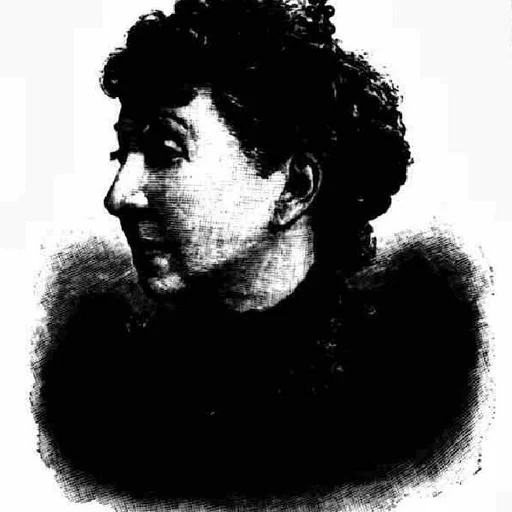
Emily Mary Osborn (1828–1925), or Osborne, was an English painter of the Victorian era. She is known for her pictures of children and her genre paintings, especially on themes of women in distress.