Artwork
Nuuskamyllynmäki
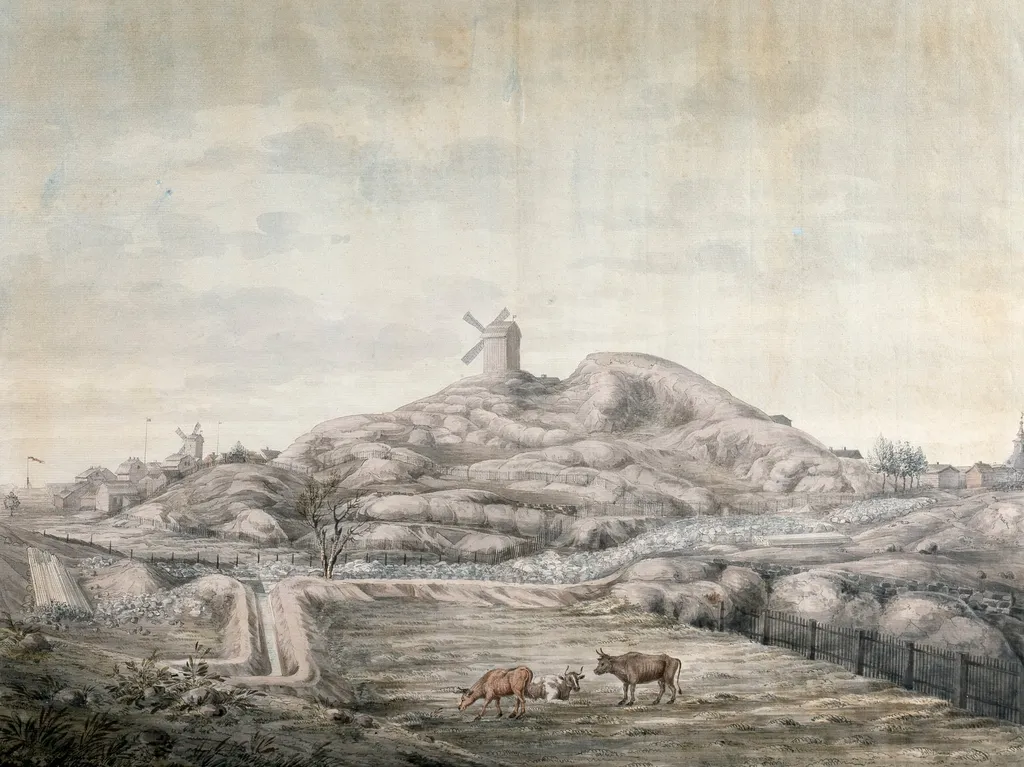
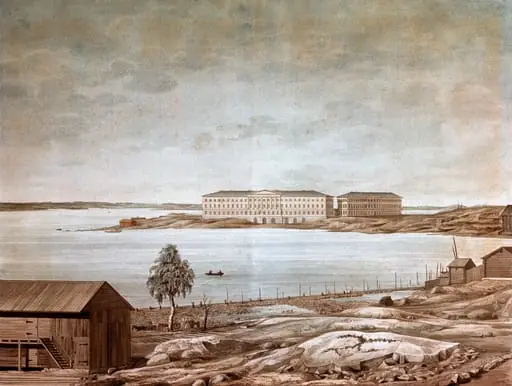
Nuuskamyllynmäki is a drawing by Carl Ludvig Engel. It dates from 1819 and is held in the collection of the Helsinki City Museum.
About this work
Overview
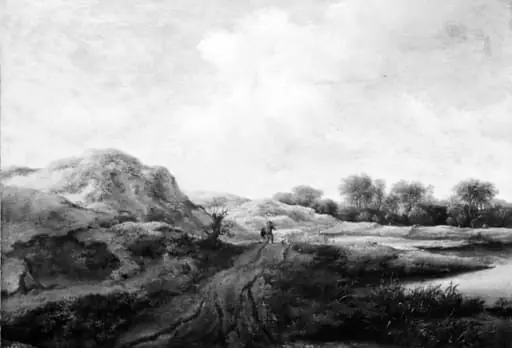
Nuuskamyllynmäki, attributed to Carl Ludvig Engel and dated to around 1819, is a modestly scaled drawing that captures a tranquil rural landscape. The composition presents a gently rolling hillside populated with modest dwellings, a few windmills, and a low fence that frames the scene. A pale, overcast sky dominates the upper field, lending the work a subdued, atmospheric quality.
Subject & Meaning
The image depicts a quiet agrarian setting, where small houses and windmills punctuate a rocky slope. Two cows are shown grazing near the fence, emphasizing the pastoral character of the locale. The muted horizon and soft lighting suggest a moment of stillness, inviting contemplation of the everyday life of early nineteenth‑century countryside.
Technique & Style
Engel employs light, fluid strokes to outline forms, creating a sense of distance and calm. Cross‑hatching is used sparingly to suggest texture on the rocky ground and the thatched roofs, while the windmills are rendered with slightly bolder lines that set them apart from the surrounding structures. The overall palette is restrained, reinforcing the work’s serene mood.
History & Provenance
The drawing is dated circa 1819, placing it within Engel’s early career before his later architectural fame. Its provenance is not extensively documented, but the work has been retained within collections that focus on Nordic landscape drawing of the early nineteenth century, reflecting Engel’s interest in the Finnish environment.
Artist & collection

Artist
Carl Ludvig Engel or Johann Carl Ludwig Engel was a German architect and the first internationally renowned architect to work in Finland.

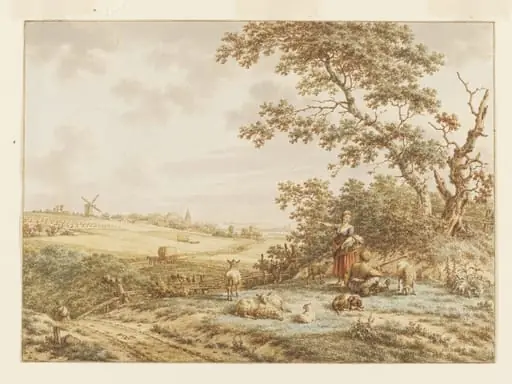 Landscape with Figures and Sheep
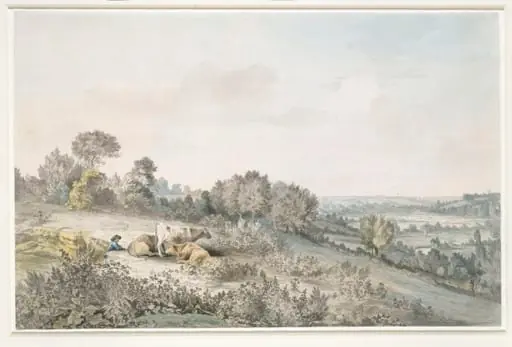 The valley of the Stour, with Langham Church in the distance
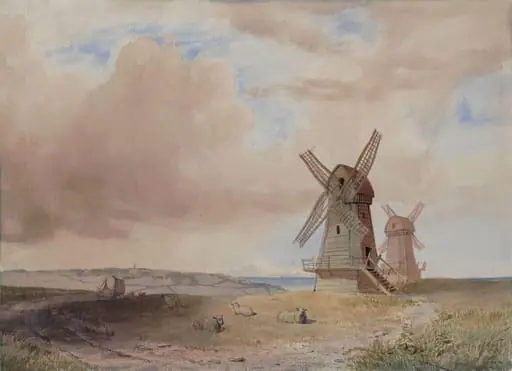 Landscape with Windmills
 Country lane
 Halt vor der Herberge
 Landschaft
 Windsor Castle
 Mousehold Heath
 Landscape with church and cattle
 A Low Cottage with a Herdsman Leading His Flock
 Panorama near Arnhem
 Dune Landscape near Haarlem