Artwork
Windsor Castle
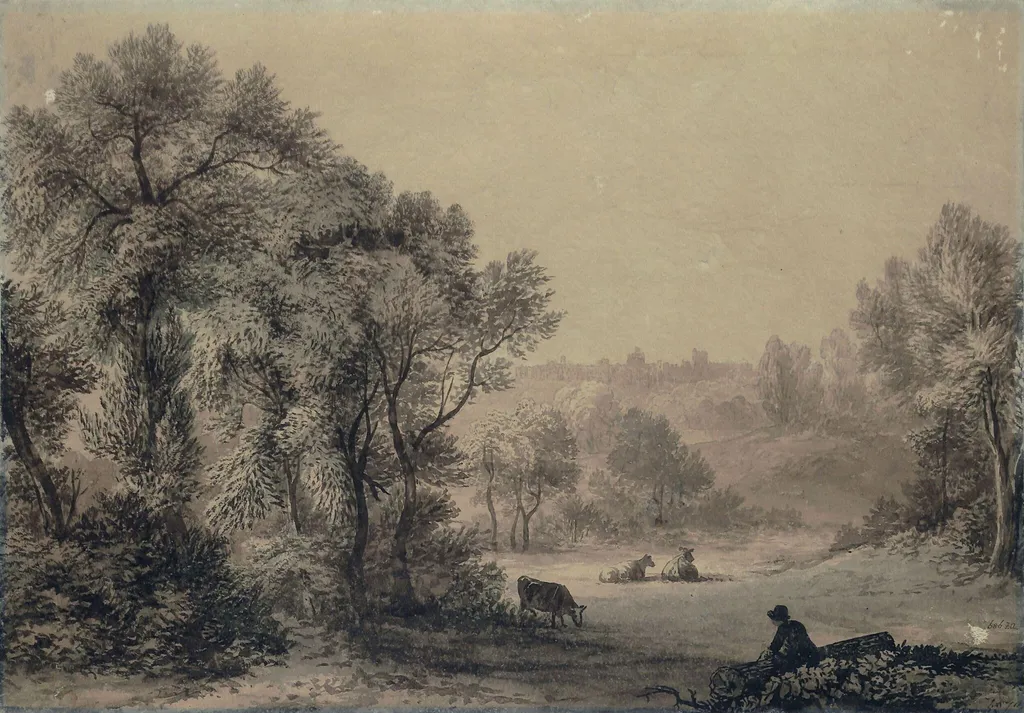
Windsor Castle is a drawing by John Glover. It dates from 1750 and is held in the collection of the Victoria and Albert Museum.
About this work
Overview
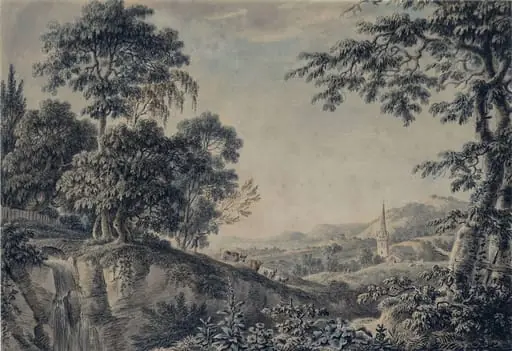
This ink drawing captures Windsor Castle from a distance, rendered in subtle tonal gradations. The composition emphasizes quiet rural tranquility, with the castle positioned atop a gentle rise, framed by sparse woodland. Delicate linework defines the landscape, avoiding dramatic contrast in favor of restrained atmosphere and spatial depth.
Subject & Meaning
The scene presents an unassuming view of the castle embedded within its natural surroundings. Cows graze near a winding path, and a solitary figure sits quietly in the foreground, suggesting contemplation or rest. The absence of human activity around the castle reinforces a sense of stillness, as if the structure exists in harmony with, rather than dominance over, the land.
Technique & Style
The artist employed Indian ink with controlled washes to achieve soft transitions between light and shadow. Fine, intricate lines delineate the bare branches of trees, creating a skeletal texture that contrasts with the smoother contours of the hills. The muted palette and deliberate lack of bold outlines contribute to a hushed, atmospheric quality.
History & Provenance
The work is part of a broader tradition of topographical drawings made during the late 18th and early 19th centuries, often commissioned to document royal residences. Its precise execution and observational detail suggest it may have been created for private study or as a preparatory sketch, though its exact origin remains undocumented.
Context
During this period, artists increasingly turned to landscape as a subject worthy of independent study, moving beyond purely architectural records. Drawings like this reflect a growing interest in the relationship between built environments and the natural world, particularly in the English countryside, where royal estates were deeply woven into regional identity.
Legacy
This drawing exemplifies a quiet, observational mode of landscape representation that influenced later topographical and plein-air practices. While not widely exhibited, such works contribute to an understanding of how artists engaged with royal sites not as monuments, but as integrated elements of everyday rural life.
Own this work as a print
Artist & collection
Artist
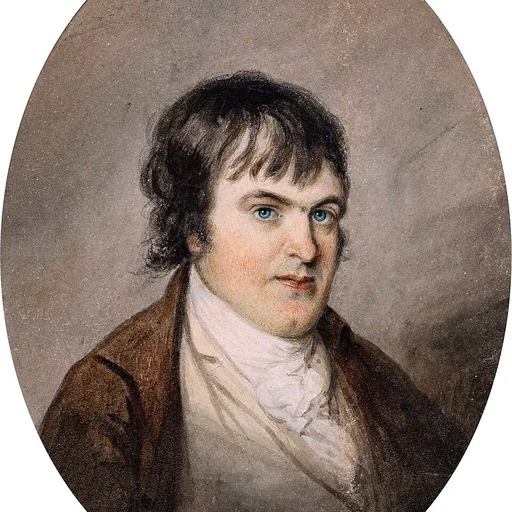
John Glover (18 February 1767 – 9 December 1849) was an English-born artist. In later life he migrated to Van Diemen’s Land and became a pastoralist during the early colonial period. He has been dubbed "the father of…

 Landscape with church and cattle
 A Beech Wood with a Resting Traveler
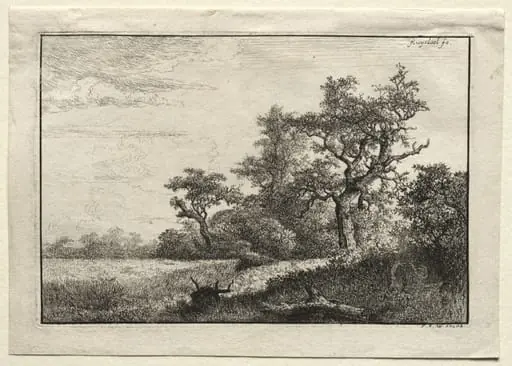 The Wheat Field
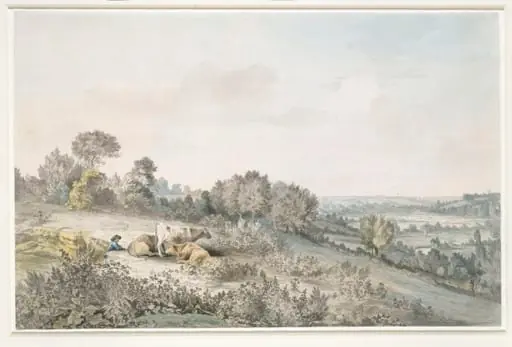 The valley of the Stour, with Langham Church in the distance
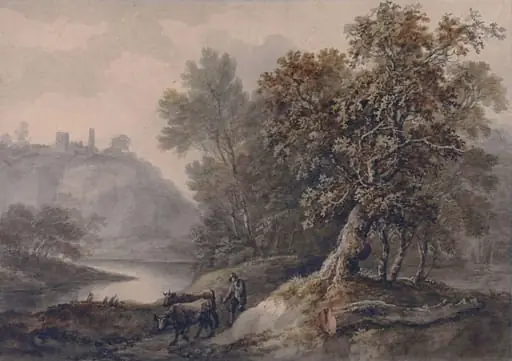 Bath Landscape
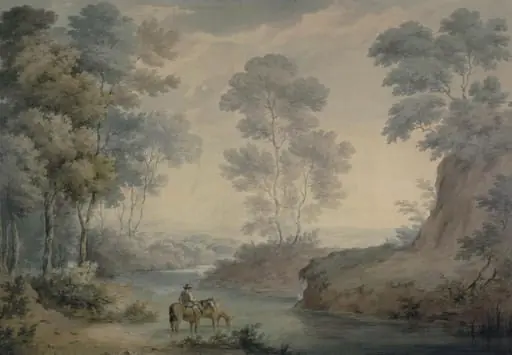 Landscape with river and horses watering
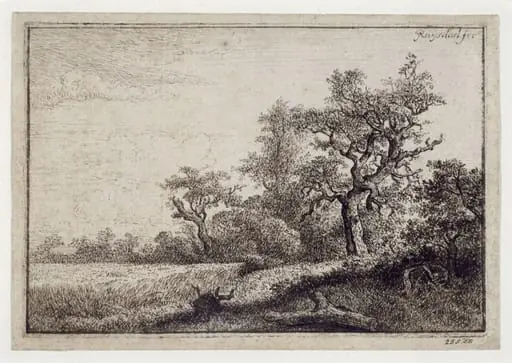 The Wheatfield. After Jacob Ruysdael
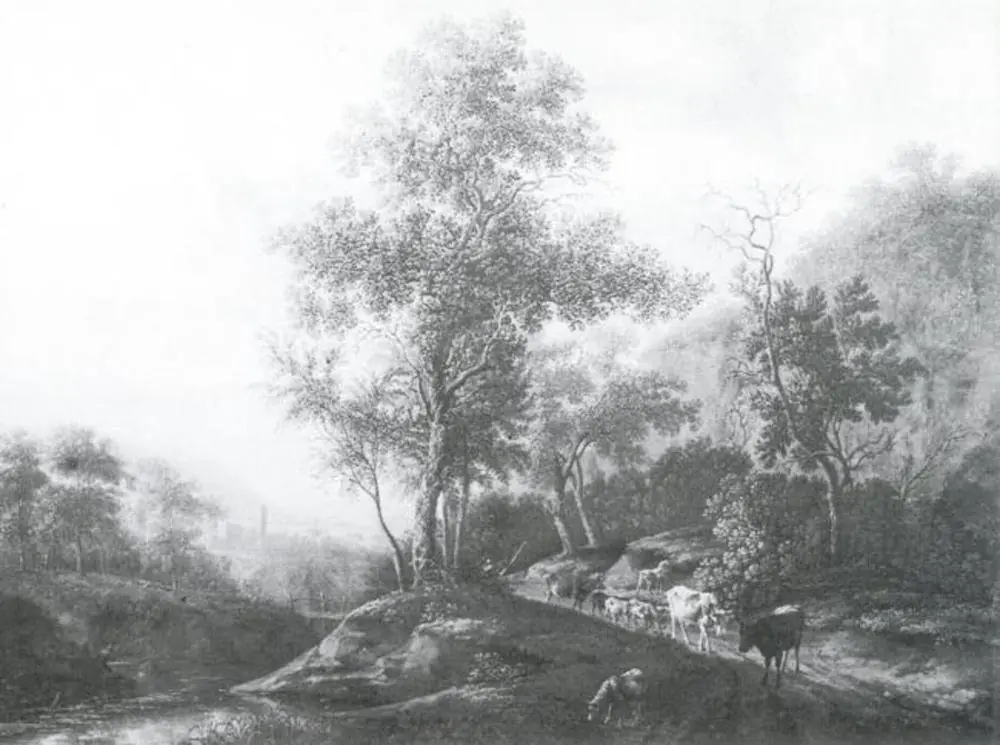 River Landscape with Cattle
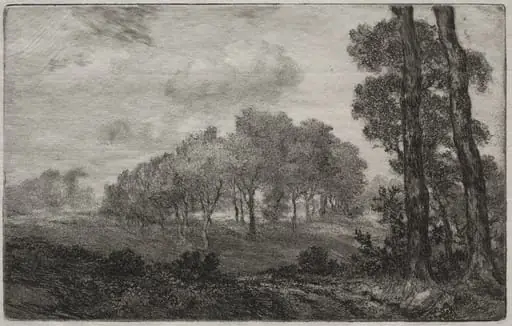 Landscape, after Français
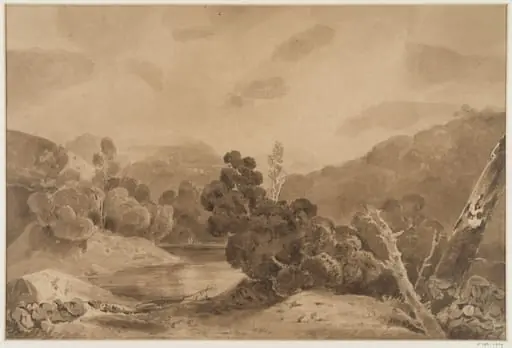 River scene with a temple or palace in the clouds
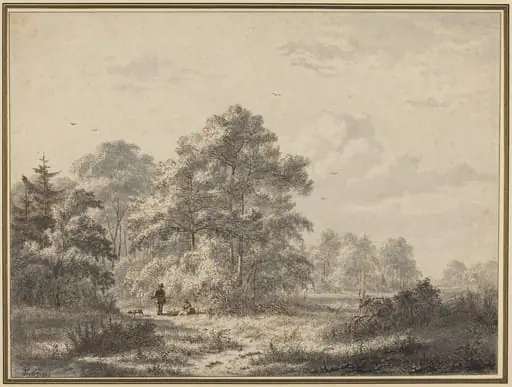 Hunters at the Edge of the Woods
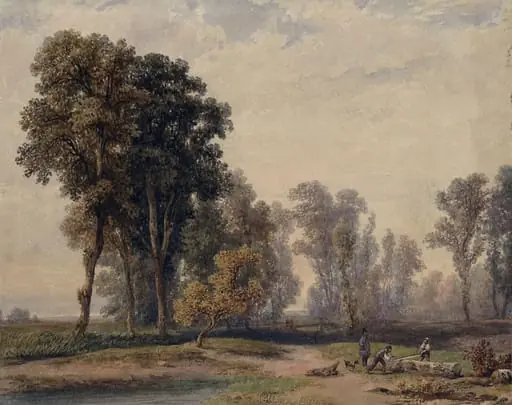 Landscape with two wood sawyers