Artwork
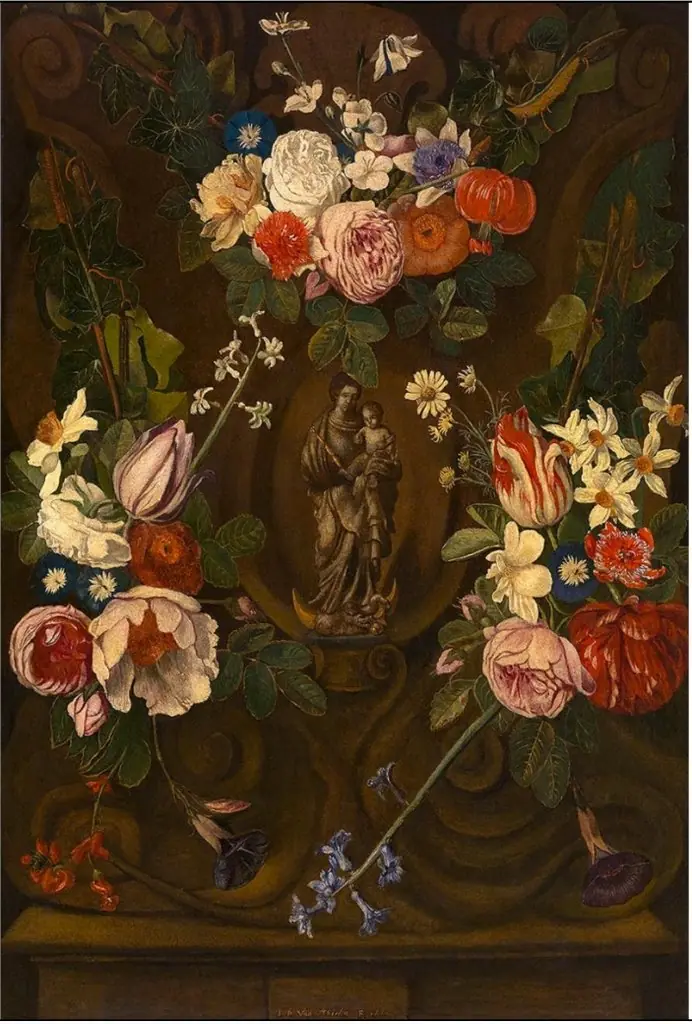
Madonna and Child Framed a Garland of Flowers
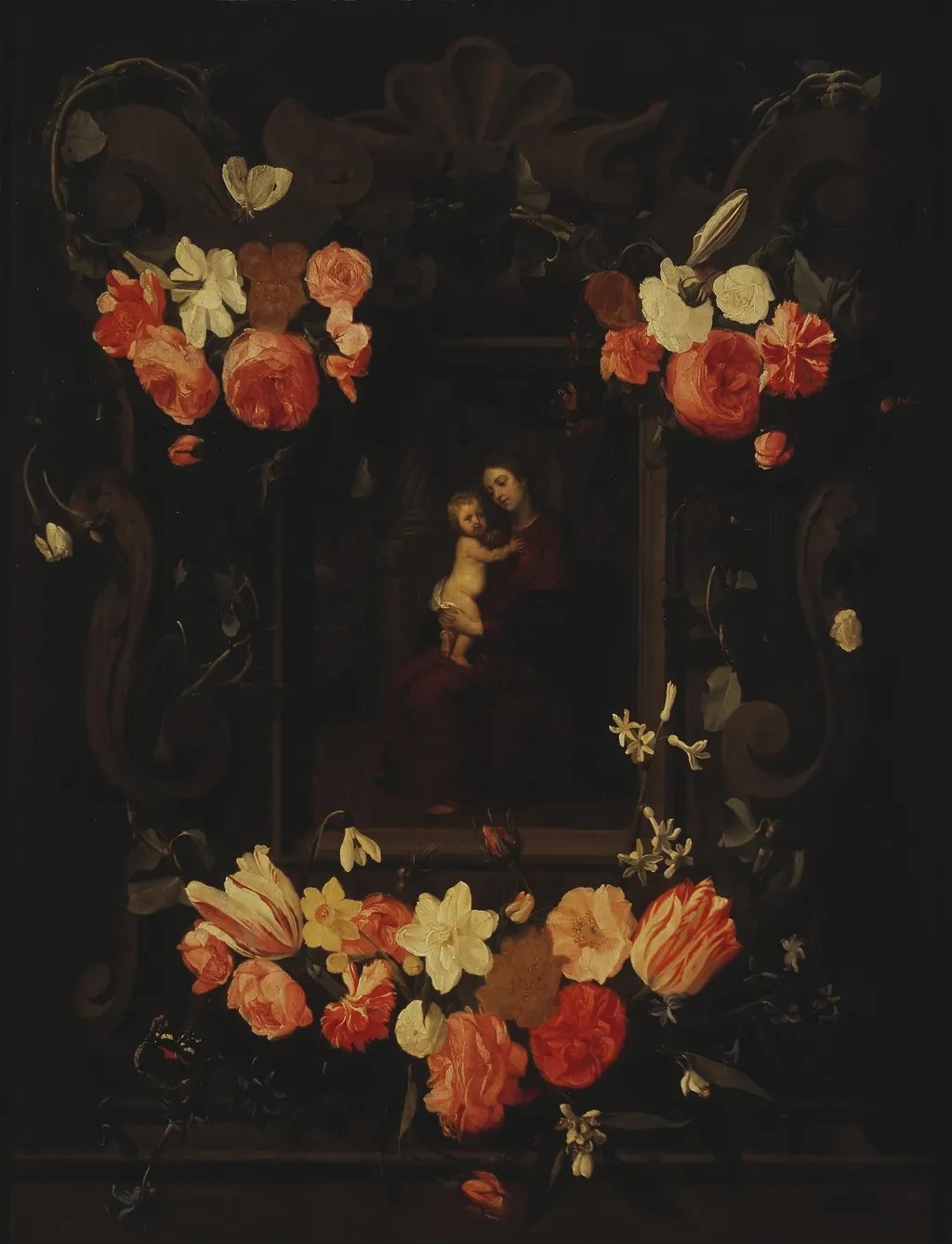
Madonna and Child Framed a Garland of Flowers is an oil painting by the Flemish Baroque painting artist Erasmus Quellinus II. It dates from 1644 and is held in the collection of the Hermitage Museum.
About this work
Overview
Created in 1644 by the Flemish artist Erasmus Quellinus II, this small copper painting presents a devotional scene of the Virgin Mary and the infant Christ. The figures are enclosed within a dark, window‑like opening, while a vivid garland of flowers—red roses, yellow tulips, white daisies—overflows the borders, giving the composition a lively, ornamental quality.
Subject & Meaning
The work combines a traditional religious motif with a naturalistic setting, emphasizing the tenderness between mother and child. The surrounding blossoms, rendered in bright hues, serve as symbolic embellishments, suggesting themes of purity, love, and the fleeting beauty of life that often accompany Marian iconography.
Technique & Style
Executed on copper, the painting benefits from the metal's smooth surface, allowing Quellinus to achieve fine detail and luminous color contrasts. The dark background intensifies the chiaroscuro effect, making the figures and floral elements emerge sharply, a hallmark of the Flemish Baroque emphasis on dramatic lighting and rich surface texture.
History & Provenance
After its creation, the piece entered various private collections before being acquired by the State Hermitage Museum in Saint Petersburg, where it remains part of the museum’s Flemish Baroque holdings. Its presence in the Hermitage reflects the 19th‑century Russian interest in acquiring Western European art.
Artist & collection
Artist
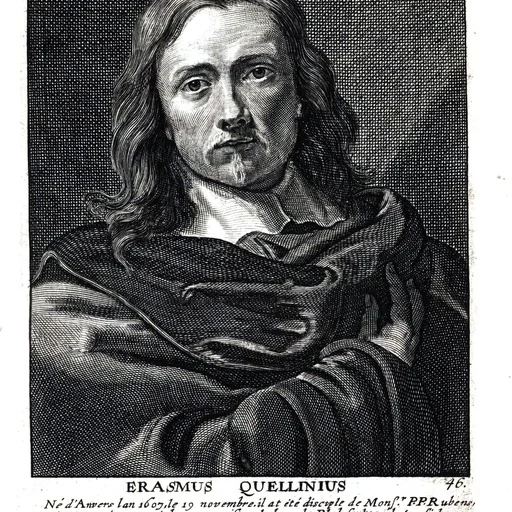
Erasmus Quellinus the Younger or Erasmus Quellinus II (November 19, 1607 – November 11, 1678) was a Flemish painter, engraver, draughtsman and tapestry designer who worked in various genres including history, portrait, allegorical, battle…

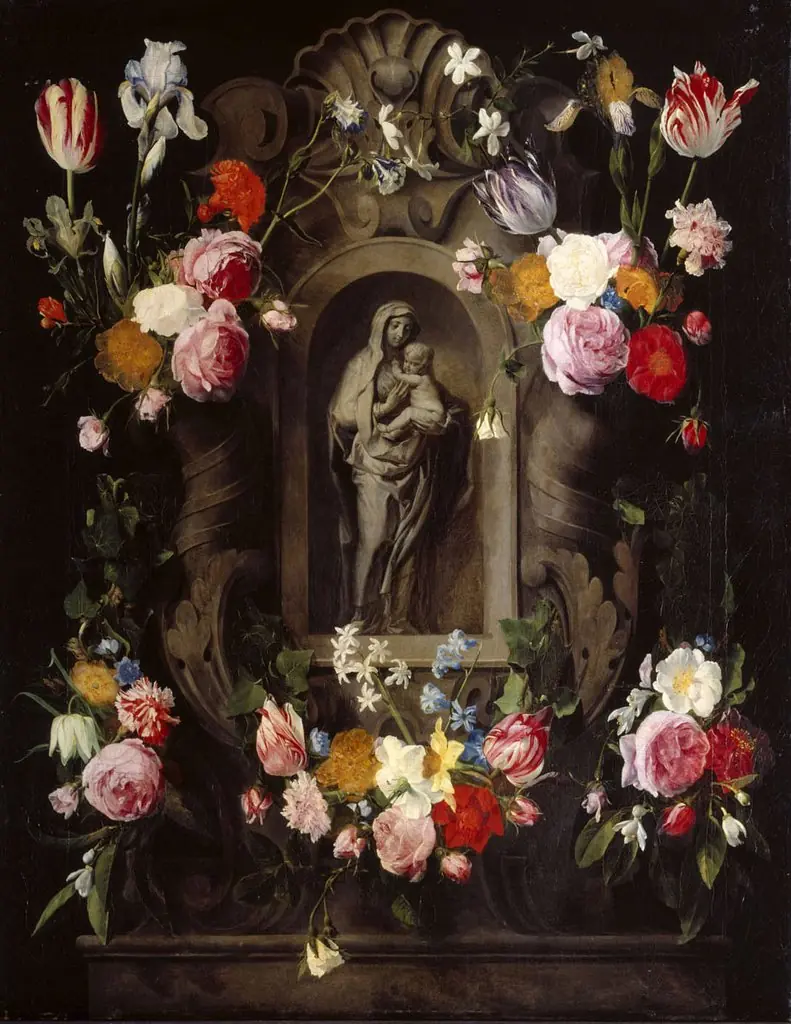 Madonna & Child Statuette in a Niche surrounded by a Garland of Flowers
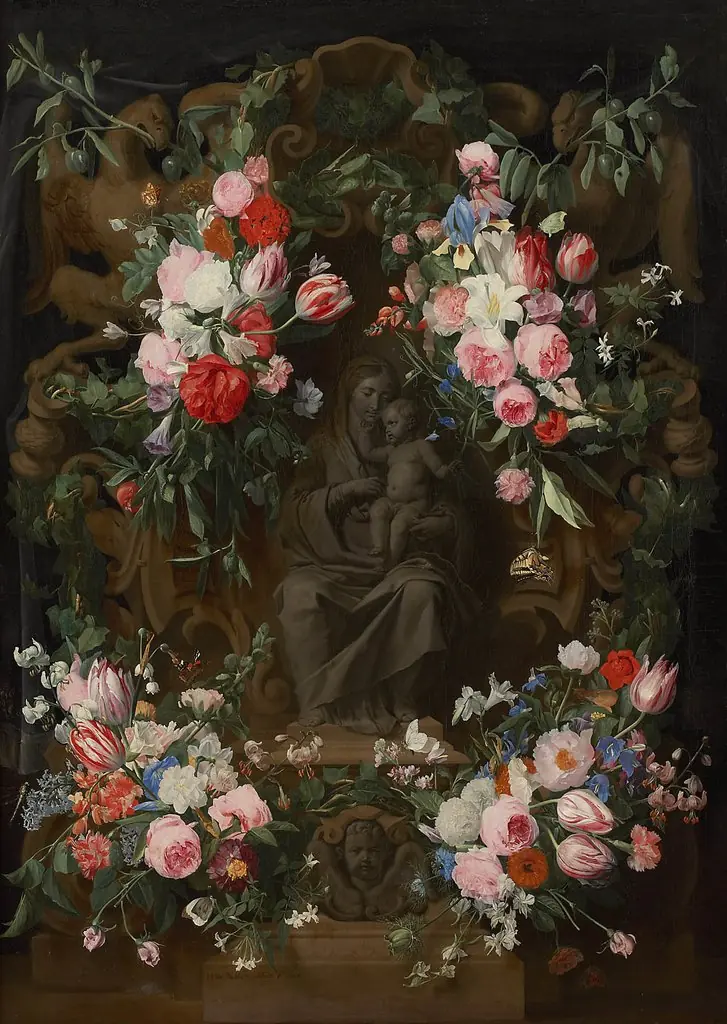 Seated Maria in a Flower Garland
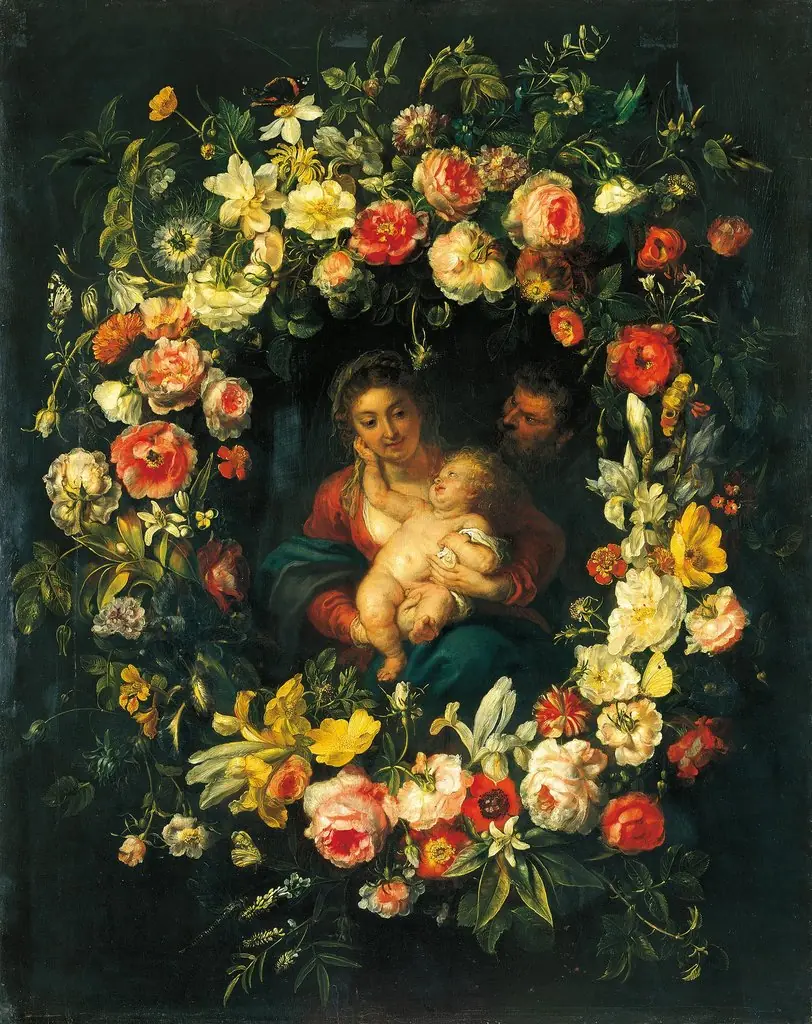 Holy Family in a Wreath of Flowers
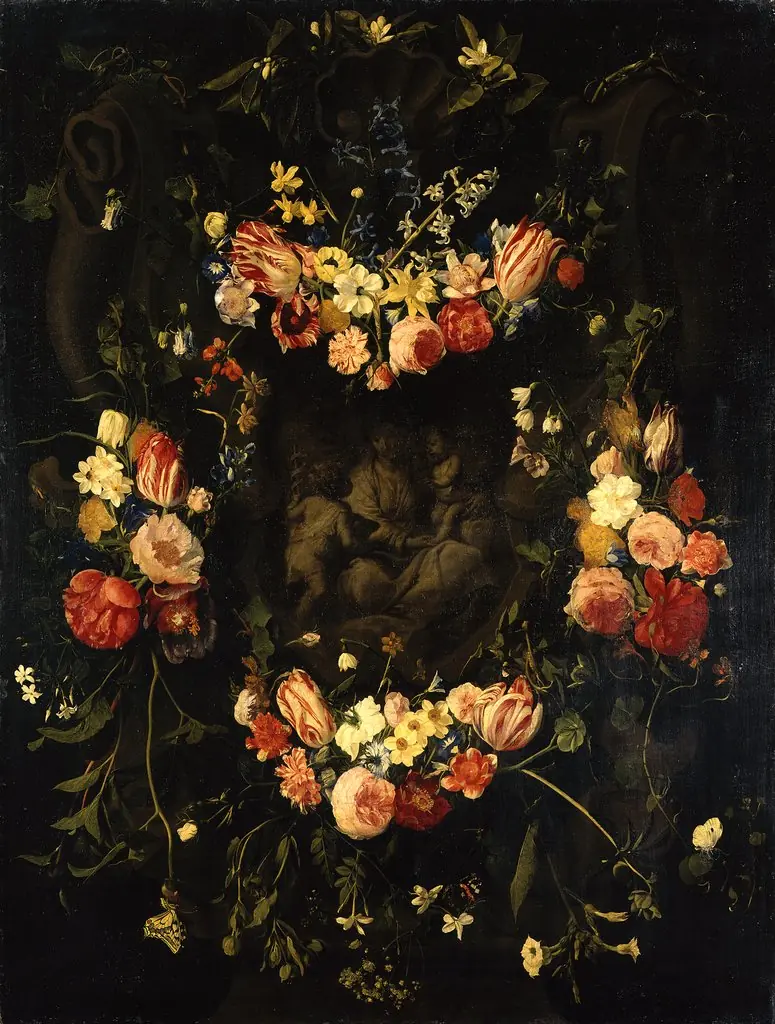 Cartouche addorned with flowergarlands surrounding a depiction of the Holy Family with the infant Saint John the Baptist
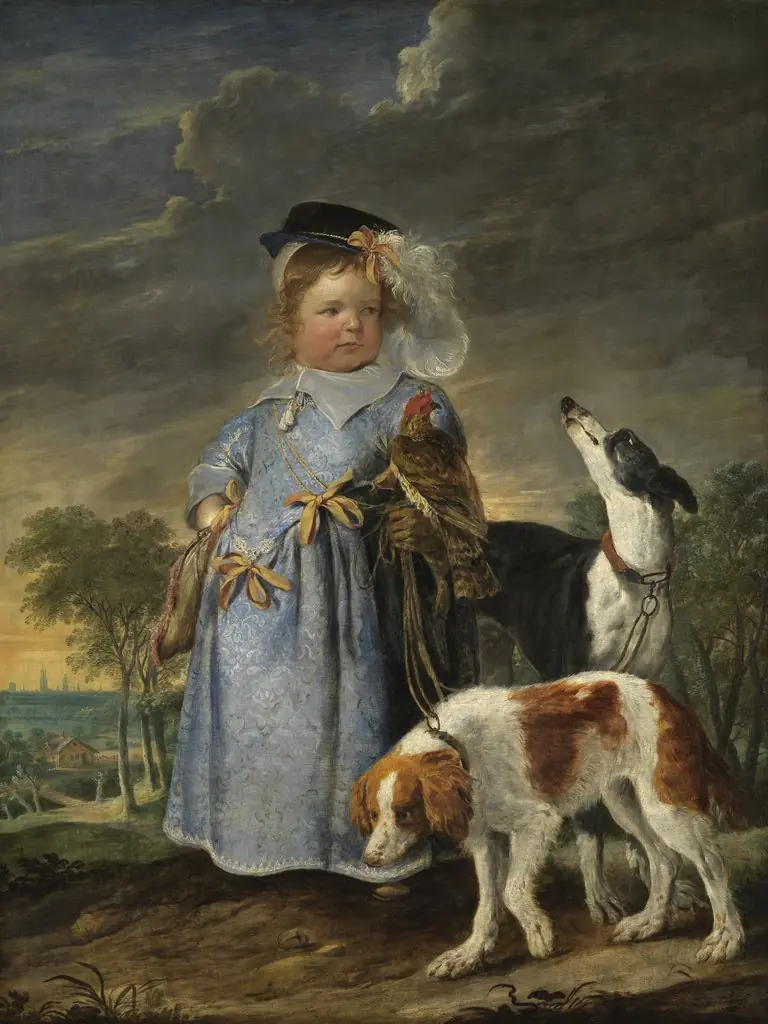 Portrait of a Boy
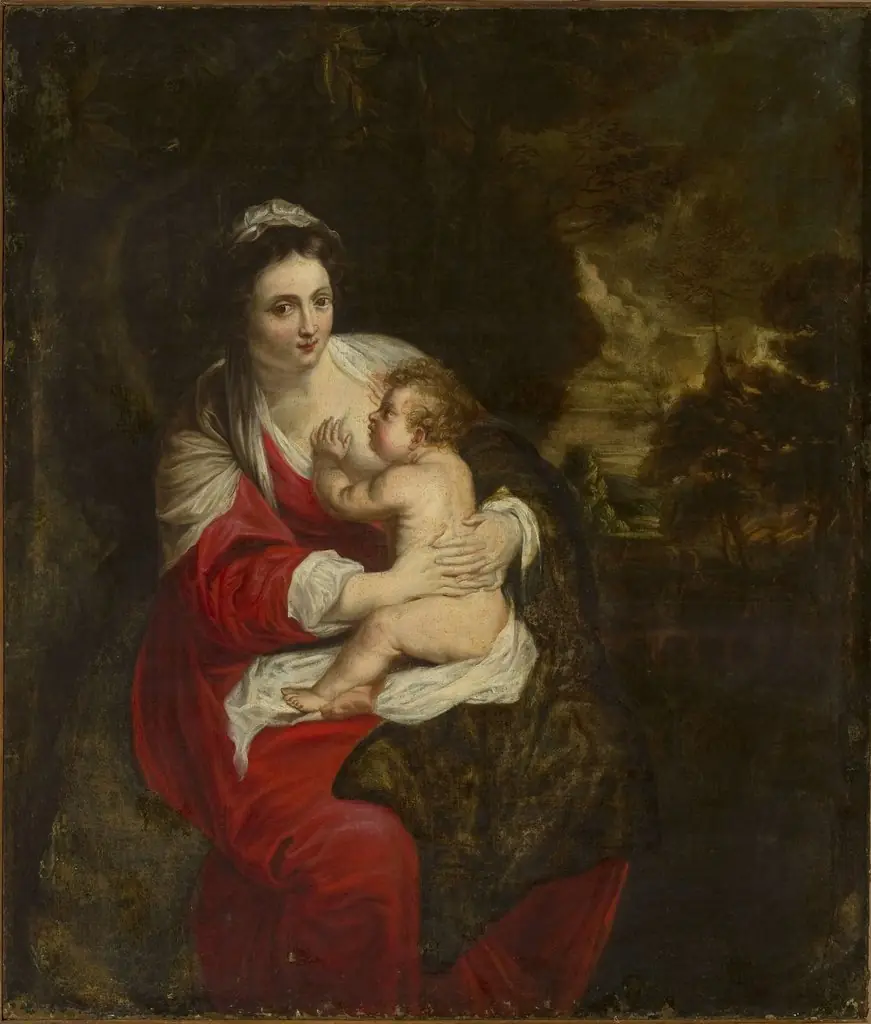 Madonna with Child Jesus
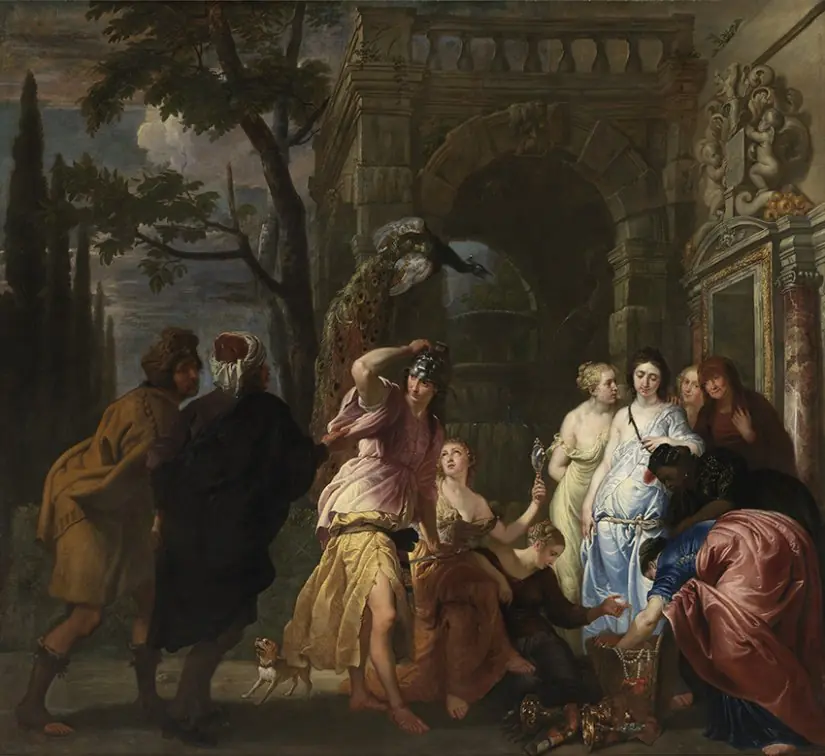 Achilles among the Daughters of Lycomedes
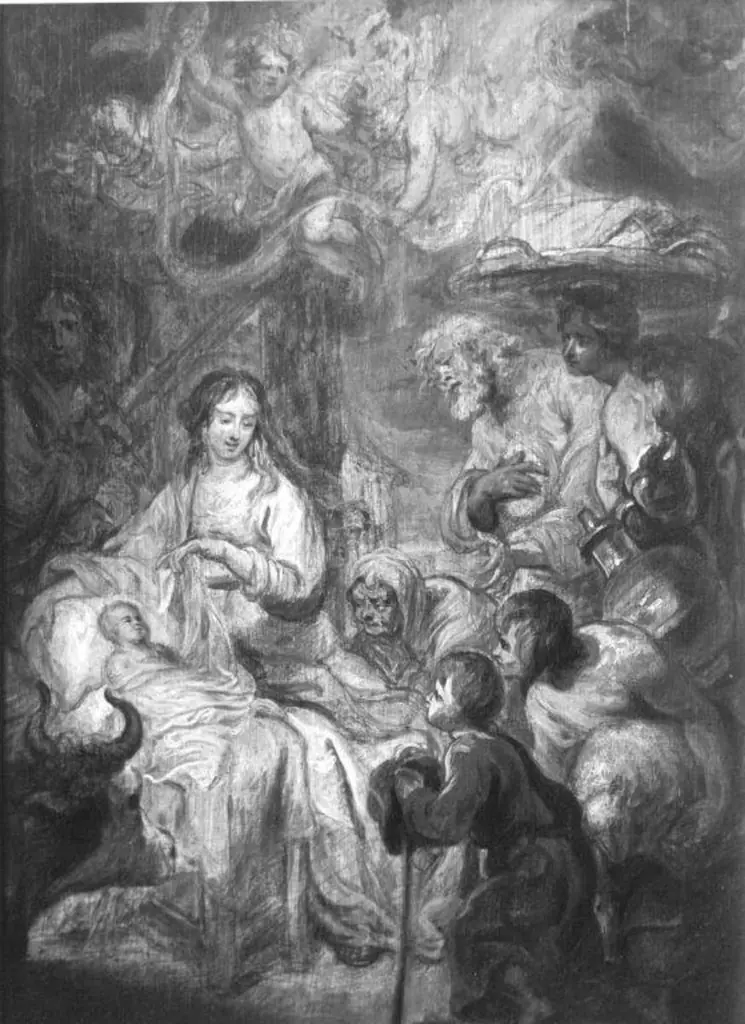 Anbetung der Hirten
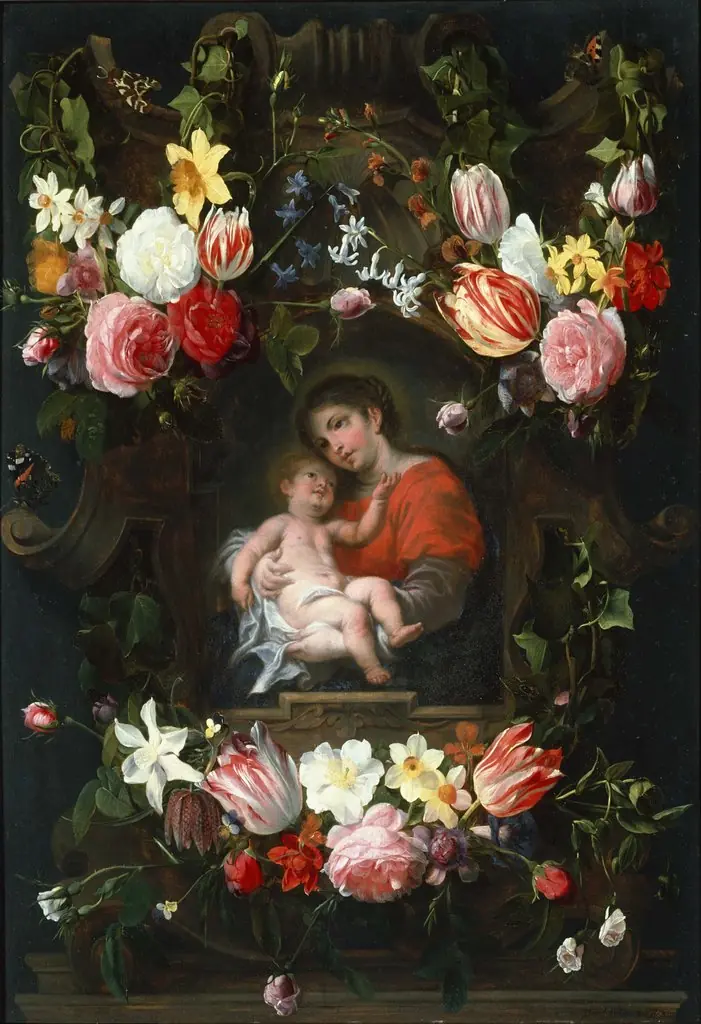 Garland of Flowers with Madonna and Child
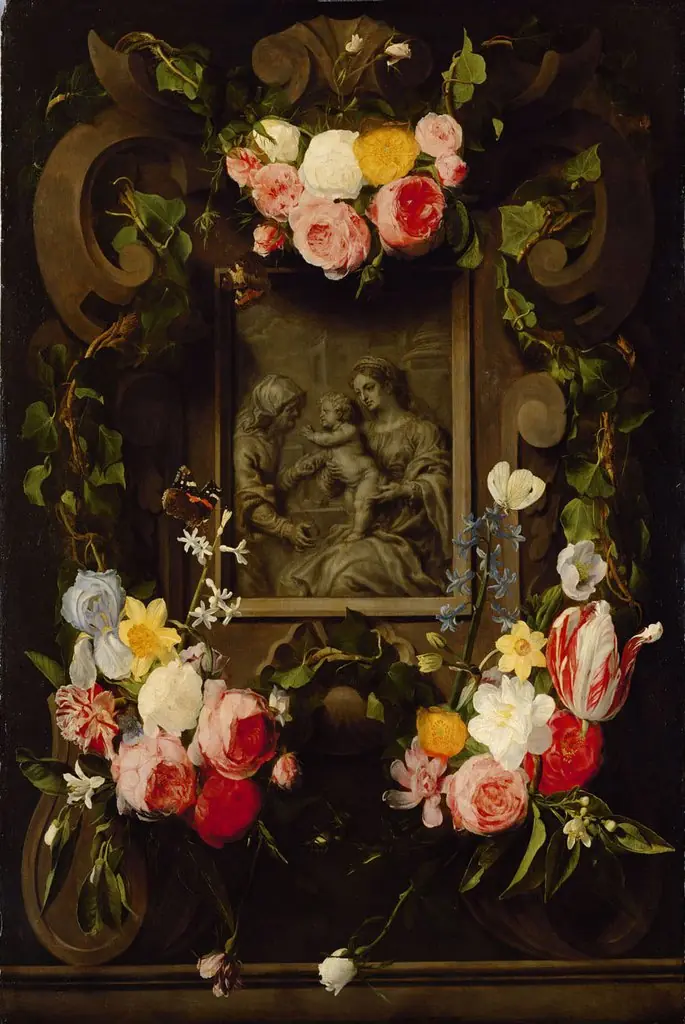 Madonna and Child with St Anna in a Flower Garland
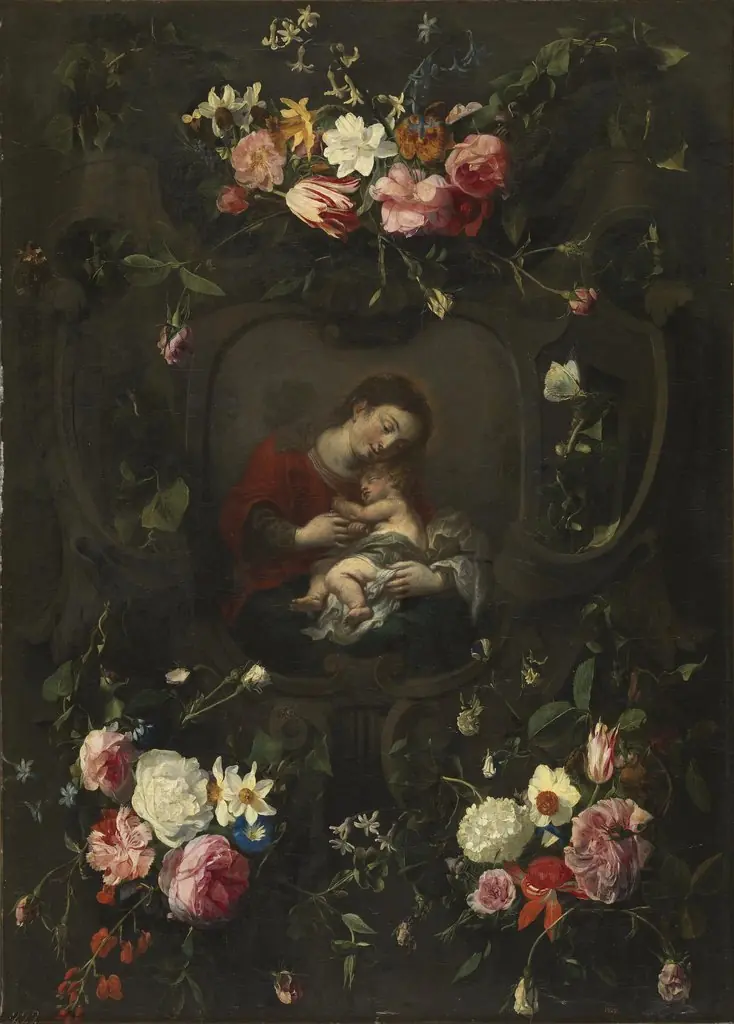 Flower garland around a Madonna and Child
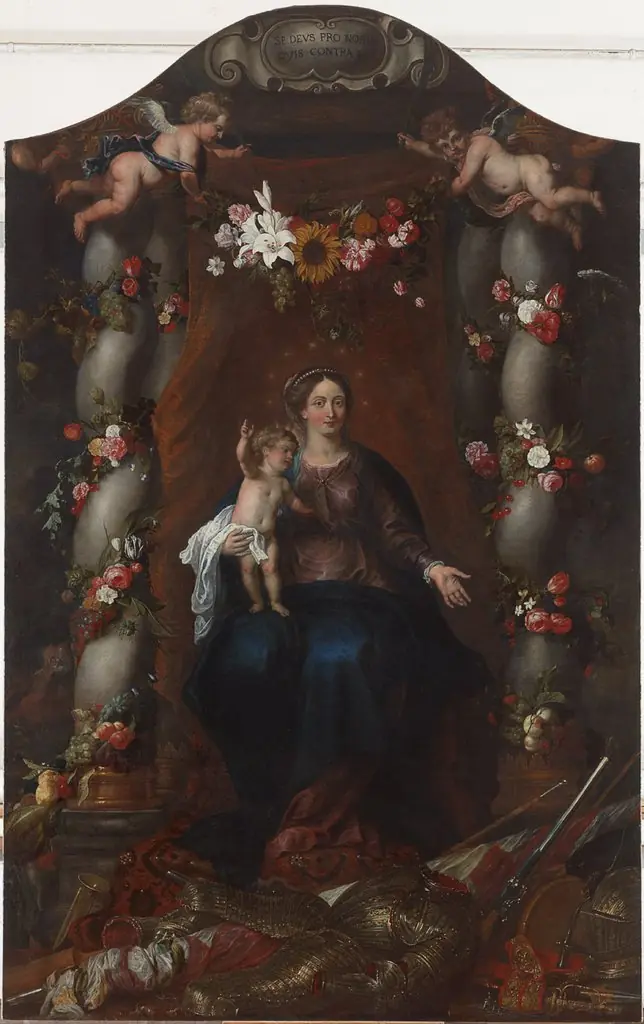 Madonna and Child Enthroned in a Fruit & Flower Garland
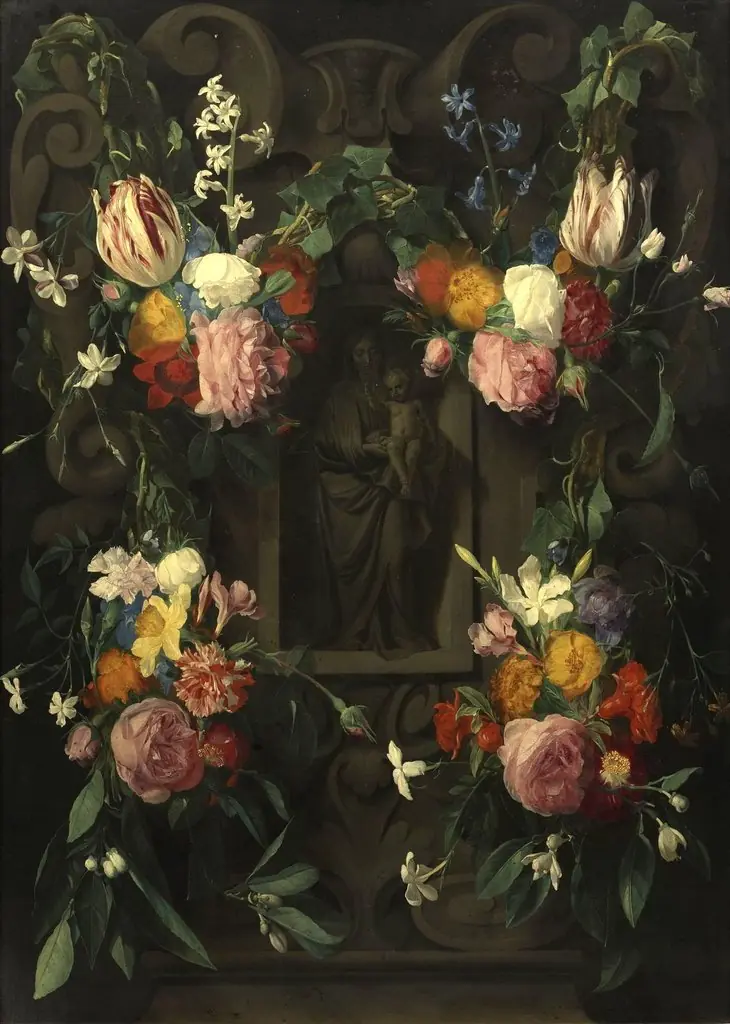 Flower Garland with the Virgin and Child
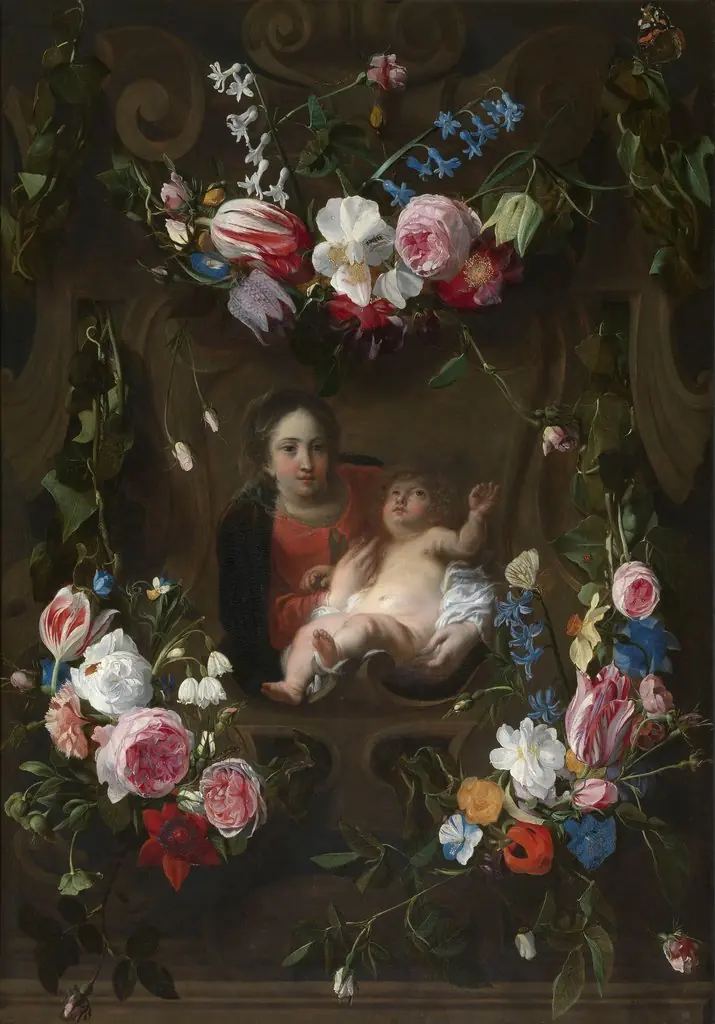 Madonna Surrounded by a Garland of Flowers
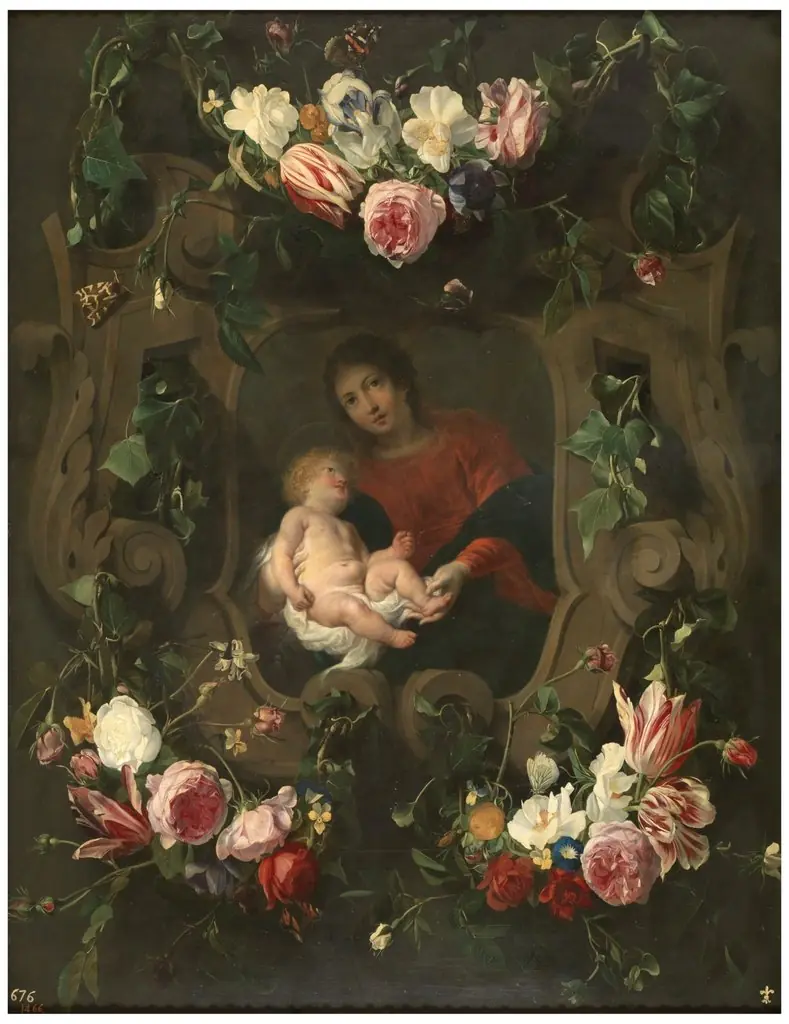 Flower garland around the Virgin and Child
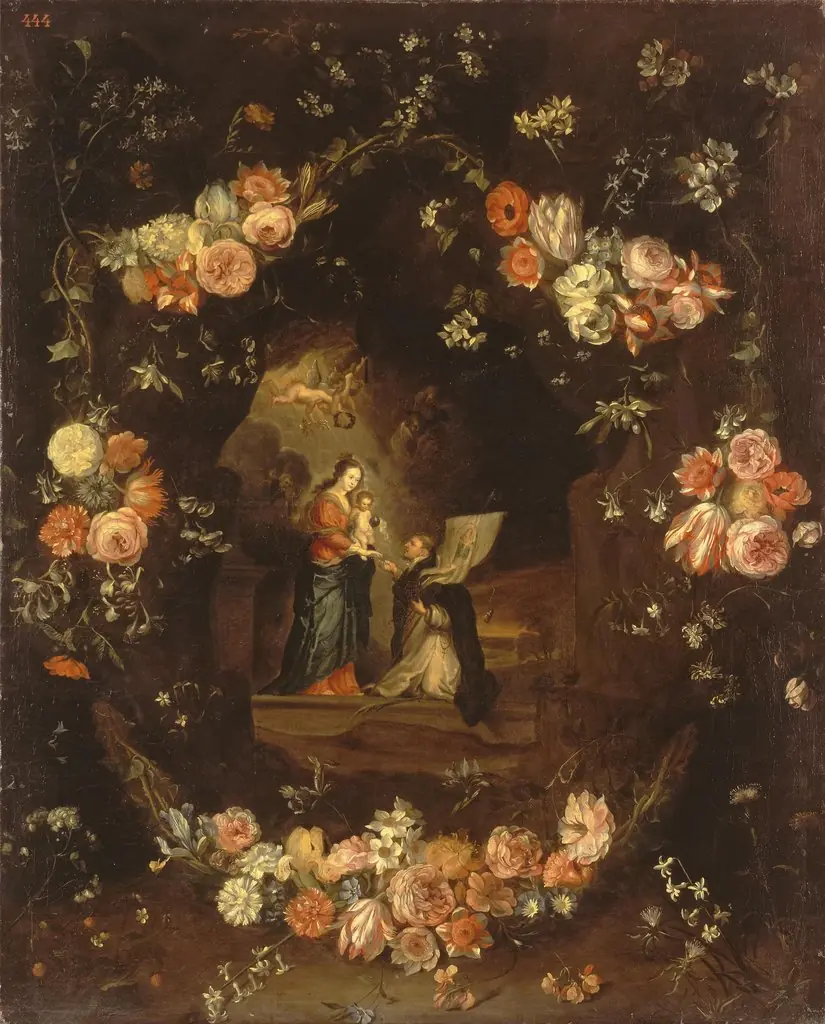 Madonna with the Child and St Ildephonsus Framed with a Garland of Flowers
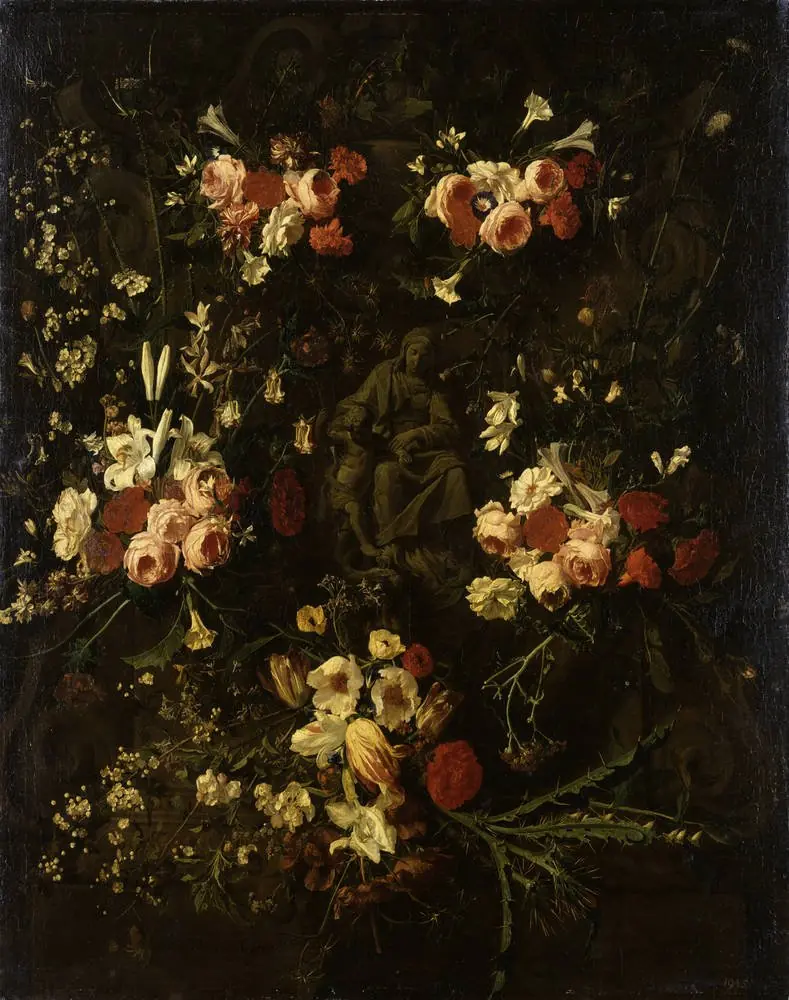 Flower garland cartouche around the Madonna and Child
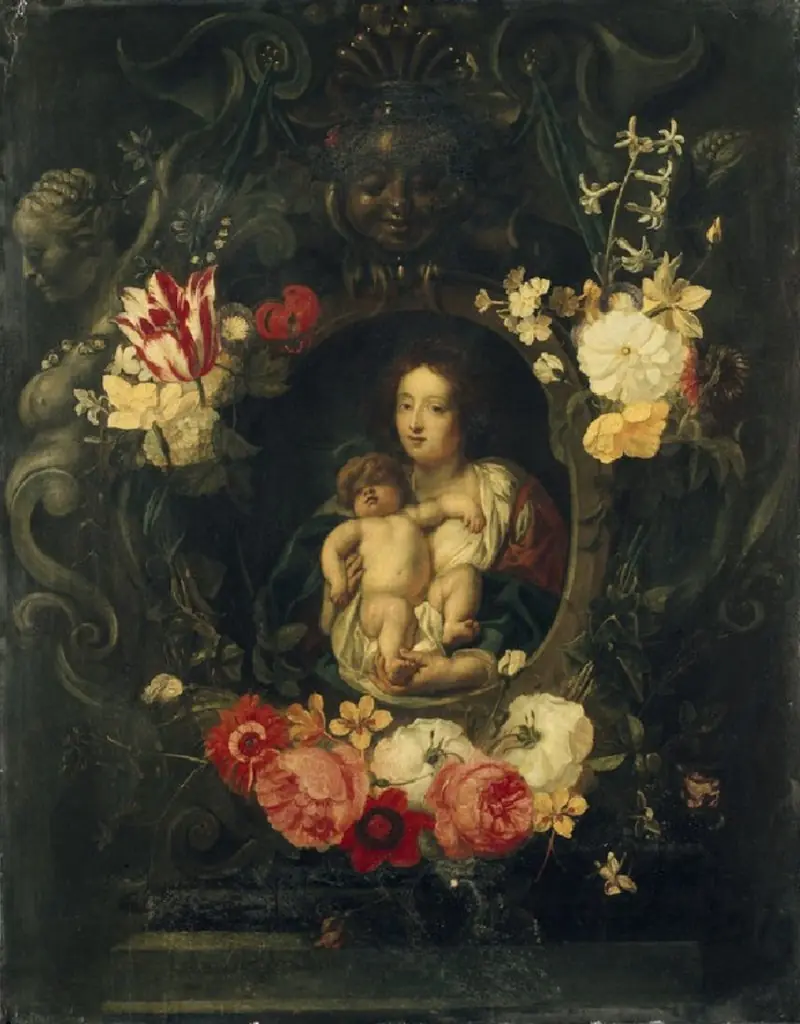 A Garland of Flowers surrounding a Medallion of the Virgin and Child
 Madonna in a flower garland