Artwork
Untitled
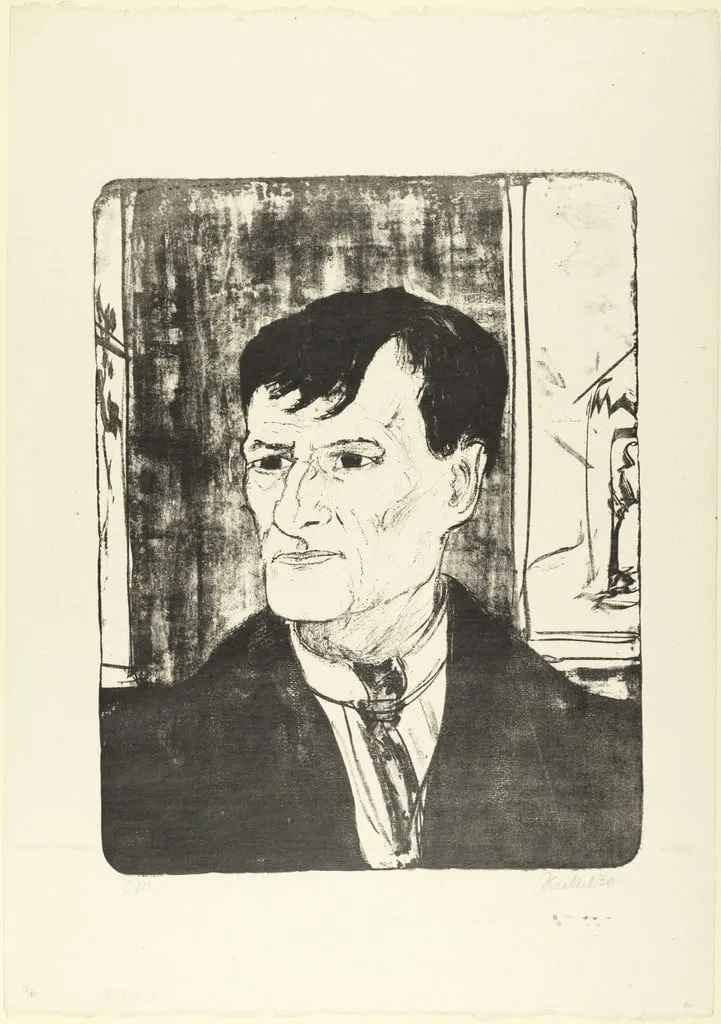
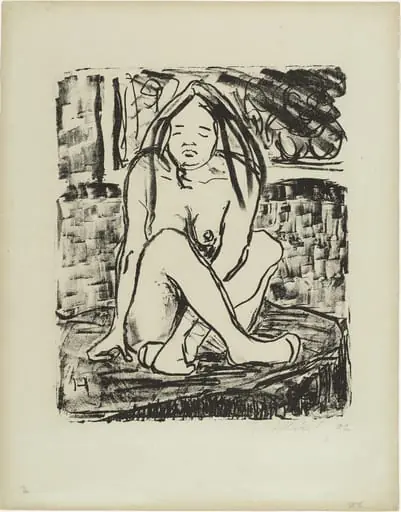
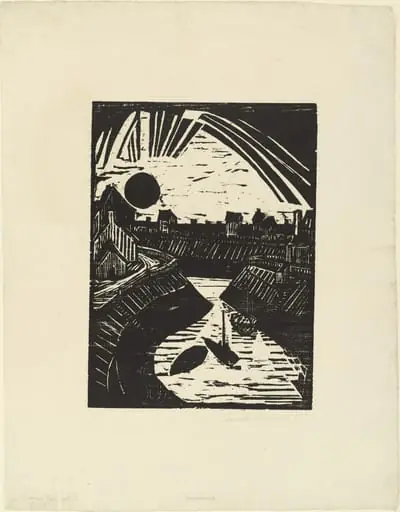
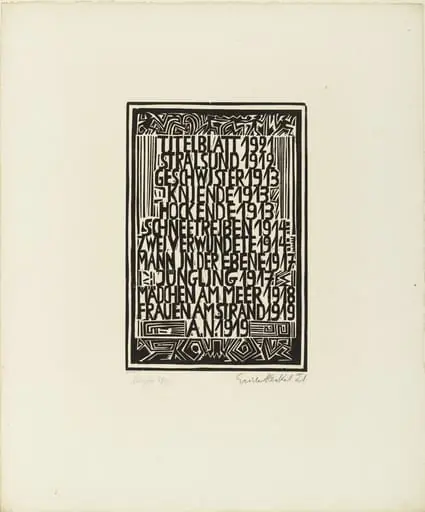
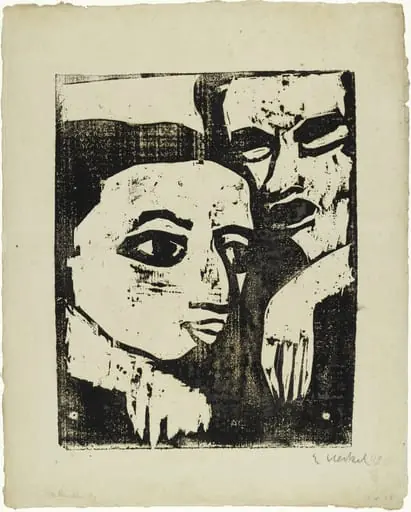
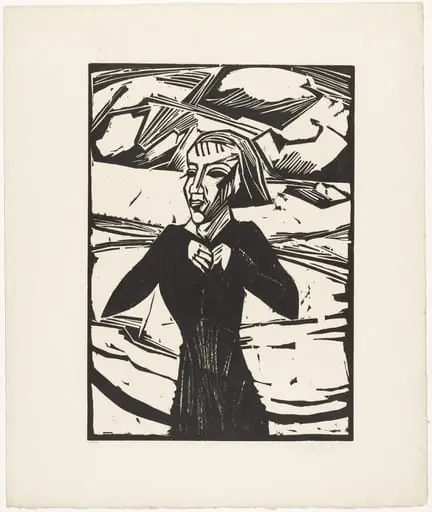
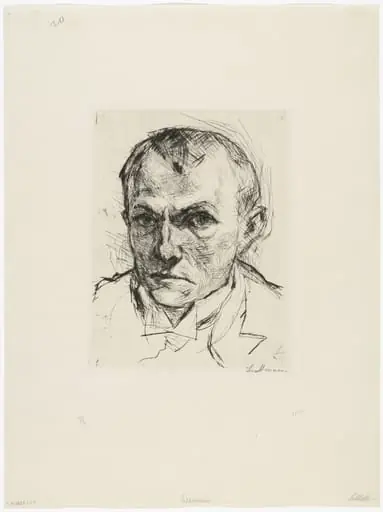
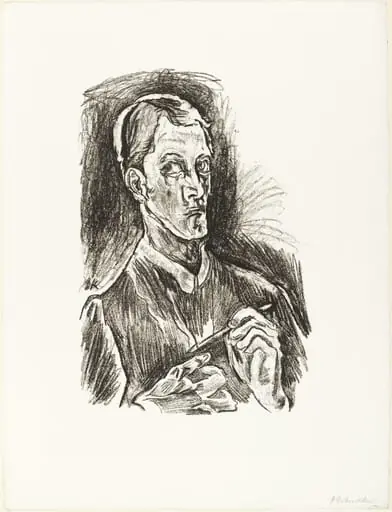
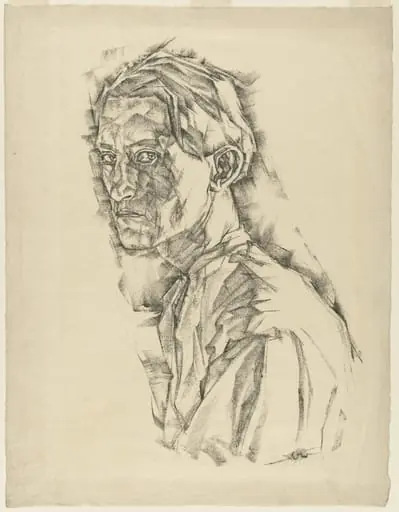
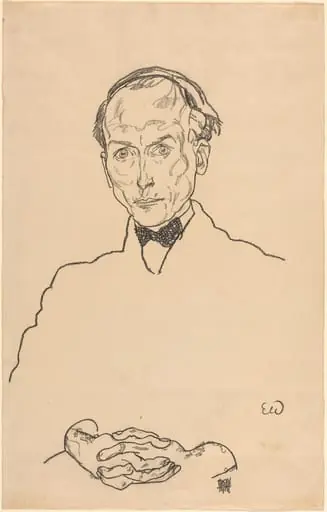
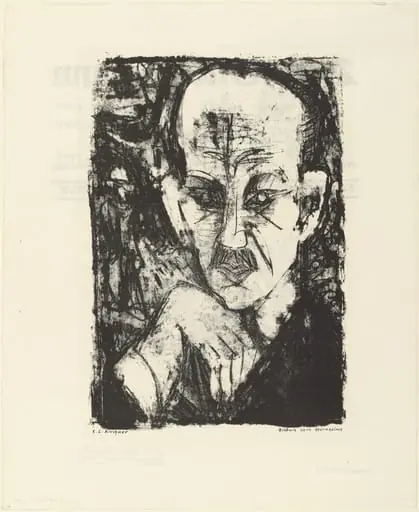
Untitled is an ink print by Erich Heckel. It dates from 1930 and is held in the collection of the Museum of Modern Art.
About this work
Overview
Its raw, unpolished appearance—evident in the hand-cut paper edges and uneven lines—emphasizes the artist’s preference for immediacy over refinement.
This 1930 lithograph by Erich Heckel is a black-and-white portrait executed using the lithographic process, in which the image is drawn directly onto a stone surface before being transferred to paper. The work reflects Heckel’s continued engagement with printmaking after his early years with Die Brücke. Its raw, unpolished appearance—evident in the hand-cut paper edges and uneven lines—emphasizes the artist’s preference for immediacy over refinement.
Subject & Meaning
The portrait depicts a man in formal attire, his expression subdued and introspective. The lack of identifying details suggests a focus on psychological presence rather than individual identity. The blurred, sketch-like background—hinting at a vase and curtain—creates a sense of spatial ambiguity, reinforcing the internal tension of the figure. The work conveys quiet isolation, consistent with Expressionist concerns about modern alienation.
Technique & Style
Heckel employed lithography to achieve a spontaneous, drawn quality, allowing the natural grain of the stone to influence the line work. The bold, irregular contours of the face contrast with the loose, indistinct rendering of the background, creating visual tension. The rough texture and uneven ink distribution reflect the medium’s physicality, aligning with Expressionist ideals that valued emotional authenticity over technical polish.
History & Provenance
Created in 1930, this print belongs to Heckel’s later period, following the dissolution of Die Brücke in 1913. It entered the collection of The Museum of Modern Art, where it remains part of its holdings of German Expressionist prints. While not among his most widely reproduced works, it exemplifies his sustained commitment to printmaking as a vehicle for personal expression beyond his early avant-garde years.
Context
By 1930, Heckel had moved away from the radical energy of Die Brücke but retained its emphasis on emotional intensity and formal simplification. The rise of Nazism in Germany would soon suppress Expressionist art, making this work part of a quiet, persistent body of output made under increasing cultural pressure. Its restrained tone may reflect both artistic evolution and the somber political climate of interwar Germany.
Legacy
This lithograph contributes to the broader recognition of Heckel as a printmaker who sustained Expressionist principles into the mid-20th century. Its inclusion in MoMA’s collection underscores its significance within the history of modern printmaking. Though less celebrated than his earlier works, it illustrates the enduring power of lithography to convey psychological depth through direct, unembellished mark-making.
Artist & collection
Artist
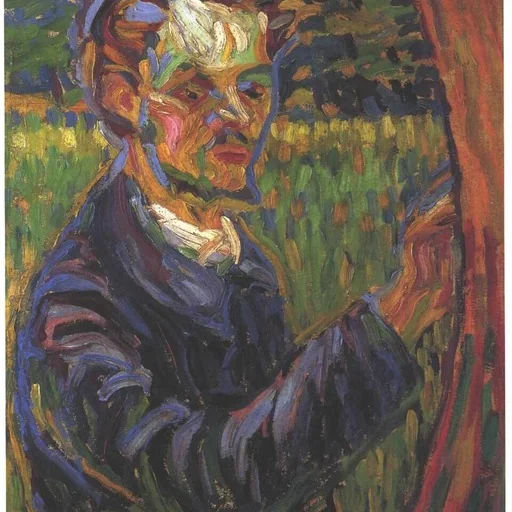
Erich Heckel (31 July 1883 – 27 January 1970) was a German painter and printmaker, and a founding member of the group Die Brücke ("The Bridge") which existed 1905–1913.