Artwork
Marion Pond (Mrs. Kenneth Bacon Bond)
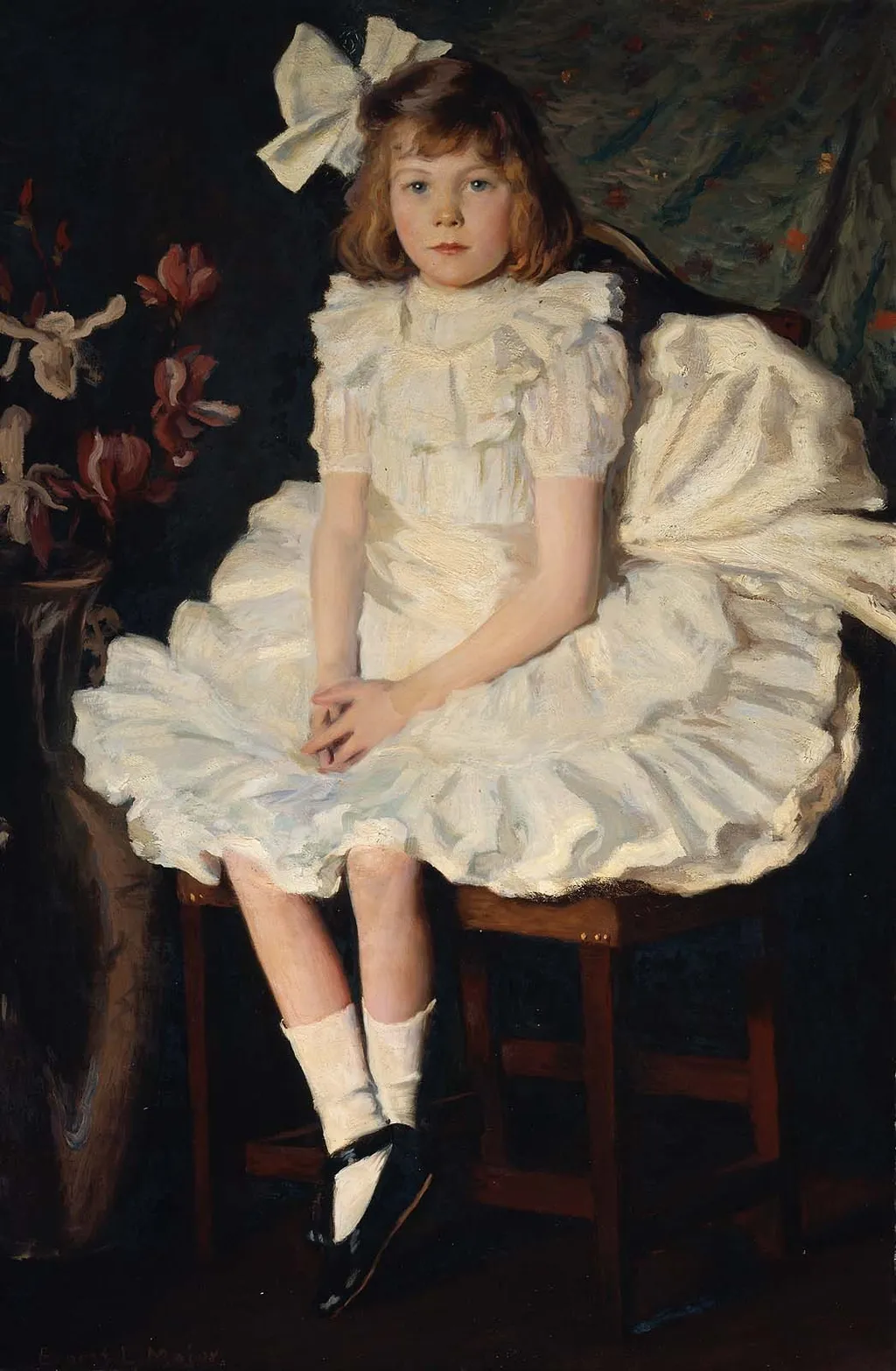
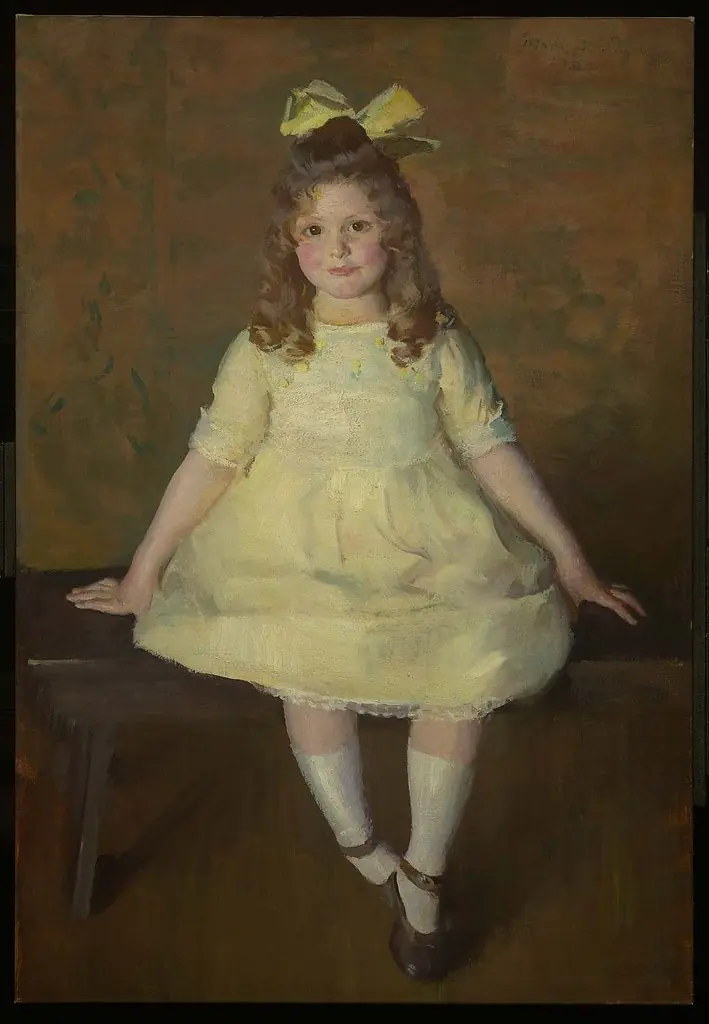
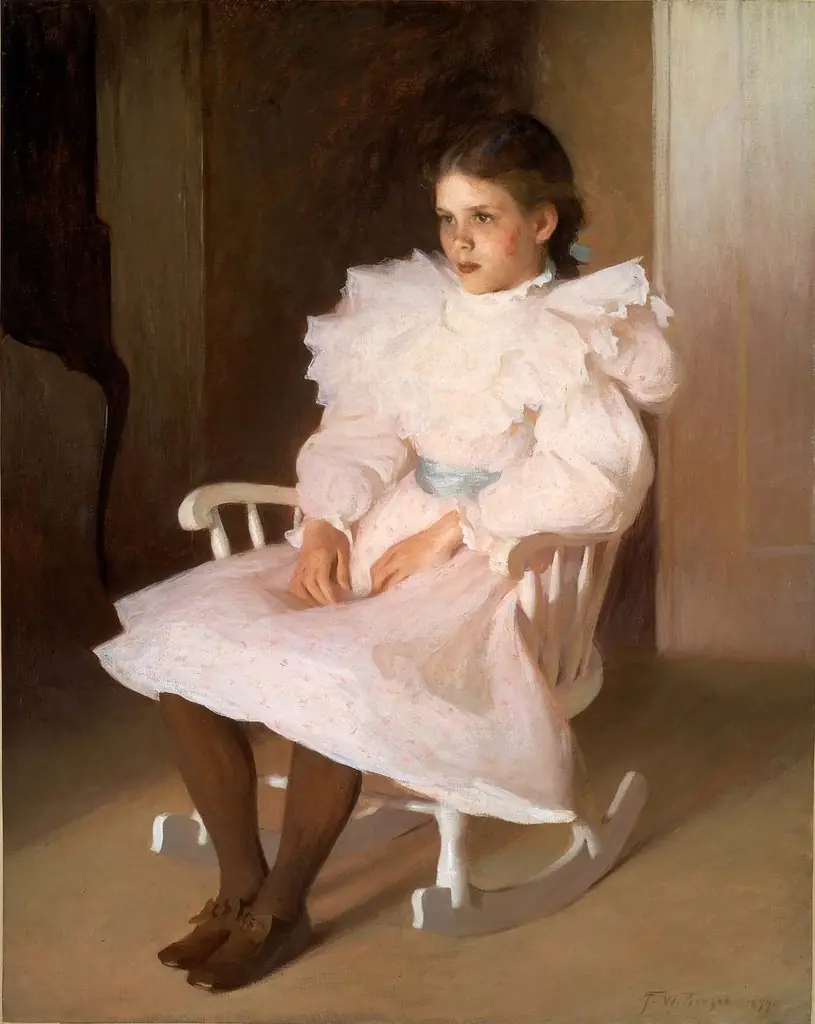
Marion Pond (Mrs. Kenneth Bacon Bond) is an oil painting by the Impressionist artist Ernest Lee Major. It dates from 1903 and is held in the collection of the Museum of Fine Arts Boston.
About this work
Overview
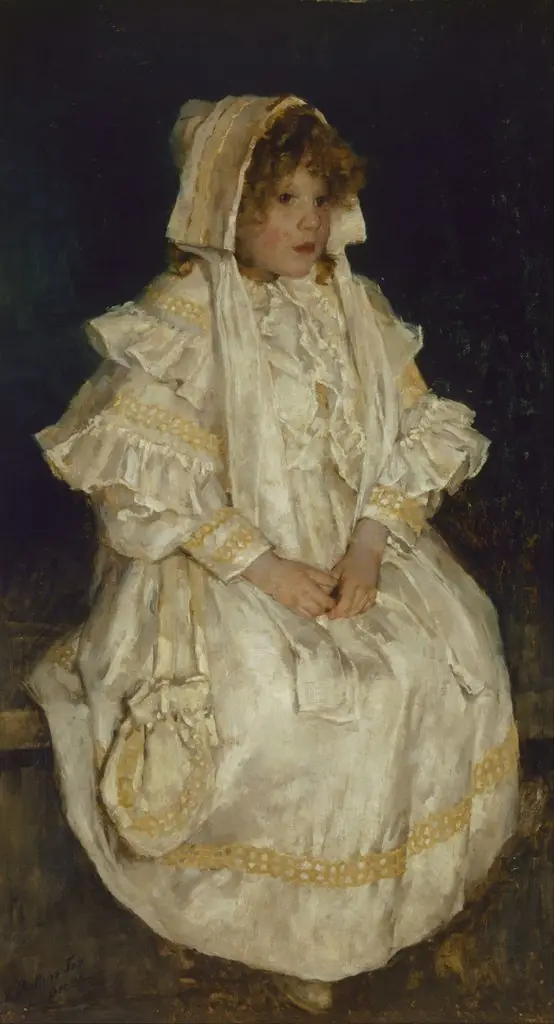
Ernest Lee Major painted Marion Pond in 1903, capturing the likeness of a young girl who was the daughter of Kenneth Bacon Bond. Executed in oil on canvas, the work is part of the Museum of Fine Arts, Boston’s collection. It reflects Major’s interest in intimate domestic portraiture during the early twentieth century, emphasizing quietude and personal presence over grand narrative.
Subject & Meaning
The subject, Marion Pond, is portrayed seated calmly in a wooden chair, hands folded in her lap. Her expression is tranquil, avoiding theatricality or sentimentality. The absence of overt symbolism or context invites focus on her stillness and individuality. The painting conveys a sense of private introspection, characteristic of portraiture that valued inner life over social display.
Technique & Style
Major employed subtle chiaroscuro to model the girl’s form, particularly in the folds of her white dress, which catch light with delicate gradations. The background remains muted and dark, enhancing the figure’s presence. Textural precision in the fabric—ruffles, seams, and bow—demonstrates careful observation, while the overall composition avoids flourish, favoring restraint and clarity.
History & Provenance
Commissioned by the sitter’s family, the painting remained in private hands until its acquisition by the Museum of Fine Arts, Boston.
Commissioned by the sitter’s family, the painting remained in private hands until its acquisition by the Museum of Fine Arts, Boston. Its documented history is modest, with no major exhibitions or public records prior to its museum entry. The work’s preservation reflects its personal significance to the Bond family and its later recognition as a representative example of early American portraiture.
Context
Created during a period when American artists increasingly turned to intimate, domestic subjects, Major’s portrait aligns with trends seen in the work of John Singer Sargent and Mary Cassatt. Unlike formal society portraits, this image avoids ostentation, reflecting a broader cultural shift toward authenticity and emotional quietude in visual representation.
Legacy
Though not widely reproduced or celebrated in major art historical narratives, Marion Pond endures as a quiet testament to Major’s observational skill. It contributes to the understanding of early 20th-century American portraiture that prioritized subtlety over spectacle, offering insight into how middle-class identity was visually constructed in that era.
Artist & collection