Artwork
A Little Girl, Helga Melchior, in a Long Dress
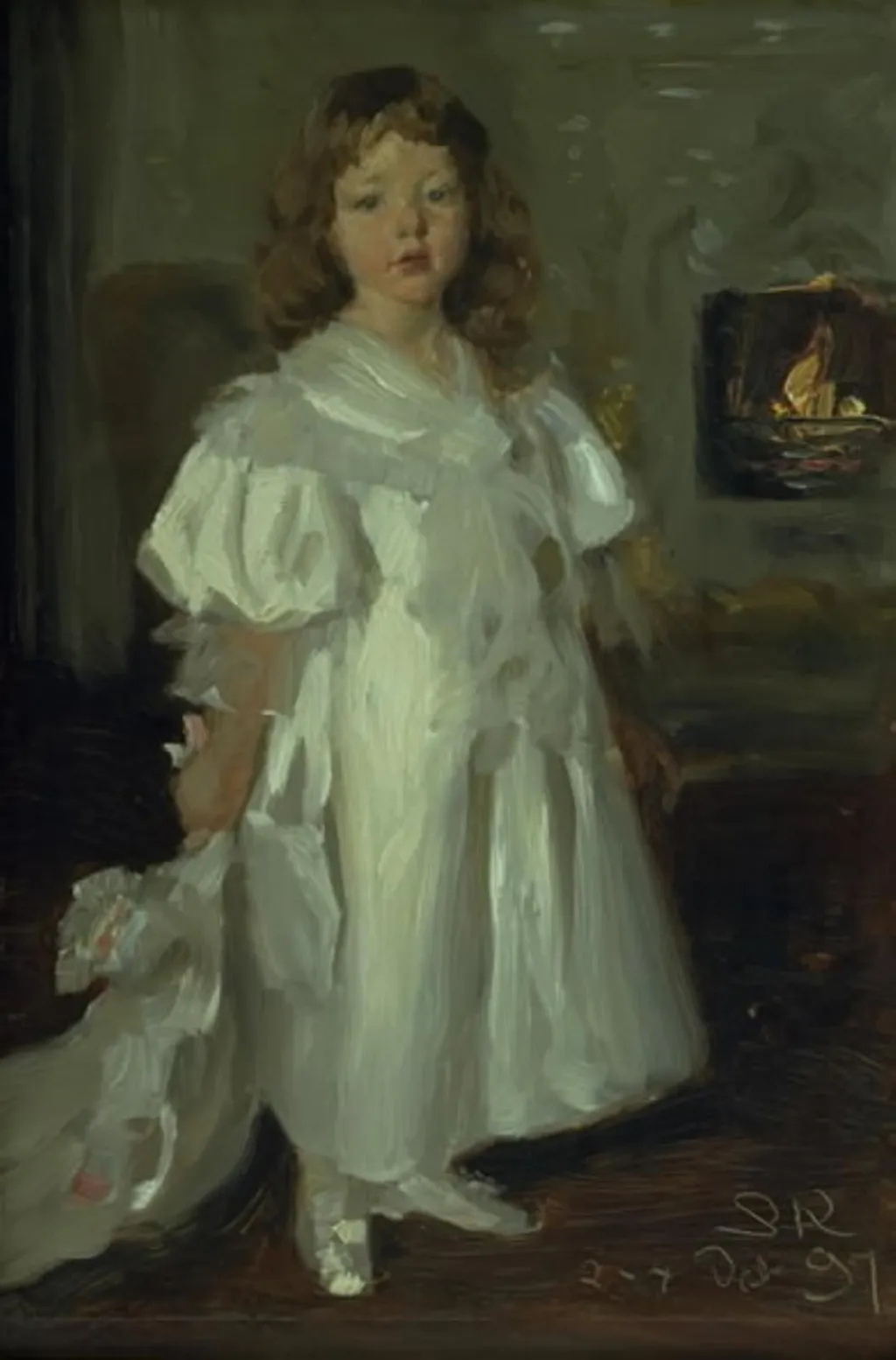
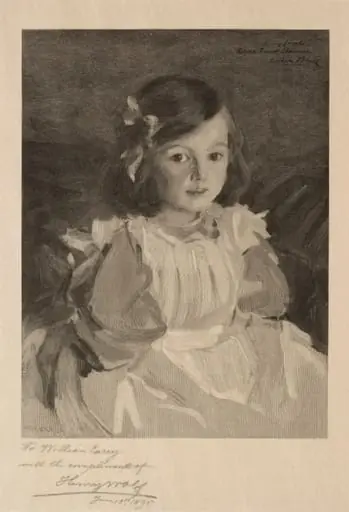
A Little Girl, Helga Melchior, in a Long Dress is a photography by the Impressionist artist Unknown. It dates from 1897 and is held in the collection of the Statens Museum for Kunst. This photograph, taken in 1897, depicts a young girl named Helga Melchior standing in a modest interior.
About this work
Behind her, a dark wall shows a faint painting of a boat on fire, glowing with warm light.
A young girl stands in a dim room, wearing a long white dress with puffy sleeves. Her hair is pulled back, and she holds a small object in her left hand. Behind her, a dark wall shows a faint painting of a boat on fire, glowing with warm light.
This photo was taken in 1897, focusing on simple, everyday details. The artist used soft lighting to highlight the girl’s face and dress.
Next, check out Impressionism to see how light and color shaped this style.
Overview
This photograph, taken in 1897, depicts a young girl named Helga Melchior standing in a modest interior. Dressed in a long white gown with full sleeves, she holds a small object in her left hand. The composition emphasizes quiet stillness, with soft natural light falling gently on her face and clothing. The background reveals a faintly visible painting of a burning boat, adding subtle narrative depth to the scene.
Subject & Meaning
Helga Melchior, the subject, is portrayed not as a posed figure but as a child caught in a moment of quiet contemplation. The long dress suggests formality or ritual, while the object she holds remains unidentified, inviting interpretation. The distant image of a burning boat behind her introduces an enigmatic contrast—perhaps symbolizing memory, loss, or the passage of time—without overt explanation.
Technique & Style
The photograph employs diffused lighting to render delicate tonal gradations across the girl’s dress and skin, minimizing harsh shadows. The shallow depth of field draws attention to her face and posture, while the blurred background painting adds atmospheric texture. The approach favors intimacy over spectacle, aligning with late 19th-century photographic practices that valued naturalism and emotional restraint.
History & Provenance
Created in 1897, the image entered the collection of the Museum of Ethnography, where it is preserved as part of a broader documentation of domestic life. The photographer’s identity remains unconfirmed, though the work reflects the era’s growing interest in capturing ordinary moments with psychological nuance. Its preservation suggests early recognition of photography’s role in recording cultural detail.
Context
In the late 1890s, photography increasingly moved beyond portraiture as mere record to explore mood and environment. This image aligns with contemporaneous trends in Nordic visual culture, where domestic interiors and quiet figures were rendered with sensitivity. The inclusion of a painted scene behind the subject reflects a common practice of using backdrops to enrich narrative ambiguity in studio photography.
Legacy
The photograph endures as a quiet example of how early photographic practice captured the subtleties of childhood and domestic space. It contributes to scholarly understanding of how light, composition, and background elements were used to convey emotional resonance without theatricality. Its presence in an ethnographic museum underscores its value as a cultural artifact rather than an artistic statement.
Artist & collection

 Domestic Scene
 Giacomo and Cardinal Marco, investing Andrea, Abbot of San Zeno, with his Benefice
 The Nymph of Fontainebleau
 Portrait of a Woman
 Madonna and Child with Saints in the Enclosed Garden
 Venus and Minerva
 Family Group of Four on Sofa
 Wall painting from Room H of the Villa of P. Fannius Synistor at Boscoreale