Artwork
A igrejinha
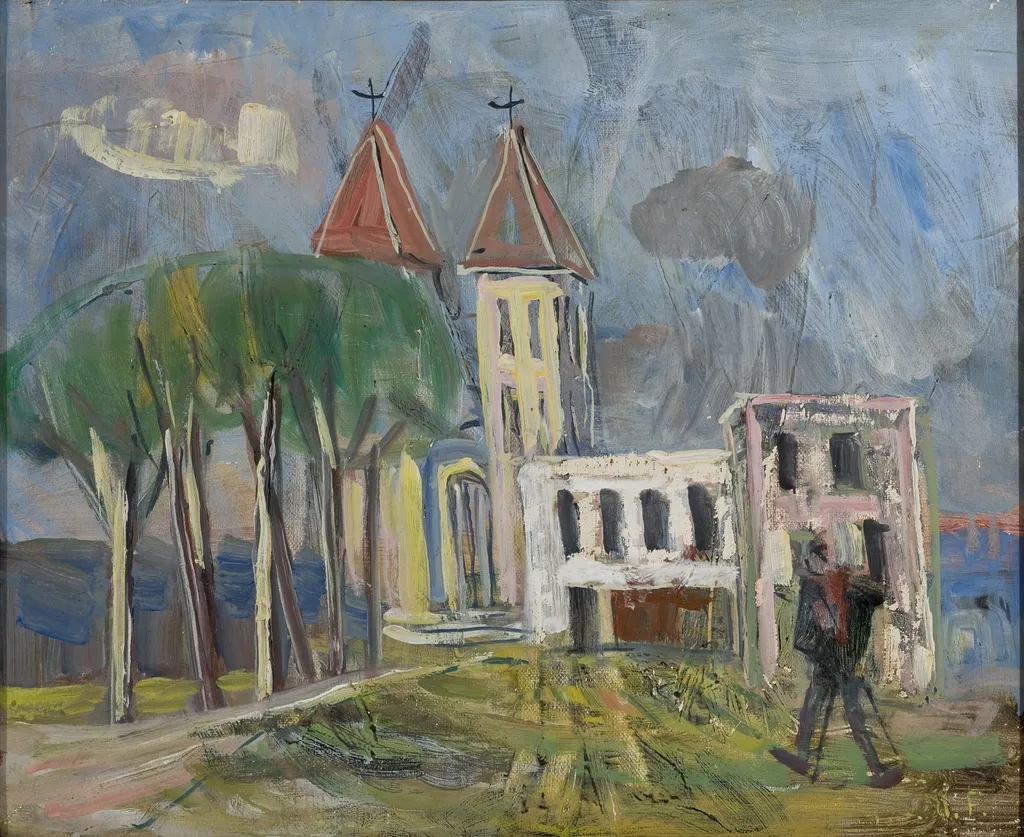
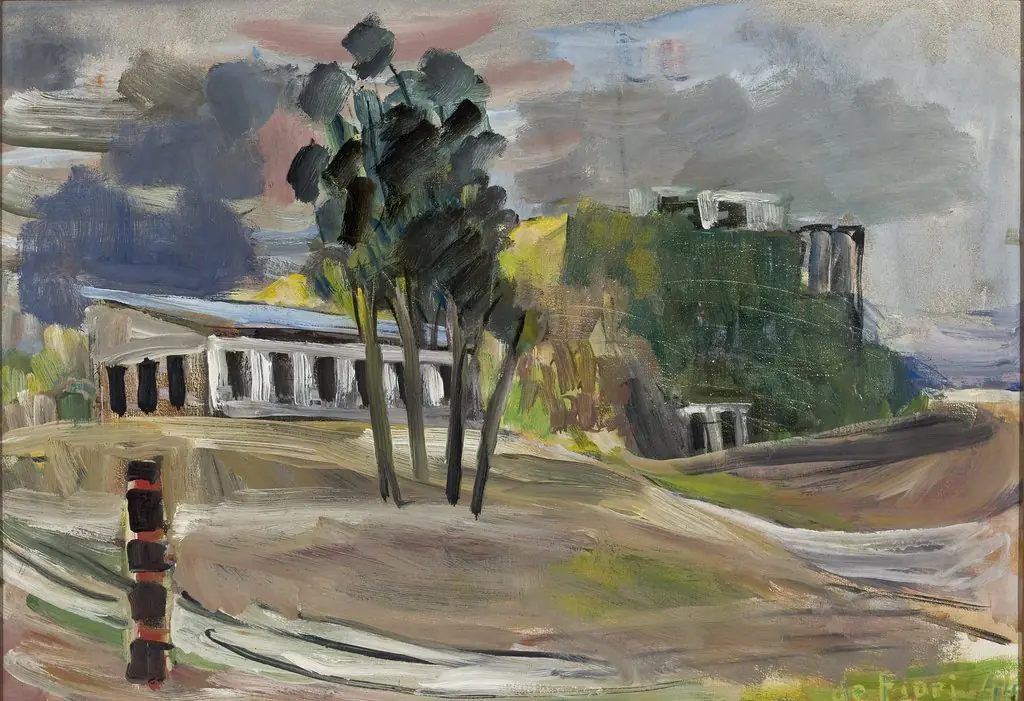
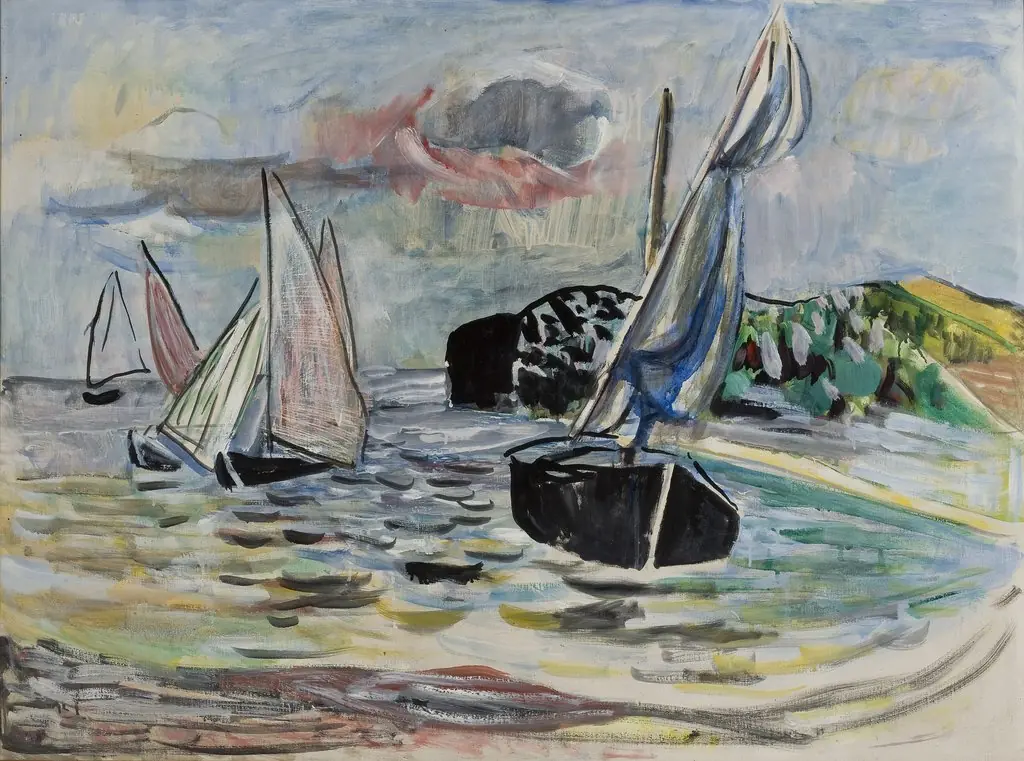
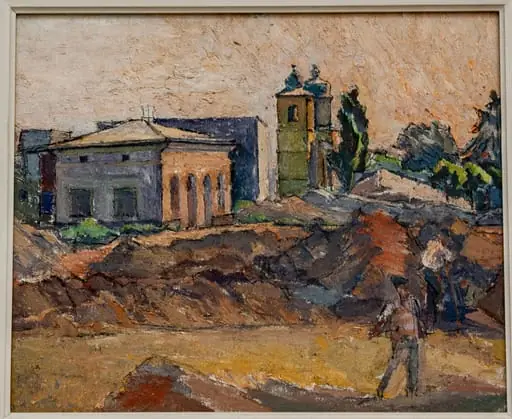
A igrejinha is an unspecified painting by Ernesto de Fiori. It dates from 1924 and is held in the collection of the São Paulo Museum of Art.
About this work
Overview
Though initially known in Berlin for portrait work, his later Brazilian period shifted toward landscape and vernacular subjects.
Ernesto de Fiori painted *A igrejinha* circa 1924 during his time in Brazil, following his emigration from Germany. Though initially known in Berlin for portrait work, his later Brazilian period shifted toward landscape and vernacular subjects. The painting is part of the São Paulo Museum of Art’s collection, reflecting his engagement with local environments after leaving Europe amid rising political tensions.
Subject & Meaning
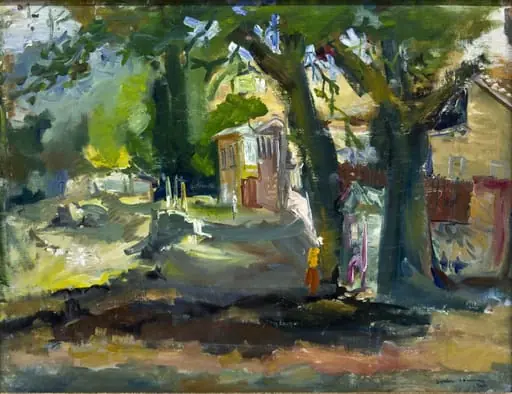
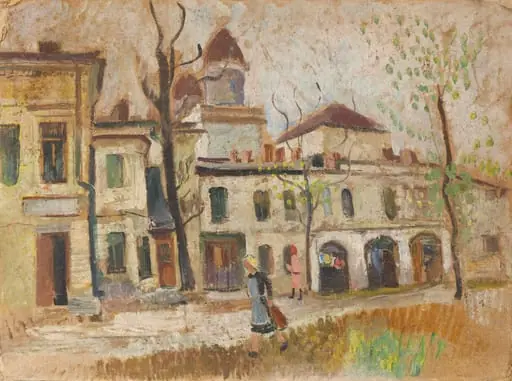
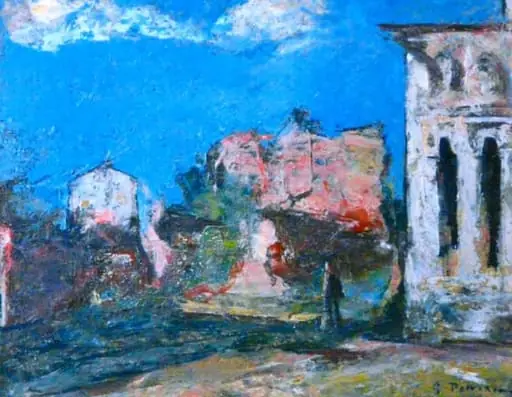
The painting portrays a modest rural church, its red-tiled tower rising among dense trees under a clear sky. The structure, unadorned and humble, suggests a local place of worship rather than an architectural monument. De Fiori’s choice of subject reflects an interest in everyday Brazilian life, subtly contrasting the European traditions he left behind with the quiet rhythms of his new surroundings.
Technique & Style
De Fiori employed loose, energetic brushwork to render the landscape, emphasizing texture over precision. Colors are applied with visible strokes, creating a dynamic interplay between the blue sky, green foliage, and the warm red roof. The composition avoids idealization, favoring a tactile, almost improvisational handling of form that conveys movement and atmospheric light without sentimentalizing the scene.
History & Provenance
Created after de Fiori’s relocation to Brazil in the early 1920s, *A igrejinha* emerged from his adaptation to a new cultural context. He had fled Nazi Germany due to his mixed heritage and avant-garde associations. The painting entered the São Paulo Museum of Art’s collection, where it remains as part of a broader effort to document modernist responses to Brazilian identity in the interwar period.
Context
In 1920s Brazil, artists increasingly turned to local themes as part of a national cultural reorientation. De Fiori’s work, though rooted in European modernism, engaged with this shift by depicting unidealized rural scenes. His background as an expatriate lent his perspective a sense of displacement, making his landscapes not merely observations but quiet meditations on belonging and change.
Legacy
Though not widely celebrated outside Brazil, *A igrejinha* exemplifies de Fiori’s transition from European society portraiture to a more personal, landscape-oriented practice. It contributes to the understanding of how exiled artists influenced Brazilian modernism, offering a nuanced alternative to dominant nationalist narratives through its restrained, emotionally grounded depiction of place.
Own this work as a print
Artist & collection
Artist
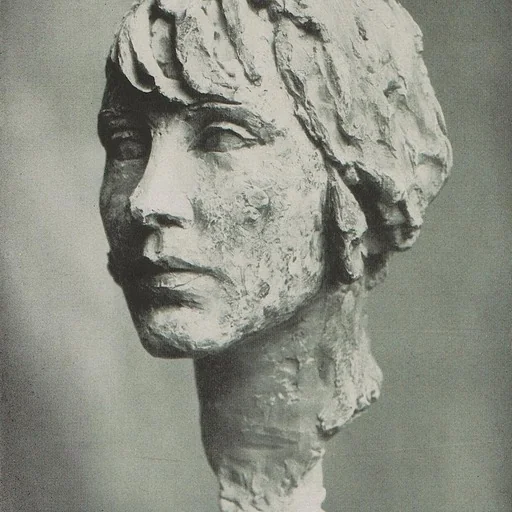
Ernesto de Fiori (12 December 1884 – 24 April 1945) was a German painter and sculptor of Italian and Austrian descent.