Artwork
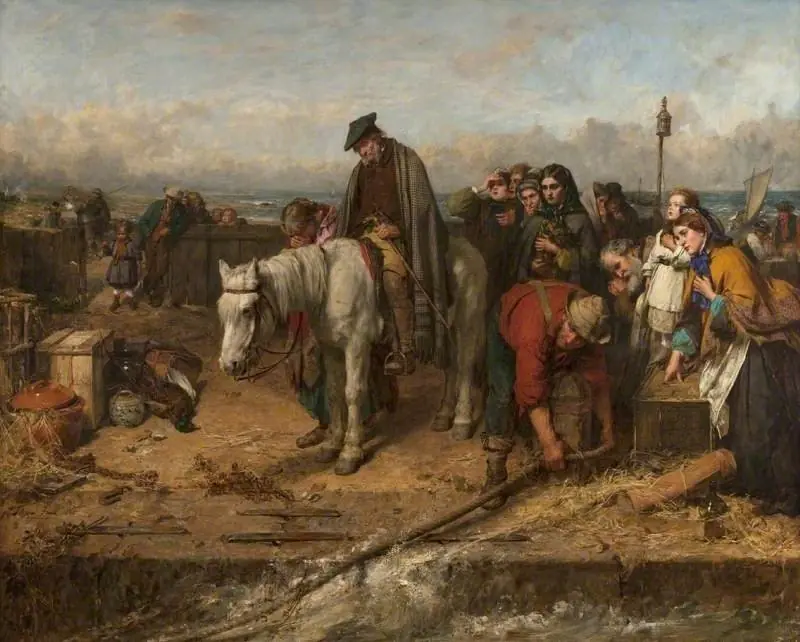
An Irish Emigrant Landing at Liverpool ('Jim Blake landing in Liverpool')
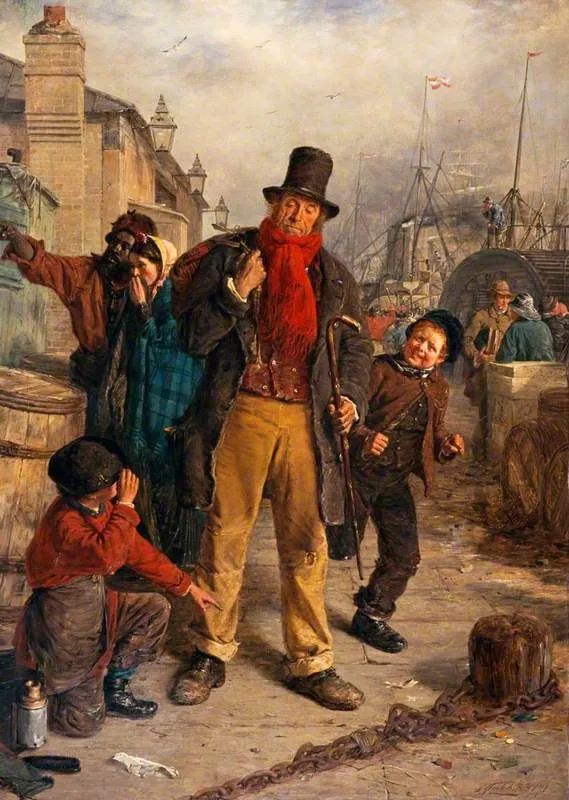
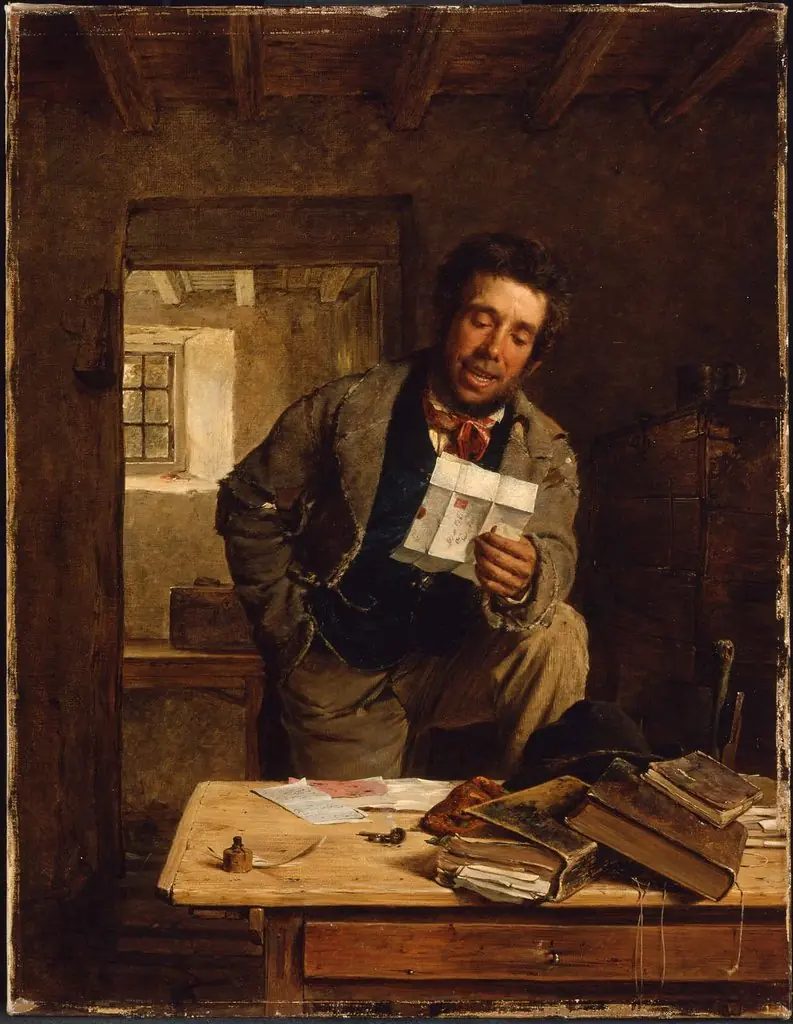
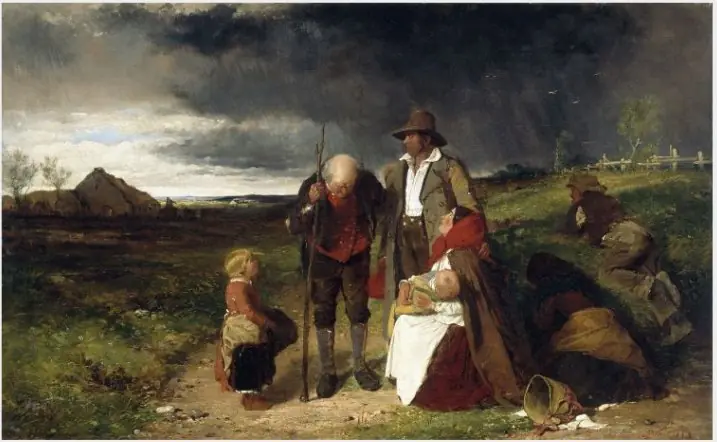
An Irish Emigrant Landing at Liverpool ('Jim Blake landing in Liverpool') is an oil painting by the Realist artist Erskine Nicol. It dates from 1871 and is held in the collection of the National Galleries Scotland.
About this work
Overview
The painting is part of the Scottish National Gallery’s collection, reflecting Nicol’s focus on social themes of the British Isles.
Painted in 1871 by Scottish artist Erskine Nicol, this oil work captures a moment of arrival at Liverpool’s dockside. It portrays a group of Irish emigrants freshly disembarked, their expressions and postures suggesting the mix of exhaustion and hope that marked migration during this period. The painting is part of the Scottish National Gallery’s collection, reflecting Nicol’s focus on social themes of the British Isles.
Subject & Meaning
At the center stands a man in a red scarf and top hat, likely a community figure or guide, addressing a young boy who watches with quiet curiosity. Surrounding figures—a woman, another child, and others—observe silently, their presence underscoring the communal nature of migration. The scene avoids melodrama, instead emphasizing quiet transition: arrival as the beginning of an uncertain new chapter.
Technique & Style
Nicol employs a naturalistic style with careful attention to textile textures and facial expressions. The figures are arranged in a loose, diagonal composition that draws the eye toward the central man and boy. Light falls evenly across the dock, avoiding theatrical contrast, while the muted palette of grays and browns grounds the scene in realism, reinforcing its documentary tone.
History & Provenance
Commissioned during a period of heightened public interest in Irish migration, the painting was acquired by the Scottish National Gallery shortly after its completion. It was not widely exhibited in Nicol’s lifetime but gained recognition in the 20th century as part of broader efforts to document 19th-century social history through art.
Context
In the decades following the Great Famine, Liverpool served as a primary entry point for Irish migrants seeking work in Britain. Nicol, who had previously depicted Irish rural life, turned his attention to urban arrival points, capturing the human dimension of displacement. This painting reflects contemporary concerns about migration, identity, and integration in industrial Britain.
Legacy
Though not widely known outside specialist circles, the painting remains a quiet testament to the everyday realities of 19th-century migration. It contributes to a visual archive of working-class experience, offering a counterpoint to romanticized or sensationalized portrayals of emigration. Its preservation in a national collection affirms its role in documenting social history.
Artist & collection