Artwork
Cleopatre
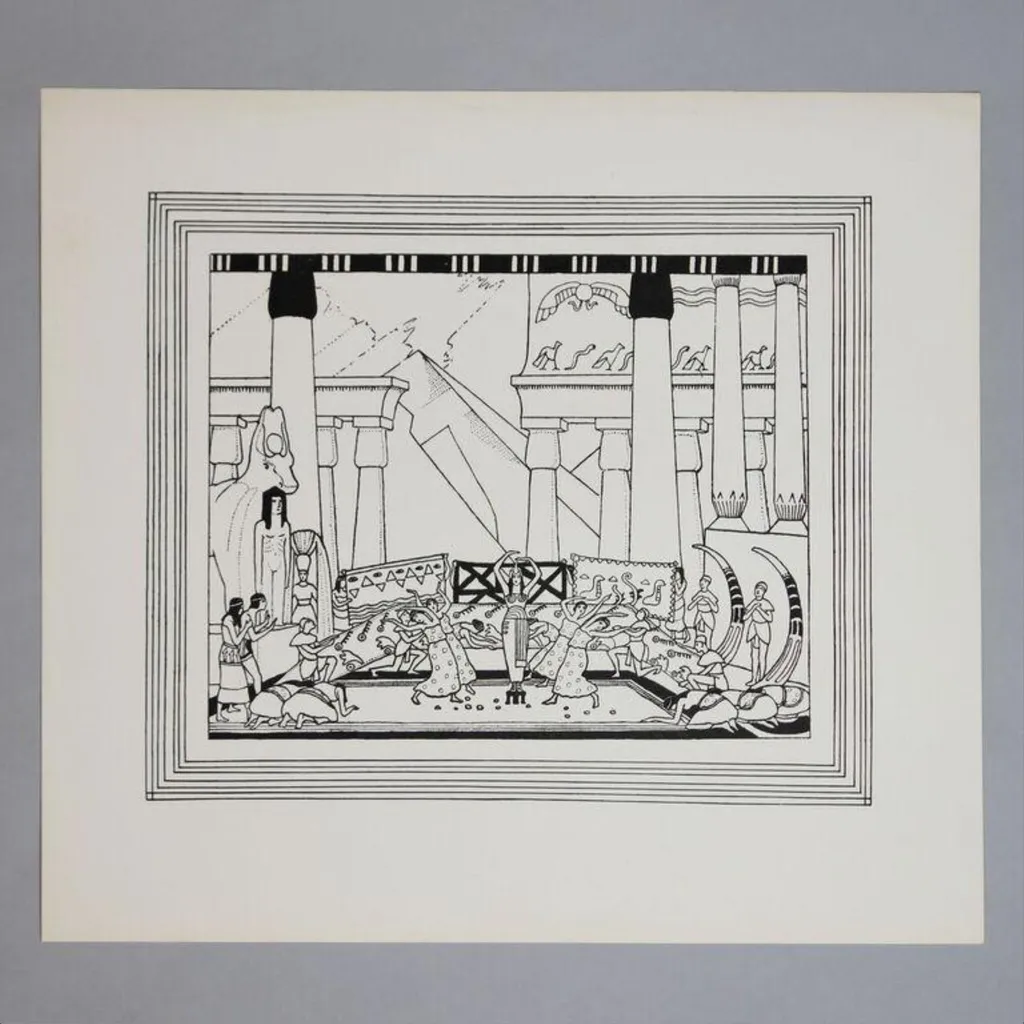
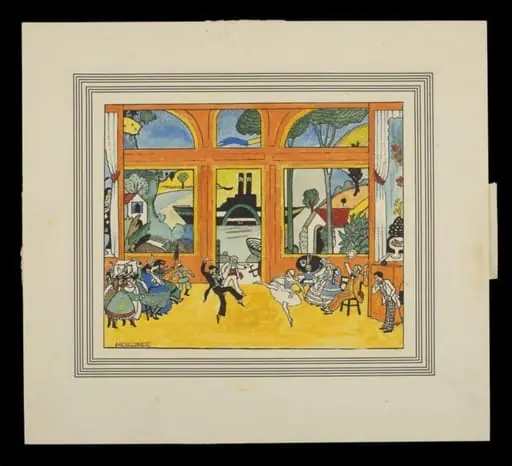
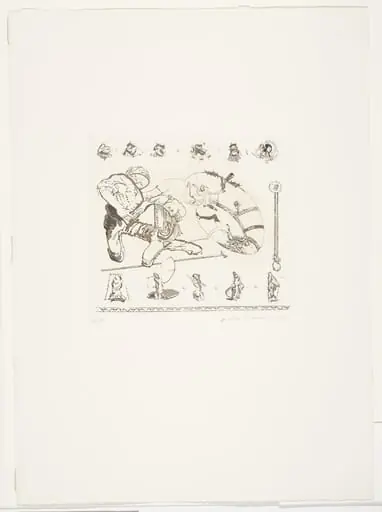
Cleopatre is a print by Ethelbert White. It dates from 1924 and is held in the collection of the Victoria and Albert Museum.
About this work
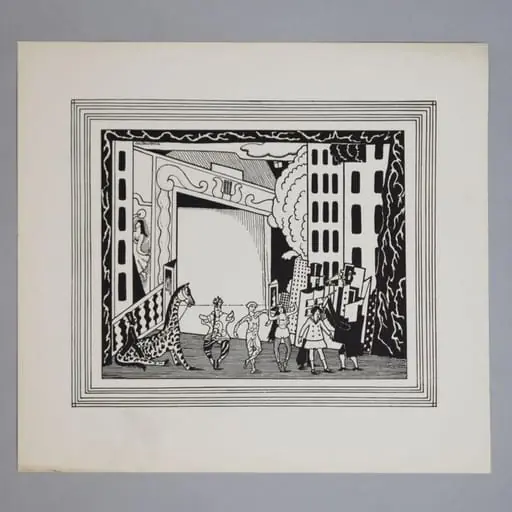
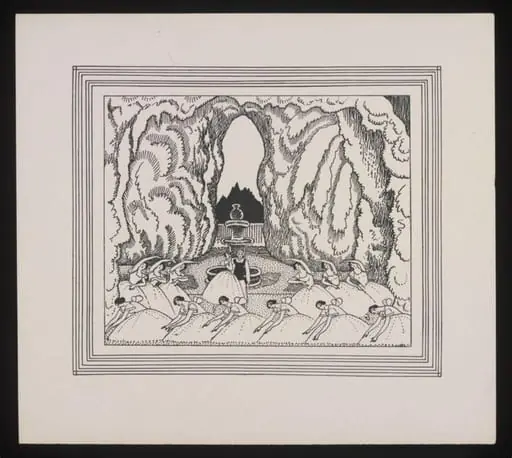
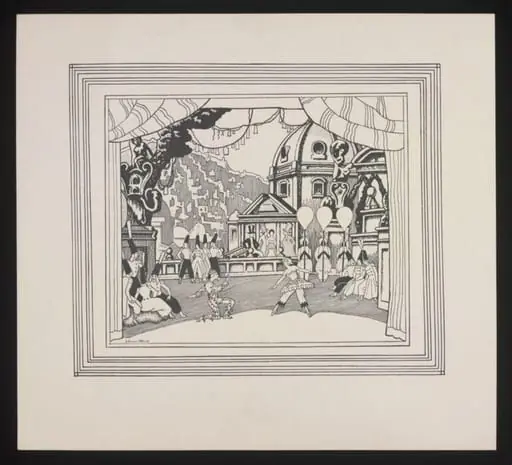
Ethelbert White’s print *Cleopatre* shows a moment from Mikhail Fokine’s 1909 ballet. The scene captures Amoun’s first sight of Cleopatra. His lover, Ta-hor, senses his new focus and grabs his arm.
This print fits a 1920s trend. Dance and Diaghilev’s Ballets Russes were popular again. White’s work joins a series of prints about famous ballet scenes.
Look up the Victoria and Albert Museum next.
Overview
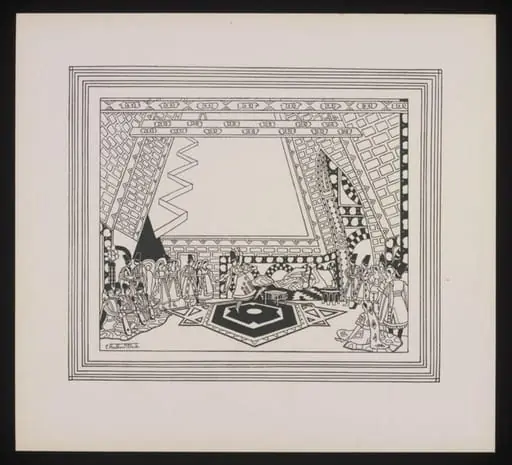
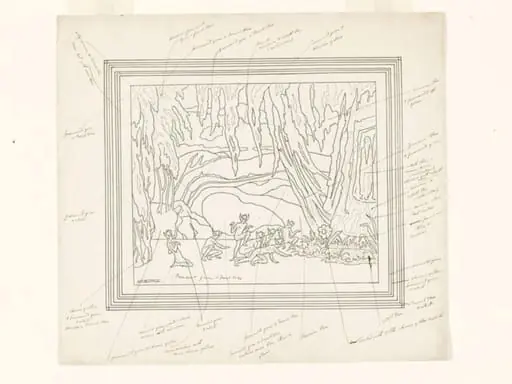
Ethelbert White’s print *Cleopatre* is one of twenty-two hand-coloured lithographs produced in the 1920s to document key moments from the Diaghilev Ballets Russes repertoire. Created as part of a broader project initiated by dance historian Cyril Beaumont, the series aimed to preserve visual records of ballets through the interpretations of artists who had previously contributed to related publications and sculpted figures of dancers.
Subject & Meaning
His former lover, Ta-hor, reacts with a sudden, tense grip on his arm, capturing the emotional rupture caused by his shifting devotion.
The print illustrates a pivotal moment in Fokine’s 1909 ballet *Cleopatra*: the Egyptian queen’s first appearance before Amoun, a Syrian prince, whose gaze locks onto her, signaling the onset of obsession. His former lover, Ta-hor, reacts with a sudden, tense grip on his arm, capturing the emotional rupture caused by his shifting devotion. The scene conveys psychological tension through gesture and spatial arrangement rather than narrative detail.
Technique & Style
White employed fine-line lithography with delicate hand-colouring to render the ballet’s costumes and poses with precision. His style blends observational accuracy with stylized forms, reflecting the influence of Art Deco and early modernist aesthetics. The figures are arranged with theatrical clarity, emphasizing movement and emotional contrast without excessive ornamentation, aligning with the ballet’s expressive choreography.
History & Provenance
The print was produced in the early 1920s as part of a series commissioned by Cyril Beaumont, who had previously documented the Ballets Russes through illustrated booklets and wooden dancer figures. White, along with Adrian Allinson, Randolf Schwabe, and Eileen Mayo, was selected for their prior involvement in these projects. The prints were intended as archival records, informed by repeated viewings of performances to capture exact staging and gesture.
Context
During the 1920s, renewed public interest in the Ballets Russes coincided with a broader cultural fascination with modern dance and exoticism. Beaumont’s print series emerged within this climate, serving both as documentation and as accessible art objects for collectors. The project reflected a desire to preserve ephemeral performances through static imagery, bridging the gap between live theatre and the printed image.
Legacy
White’s *Cleopatre* remains a significant example of early 20th-century dance documentation, valued for its fidelity to performance detail and its artistic interpretation. The series as a whole contributed to the visual archive of the Ballets Russes, influencing later scholarship and museum collections, including those at the Victoria and Albert Museum, where many prints from the series are held.
Artist & collection
Artist
Ethelbert White was an English artist and wood engraver. He was an early member of the Society of Wood Engravers and a founding member of the English Wood Engraving Society in 1925. He also worked in oils and water…