Artwork
Job and His Family Restored to Prosperity
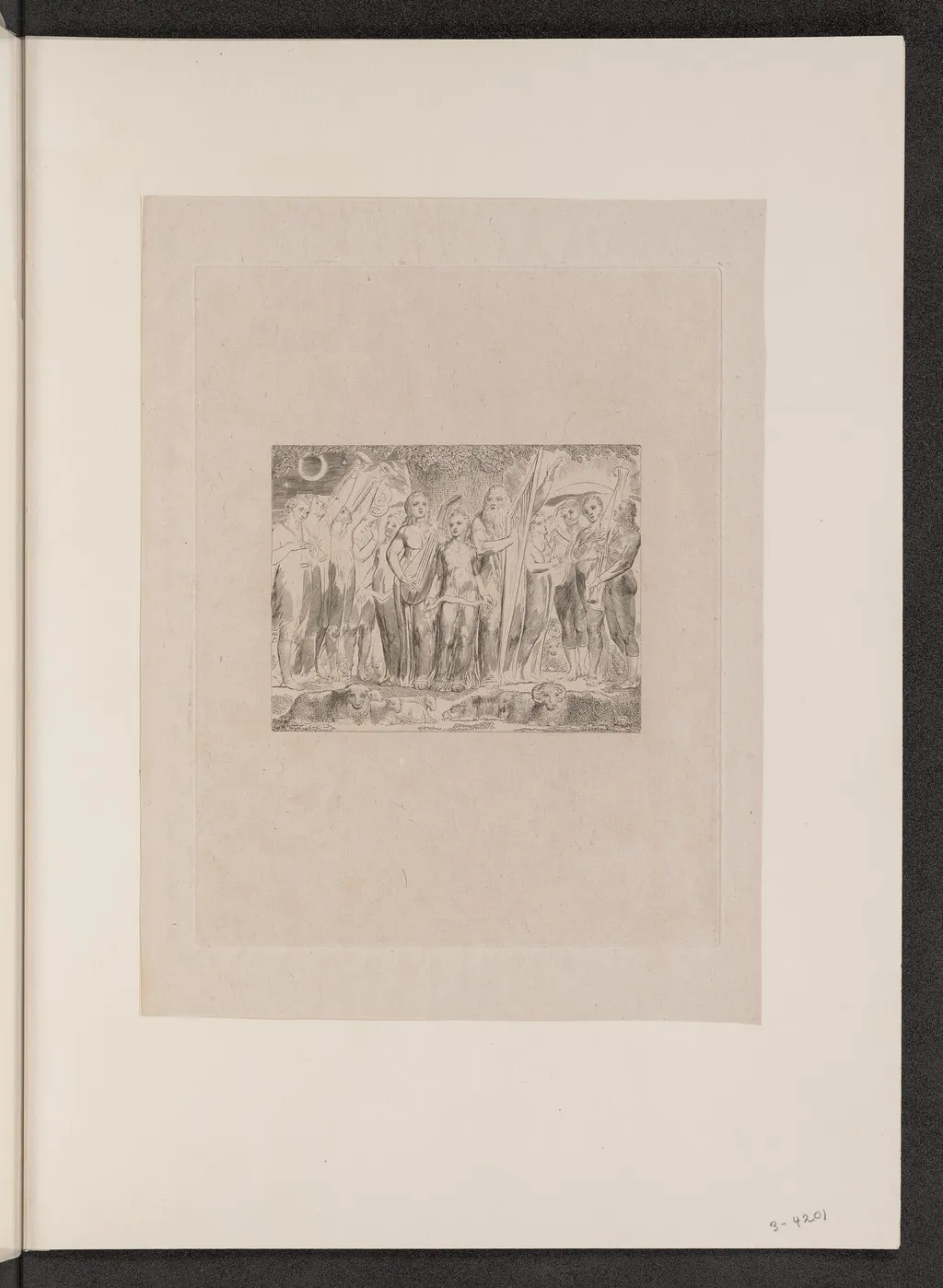
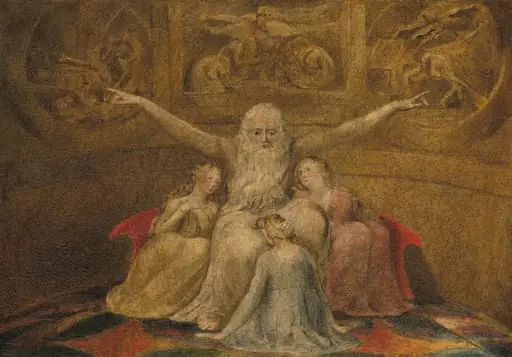
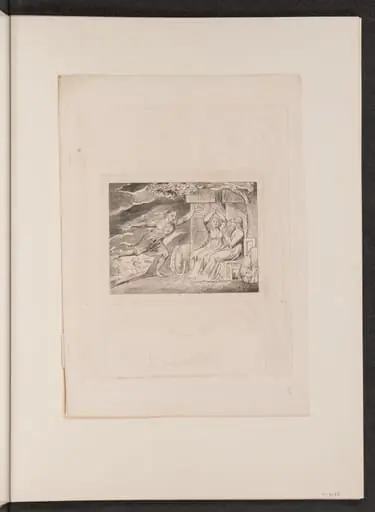
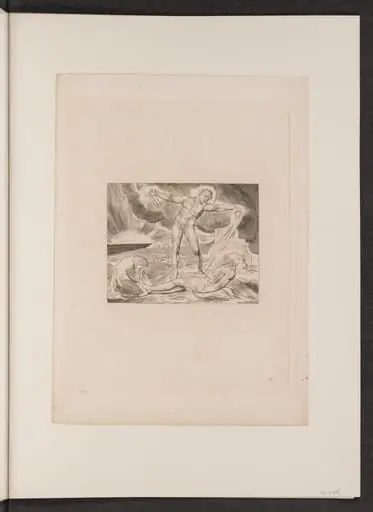
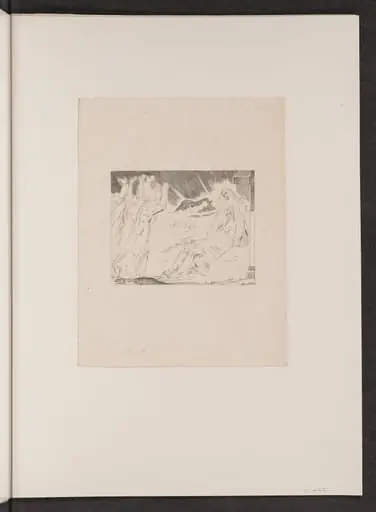
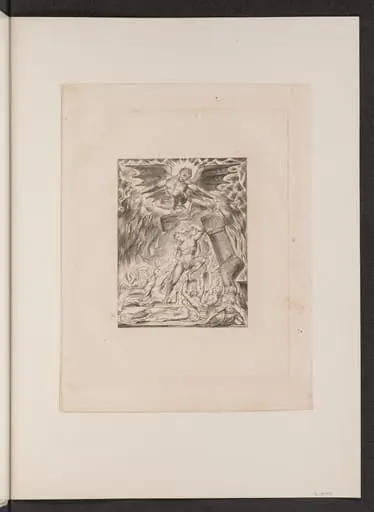
Job and His Family Restored to Prosperity is an ink print by the Romanticist artist William Blake. It dates from 1825 and is held in the collection of the National Gallery of Art.
About this work
Overview
Job and His Family Restored to Prosperity is an 1825 engraving by William Blake, exemplifying his later focus on visionary and allegorical themes derived from literature and scripture.
Subject & Meaning
The engraving depicts a scene of transformation, where Job and his family, initially portrayed as tired, begin to rejoice, symbolizing their restoration to prosperity. The use of flags/staffs and the interplay of shadows and light underscore the emotional shift from despair to hope.
Technique & Style
Blake employed cross-hatching, a technique of layered lines, to achieve a moody, dramatic effect with deep contrasts of dark and light, creating three-dimensional form without color.
History & Provenance
Created in 1825, this work is part of Blake's later oeuvre, characteristic of his Romantic Age style, though specific provenance details are not provided here.
Context
As a Romantic Age central figure, Blake's work reflects his engagement with symbolic and imaginative themes, situating this engraving within his broader exploration of literary and scriptural allegories.
Legacy
While the engraving's direct impact is not detailed, it contributes to Blake's recognized influence as a poet, painter, and printmaker, embodying the visionary themes that define his legacy.
Artist & collection
Artist
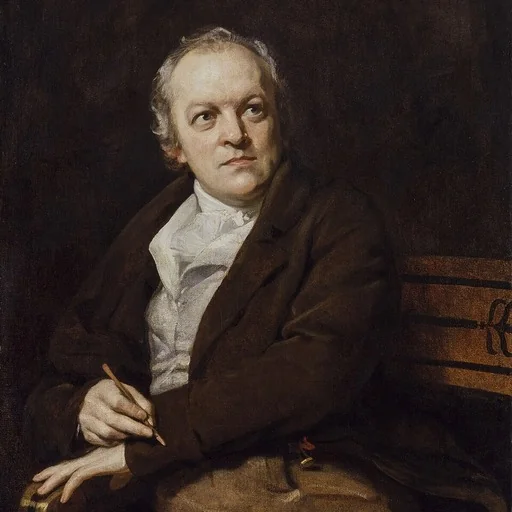
William Blake (28 November 1757 – 12 August 1827) was an English poet, painter and printmaker.