Artwork
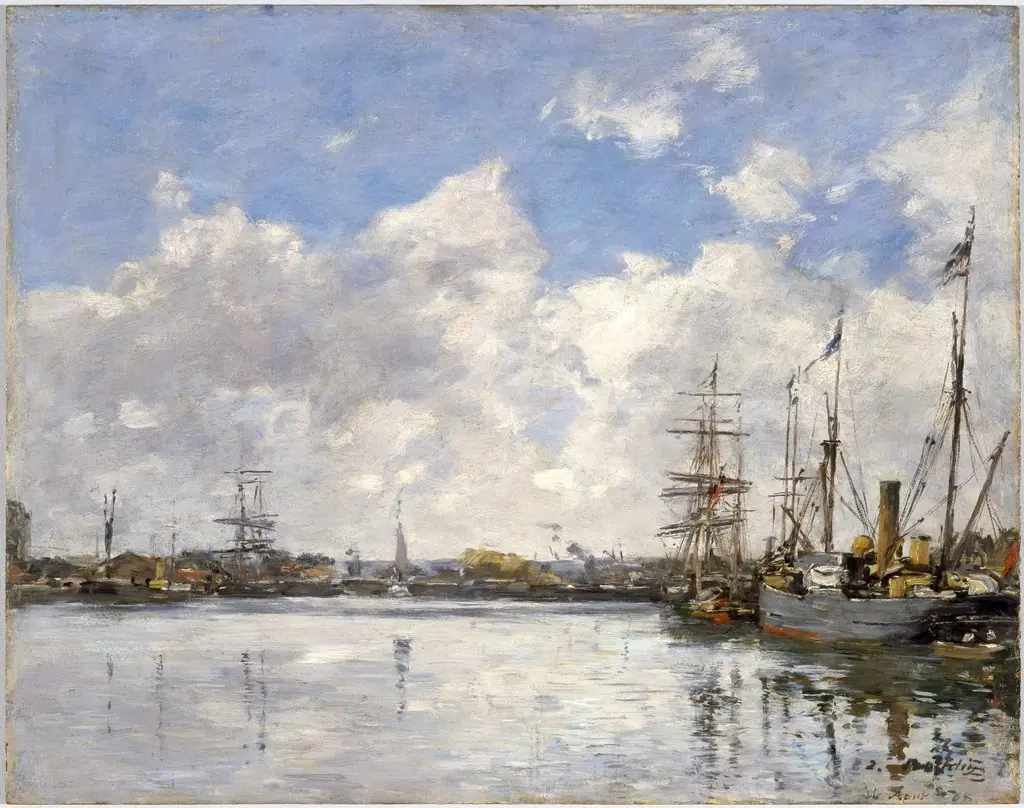
The Dock of Deauville
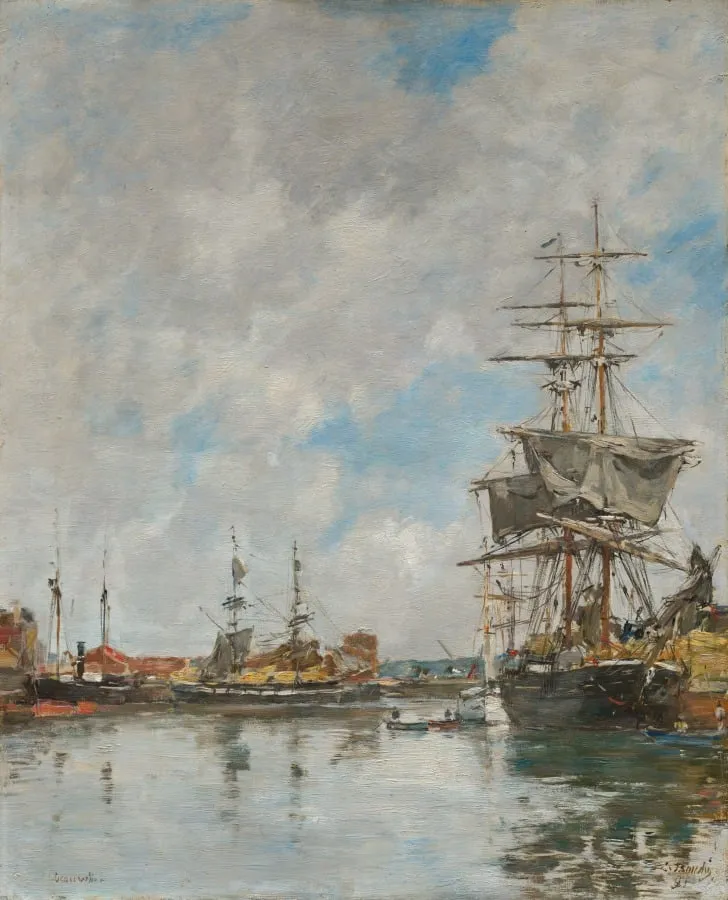
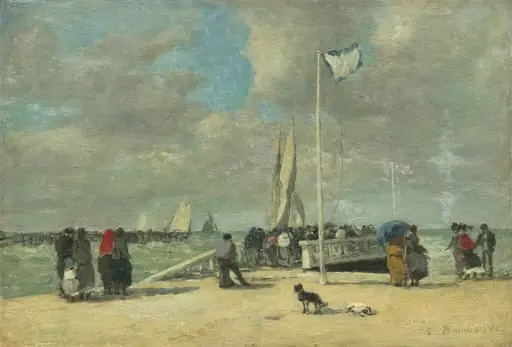
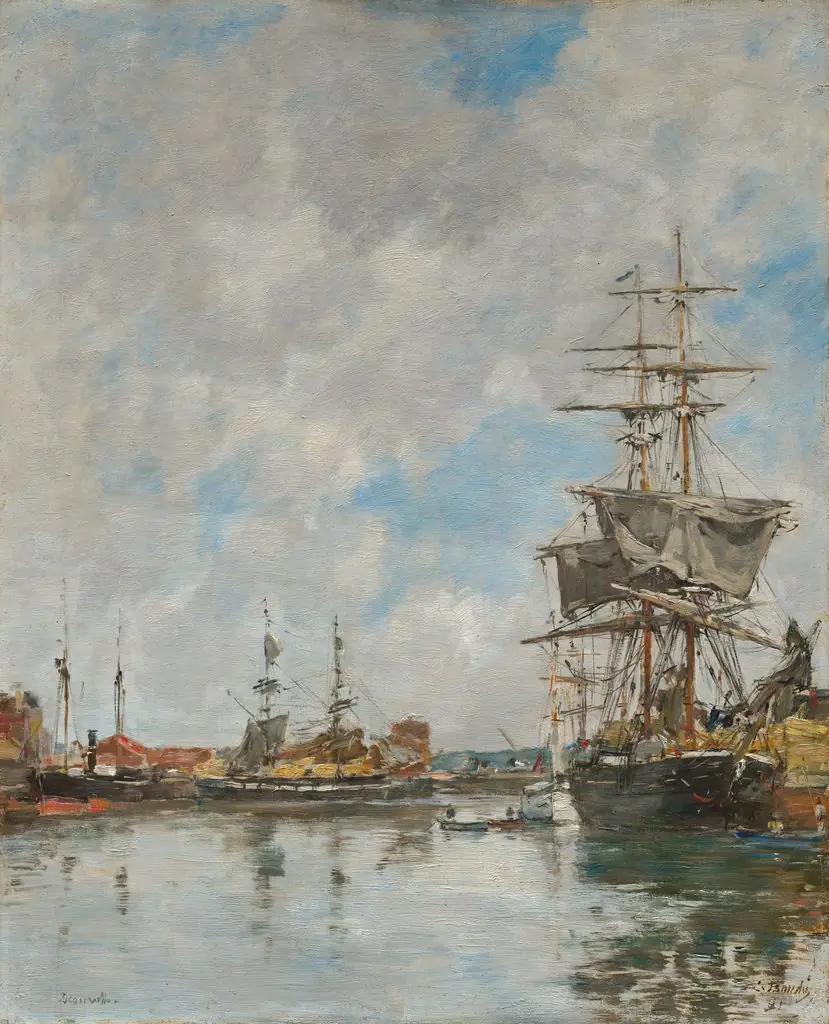
The Dock of Deauville is an unspecified painting by the Impressionist artist Eugène Boudin. It dates from 1891 and is held in the collection of the Cleveland Museum of Art.
About this work
Overview
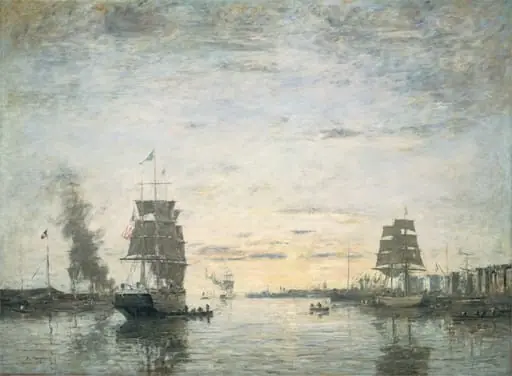
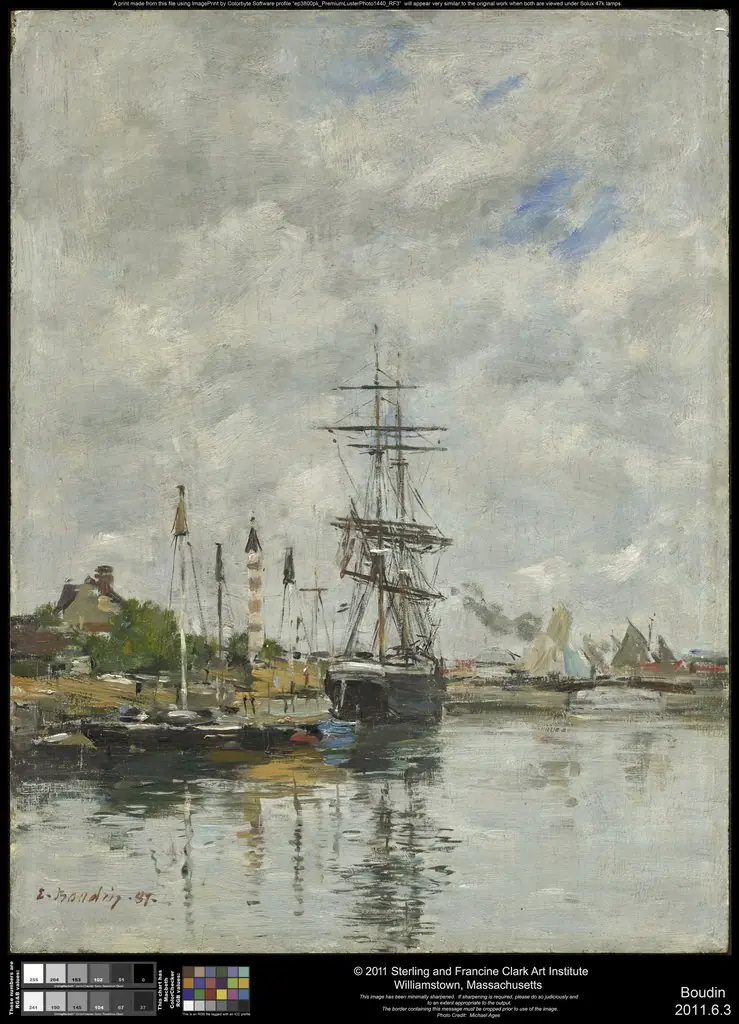
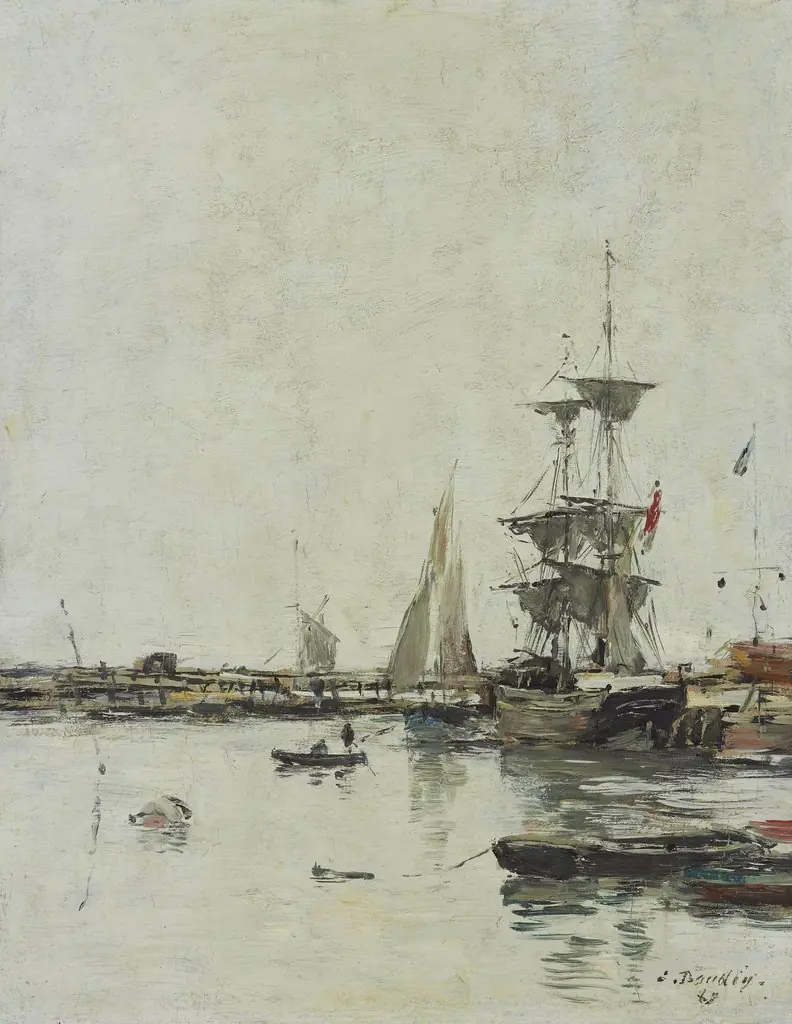
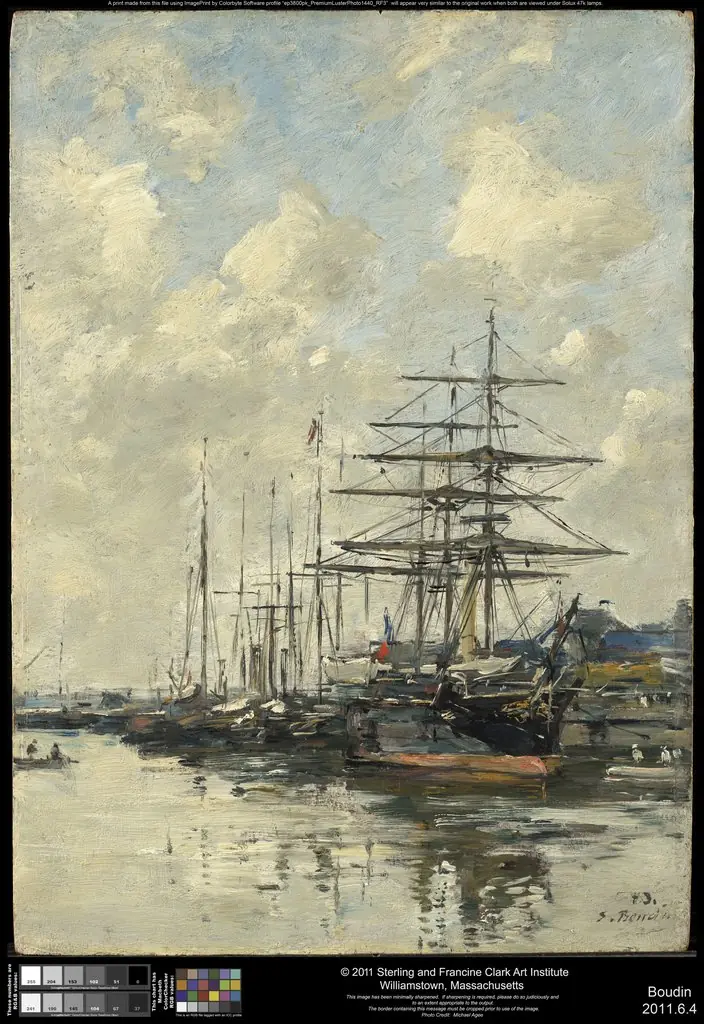
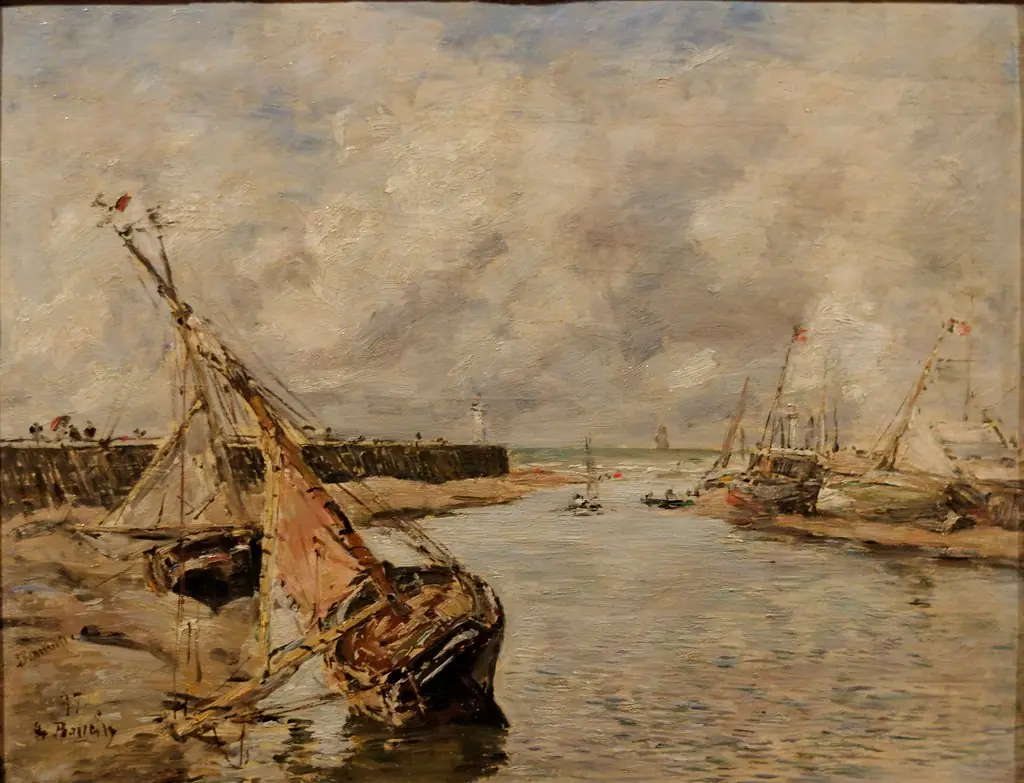
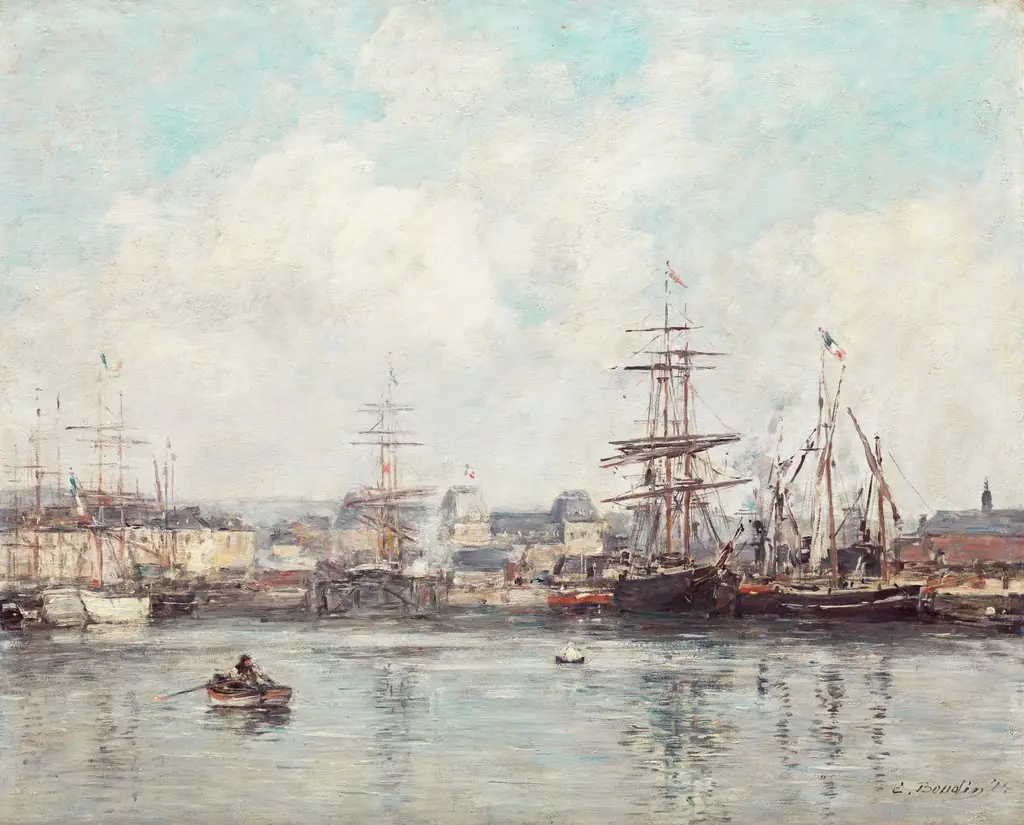
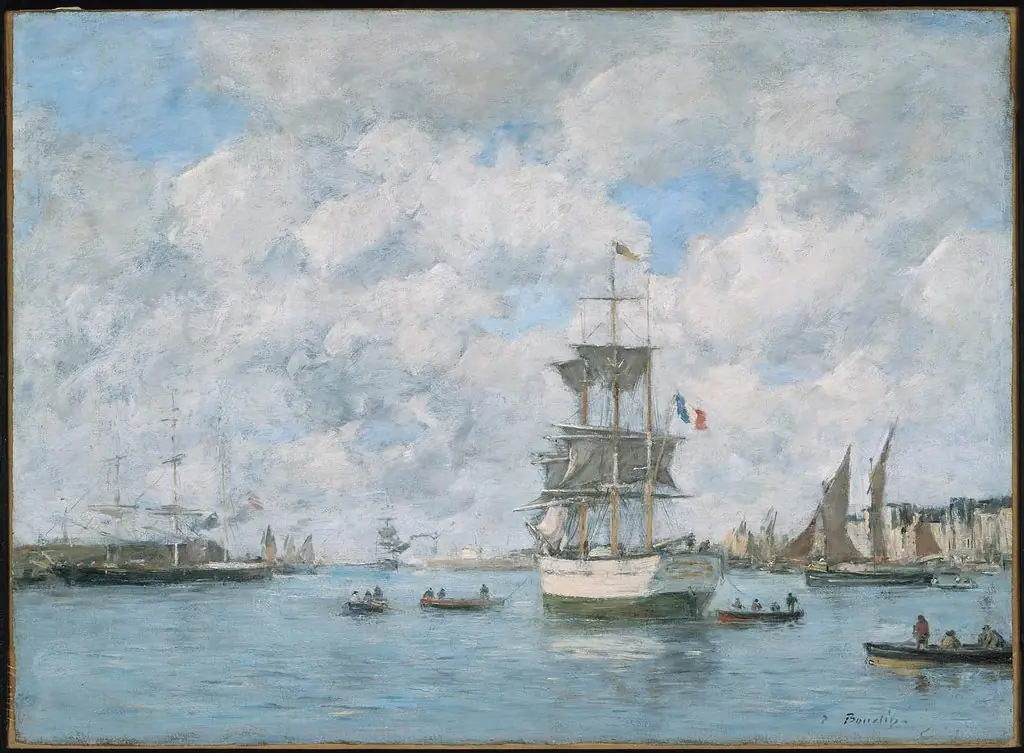
Eugène Boudin’s The Dock of Deauville captures a quiet maritime scene in the Normandy seaside town, focusing on anchored vessels rather than human activity.
Eugène Boudin’s The Dock of Deauville captures a quiet maritime scene in the Normandy seaside town, focusing on anchored vessels rather than human activity. The composition avoids bustling port life, instead emphasizing stillness and atmospheric light. Boudin’s approach reflects his broader interest in the transient effects of weather and sea, rendered with a restrained palette and loose, observational brushwork that prioritizes mood over detail.
Subject & Meaning
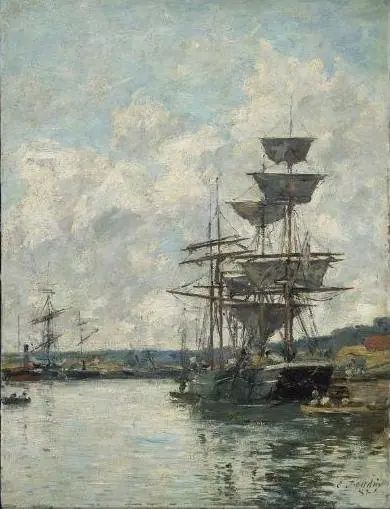
The painting presents a harbor at rest, with ships suspended in calm waters under a soft sky. No laborers, cargo, or movement are depicted; the vessels exist as silent forms, integrated into the environment. This absence of human presence underscores Boudin’s focus on nature’s quiet rhythms — the interplay of wind, light, and water — suggesting a contemplative harmony between man-made objects and the natural world.
Technique & Style
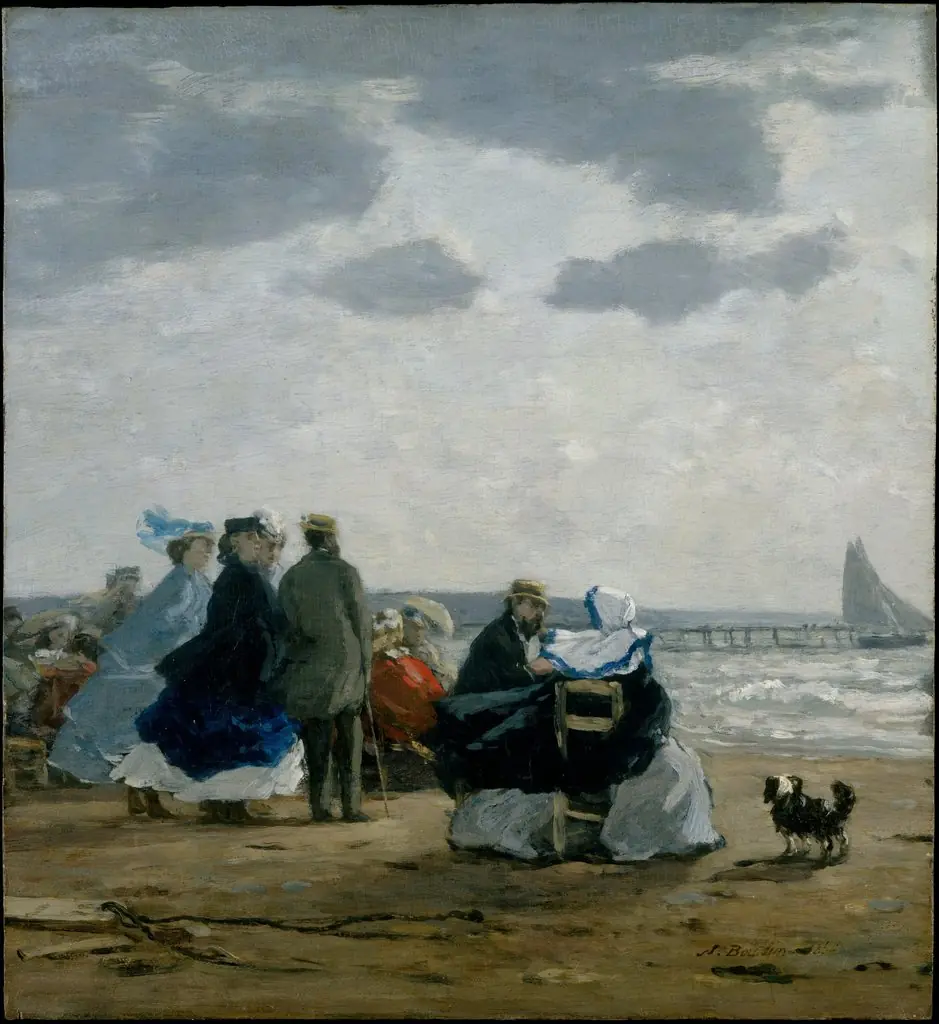
Boudin employed a sketchy, fluid brush technique, applying thin layers of paint to suggest form without definition. Light tones, often white or pale gray, are rubbed around masts and rigging, subtly overlapping darker outlines to imply shifting air and movement. This method avoids heavy modeling, instead using tonal gradations to evoke the ephemeral quality of daylight on water and sail, creating depth through suggestion rather than chiaroscuro contrast.
History & Provenance
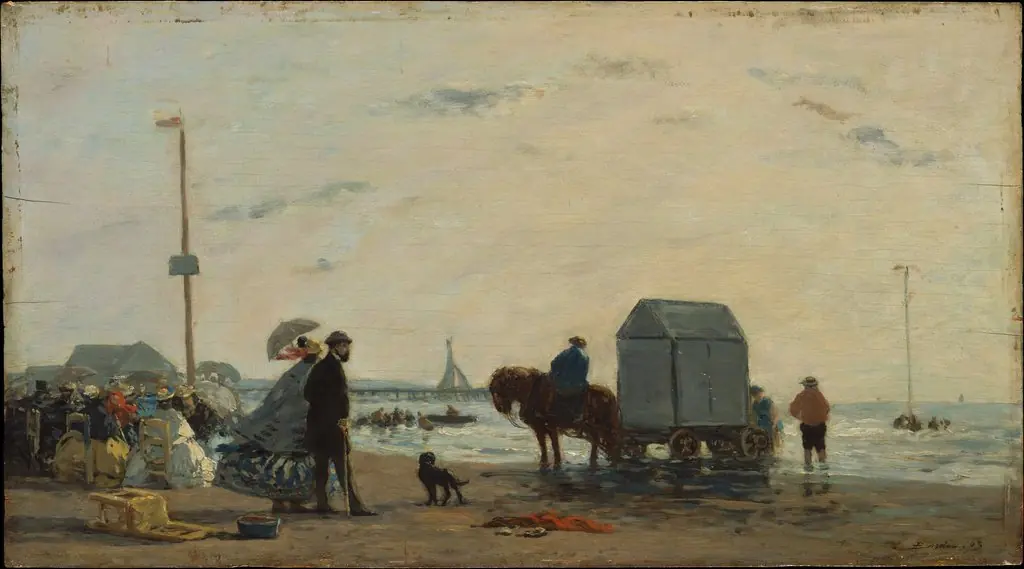
Painted during Boudin’s mature period, this work aligns with his decades-long engagement with coastal scenes in Normandy. Deauville, a growing resort town in the mid-19th century, provided frequent subject matter. While specific ownership records are not widely documented, the painting is consistent with works held in French public collections, reflecting Boudin’s reputation among contemporaries for capturing the subtle nuances of seaside light.
Context
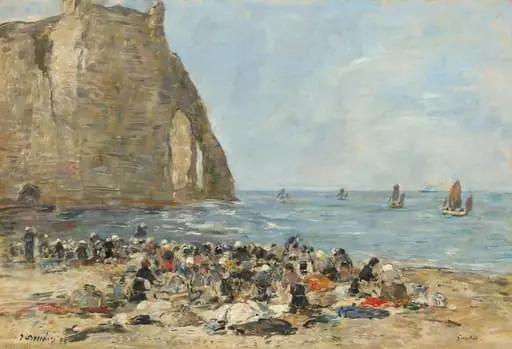
Boudin worked alongside early Impressionists, influencing Monet’s approach to light and plein air painting. Unlike later Impressionist focus on color theory, Boudin retained a tonal sensitivity rooted in 19th-century landscape traditions. His harbor scenes, devoid of narrative, reflect a broader shift in French art toward observing everyday environments with quiet attention — a precursor to modern landscape sensibilities.
Legacy
Boudin’s restrained, atmospheric depictions of harbors helped redefine marine painting by prioritizing mood over spectacle. His technique of using light to suggest form influenced the development of Impressionism, particularly in the treatment of sky and water. Though less celebrated than his successors, his work laid a quiet foundation for the movement’s emphasis on transient visual experience and observational honesty.
Artist & collection
Artist
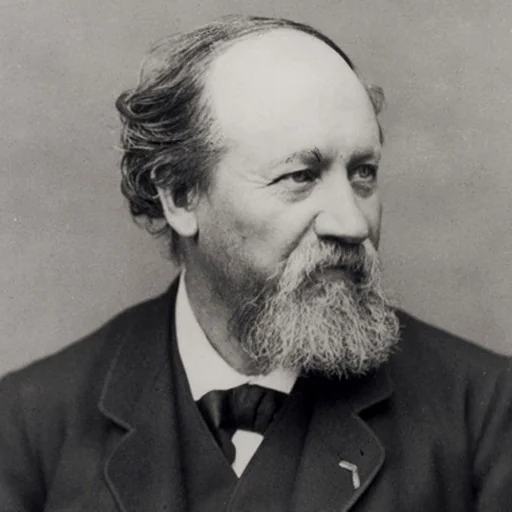
Eugène Louis Boudin (French: ; 12 July 1824 – 8 August 1898) was one of the first French landscape painters to paint outdoors.