Artwork
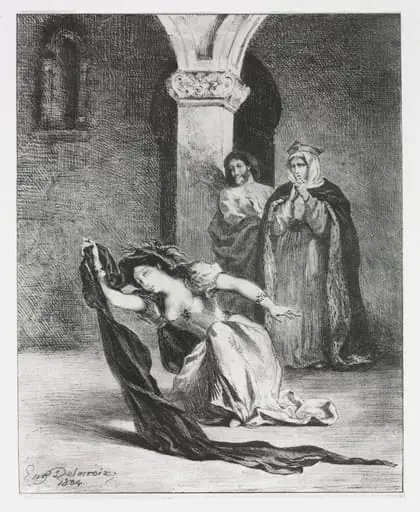
Illustrations for Faust: Faust in the prison of Marguerite
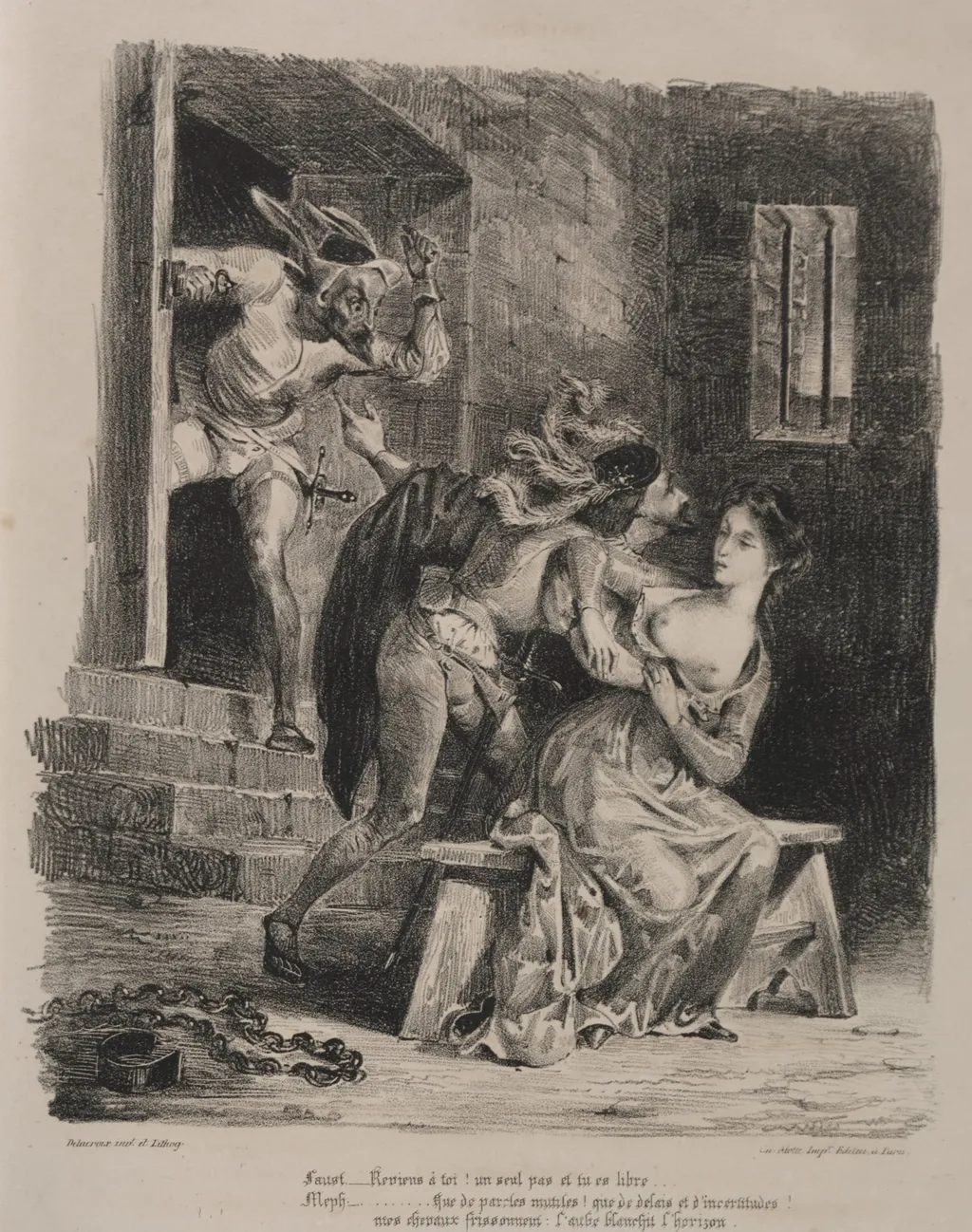
Illustrations for Faust: Faust in the prison of Marguerite is a print by the Romanticist artist Eugène Delacroix. It dates from 1828 and is held in the collection of the Cleveland Museum of Art.
About this work
Overview
Delacroix’s approach prioritized emotional intensity over academic restraint, aligning the image with literary themes of guilt, redemption, and human suffering.
Created in 1828, this print by Eugène Delacroix is one of a series commissioned to accompany Goethe’s dramatic poem Faust. Executed in the Romantic tradition, it captures a pivotal moment of moral crisis: Faust’s visit to his condemned lover, Marguerite, in her prison cell. Delacroix’s approach prioritized emotional intensity over academic restraint, aligning the image with literary themes of guilt, redemption, and human suffering.
Subject & Meaning
The scene portrays Faust, cloaked in dark attire and armed, confronting Marguerite, bound and dressed in white, symbolizing her innocence amid ruin. A third figure enters through the doorway, suggesting impending judgment or arrest. The composition conveys psychological tension rather than narrative clarity, emphasizing inner turmoil over external action. Delacroix interprets Goethe’s text not as moral allegory but as a study of emotional collapse and irreversible consequence.
Technique & Style
Delacroix employed loose, expressive brushwork and a restrained palette dominated by somber tones to evoke claustrophobia and despair. Light falls selectively, carving figures from shadow and heightening the drama of their isolation. His technique reflects influences from Rubens and Titian, particularly in the fluid handling of fabric and the atmospheric depth achieved through layered glazes, rather than linear precision.
History & Provenance
The illustration was produced as part of a commercial publishing project for a French edition of Goethe’s Faust, intended to appeal to literary audiences. Though not exhibited publicly at the time, the series was widely circulated in print form. Delacroix retained personal interest in the subject, revisiting Faustian themes in later paintings, but this early work remains among his most direct engagements with literary narrative.
Context
In the late 1820s, French artists increasingly turned to literary sources to explore psychological depth and moral ambiguity. Delacroix’s illustrations responded to a growing appetite for Romantic interpretations of German literature. Unlike Neoclassical peers who favored idealized forms, he embraced disorder, emotion, and the sublime in human suffering, positioning his work at the vanguard of a new artistic sensibility.
Legacy
This print helped establish Delacroix as a visual interpreter of literary drama, influencing later illustrators and Symbolist painters who sought to translate inner states into imagery. Though overshadowed by his large-scale canvases, the Faust series demonstrated his ability to distill complex narratives into potent, intimate scenes, cementing his role in bridging literature and visual art in the 19th century.
Artist & collection
Artist
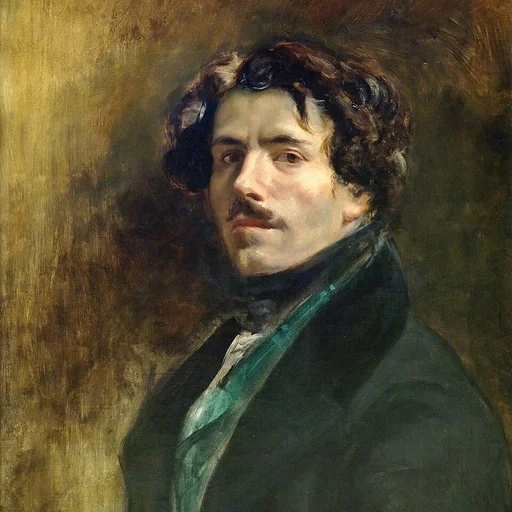
Ferdinand Victor Eugène Delacroix ( DEL-ə-krwah, -KRWAH; French: ; 26 April 1798 – 13 August 1863) was a French Romantic artist who was regarded as the leader of the French Romantic school.