Artwork
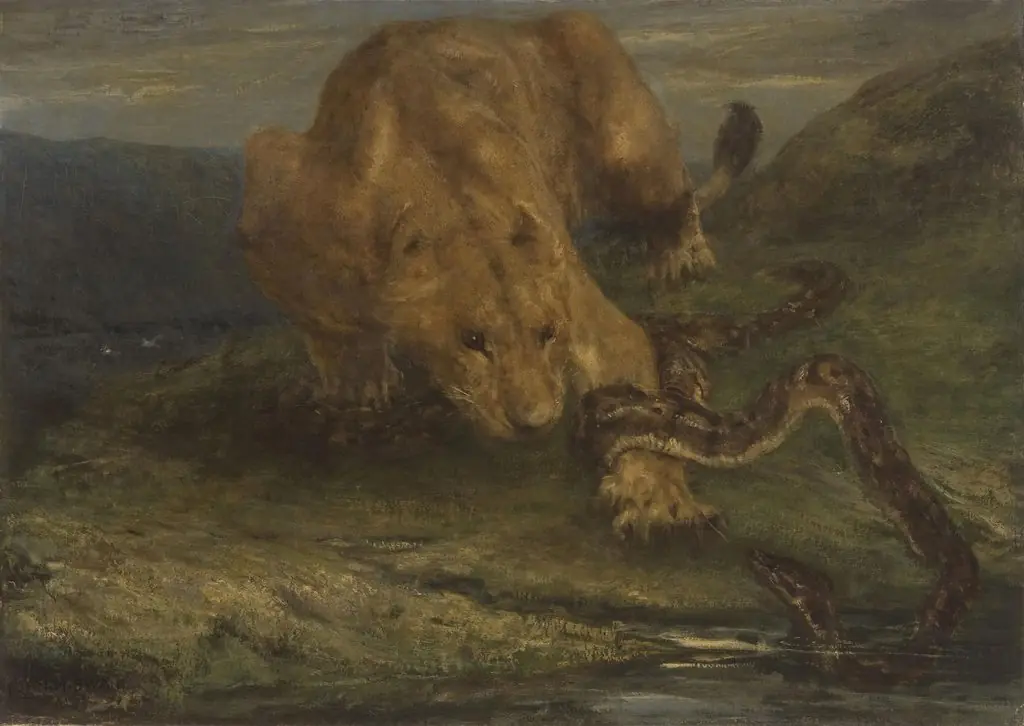
The Lion and the Snake
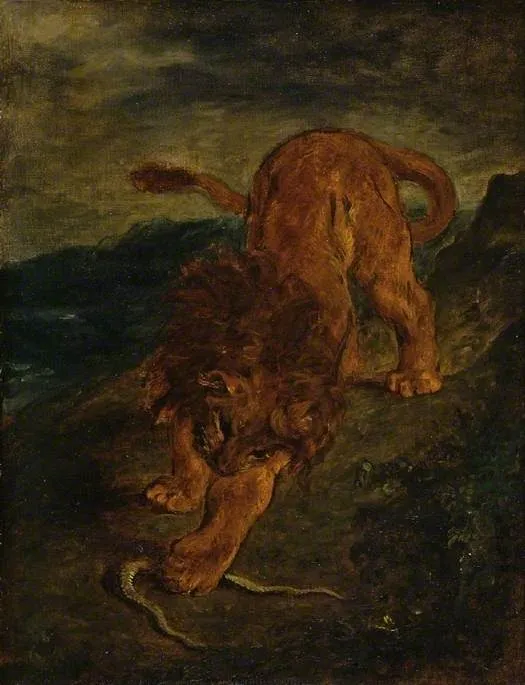
The Lion and the Snake is an oil painting by Eugène Delacroix. It dates from 1847 and is held in the collection of the Fitzwilliam Museum.
About this work
Overview
Painted in 1847 by Eugène Delacroix, *The Lion and the Snake* is an oil-on-canvas work that captures a moment of primal tension between two animals.
Painted in 1847 by Eugène Delacroix, *The Lion and the Snake* is an oil-on-canvas work that captures a moment of primal tension between two animals. Delacroix, a central figure in French Romanticism, favored emotional intensity and dynamic composition over academic restraint. The painting is held in the Fitzwilliam Museum’s collection, where it exemplifies his mature style—vibrant yet atmospheric, driven by instinct rather than idealized form.
Subject & Meaning
The painting depicts a lion, poised on a rocky ledge, fixated on a snake winding below. Neither animal is shown in active combat, but the stillness suggests an imminent confrontation. The lion’s alert posture and the snake’s deliberate motion imply a balance of power and danger. The scene evokes natural conflict without moralizing, reflecting Romanticism’s fascination with untamed forces and the sublime in nature.
Technique & Style
Delacroix employed loose, expressive brushwork to convey texture and motion, particularly in the lion’s fur, rendered in rich golds and browns that contrast with the snake’s pale, sinuous form. The dark, shadowed background heightens the drama, while the faint suggestion of sky above adds depth without clarity. Color, not line, defines form—an approach influenced by Rubens and Venetian masters—creating a sense of visceral immediacy over anatomical precision.
History & Provenance
Completed in 1847, the painting entered the Fitzwilliam Museum’s collection in the 19th century, likely through a private acquisition or bequest. Its history prior to museum ownership is not well documented, but it aligns with Delacroix’s later period, when he increasingly turned to animal subjects as metaphors for raw energy and instinct. The work has remained in the museum’s care since its acquisition, with no known major restorations altering its original appearance.
Context
In mid-19th-century France, Romanticism was shifting from grand historical narratives toward more intimate, emotionally charged scenes. Delacroix’s interest in animals reflected broader cultural fascination with the natural world as a realm of unmediated truth. This painting emerged alongside his studies of North African wildlife and his growing detachment from classical ideals, positioning it as a quiet but potent statement on nature’s autonomy.
Legacy
Though less celebrated than Delacroix’s larger historical works, *The Lion and the Snake* influenced later artists drawn to expressive animal subjects and atmospheric tension. Its emphasis on mood over narrative, and color over detail, prefigured aspects of Impressionism and Symbolism. The painting endures as a testament to Delacroix’s ability to distill primal drama into a single, resonant moment.
Artist & collection
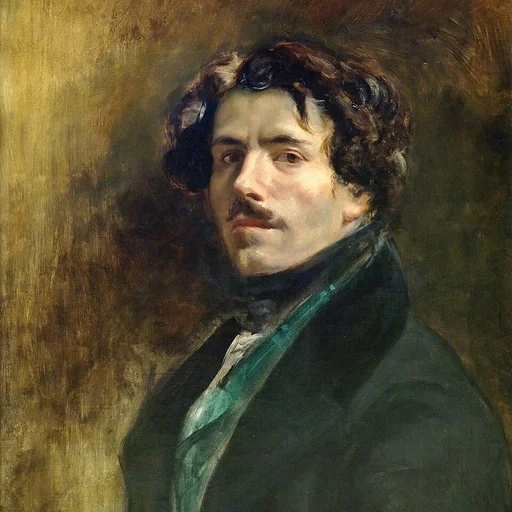
Artist
Ferdinand Victor Eugène Delacroix ( DEL-ə-krwah, -KRWAH; French: ; 26 April 1798 – 13 August 1863) was a French Romantic artist who was regarded as the leader of the French Romantic school.