Artwork
A Concert: Laura Devéria Singing
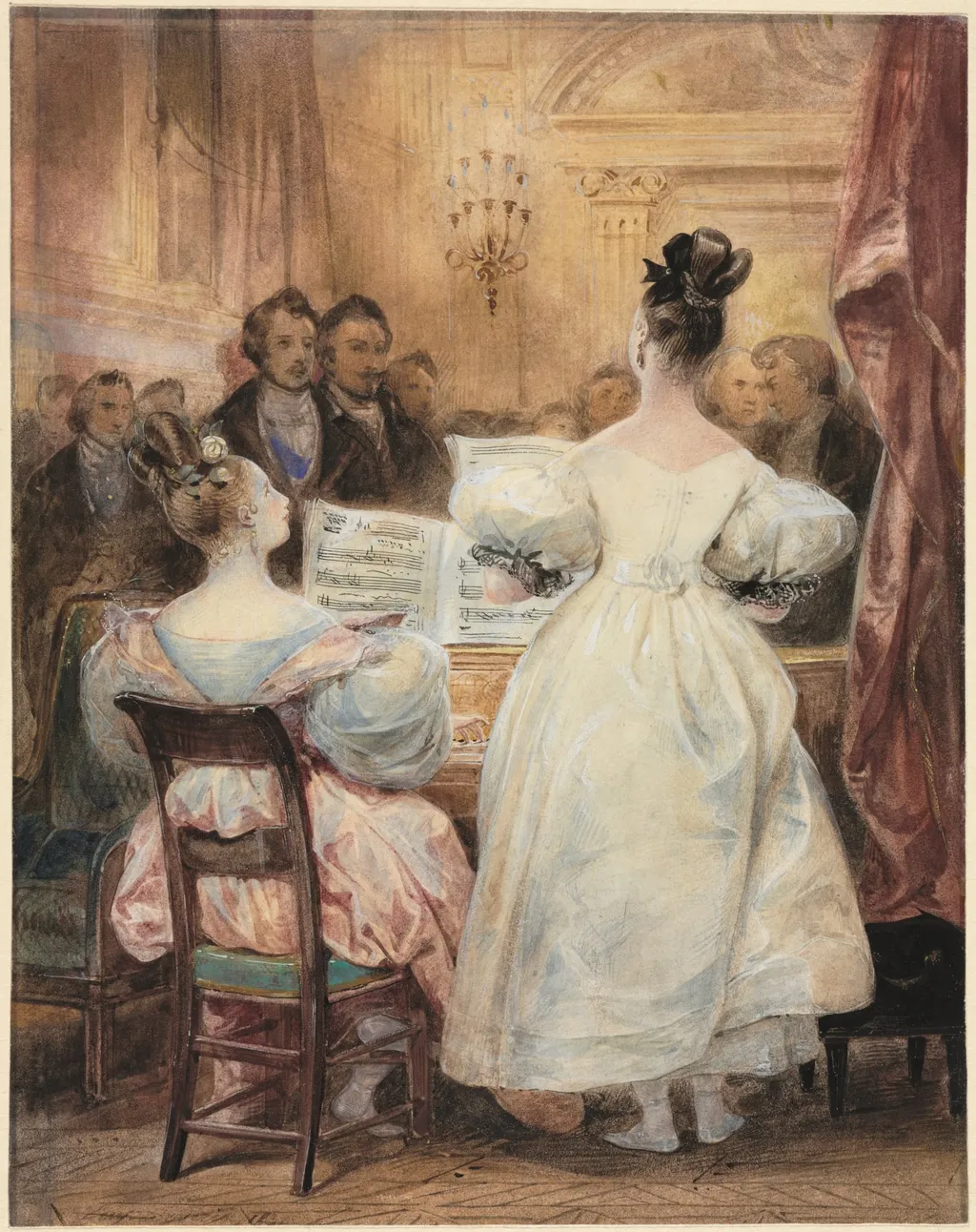
A Concert: Laura Devéria Singing is a drawing by the Romanticist artist Eugène Devéria. It dates from 1831 and is held in the collection of the Cleveland Museum of Art. Created in 1831, this drawing by Eugène François Marie Joseph Devéria captures a private musical moment within his family.
About this work
The woman in the painting is Laura Devéria, and what's interesting is that she's the artist's sister, which makes this painting a personal work.
The painting shows a woman singing at a concert.
She's dressed in old-fashioned clothes and surrounded by people.
The woman in the painting is Laura Devéria, and what's interesting is that she's the artist's sister, which makes this painting a personal work.
The fact that it's a family member adds a unique touch to the scene.
The artist likely had a close relationship with Laura, which might have influenced how he portrayed her.
You can learn more about this style by looking at the work of Eugène François Marie Joseph Devéria (French, 1805–1865).
Overview
Created in 1831, this drawing by Eugène François Marie Joseph Devéria captures a private musical moment within his family. Executed in pencil and ink, it portrays his sister Laura Devéria engaged in song, surrounded by attentive listeners. The work is held in the Cleveland Museum of Art’s collection and reflects Devéria’s interest in intimate, domestic scenes alongside his larger historical commissions.
Subject & Meaning
The subject is Laura Devéria, the artist’s sister, performing a vocal piece in a domestic setting. Her poised expression and the quiet focus of the onlookers suggest a moment of personal expression rather than public spectacle. The inclusion of family members implies a celebration of artistic talent within the household, elevating everyday ritual into a subject worthy of artistic record.
Technique & Style
Devéria employed fine linear draftsmanship, using delicate ink lines and subtle shading to define form and texture. The figures are rendered with restrained detail, emphasizing gesture and posture over elaborate costume or setting. This approach aligns with Romantic-era interest in emotional nuance, prioritizing atmosphere and human connection over theatrical grandeur.
History & Provenance
The drawing was produced during Devéria’s early career, shortly after his training at the École des Beaux-Arts. It remained within the Devéria family until entering the Cleveland Museum of Art’s collection. Its preservation as a personal work, rather than a commissioned piece, underscores its significance as a familial document rather than a public statement.
Context
In early 19th-century France, domestic scenes featuring music and performance were gaining traction among artists seeking to capture private emotion. Devéria’s work aligns with this trend, contrasting with the grand historical narratives favored by academic institutions. His focus on family reflects broader Romantic ideals valuing individual experience and intimate relationships.
Legacy
Though Devéria is better known for murals and portraits of historical figures, this drawing offers insight into his quieter, personal practice. It stands as a rare example of his engagement with familial subject matter, illustrating how Romantic ideals extended beyond public monuments into the rhythms of home life. The work remains a quiet testament to artistic kinship.
Artist & collection
Artist
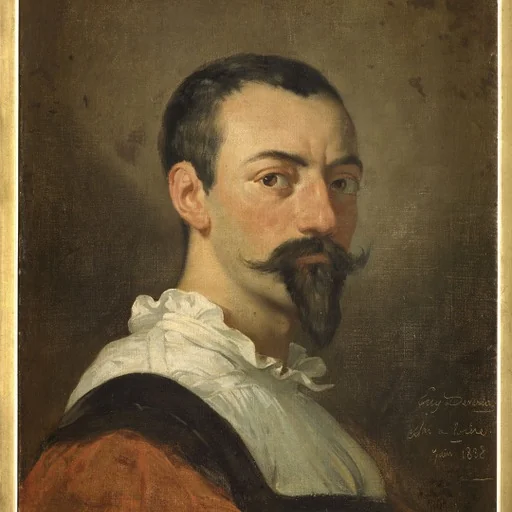
Eugène François Marie Joseph Devéria (22 April 1805, in Paris – 3 February 1865, in Pau) was a French Romantic history painter, portraitist and muralist.

 La Soirée Bourgeoise
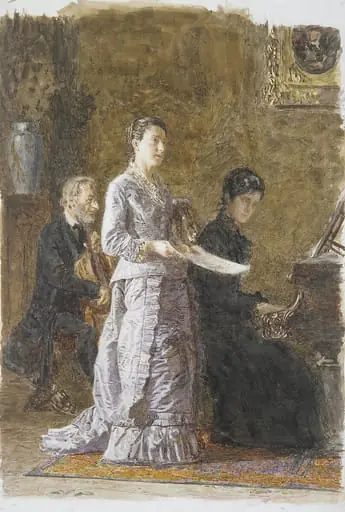 The Pathetic Song
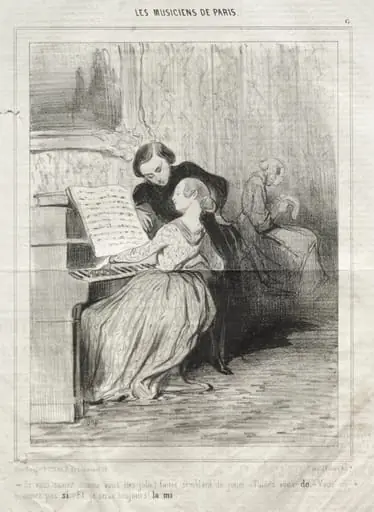 If you knew how pretty you are!
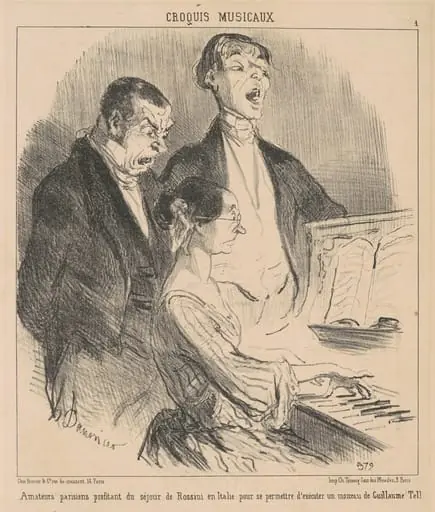 Amateurs parisiens profitant du séjour de Rossini
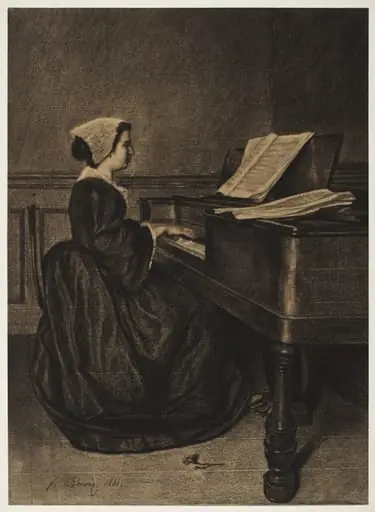 Woman at the Spinet
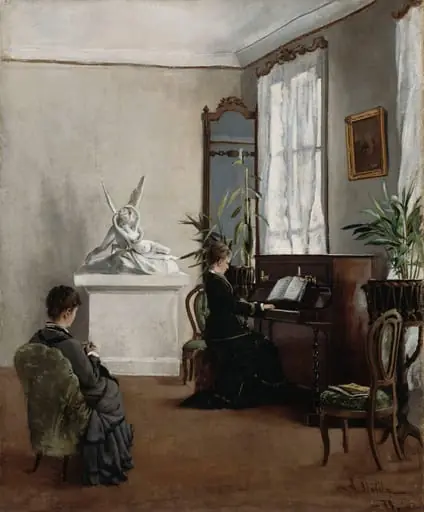 Soitannollisen kodin sisäkuva
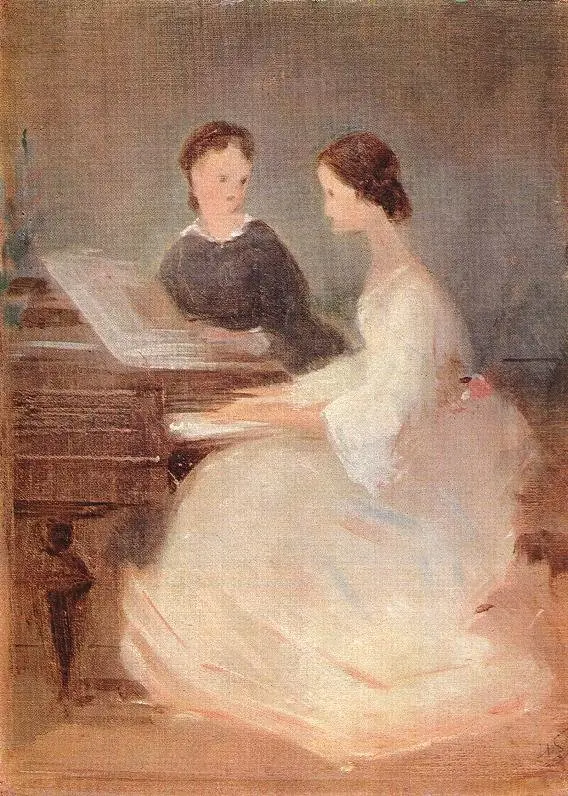 At the Piano
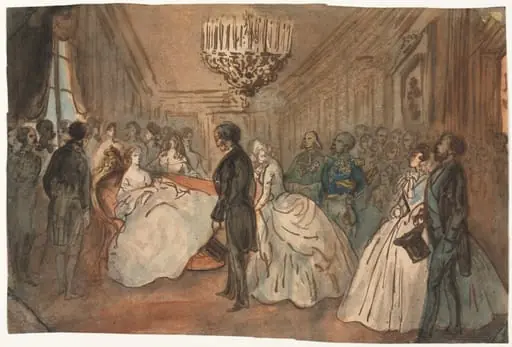 The Empress Eugénie Receiving the Diplomatic Corps after the Birth of the Imperial Prince
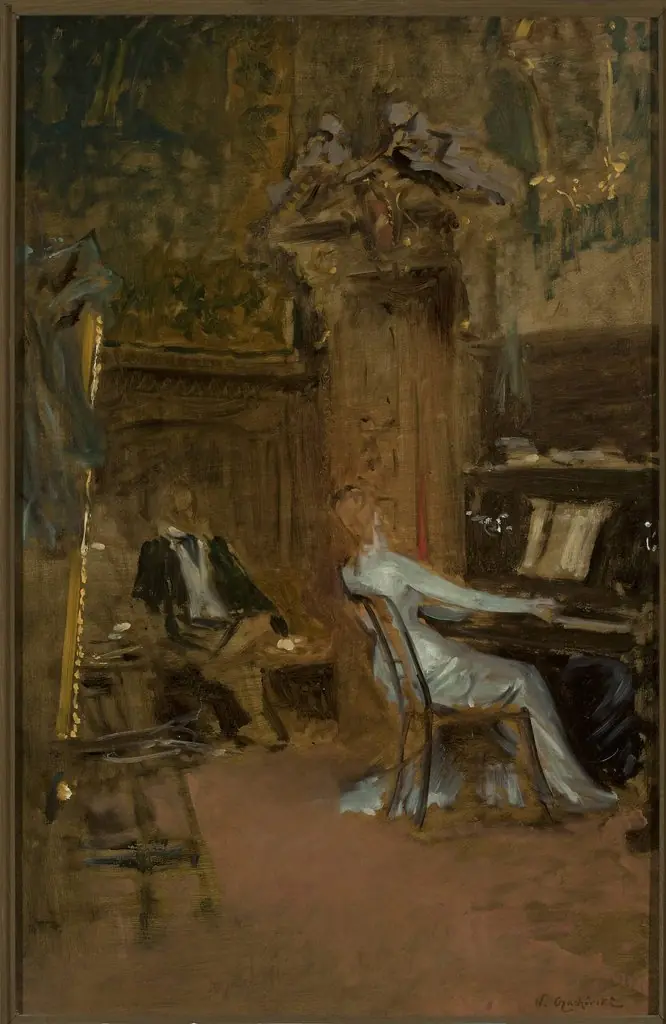 Concert in the living-room, sketch
 My Jealousy
 Portrait of Madame Thomas (née Camille Boucher)
 Kamarimusiikkia